Click image to open full size in new tab
Article Text
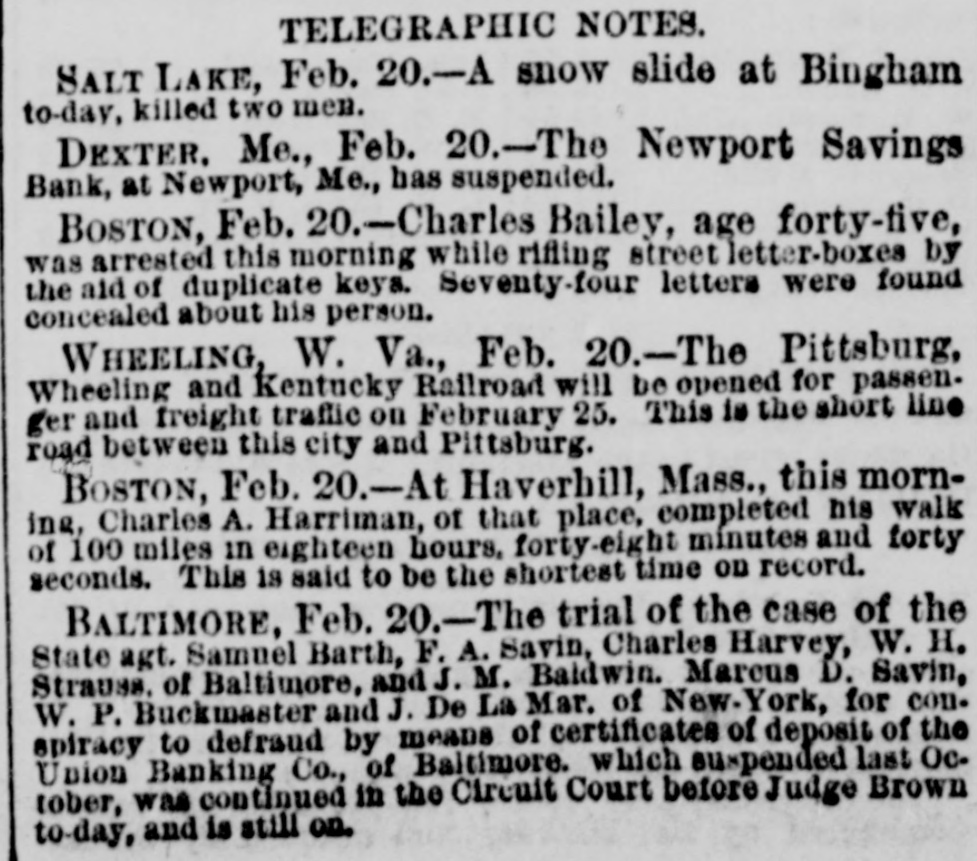
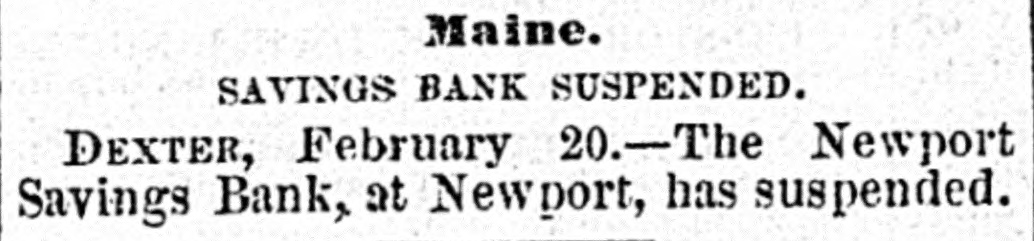
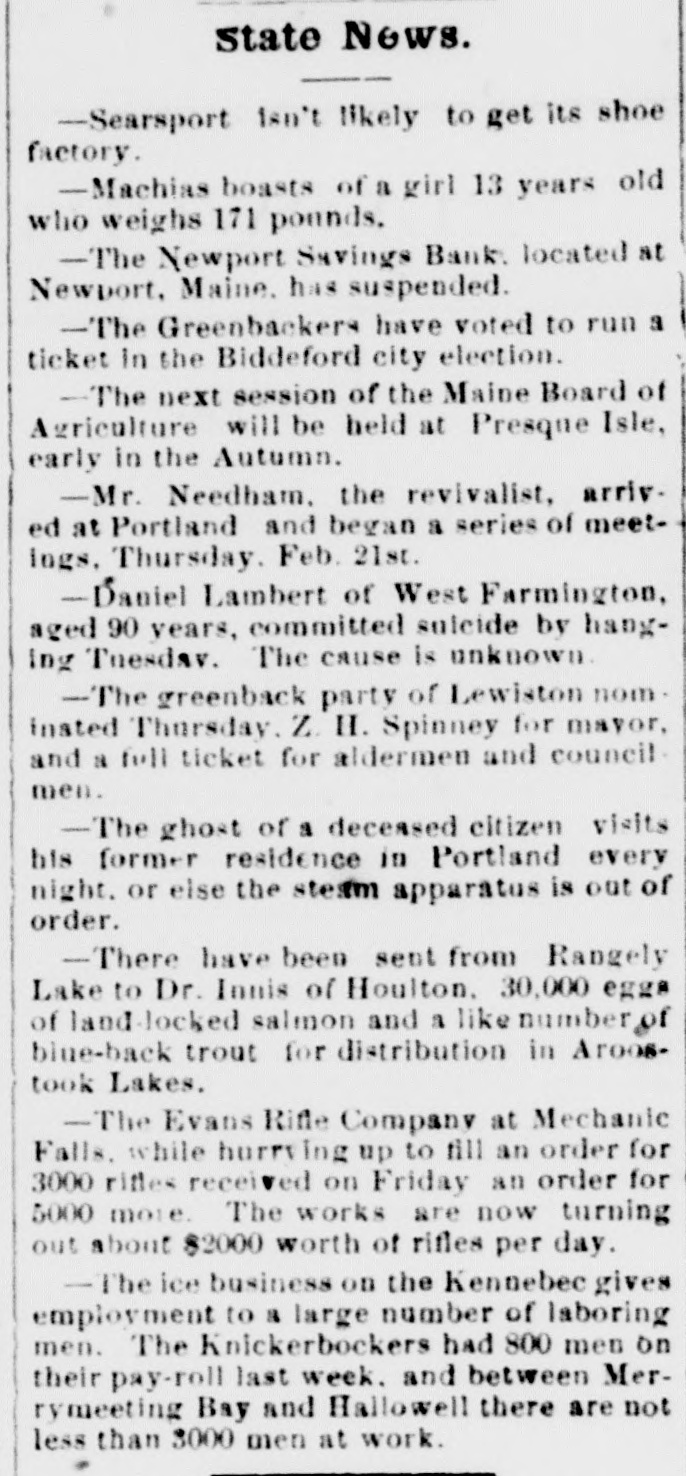
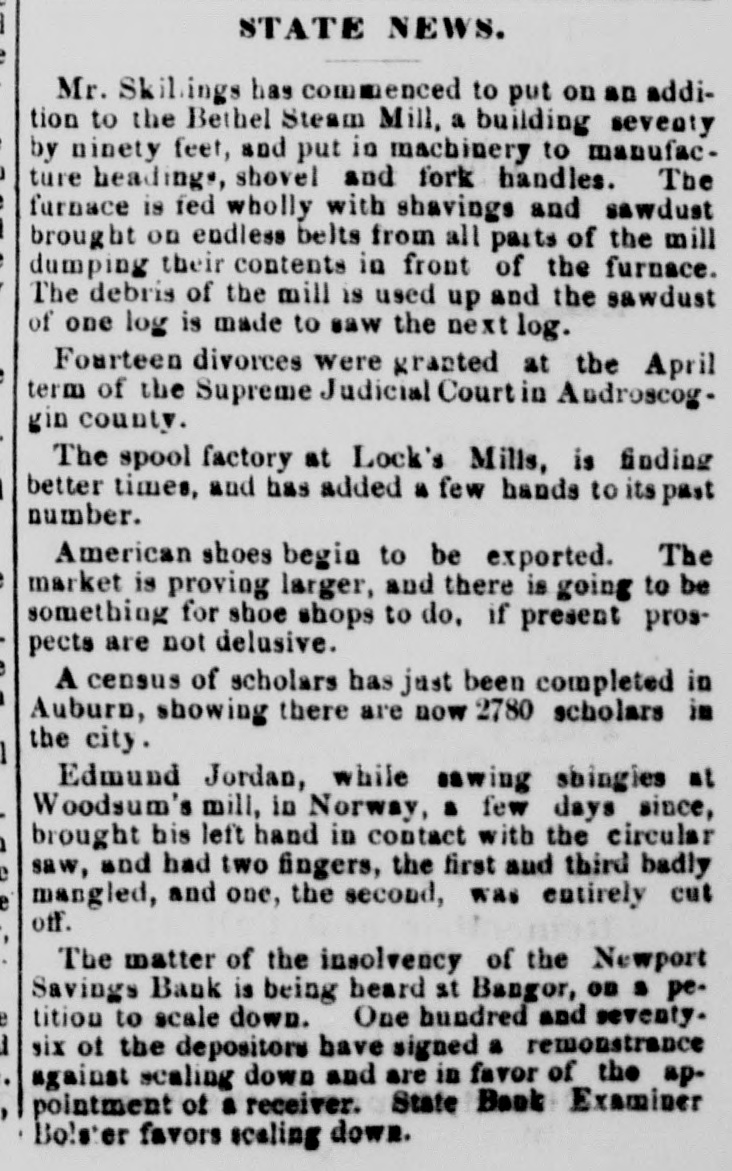
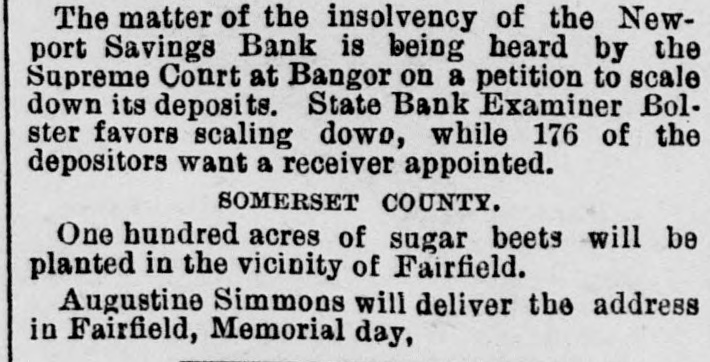
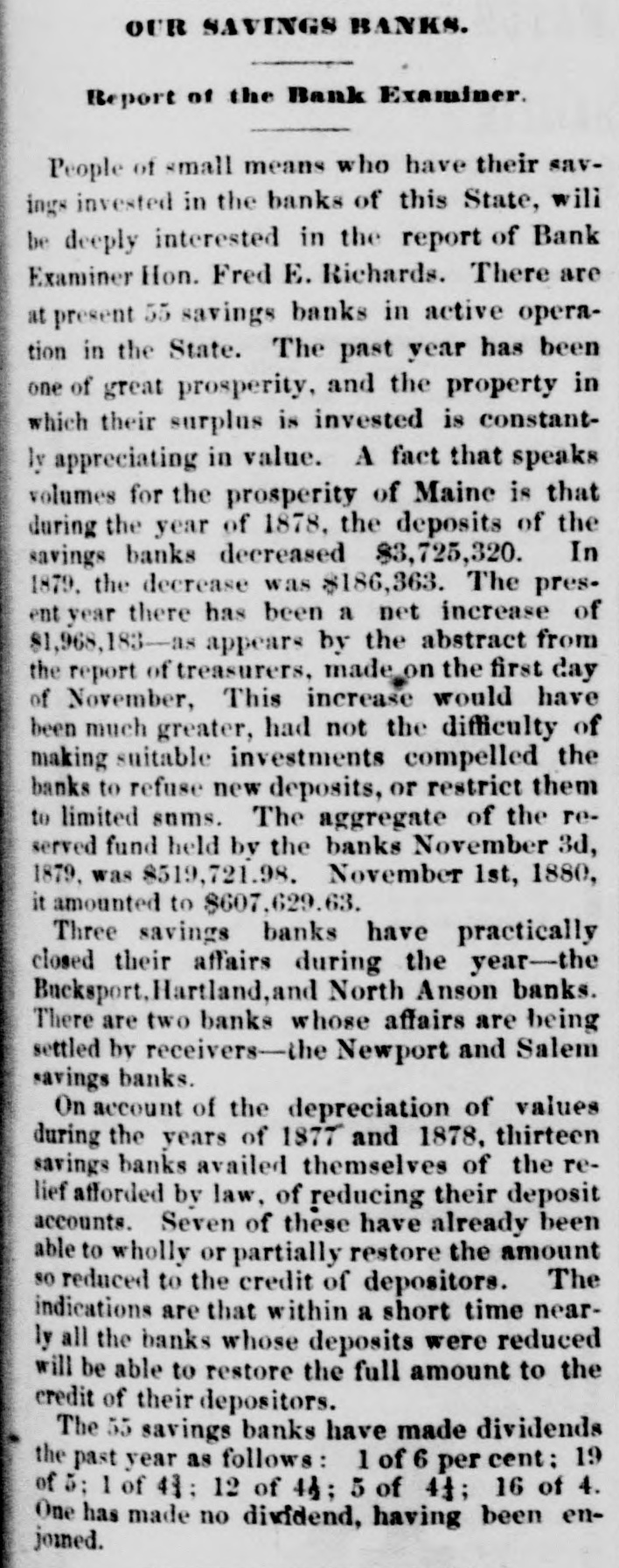
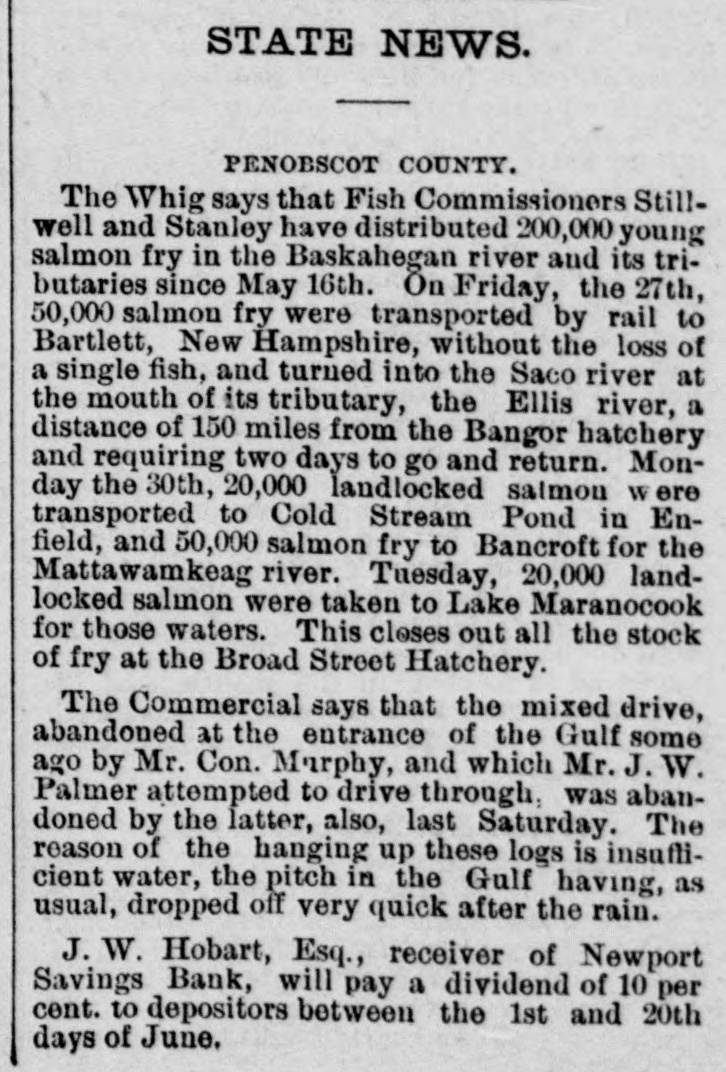
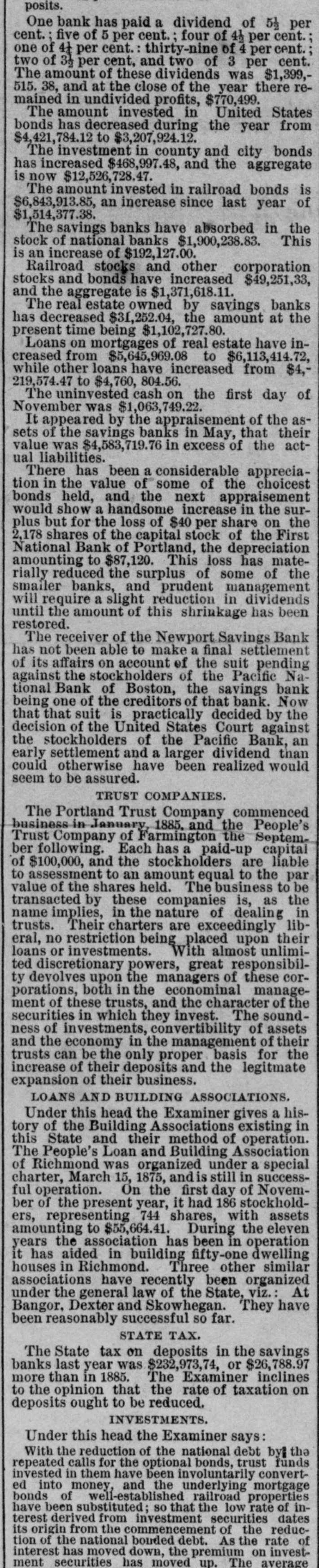
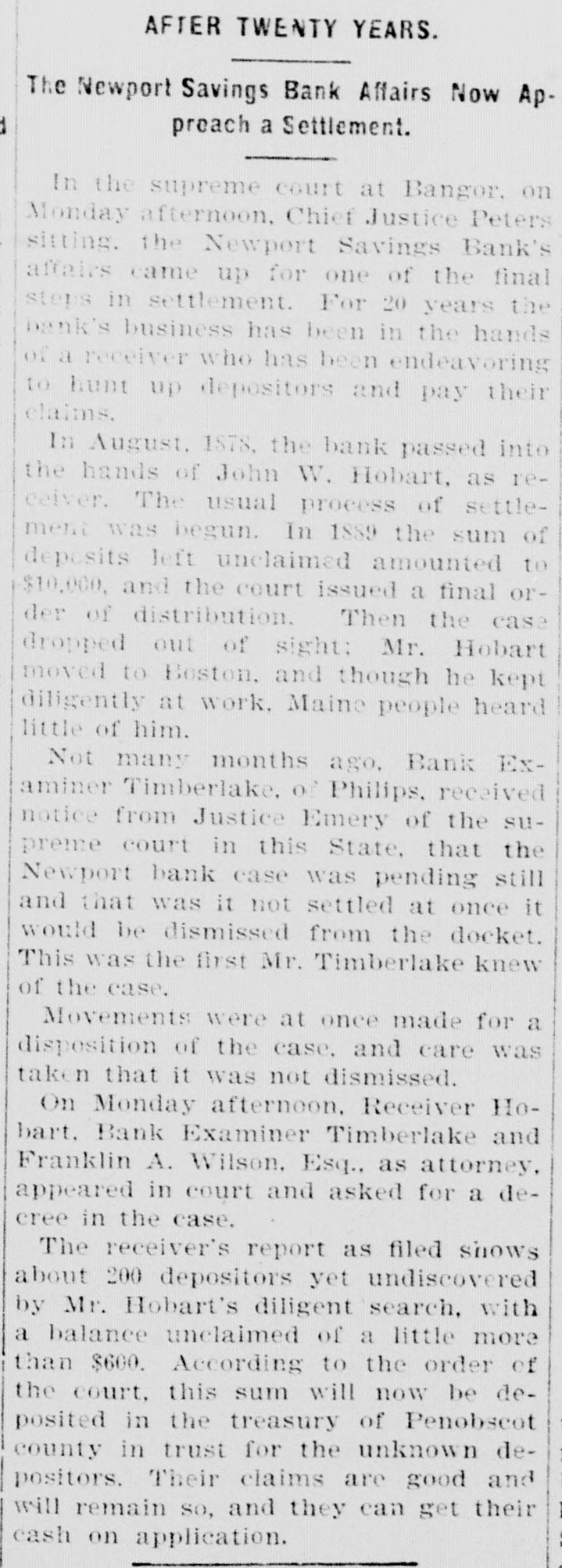
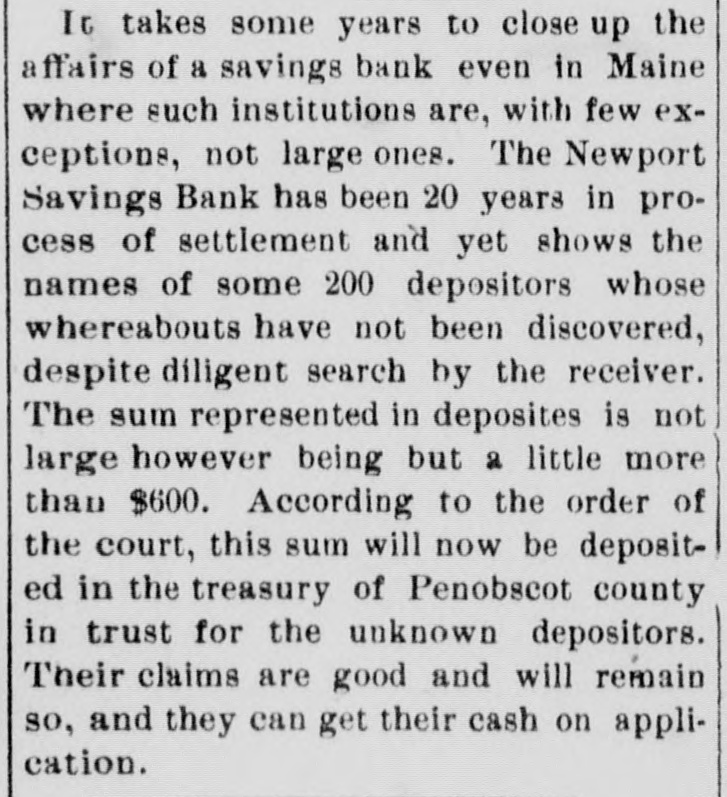
but that persons who have a surplus earnings, income, desiring to keep their funds as nearly in hand as possible, have become depositors, until the conditions of business 80 change as to make it more profitable or less dangerous to invest far themselves. Whenever the opportunity for private investment becomes sufficiently promising, these funds will leave the banks. The aggregate of deposits in the savings banks Nov. 1, 1884, was $32,913,835 16 May 1, 1885, it was 33,996,182 84 Nov. 2, 1885, it was 35,111,600 04 The increase the first six months was 1,082,347 68 And during the last half of the year, 1,115,417 20 The increase for the full year has been, 2,197,764 88 The reserved fund increased between Nov. 1, 1884, and May 1, 1885, 71,992 And between May 1, 1885, and Nov. 2, 1885, 72,610 And at the close of this year it amounts to 1,220,571 14 or a little more than 3 per cent of the deposits. Regular semi-annual dividends have been paid by all the savings banks, as follows: One bank 6 per cent per annum. " Six banks 5 " " 41 " : 4 Forty-one banks, These dividends amounted to $1,368,035.85, and at the close of the year there remained in the banks $861,986 36 in undivided profits The investment in United States bonds has decreased during the year from $4,739,840.58 to $4,421,784 12. There has been an increase of holdings in State, county and city bonds of $1,145,471.90, the aggregate being $12,057,730 99. The aggregate of railroad bonds owned by the savings banks is $5.329 536.47; a gain during the year of $966,155.01. The amount invested in railroad stock and stock and bonds of other corporations is $1,322,366.78. This shows a slight increase since last year. The savings banks own national bank stock to the amount of $1,708,111.83, or $124,574 61 more than last year. The real estate owned amounts to $1,133,979.84. The uninvested cash November 2 was $1,016,509.58. The loans on mortgages of real estate have increased during the year from $5,216,929.17 to $5,645,969.08; while all other loans show a decrease of $389,105.57; the aggregate being $4,219,574.47. The savings banks have the present year paid the State Treasurer for tax on deposits, $206,184 77: this is $14,367.14 in excess of any previous year. The municipal Taxes aggregate $14,610.74 The Receiver of the Newport Savings Bank, J. W Hobart, Esq, expects to make a final dividend of 5 per cent within a short time, which will give depositors 75 per cent of the balance to the credit of their accounts at the time of its suspension. Twe People's Twenty-Five Cent Savings Bank of Bath, by order of court dated December 20, 1884. declared a special dividend of 5 per cent, amounting to $19.929,54, and the same has been paid to depositors hose accounts were reduced by decree of the Supreme Judicial Court in April, 1883. The Wiscasset Savings Bank (which was enjoined by the court for a period that included three dividend days), on the 2nd of February last, declared a special dividend to its depositors of 6 per cent, which amounted to $5,957.17. The Portland Trust Company commenced business the first of the year and its progress has been highly satisfactory to its management. The business consists of receiving deposits. loaning money, buying and selling investment securities for savings banks, trust funds and private investors. It also accepts and executes legal trusts, and acts as agent for countersigning bonds, paying coupons, &c. The security offered by the terms of its charter has attracted deposits from all parts of the State which now exceed $350,000.00; and this confidence is confirmed by the character of the Board of Trustees directing and managing its affairs. From the earnings of the first year the company has carried a satisfactory amount to the credit of its surplus fund, after reserving a sum sufficient to pay a dividend in January to the stockholders. The People's Trust Company of Farmington was chartered by an act of the Legislature, approved February 24, 1885, and organized the 5th of September last. Its officers are: President, George W. Wheeler; Secretary and Treasurer, Daniel M. Bonney Trustees, George W. Wheeler, Hiram Holt. James R. Marston, George M. Currier, Daniel M. Bonney. At this date it can hardly be said to have commenced business. The following is a statement of its affairs November 2: Liabilities. $50,000 00 Capital stock (paid in), 9,177 05 Demand deposits, 1 05 Profits, $59,178.10 Resources. $11,000.00 Loans on names, 10,488 00 Loans on collaterals, 176 09 Expense account. 37,514 01 Cash on hand and on deposit, $59,178 10 Many thousands of the very highest-priced bonds held by the savings banks will mature during the next two years. They should be replaced by others equally choice and dividends should be so reduced that a portion of the earnings may be applied to the premiums which must be paid for such securities The character of the assets should be considered first, the income therefrom afterwards. Depositors are pleased with generous dividends, but they demand absolute safety. When the old law in relation to the invest-