Article Text
court fixing the amount due at $8,000. Strain's removal anticipated the filing of this order, and Strain is positive that administration effort will now be exerted to atone for Vandeventer.
When Break Came.
Strain described his first open break with Attorney General Short. It happened just after the Central Exchange State bank of Woodward failed. This is the bank of which Charles H. Martin was cashier. Martin was a close friend of Fred Dennis and Strain says he has been Short's guest in Oklahoma City and has been presented to Governor Walton although facing criminal charges.
"I sent my assistant, J. P. Kirby, to Woodward to take charge of the bank," Strain said. "Kirby found Short and a liquidating agent in charge and phoned me. I told him the banking department was entrusted by law with the administration of failed banks and instructed him to throw out Short and his agent. Short appealed to the governor but the legislature was in session and he lost. No liquidating agent was paid by the Woodward depositors."
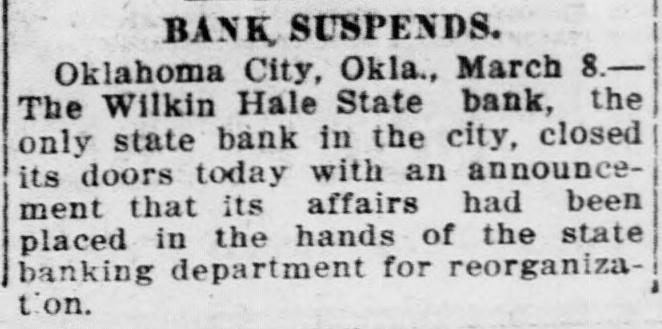
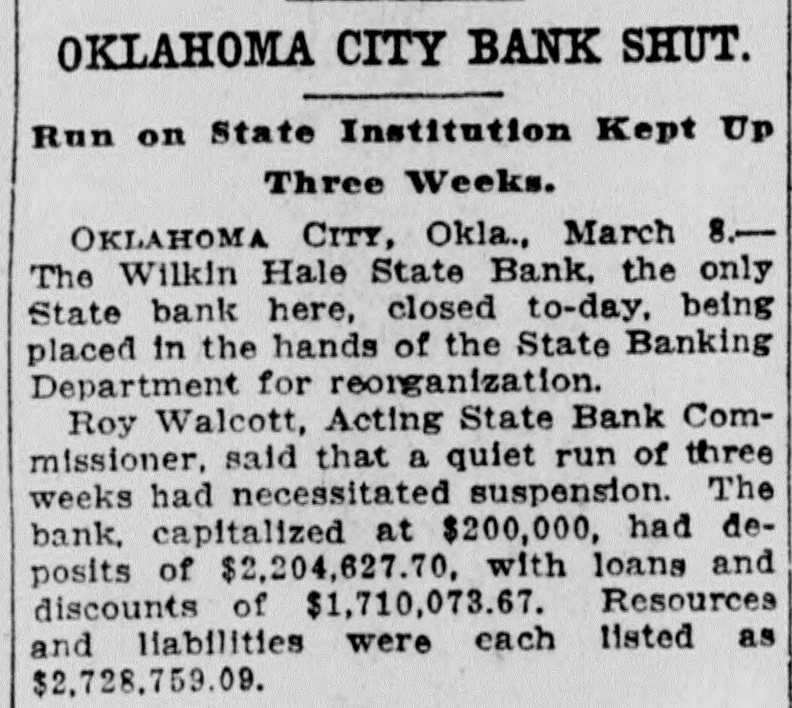
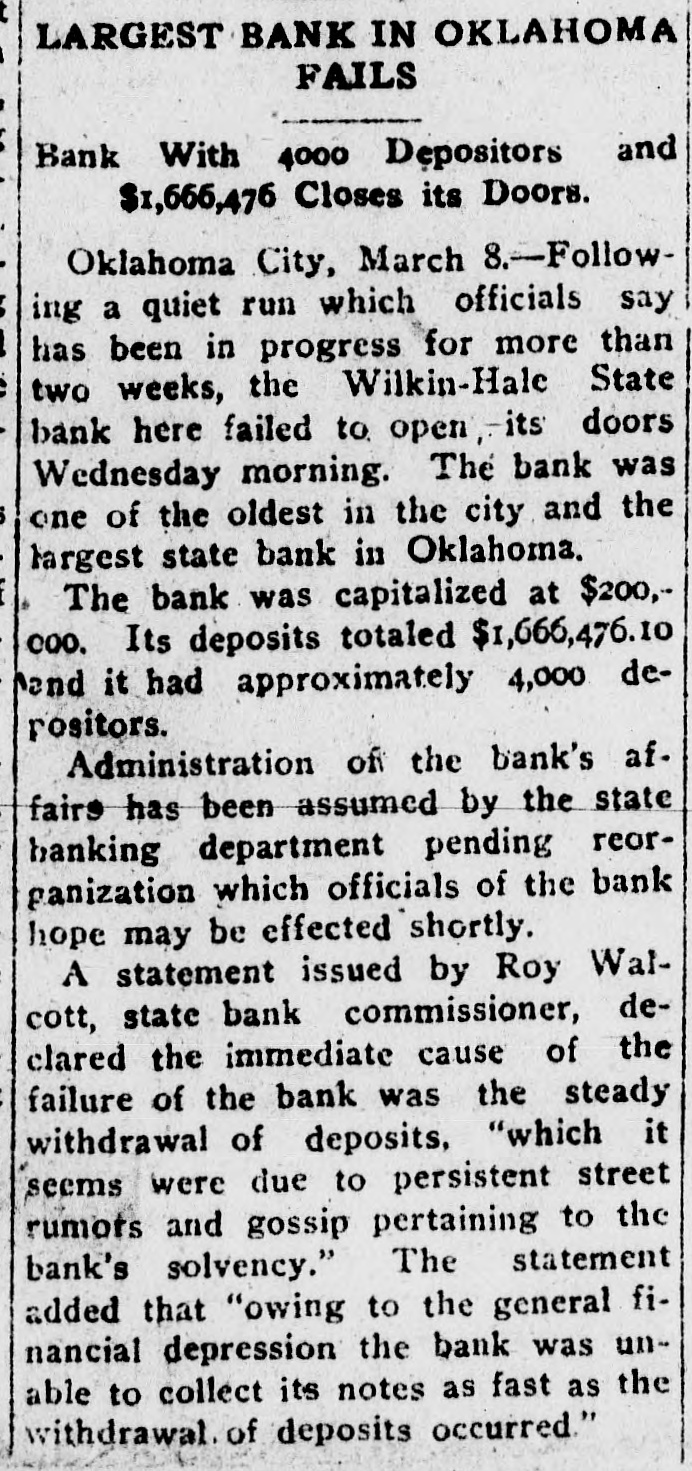
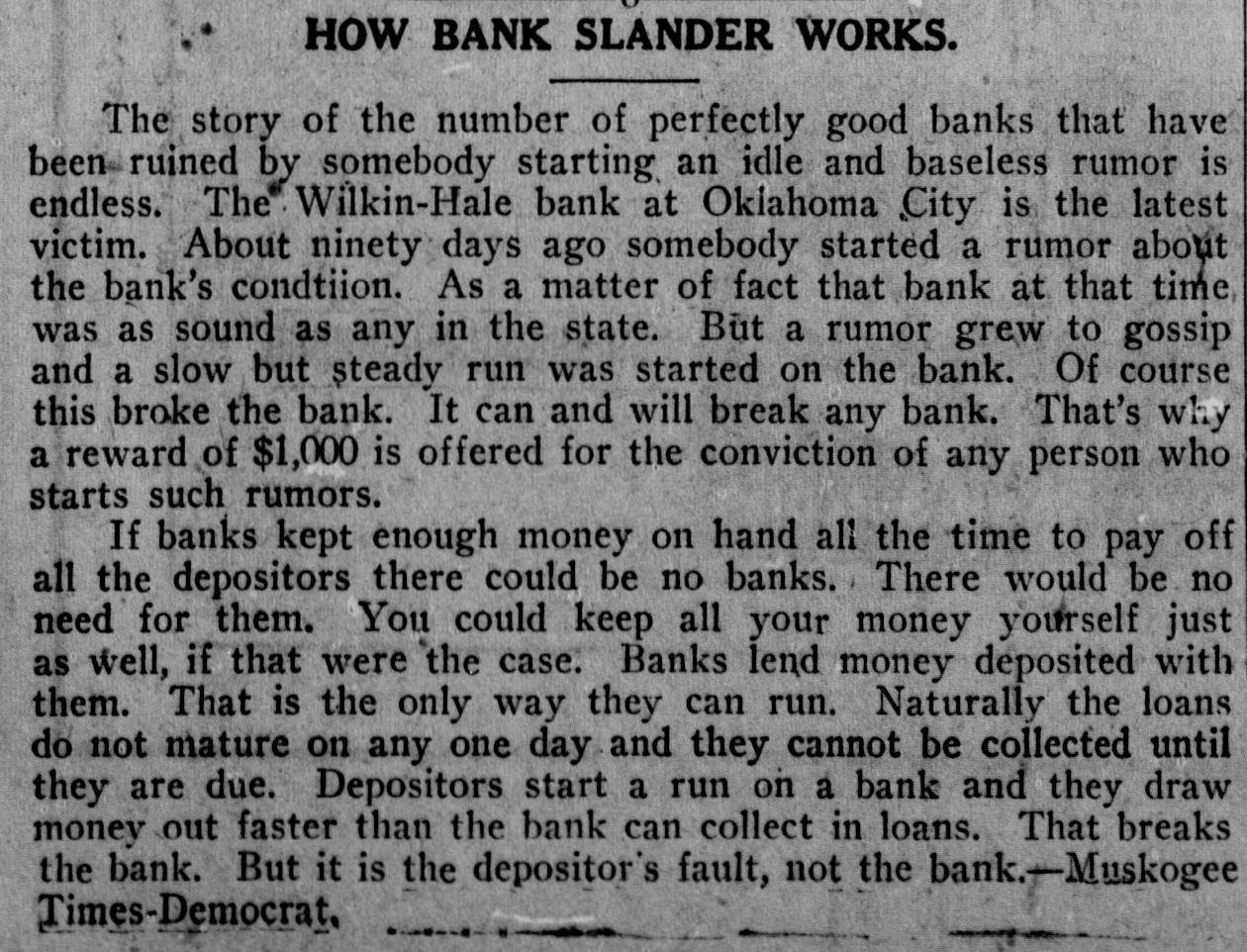
Strain's crisp actions got him into plenty of personal difficulties, he admitted Saturday. He said that Prentiss Price, liquidating agent for the Wilkin-Hale State bank at Oklahoma City, came to him with a tale about how Dr. E. T. Bynum, the banking commissioner who will succeed Strain, had refused to pay a note of several hundred dollars.
Would Sue Bynum.
"Price asked me what to do," Strain said. "I told him to sue Bynum and he was astonished that anyone would have the nerve to sue a man who was so close to Governor Walton. I told him I'd sue the governor himself if he owed a note and wouldn't pay it."
Bynum was not certain that he would take over the office Monday, though that is the date on which the governor's order becomes effective. Judging not by his word but by his attitude, Bynum does not approach his new job with any great joy. Apparently he realizes the danger there is in it, under all the circumstances.
He is confident, he says, that the courts will hold that the legislature had no power to impose any limitation upon the governor's right to appoint, as he claims is the effect of the requirement that the commissioner must have five years actual experience. However, he evidently anticipates court action on this point.
"It is not true I was never behind a counter," said the doctor. "My father and my uncle were bankers, and I was about the bank much though I never made it a profession."
Explains Note Transaction.
The doctor felt an explanation was due in regards to Strain's charge that Bynum had an unpaid note in the Wilkin-Hale bank.
"When the Wilkin-Hale bank failed," he said, "I owed two notes, one for $1,100 for money borrowed, the other for $250, a note on which I gone security for a man who went into bankruptcy. I paid the larger note in full, but asked for time to collect as much as possible from the maker of the $250 note, all the while agreeing, however, to pay the amount in full if I failed to make the collection before the affairs of the bank were finally wound up.
"I gave my own note to the bank for the note I had endorsed, and this will be paid in full. I reported the matter to the banking board at the time, and was assured everything would be all right. No suit has been brought against me by the liquidating agent."
Governor Not to Answer.
Governor Walton has not returned from Fort Sill, where he spent Saturday at the National Guard encampment, but reporters for an Oklahoma City paper got in touch with him.
The governor said that because he "desired to show respect for 'Uncle Joe's' advanced age, which handicapped him in the performance of his official duties," he would not make reply to Strain's statement.
"That kind of a statement calls for no reply," Walton said. "It's lack of good faith is apparent. If I replied Uncle Joe would merely shoot at me again and I am not willing to enter into a controversy with him.
"No pressure was brought to bear on me from any source to influence my action. I gave Uncle Joe a good tryout and he was just not the man for the place.
"I did not approve Strain's attack on Short, and these two considerations alone were the cause of my asking his retirement."
Brings Smile From Joe.
Strain smiled grimly Saturday night when shown the Fort Sill statement of the governor.
"He can't reply," Strain asserted.
To the governor's assertion that he respected "Uncle Joe" and gave him a good tryout, Strain asked that the governor specify in what particularity he had failed to make good.
But "Uncle Joe" was very certain the governor was right in saying he did not "approve Strain's attack on Short." Strain pointed out that he had never attacked Short personally, but he presumed the governor referred to the court attack Strain has made on some of Short's friends, and on the liquidating system Short instituted.
Good Banks In No Danger.
Strain admitted that in the heat of the moment he had perhaps gone a little too far, in his prepared statement Saturday morning, in referring to the anger to which state banks are subjected because of the restoration of what he refers to as "the Fred Dennis gang."
"A state bank that is wisely and honestly managed is in no great danger," Strain said. "It will possibly be subjected to annoying political pressure, but it will be in no imminent danger."
Strain thinks the vast majority of bankers have been in sympathy with his administration of the office, but he does not expect them to take any steps to resist the governor's attempt to displace Strain. The bankers cannot afford to antagonize the possible new bank commissioner, he pointed out.
Leaguers Are Silent.
Dense silence continues to envelop Reconstruction league headquarters regarding the dismissal of Strain. Strain was an indorsee of the league in the Democratic primary, and was strongly backed by it also for appointment as bank commissioner. On the other hand Bynum has been the governor's adviser most hated by the leaguers. But not a word has been raised against Strain's removal and Bynum's appointment, even though it is generally admitted by leaguers in private conversation that the governor has, in effect, turned his back on the Shawne platform pledge for punishment of the bank bandits.
Privately the governor's league friends admit he has "pulled an awful boner, the worst one yet." But the league is so tied up to the governor by jobs given its leaders that it doesn't dare protest. The league's organ, The Oklahoma Leader, has given considerable publicity to Strain's charge, but has not had a word to say editorially.
Wonderment Arises.
There is some wonderment as to why Walton felt he owed Short so much as to pay such a price for placating him, and securing his cooperation as is involved in the firing of Strain. It is generally agreed that the incident will greatly weaken the governor with the farmer-labor rank and file, and certainly will not strengthen him with the more conservative citizens.
Some reason for the governor's action may be found in knowledge of the fact that opinions of the attorney general govern the actions of the various departments. The attorney general's opinion isn't final, but the officer who has that opinion back of him is thereby guarded against suit for anything he may do in line with that opinion. An adverse opinion from the attorney general has made it much more difficult for the Reconstructionists to secure control of John A. Whitehurst's appointees in the board of agriculture. Whitehurst, armed with the attorney general's opinion, has the court with him in securing a temporary injunction.
It may not be that the attorney general's opinions are colored at all by his friendships. But there is a wide spread opinion in the capitol that it pays to be friendly to him. Just now, with the increasing talk of the possibility of a self-constituted session of the legislature, to impeach the governor, suppose the legislators secured an opinion from the attorney general that such procedure was legal under certain circumstances? Would it not be much more difficult for the governor to use the militia or his private officers to disperse the session? These are only suppositions, of course. It is not likely Short has entered into any sort of agreement with the governor. He is one of the canniest politicians in the capitol. But there are those who figure that without any promise having been asked or given, the governor believes Short will be much friendlier with Strain out than with him in. Short has been in St. Louis on matters connected with the taxation for the Frisco, but was reported Saturday enroute from there to Duncan.
M. E. Trapp, lieutenant governor, was at his desk Saturday, after an absence of several days.
"Just quote me as saying," he said: "That all I want is peace and the opportunity to go about my private business affairs."
Trapp insists that he would regard it as a calamity if by any chance he were elevated to the governor's chair.