Article Text
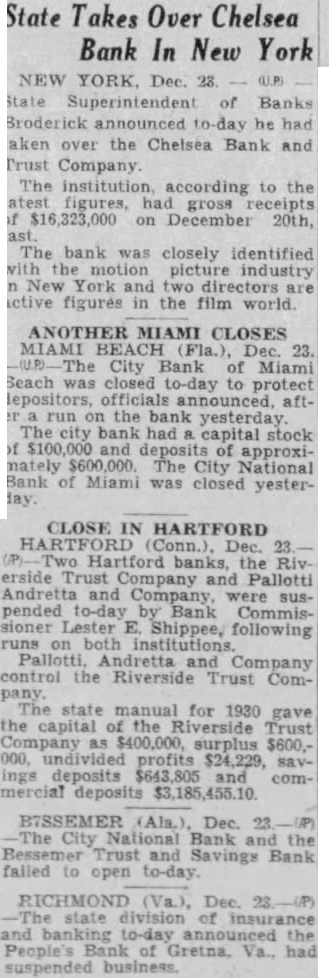
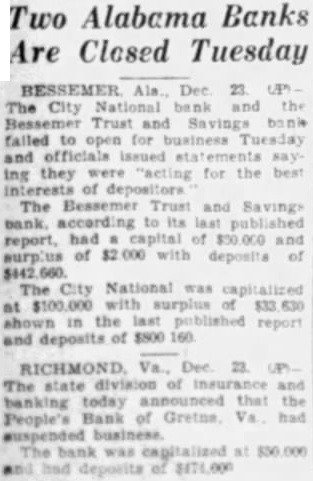
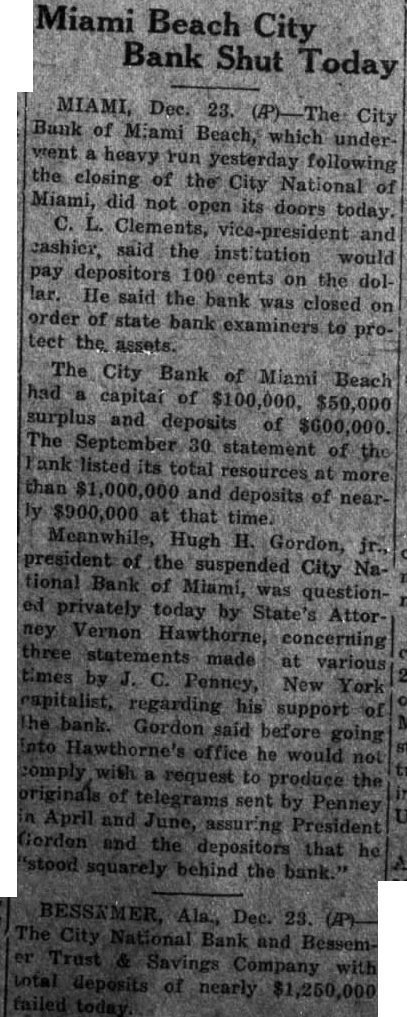
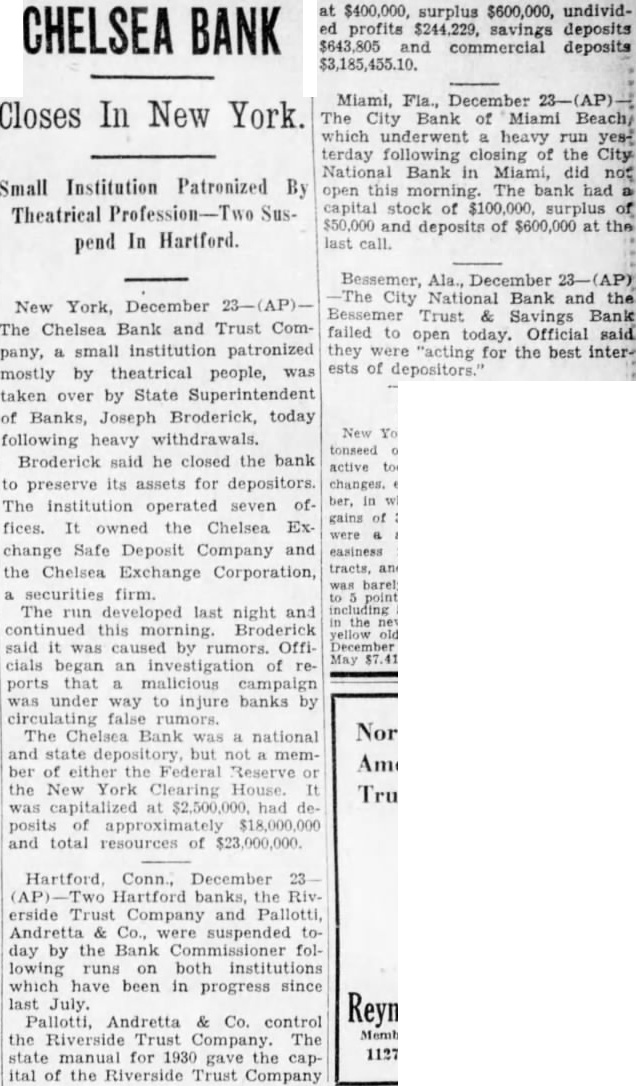
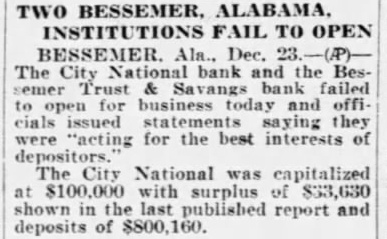
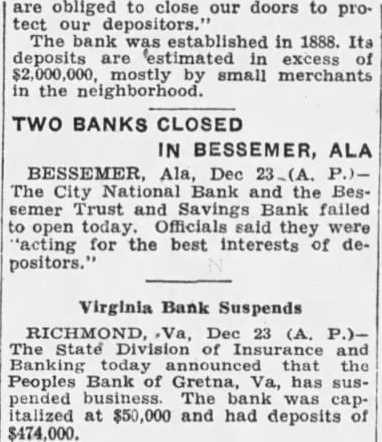
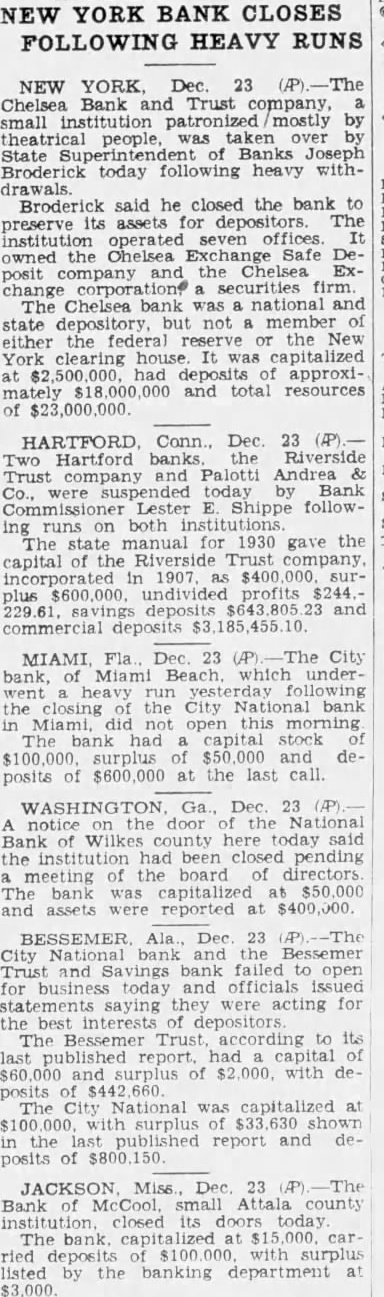
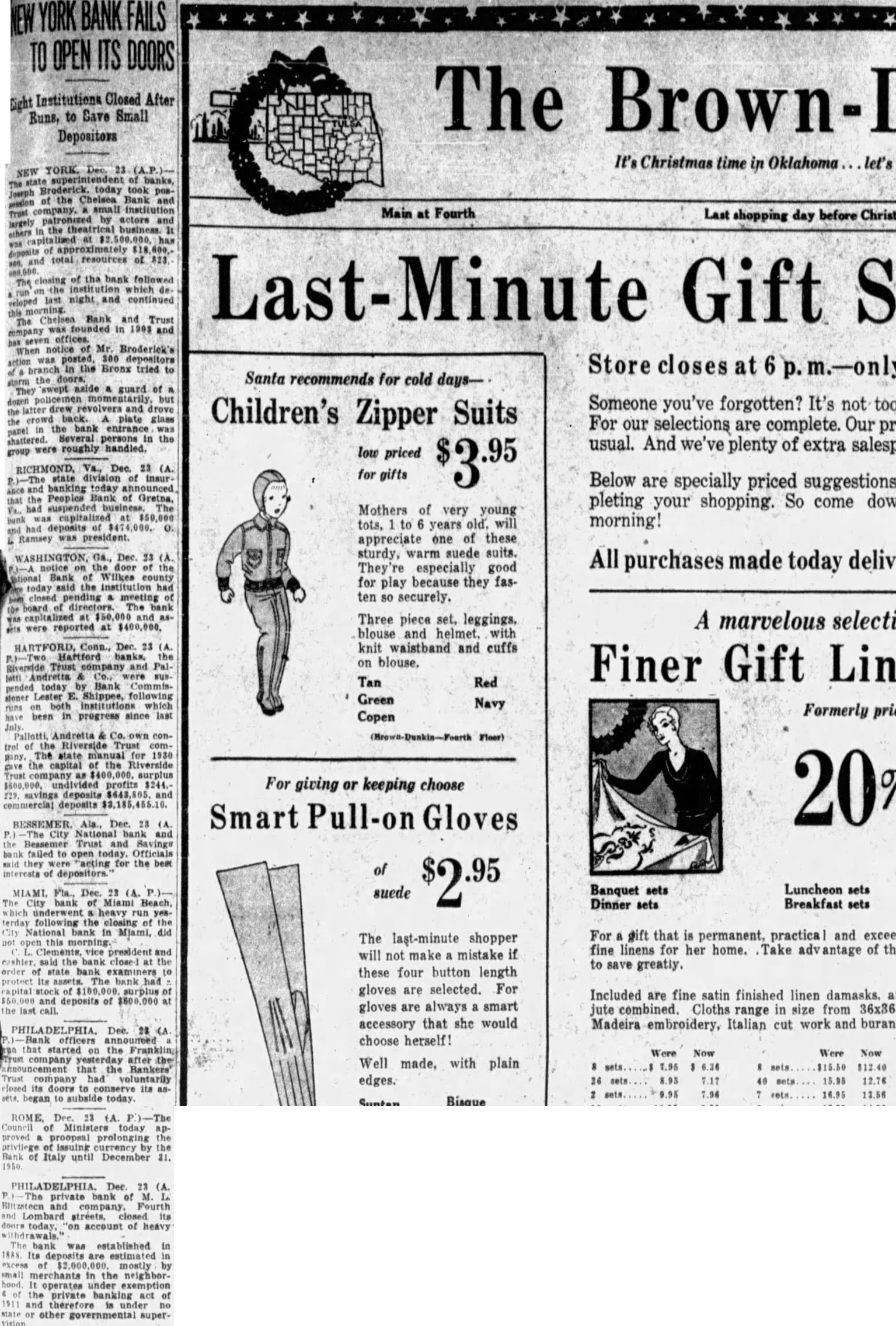
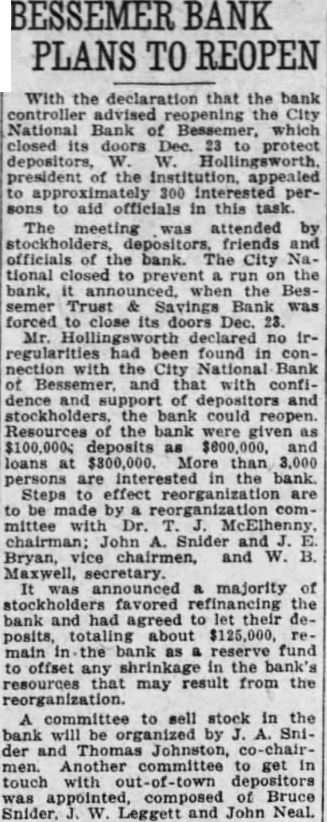
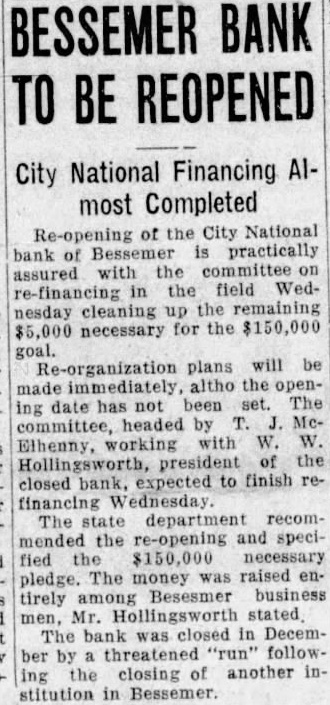
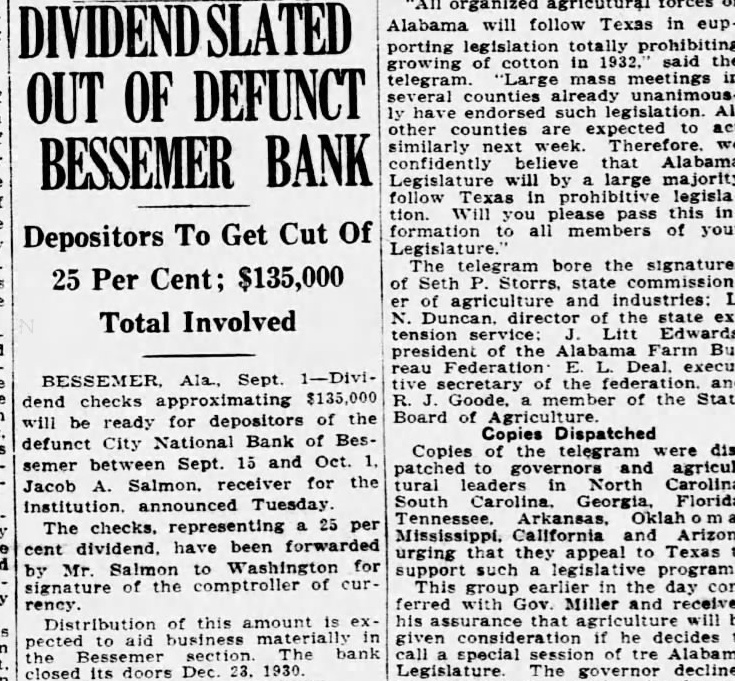
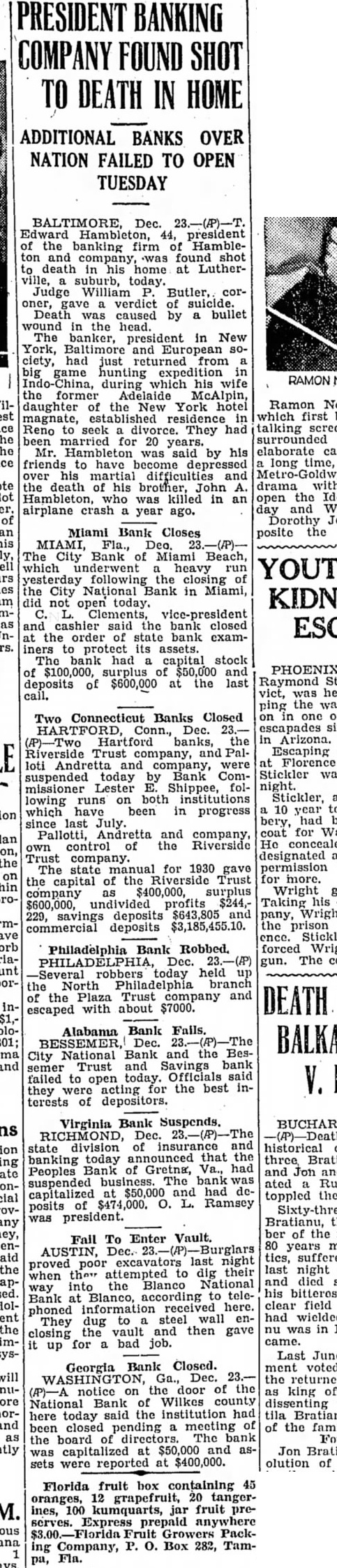
PRESIDENT BANKING COMPANY FOUND SHOT TO DEATH IN HOME ADDITIONAL BANKS OVER NATION FAILED TO OPEN TUESDAY BALTIMORE, Dec. 23.-(P)-T. Edward Hambleton, 44, president of the banking firm of Hambleton and company, was found shot death in his home at Luthersuburb, today. Judge William Butler, corgave verdict suicide. was caused by a bullet wound the head. The banker, president in New York, Baltimore and European SOciety, had just returned from big game hunting expedition in during which his wife the former Adelaide McAlpin, daughter of the New York hotel magnate, established in Reno to seek They had been married for 20 years. Mr. Hambleton was said by his friends to have become depressed over his martial difficulties and the death of his brother, John Hambleton, who was killed in an airplane crash year ago. Miami Bank Closes MIAMI, Fla., Dec. The City Bank of Miami Beach, which heavy run following the closing of the City National Bank in Miami, did not open today. Clements, vice-president and cashier said the bank closed the order of state bank examiners to protect its assets. The bank had capital stock of $100,000, surplus $50,000 and deposits of $600,000 at the last call. Two Connecticut Banks Closed HARTFORD, Dec. Hartford banks, the Riverside Trust company, and Palloti Andretta and company, were suspended today by Bank Commissioner Lester Shippee, following runs on both institutions which have been in progress since last July. Pallotti, Andretta and company, control of the Riverside own Trust company. The state for 1930 gave the capital of the Riverside Trust company $400,000, surplus $600,000, undivided profits $244,229, savings deposits $643,805 and commercial deposits Philadelphia Bank Robbed. PHILADELPHIA, Dec. -Several robbers today held the North branch the Plaza Trust company and escaped with about $7000. Alabama Bank Fails. BESSEMER, Dec. City National Bank and the Bessemer Trust and Savings bank failed to open today. Officials said they were acting for the best interests of depositors. Virginia Bank Suspends. RICHMOND, Dec. state division of insurance banking today announced that the Peoples Bank of Gretna, had suspended business. The bank capitalized $50,000 and had deposits of $474,000. O. Ramsey was president. Fall To Enter Vault. AUSTIN, Dec. proved poor excavators last night attempted to dig their when way into the Blanco National Bank at Blanco, according to telephoned information received here. They dug to steel wall envault and then gave closing it up for bad job. Georgia Bank Closed. WASHINGTON, Ga., Dec. (AP)-A notice on the door of the National Bank of Wilkes county here today said the institution had been closed pending a meeting of the board of directors. The bank was capitalized at $50,000 and assets were reported at $400,000. Florida fruit box containing 45 oranges, grapefruit, 20 tangerines, 100 kumquarts, jar fruit preserves. Express prepaid anywhere Growers Packing Company, P. O. Box 282, Tampa, Fla.