Click image to open full size in new tab
Article Text
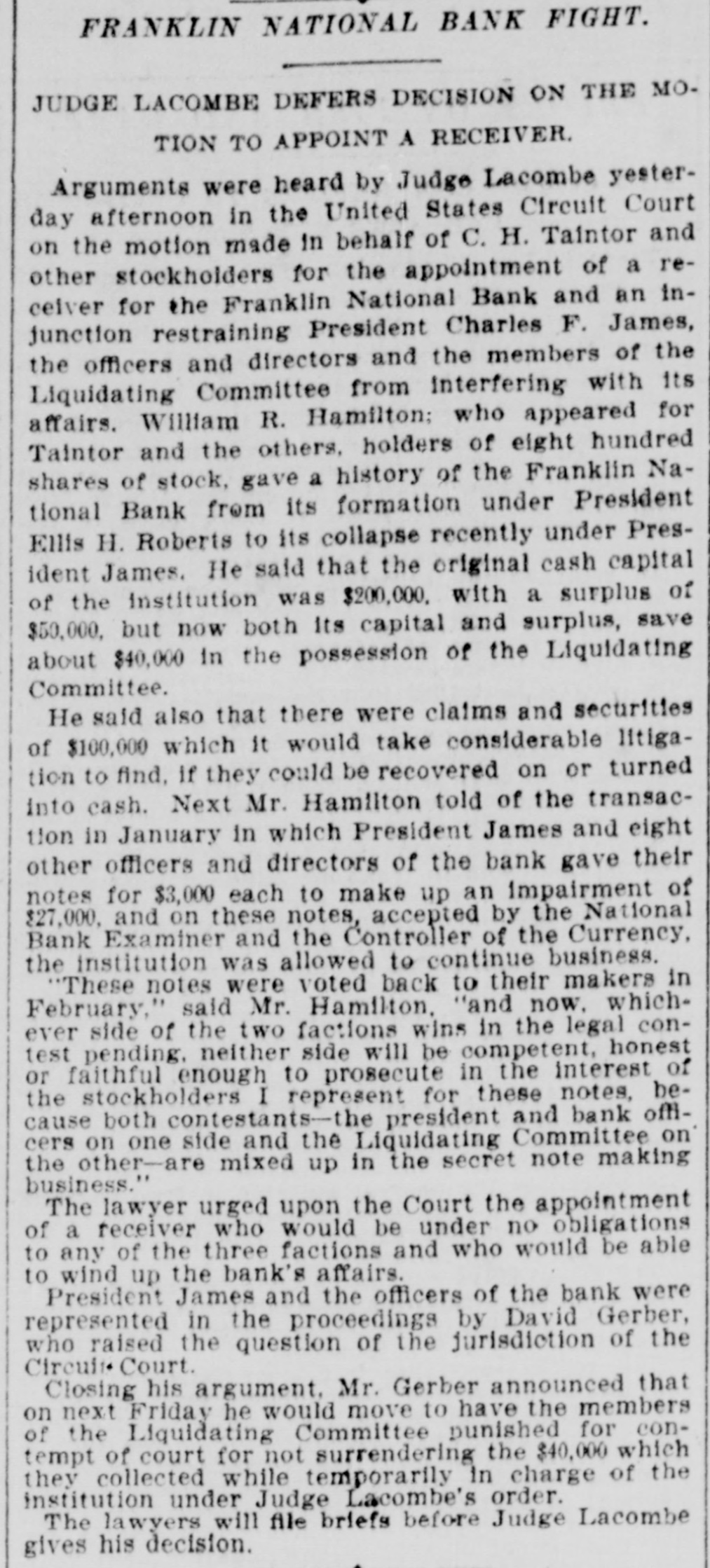
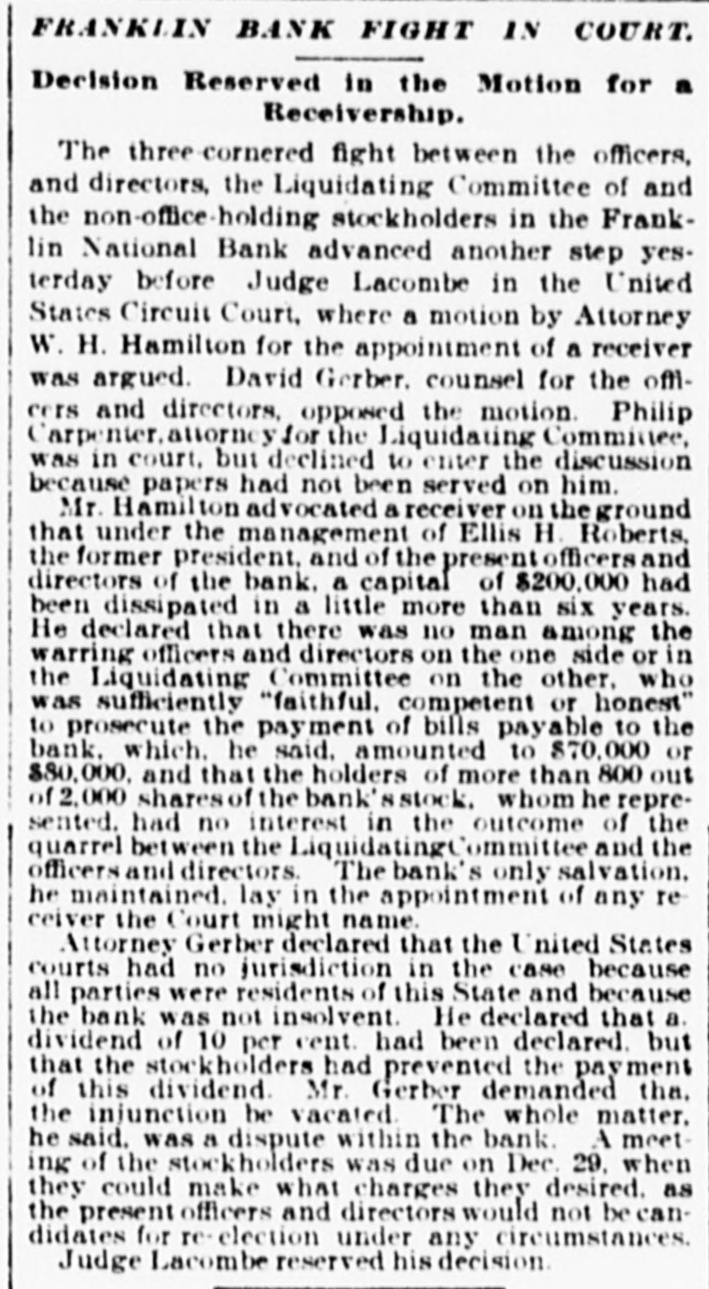
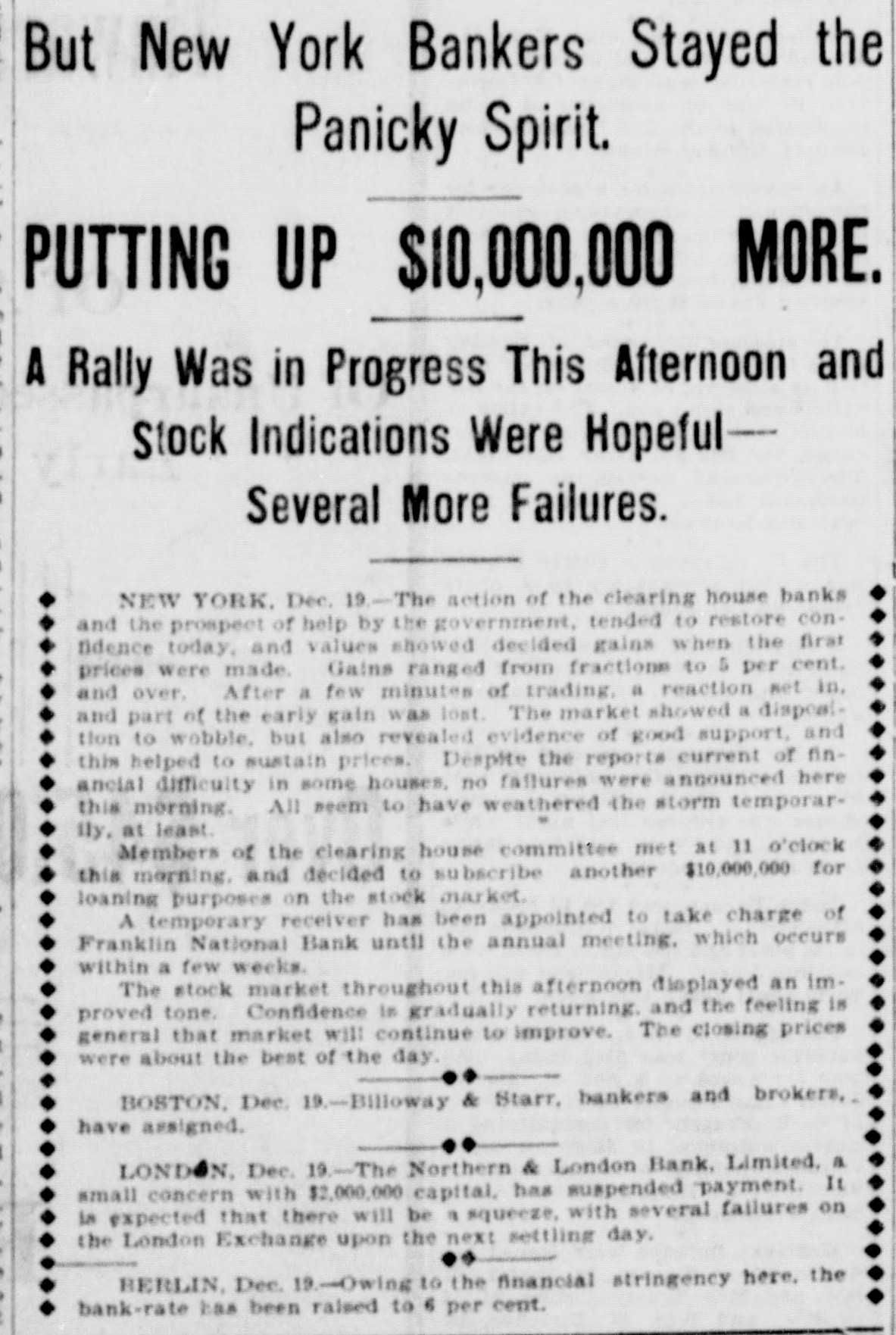
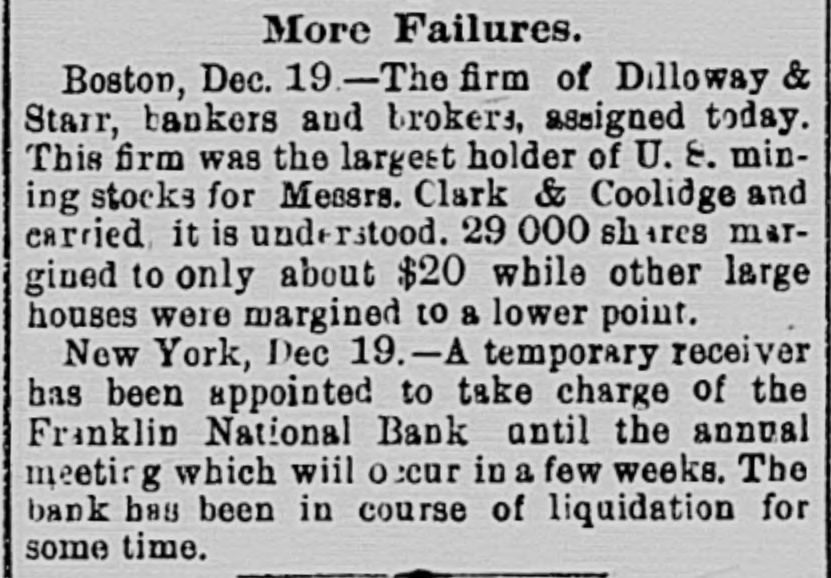
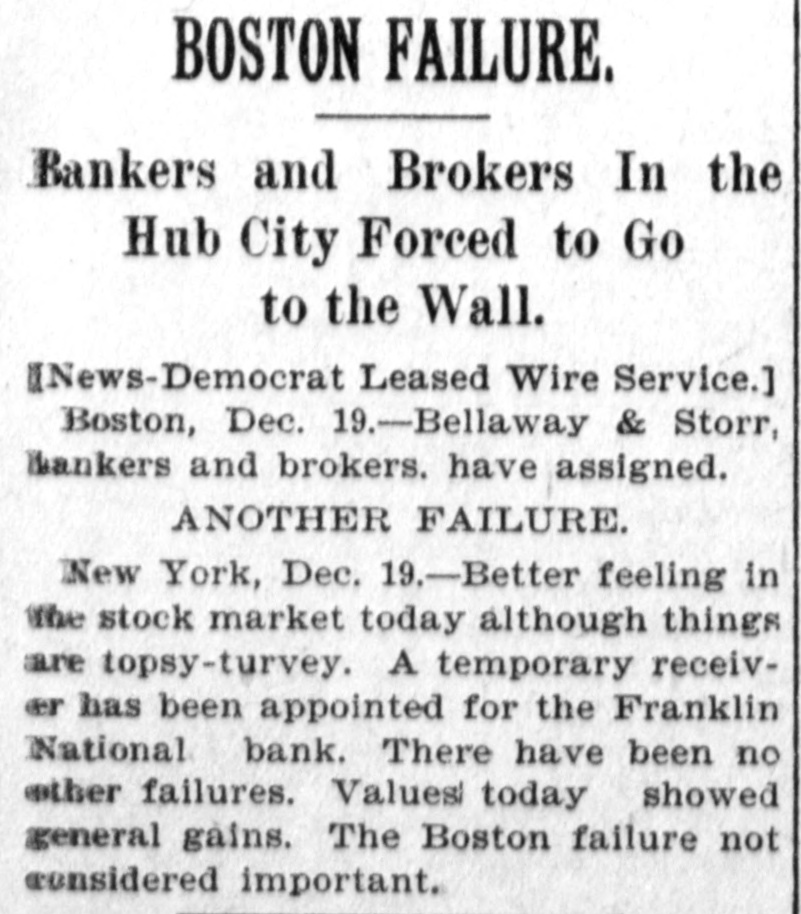
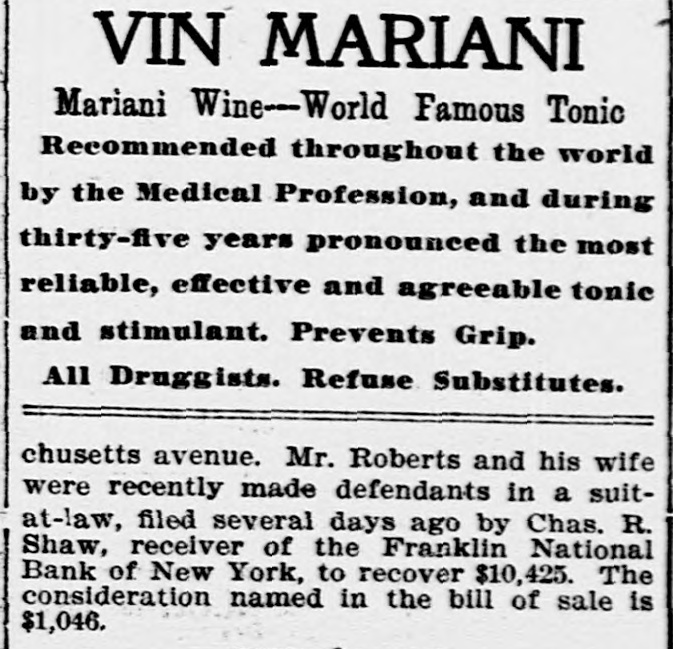
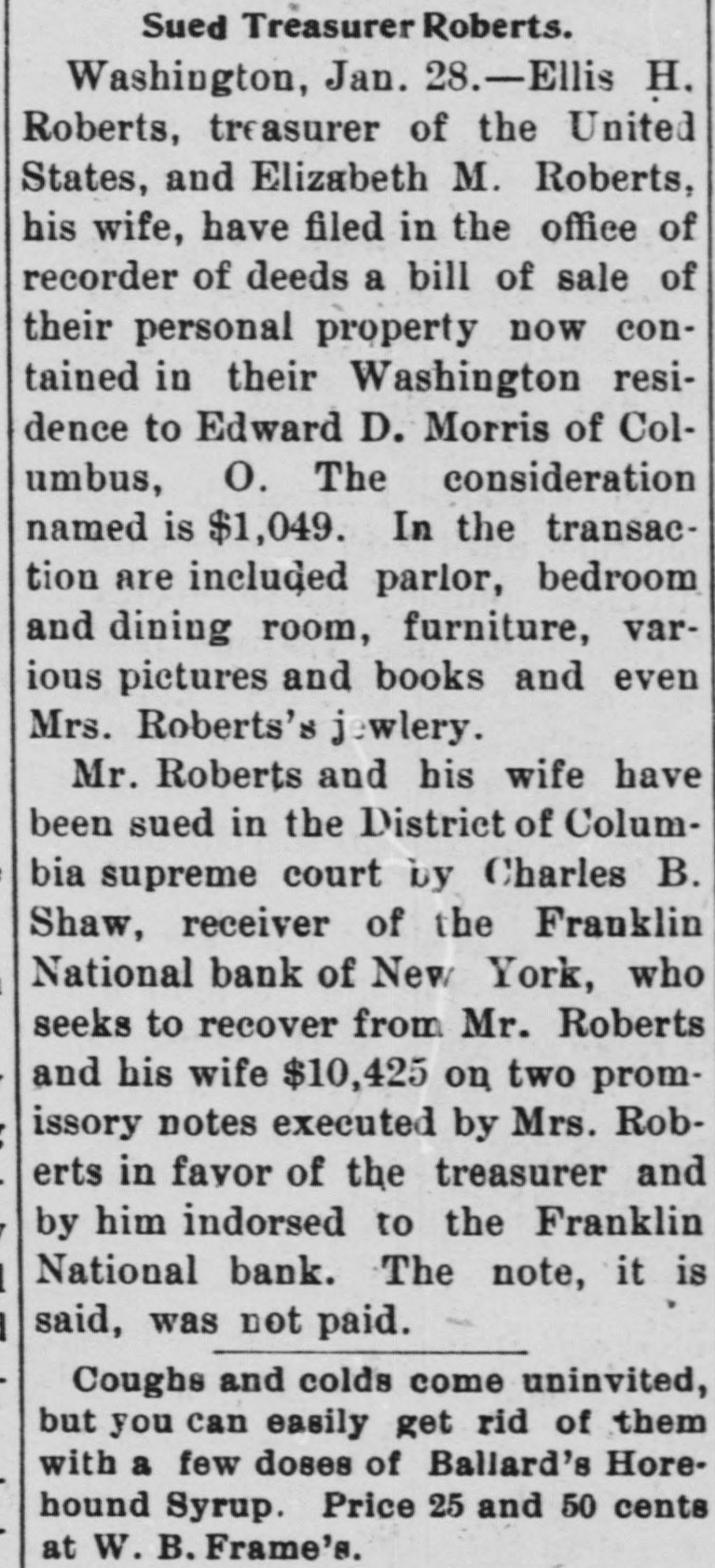
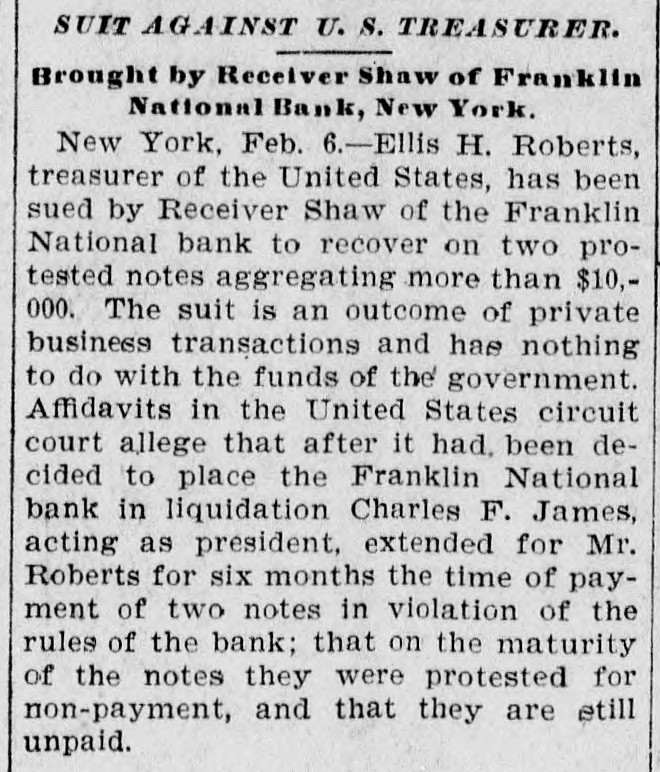
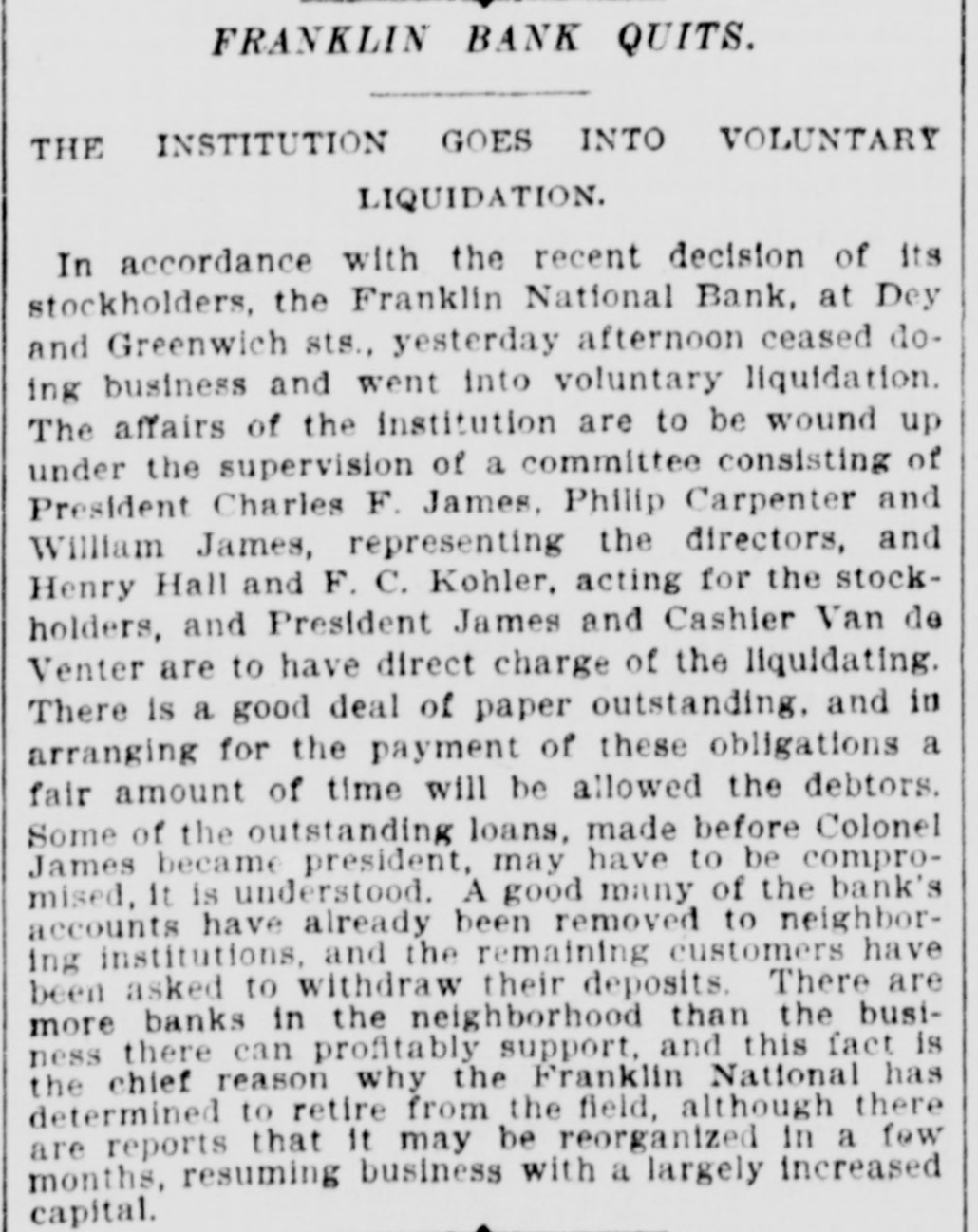
CHARGES AGAINST OFFICERS. PETITION ASKING FOR A RECEIVER FOR THE FRANKLIN NATIONAL BANK ALLEGES THAT THEY ARE TRYING TO FAVOR THEMSELVES AS DEBTORS. There is a lively war going on between the officers and directors of the Franklin National Bank on the one hand and the Liquidating Committee on the other. Twice within the last few weeks Judge Lacombe, of the United States Circuit Court, has been asked to settle the differences which arose in the efforts to wind up the bank's affairs. He first ruled that the Liquidating Committee did not supersede President James and the other officers and that the latter could close up the institution. Next It was asserted that the Liquidating Committee while in possession of the bank had changed the combination on the vaults and would not turn over the books or papers. Judge Lacombe demanded that the combination of the strong box be surrendered to President James, and this was reluctantly done. In the course of these proceedings It was alleged that the Liquidating Committee had secured possession of about $40,000 which they refused to surrender. Action on this matter is still pending before the court. Yesterday the Franklin National Bank matter came up before Judge Lacombe in the form of a petition for the appointment of a receiver. This application is made by C. H. Taintor and others, who represent that they hold 325 shares of the bank's stock. Taintor's bill of complaint charges that the Liquidating Committee and the officers and directors of the bank are at war among themselves and that a state of affairs has resulted which makes a receivership imperative If the stockholders are to be protected. The complaining stockholders in the petition now before Judge Lacombe charge that on January 1. 1899, the defendants Charles F. James, William James, Theodore P. Hoffman, Washington L. Jacques and George West gave to the bank their notes for $3,000 each to make up an impairment of $15,000 in the capital required by the Controller of the Currency as a condition of allowing the bank to continue business. The petitioners further allege that on the following February 1 the makers of the notes voted to return them to themselves, and that in the whole transaction no money was paid into the bank's treasury. The petition continues: The individual defendants have conspired and are conspiring together to secure control of the liquidation for the purpose of avoiding payment on the notes of $3,000 each made by the five named defendants to enable the defendants to get large sums from the funds of the bank for themselves under the guise of salaries, that are not and cannot be earned, and to enable them to pay large sums to counsel from the funds of the bank, against the interest of your crators and the other shareholders, and to enable them to favor the mselves and their friends as debtors of the bank, especially in regard to the Anglo-American Oyster Company loan, said loan of $5,100 to the defendant Charles F. James, and said loan of more than $10,000 to said Ellis H. Roberts, all to the great detriment and loss of your orators and other shareholders of the bank. In addition to the appointment of a receiver the petition asks for "a writ of injunction, perpetually enjoining and restraining the defendants from assuming or attempting to assume any authority over the affairs of the bank." When the motion to show cause why the appointment of the receiver petitioned for came up before Judge Lacombe counsel for President James and his associates stated that as the copy of the petition had only been served on him the previous evening he had not had time to prepare an answer to the serious allegations which It contained. He asked for reasonable time to frame his answer, and as there was no objection from the other side the arguments on the motions for the appointment of a receiver and the issuance of a perpetual injunction against the defendants were put off for one week.