Article Text
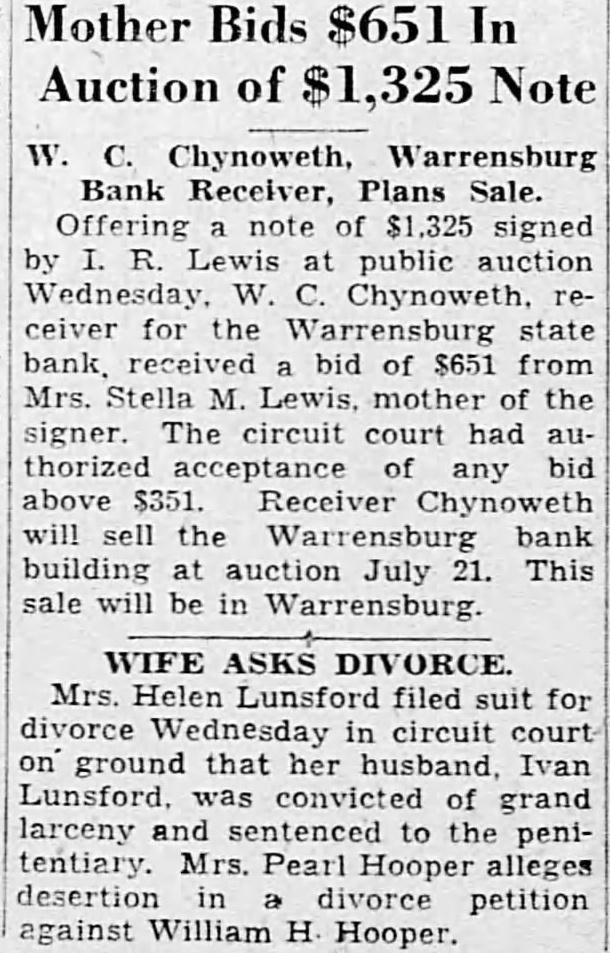
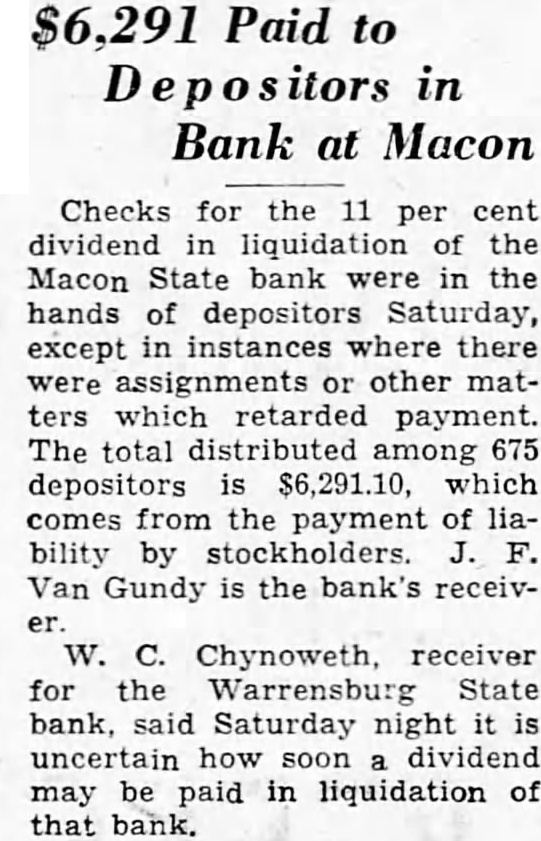
Federal Men Will Appraise County Lands Group Expected Here Next Week to Act on Applications for Farm Loans. Appraisers of the Federal Land Bank of St. Louis are expected in Macon county in the next week or two to look over lands of farmers who have made application for loans under the new emergency farm mortgage act, R. W. Dickenson, Macon county administrator, said Monday. There have been about 75 applications made for loans in this county and four or five commissioner's loans have been secured "Commissioner's" loans are for not more than $5,000 and run for a shorter period of time than the majority of loans provided for in the farm mortgage act. Only one type of application is being used now in making the loans, Mr. Dickenson says. The Federal Land Bank officials decide into which classification the loan falls that is asked for. Two Types of Loans. In the last three weeks nearly 400 Illinois bank receivers and conservators were called to Springfield to hear of the Farm Credit Plan to help open closed banks, which includes two types of loans, the regular Land Bank loan on first mortgages and the commissioner's loan. The Land Bank can loan as much as 50 per cent of the appraised value of the land. while the commissioner may loan as much as 25 per cent more on a secend mortgage In many instances the two loans are expected to be sufficient to retire all the farmer's indebtedness, including the notes and mortgages held by closed banks. In others, the farmer's debts will exceed the amount of safe loan. In this latter situation, there must be a scaling down of debts if two loans are made. The Farm Credit Administration expects these loans to put the farmer on sound financial basis and is of the opinion that debt equal to 75 per cent of the appraised value of the farm is all the farmer can carry safely In such cases, the receiver may or may not be justified in scaling-down in order to liquidate his farm mortgages and note holdings and thus pay liquidation dividends. Transfer Holdings. In effect. the farm mortgage and note holdings are sold or transferred from the closed bank to the Land Bank and commissioner. In exchange, the receiver obtains cash to return to the bank's depositors. The plan was explained by W. H. Land. vice-president of the St. Louis Federal Land bank It has the endorsement of E. J. Barrett, State Auditor of Public Accounts, whose office has the receiverships. Representative W. C. Chynoweth, receiver of the Warrensburg State bank. attended some of these meetings. The plan will not greatly help the situation in that community. he says. There is only one loan among the customers of the closed bank. that he knows of. that will meet the requirements of the emergency farm loan regulations. EDUCATIONAL MEET An educational meeting of garment factory workers in Decatur will be conducted tonight at 7:30 in Carpenters hall and not in the Trades and Labor hall as previously announced. Recovery act codes will be discussed.