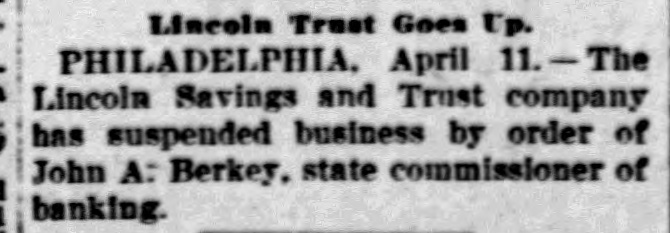
Suspended by order of the state bank examiner (state commissioner of banking).
Newspaper Excerpt
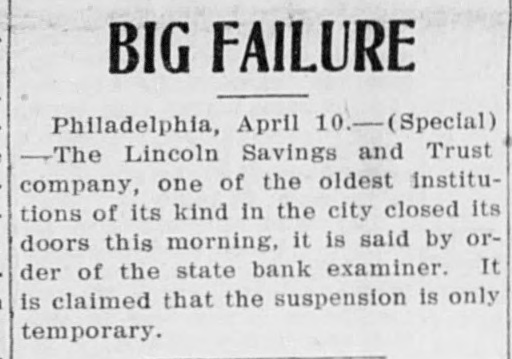
BIG FAILURE Philadelphia, April 10. - (Special) The Lincoln Savings and Trust company... closed its doors this morning, it is said by order of the state bank examiner.
Source
newspapers
+3 months
2.July 11, 1907Reopening
Newspaper Excerpt
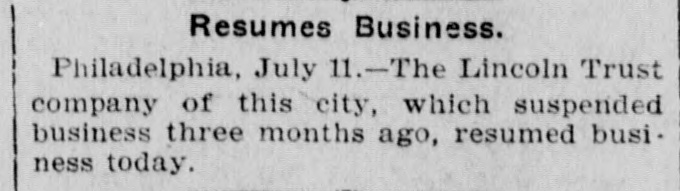
Resumes Business. Philadelphia, July 11.-The Lincoln Trust company of this city, which suspended business three months ago, resumed business today.
Source
newspapers
+11 months
3.June 19, 1908Suspension
Cause
Government Action
Cause Details
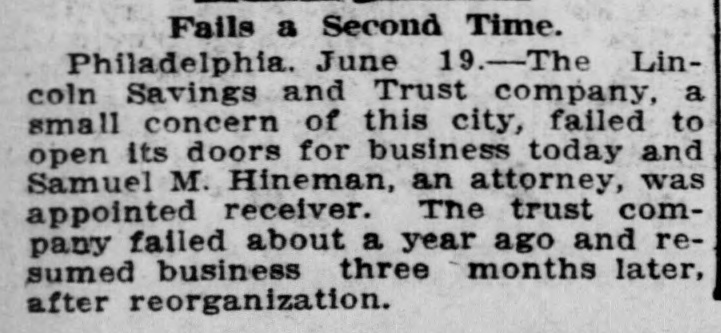
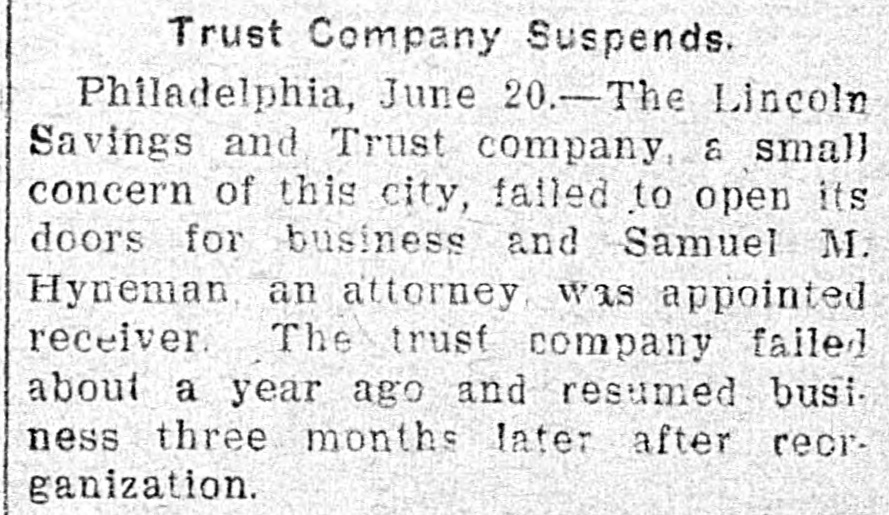
Failed to open for business and a receiver (Samuel M. Hyneman) was appointed.
Newspaper Excerpt
Philadelphia, June 19.-The Lincoln Savings and Trust company... closed today and a receiver was appointed.
Source
newspapers
same day
4.June 19, 1908Receivership
Newspaper Excerpt
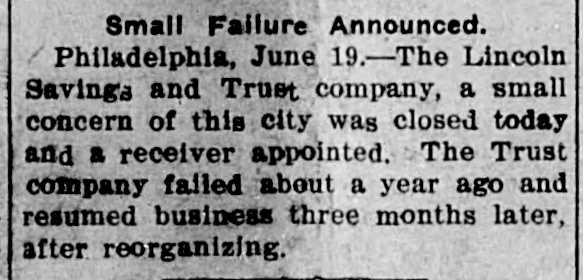
The Lincoln Savings and Trust Co., a small concern in this city, closed today and a receiver was appointed.
Source
newspapers
Newspaper Articles (15)
1.April 10, 1907The Daily SentinelGrand Junction, CO
Click image to open full size in new tab
Article Text
BIG FAILURE Philadelphia, April 10. - (Special) The Lincoln Savings and Trust company, one of the oldest institutions of its kind in the city closed its doors this morning, it is said by order of the state bank examiner. It is claimed that the suspension is only temporary.
PHILADELPHIA, April 11. 1 The Lincoln Savings and Trust company has suspended business by order of John A: Berkey. state commissioner of banking.
3.July 12, 1907The Birmingham Age-HeraldBirmingham, AL
Click image to open full size in new tab
Article Text
Resumes Business
Philadelphia, July 11.-The Lincoln Trust company of this city, which suspended business three months ago, resumed busi. ness today.
4.June 19, 1908The Topeka State JournalTopeka, KS
Click image to open full size in new tab
Article Text
Fails a Second Time
Philadelphia. June 19.-The Lincoln Savings and Trust company, a small concern of this city, failed to open its doors for business today and Samuel M. Hineman, an attorney, was appointed receiver. The trust company failed about a year ago and resumed business three months later, after reorganization.
5.June 19, 1908The Detroit TimesDetroit, MI
Click image to open full size in new tab
Article Text
PHILA
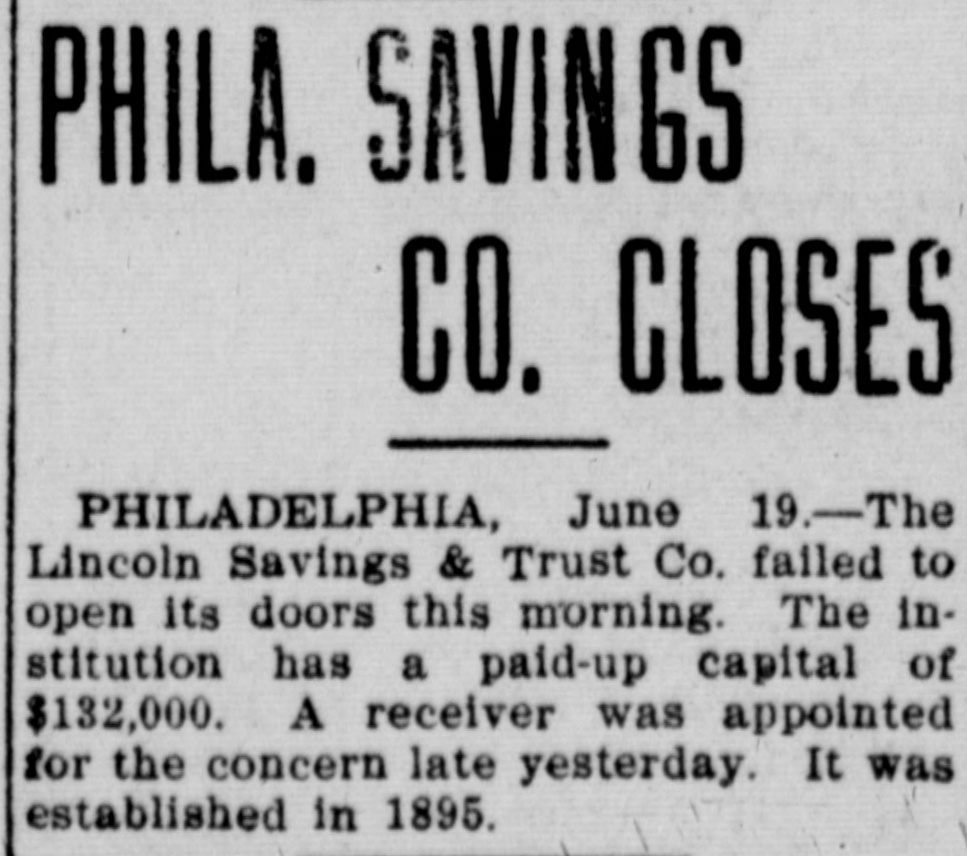
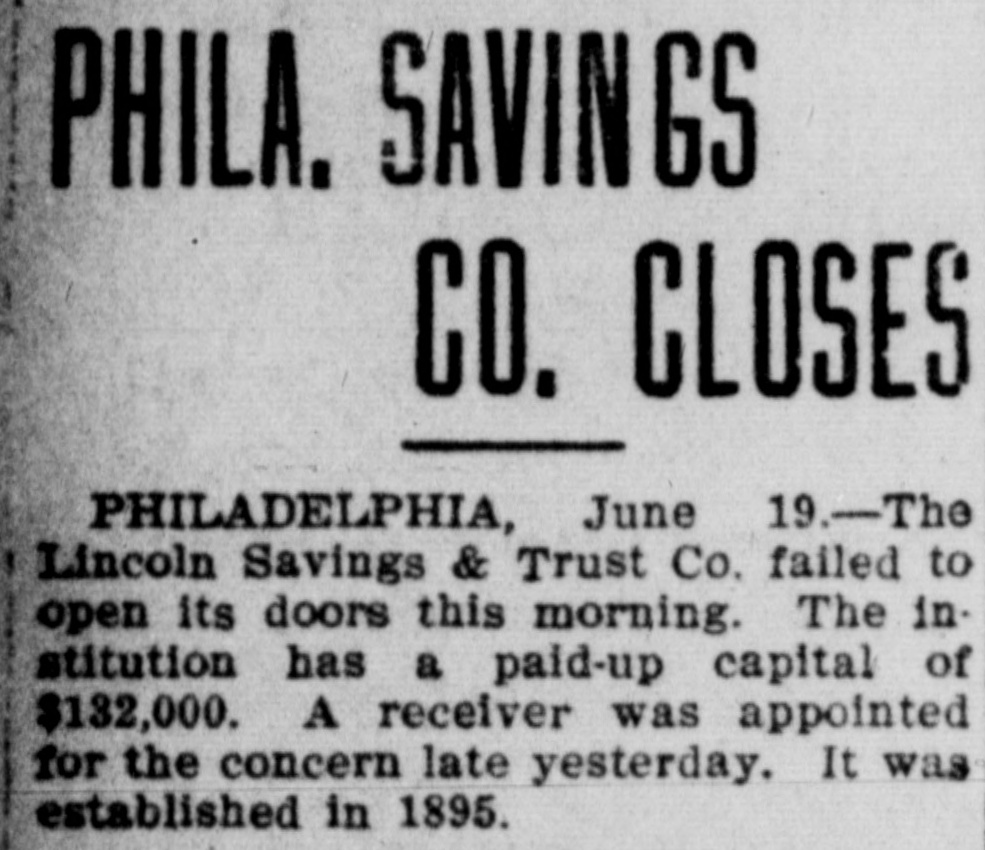
SAVINGS CO. CLOSES PHILADELPHIA, June 19.-The Lincoln Savings & Trust Co. failed to open its doors this morning. The institution has a paid-up capital of $132,000. A receiver was appointed for the concern late yesterday. It was established in 1895.
6.June 19, 1908Albuquerque CitizenAlbuquerque, NM
Click image to open full size in new tab
Article Text
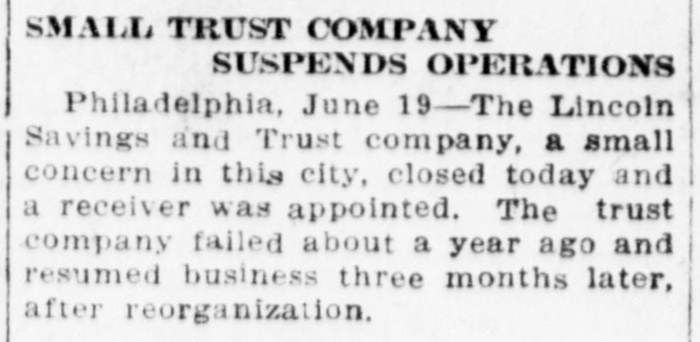
SMALL TRUST COMPANY SUSPENDS OPERATIONS Philadelphia, June 19-The Lincoln Savings and Trust company, a small concern in this city, closed today and a receiver was appointed. The trust company failed about a year ago and resumed business three months later, after reorganization
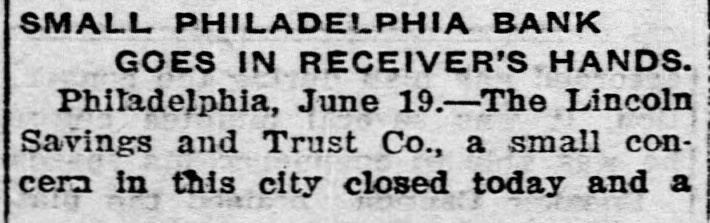
SMALL PHILADELPHIA BANK GOES IN RECEIVER'S HANDS. Philadelphia, June 19.-The Lincoln Savings and Trust Co., a small concern in this city closed today and a
8.June 19, 1908Rock Island ArgusRock Island, IL
Click image to open full size in new tab
Article Text
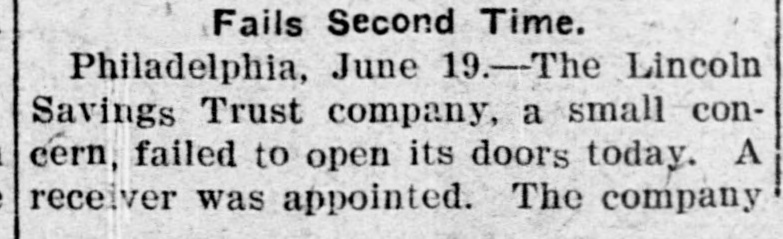
Fails Second Time
Philadelphia, June 19.-The Lincoln Savings Trust company, a small coneern, failed to open its doors today. A receiver was appointed. The company
9.June 19, 1908The Laramie RepublicanLaramie, WY
Click image to open full size in new tab
Article Text
Small Failure Announced
Philadelphia, June 19.-The Lincoln Savings and Trust company, a small concern of this city was closed today and a receiver appointed. The Trust company failed about a year ago and resumed business three months later, after reorganizing.
Philadelphia, June 20.-The Lincoln Savings and Trust company, a small concern of this city, failed to open its doors for business and Samuel M. Hyneman an attorney was appointed receiver. The trust company failed about a year ago and resumed business three months later after recrganization.
11.June 20, 1908The Detroit TimesDetroit, MI
Click image to open full size in new tab
Article Text
PHILA
SAVINGS CO. CLOSES PHILADELPHIA, June 19.-The Lincoln Savings & Trust Co. failed to open its doors this morning. The institution has a paid-up capital of $132,000. A receiver was appointed for the concern late yesterday. It was established in 1895.
12.June 20, 1908The Prescott Daily NewsPrescott, AR
Click image to open full size in new tab
Article Text
Receiver In Charge
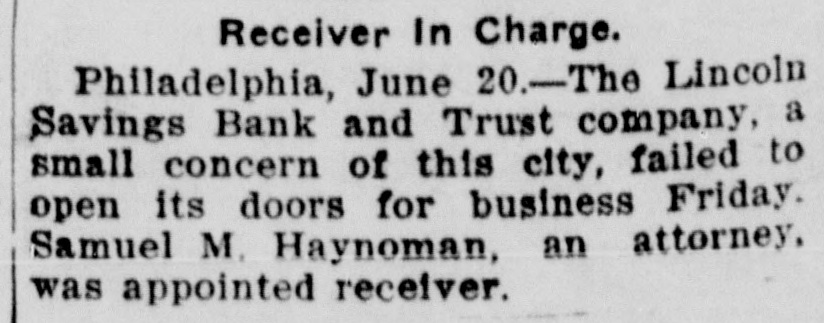
Philadelphia, June 20.-The Lincoln Savings Bank and Trust company, a small concern of this city, failed to open its doors for business Friday. Samuel M. Haynoman, an attorney. was appointed receiver.
13.June 23, 1908The Morris County ChronicleMorristown, NJ
Click image to open full size in new tab
Article Text
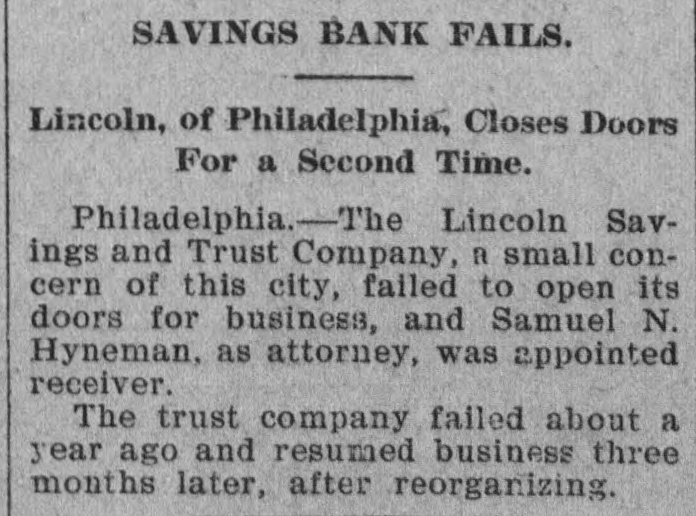
SAVINGS BANK FAILS
Lincoln, of Philadelphia, Closes Doors For a Second Time. Philadelphia.-The Lincoln Savings and Trust Company, R small concern of this city, failed to open its doors for business, and Samuel N. Hyneman, as attorney, was appointed receiver. The trust company failed about a year ago and resumed business three months later, after reorgarizing.
14.June 25, 1908The Weekly HeraldAmarillo, TX
Click image to open full size in new tab
Article Text
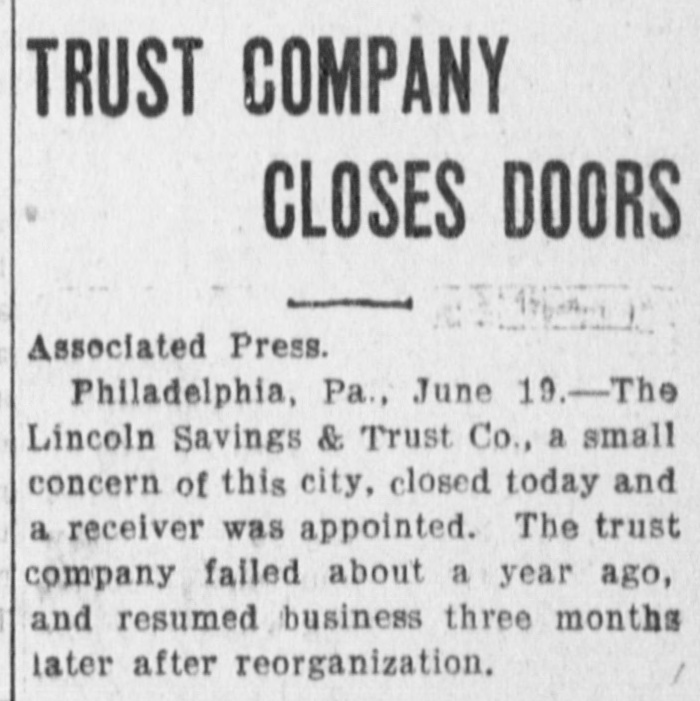
TRUST COMPANY CLOSES DOORS Associated Press. Philadelphia, Pa., June 19.-The Lincoln Savings & Trust Co., a small concern of this city, closed today and a receiver was appointed. The trust company failed about a year ago, and resumed business three months later after reorganization.
15.June 26, 1908The CitizenFrederick, MD
Click image to open full size in new tab
Article Text
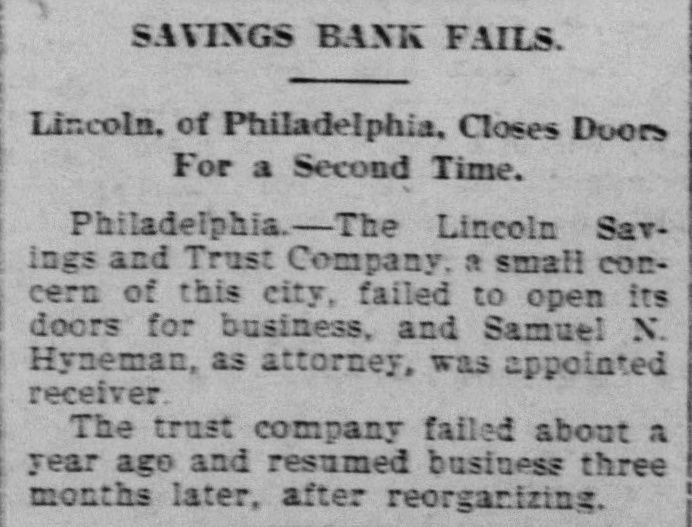
SAVINGS BANK FAILS
Lincoln. of Philadelphia, Closes Doors For a Second Time. Philadeiphia.-The Lincoln Savings and Trust Company, a small concern of this city, failed to open its doors for business, and Samuel N. Hyneman, as attorney, was appointed receiver. The trust company failed about a year ago and resumed business three months later, after reorganizing.
Bank runs are almost always and everywhere a deterioration of bank fundamentals.
But not for you.
You are the measure-zero exception: great fundamentals, solid bank, and yet the Diamond Dybvig fairy spread its rumor. Depositors woke up. Your collateral was not prepositioned. The Clearinghouse had it for you.
Do not pass Go. Do not collect $200. Go directly to jail… or worse.
Flag Article for Review
Flag Episode for Review
Lincoln Savings & Trust Company · Episode ID 4497178891288