Article Text
(Continued from Page 2) of the lease alone; for the express covenants of the lessee contained in the lease will remain, during the continuance of the term, obligatory upon the lessee. These obligations extend to breaches of covenant which have occurred after the assignment, and the lessee is not relieved therefrom by the mere acceptance of rent by the lessor from the person to whom such assignment has been made. 3. RIGHTS OF LESSOR. After an assignment of a lease, in absence of further contract, the lessor retains his right to enforce all the personal covenants of the lessee contained in the lease against such lessee, wholly unmodified and unaffected by the fact that the assignment has been made, and his rights against such lessee under such covenants would be wholly unaffected by the fact that the said assignee had deliberately incapacitated himself to perform his lawful obligations imposed by his privity of estate with reference to the term assigned to him. 4. RELEASE OF LESSEE. Where, by the express terms of the lease, it is provided that the lessees are empowered to make an assignment of said lease in a manner therein set forth, and which assignment, thus made, it is stipulated, should be effective to forever release and discharge such lessees from all obligations arising and accruing under the conditions of said lease subsequent to the date of such assignment, and where, pursuant thereto, an assignment in writing is made and duly recorded and possession taken thereunder by the assignee, and who for more than 17 months continues the payments of rents and the full performance of all the conditions and obligations imposed by the terms of the lease, which payments are received and which performances are accepted by the lessor with knowledge of the facts, and where thereafter the lessor actively engaged in assisting the said assignee in endeavoring to secure a purchaser of the term thus held by him pursuant to the aforesaid assignment, held, that thereby the lessor waives any rights which he might otherwise have exercised to object to the failure of the assignment to conform to the conditions provided therefor in said lease, and such assignment must be deemed valid and effective to forever release and discharge the lessee from any and all obligations imposed by the terms of the original lease. 5. TERMINATION OF LEASE. In view of the conflicting claims of the parties to this action as to whether the demised premises have been surrendered or abandoned by the assignee of the lease, yet where the evidence discloses that the landlord (lessor) immediately after the abandonment or surrender of the premises by the assignee of the lease promptly took possession thereof and shortly thereafter commenced an action to quiet his title against the provisions of the lease, such proceedings are wholly inconsistent with the continuation of the tenancy and operate as an acquiescence in the abandonment or as an acceptance of the surrender, as the case may be. In either event the lease is wholly terminated, the covenants thereof are at an end, and will support an action only for liabilities that were fixed at the time of the termination of the lease, but will not sustain demands that might have thereafter accrued had the lease not been determined. APPEAL from the district court for Lancaster county: ELLIOTT J. CLEMENTS, JUDGE. Affirmed.
Field, Ricketts & Ricketts, for appellant.
F. M. Tyrrell, Peterson & Devoe, T. S. Allen, F. B. Sidles, C. S. Wilson and A. S. Johnston, contra.
Heard before MORRISSEY, C. J., DEAN, DAY, GOOD, THOMPSON and EBERLY, JJ.
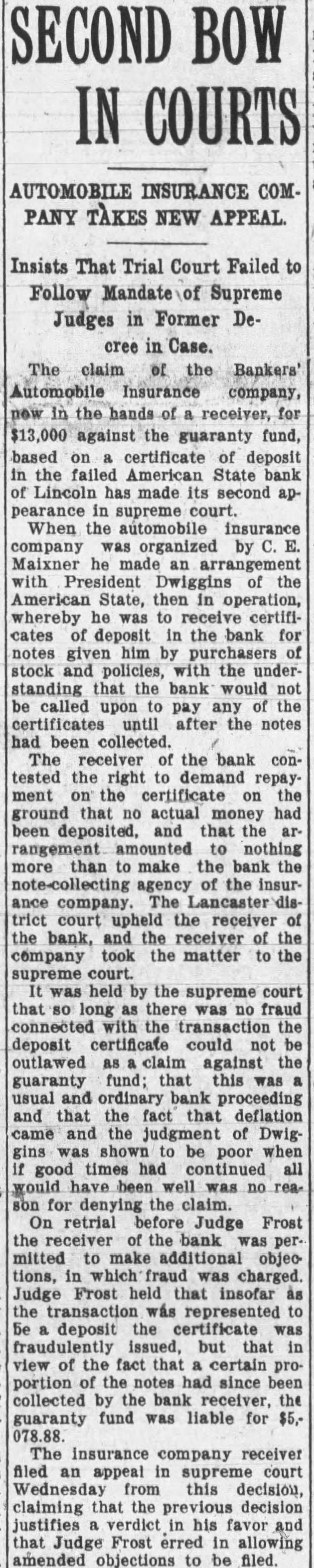
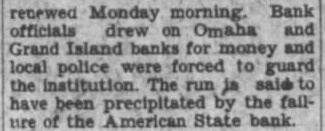
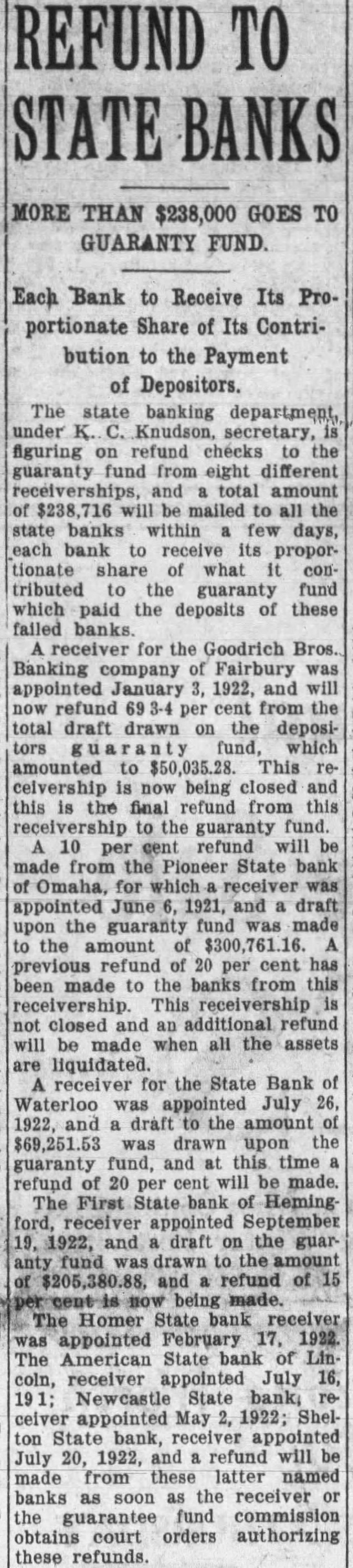
EBERLY, J. On March 4, 1922, this action was commenced in the district court for Lancaster county, Nebraska, by Charles Mayer, plaintiff, against Frank P. Dwiggins and others, defendants. The amended petition upon which the case was tried sought (1) the annulment of a 99-year lease covering lots 14 and 15, in block 40, in the city of Lincoln, Nebraska; (2) prayed that the title to said lots be quieted: (3) and that a real estate mortgage executed by defendants Sandlovich and wife as surety for the lessees be foreclosed and the premises therein described sold, and out of the proceeds the plaintiff may be paid the sum of $20,000 with interest as liquidated damages occasioned by the failure of defendants to fulfil the terms of the aforesaid lease, and that plaintiff be given a personal judgment for that amount against Dwiggins and his codefendants. To this amended petition answers and cross-petitions were filed by the various defendants, to which pleadings the plaintiff replied. The district court adjudged the lease contract "annulled," and "held for naught," and that the title to said premises be quieted in plaintiff but determined that the pleadings and evidence in the case were insufficient to support a finding in favor of the plaintiff for either liquidated or actual damages and denied further relief. From the denial of the court of further relief, the plaintiff prosecutes an appeal to this court. The facts out of which this litigation arose are as follows: On March 24, 1920, Charles Mayer leased to Frank P. Dwiggins, and others, for the term of 99 years, lots 14 and 15, in block 40, in the original plat of the city of Lincoln, Nebraska. As evidencing the contract of the parties, in addition to the lease, a bond in the sum of $20,000 was signed by all of the defendants, and a mortgage was executed by Sandlovich and wife only "to take the place of a surety." The terms of the lease cover 18 typewritten pages, and, in addition to the required payment of rent, provided for the payment by the lessees of taxes, insurance, water rents, and repairs, and also contained the provision that on or before April 1, 1925, they (lessees) would commence to remove the building and other improvements now situated on the premises herein leased and replace the same at their own cost "with a modern fireproof building * which shall be completed not later than the first day of April, 1926, at a cost of not less than $75,000." Defendants entered into the property demised under the foregoing agreements evidenced by the three instruments in writing-the lease, bond, and mortgage. On June 14, 1920, the defendants assigned in writing all their rights in the property created by this lease to the American State Bank. This assignment recited that it was the purpose of the instrument "to divest the undersigned (lessees) of any interest or right or equity in the lease and to place and hold in the American State Bank all rights and privileges granted to the undersigned by the terms of said lease." It is to be remembered that the lease itself provided for the transfer of the rights of the lessees by assignment in writing and that the effect of such assignment would be to wholly divest the lessees of all liabilities created by the lease. However, the assignment executed by the lessees, above referred to, was not acknowledged or executed by the assignee. Neither did the assignee expressly accept the same nor assume the terms and conditions thereof in writing, as was required to be done by the terms of the lease. At or about the date of the assignment, the assignee, American State Bank, entered into possession of the property thereunder and thereafter promptly paid the rent and performed all the covenants imposed upon the lessees by the terms of the lease until August 1, 1921. On July 16, 1921, the American State Bank was discovered to be insolvent. A receiver was thereupon appointed for the bank, who qualified as provided by law and who continued the full payment of the rents and the full performance of the terms of this lease until December 1, 1921. On December 3, 1921, demand was made in behalf of the plaintiff for all rents due and owing from all subtenants in possession of said premises and the same was delivered to him, and also that the rents and profits thereafter accruing be paid to him. In the month of December, 1921, pursuant to authorization of the court of competent jurisdiction, the bank receiver, Mr. Warner, in behalf of the insolvent bank, elected to repudiate and abandon the lease. In pursuance of such election he orally tendered the entire premises involved to the plaintiff. However, no assignment in writing or other instrument evidenced this fact. But plaintiff took full possession, and in August, 1922, leased the premises for a term of years as owner. After reading the conflicting provisions to be found in the lease, the mortgage, and the bond, the writer of this opinion finds himself in full accord with the statement contained in plaintiff's brief to the effect that-"The language in which the three papers are written is uncertain, confused, and does not harmonize. It is difficult to determine with certainty whether the bond and mortgage were given to secure the performance of the covenants of the lease generally, or the covenant to erect and construct the new building alone, or the performance of all covenants up to and including that providing for the erection of the new building." In view of these conflicting provisions contained in the three instruments now before us, it is thought that the question of construction presented necessitates the application of the following canons: (a) That, the evidence in the record indicating that the lease in question was prepared under the direction of the plaintiff, the maxim "that a deed shall be taken most strongly against the grantor" is applicable; (b) that the special mention of one thing must/ be understood as excluding another; (c) that a surety is entitled to stand upon the strict terms of his contract and is bound only to these and in a manner pointed out in his obligation. True, even in the light of these rules, no decision which we might reach as to the conflicting clauses of these instruments before us is entirely satisfactory or entirely free from difficulty. But the more reasonable conclusion is that, properly construed, the bond and mortgage were given to secure the covenant to erect and construct the new building only. In view of the conclusions arrived at on the subject of the real facts upon which this controversy is based, the following propositions of law become material: At common law a lessee, during his occupation, holds both by privity of estate and of contract. His privity of estate depends upon and is coexistent with the continuance of his term. By an assignment he divests himself of this privity of estate and transfers it to his assignee; it remains annexed to the estate, into whose possession soever the lands may pass, and the assignee holds in privity of estate with the original landlord. The privity of contract, however, is not transmitted to the purchaser by an assignment of the lease; for the express covenants of a lessee will, during the term, remain obligatory upon him and his personal representatives, even for breaches which have occurred after an assignment and acceptance of rent from the assignee by the lessor; so too a lessee, by assigning his rights and interests in the premises, does not thereby discharge himself of his express obligations. And it is also true that at common law a covenant for the payment of rent ran with the land, and that the assignee of the term is chargeable by reason of privity of estate with the payment of rent, but it is not his personal obligation, and at common law an assignee may always discharge himself from liability for subsequent breaches in respect to rent as well as to other covenants by assigning over, although it be done for the express purpose of getting rid of his responsibility, and although the second assignee neither takes the property nor receives the lease, and this for the reason that such assignment destroys the privity of estate which is the only ground upon which the assignee was liable, and though the tenant's liability or his covenant to pay rent may subsist during the continuance of the lease, there is no personal confidence reposed in the assignee of the lessee. 2 Taylor, Landlord and Tenant (9th ed.) pp. 13-34; Hogg v. Reynolds, 61 Neb. 758. Indeed, very respectable authorittes sustain the proposition that after an assignment of a lease the lessor has two remedies, either of which may be prosecuted separately (Continued on Page 6)
Senator Chappell's bill classing is as mansiaughter to cause the death of any person by selling or giving him poison hootch was finally killed. Hereafter farmers can automaticalis place themselves under the state compensation laws by taking out compensation insurance. The senate has given its approval to two bills which enlarge the power of county boards in highway condemnation matters. Willis E. Reed has again falled to convince the supreme court that it is illegal to charge interest on monBy loaned. The bill creating a state publicity department met a close squeak on final pasage in the house, only just enough of the required votes being for it At that It was necessary to take off the emergency clause. It is expected that the bill will make the grade all right in the benate. Governor McMullen is specially interested in the passage of this bill. He is convinced that one of the state's great needs is more publicity. Some house members are in favor of providing electrical voting equipment for legislators in the new capitol building. In anticipation of such a change the new building is being constructed to provide for the installation. It will be much faster than present viva voce methods. Speaker Rodman is of the opinion that a constitutional amendment will be necessary before such a system can be adopted. A majority supported a resolution asking for the electrical installation. At one fell swoop the senate killed 44 of its bills, all that were in the hands of standing committees. Included in the list were Jenator Cooper's famous auto-sheik bill, Senator Osterman's railroad tax measure, and a number of other bills that have attracted more or less atention. Earlier in the week the house performed a similar operation upon its bills. There were 76 of them. These actions mean that the beginning of the end is in sight. Perhapa even before this reache: the light of print the agony will I over and members will have hiked ) their respective homes, there to all their palpitating constituents all about it. The real battle of the session was staged in the senate over the superpower bill. It was amended, reamended, refered back for further amendment, and generally pulled and hauled around thru all the parliamentary knotholes that could be found. At one time the bill included all counties but one. Then it was changed 80 that each county might vote upon whether it would or would not be included in the district. Then this amendment was knocked out, and several counties were exempted from the district. Because of the importance of the proposal the senators have not been disposed to kill the bill, but they realize the necessity of being extra careful in what they do. Insurance companies have been making a special effort to get rid of the "valued policy" policy law. As the law now stands the face of the policy must be paid in case of total loss. They wanted it changed so that only actual value will be paid if it can be shown that the value is les than the face of the policy. The bill was killed. Legislators thought that it is up to the companies to know the value of what they insure, and that when they accept pay for a certain amount they should make good on it. The opinion was also expressed that a change in the law might open the way for an endless number of lawsuits. This is doubtful. tho, bceause no reliable company would want to gain a reputation for opposing just claims. When is a deficit bill an appropriation. and when is it not? This is the way the question was argued by opposing sides. One faction contends that the four and a half millions req ired to pull the state out of its fimancial difficulties is an appropriation, and should be included in all statements regarding the total of ap ropriations. The other side insists that this money has already been appropriated by other legislatures, and that the amount provided by the deficiency bill is only to make up the shortage caused by someone or other. For particulars as to who is to blame consult your favorite political oracle. As a matter of fact, this deficiency promises to be a political bone of contention for a long time so there is no need for being in a hurry about deciding whether or not it is an appropriation, or fixing the blame. The doctors were out of luck, too. The effort to increase the fees they may charge in compensation cases failed to make the hill in the house. The anti-trading stamp bill was amended to include merchants sellIng any and all kinds of goods, instead of food stuffs, only, and then promoted to a higher place on the program. The senate has been putting in some of its spare time discussing changes in the primary law. : changes should be made they are likely to be knocked out by referendum.