Click image to open full size in new tab
Article Text
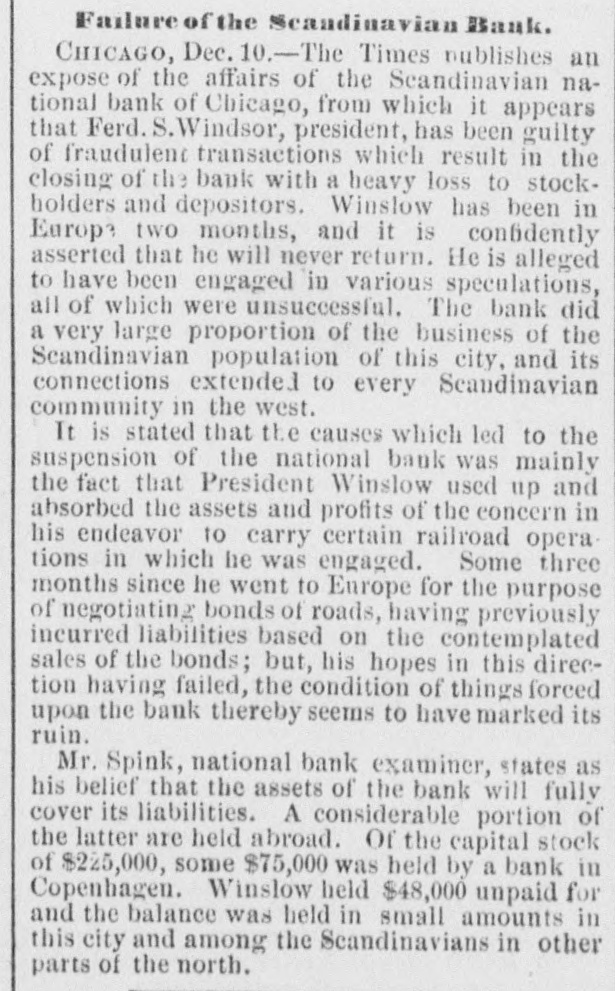
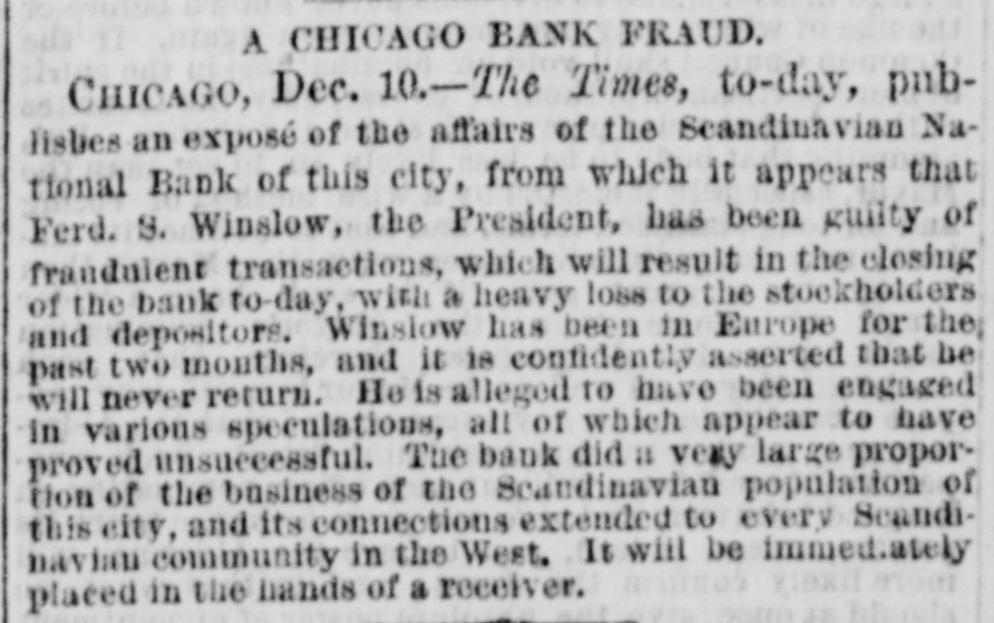
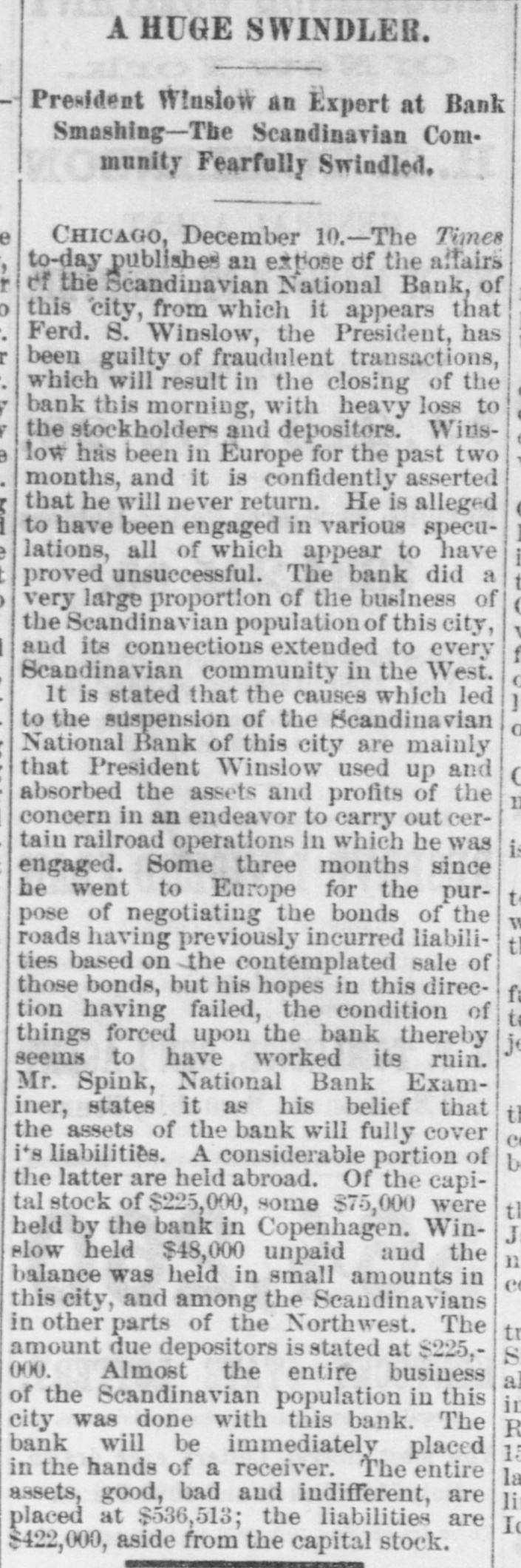
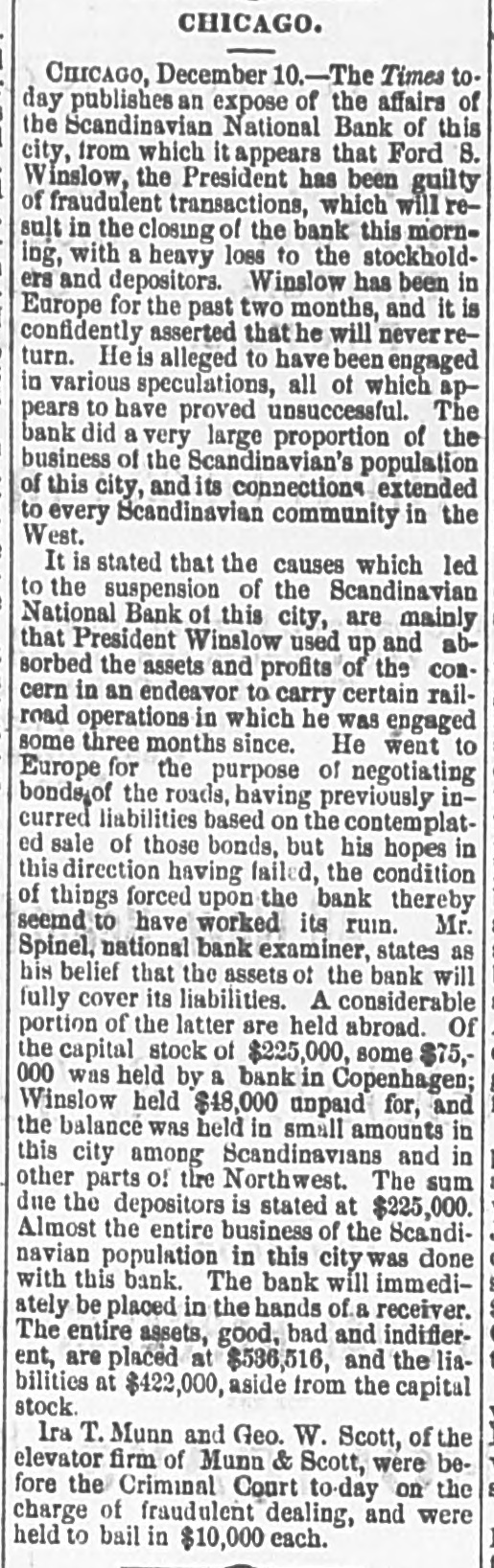
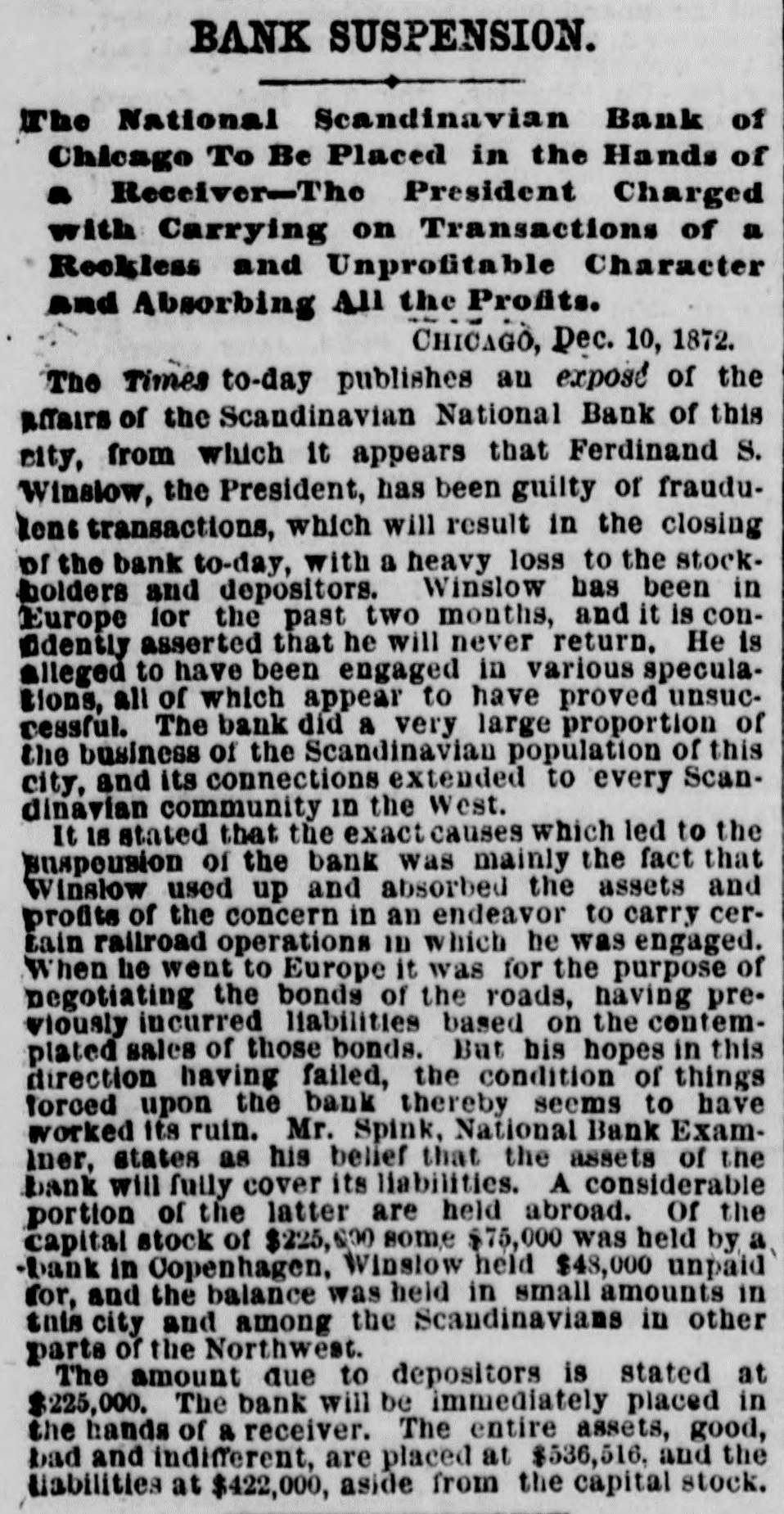
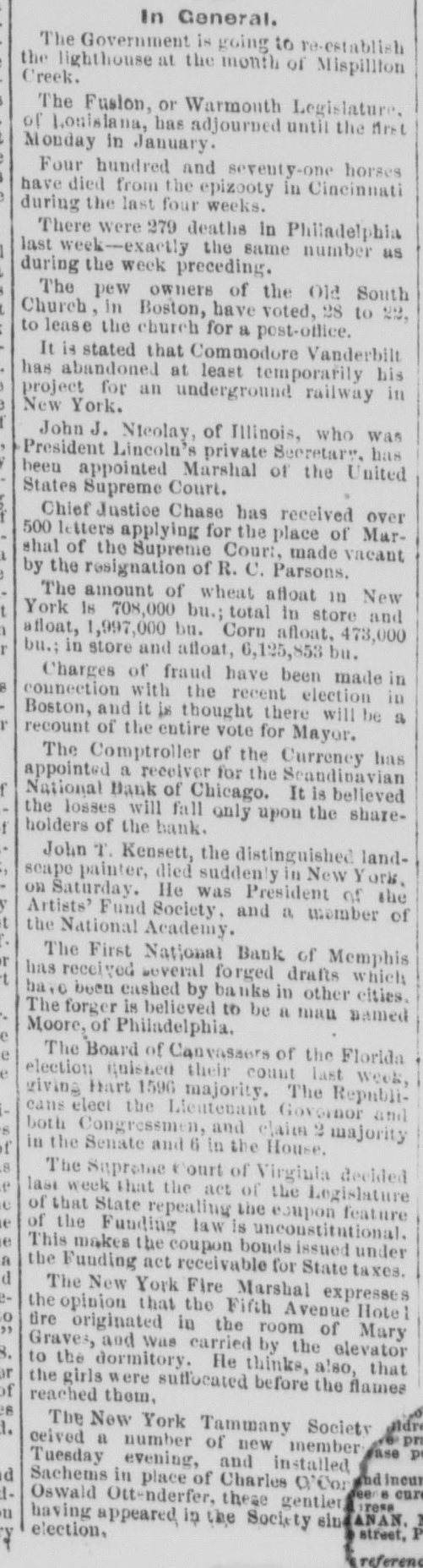
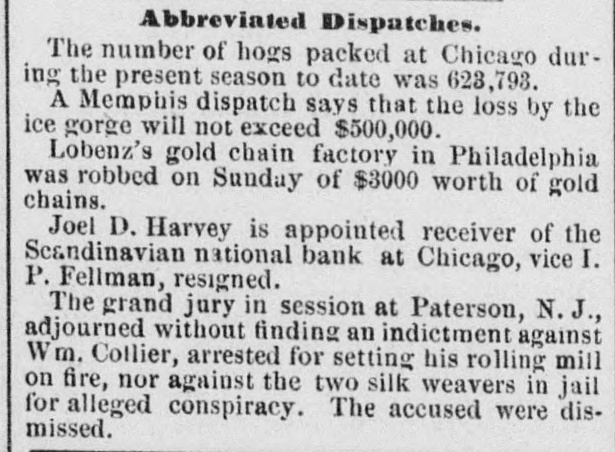
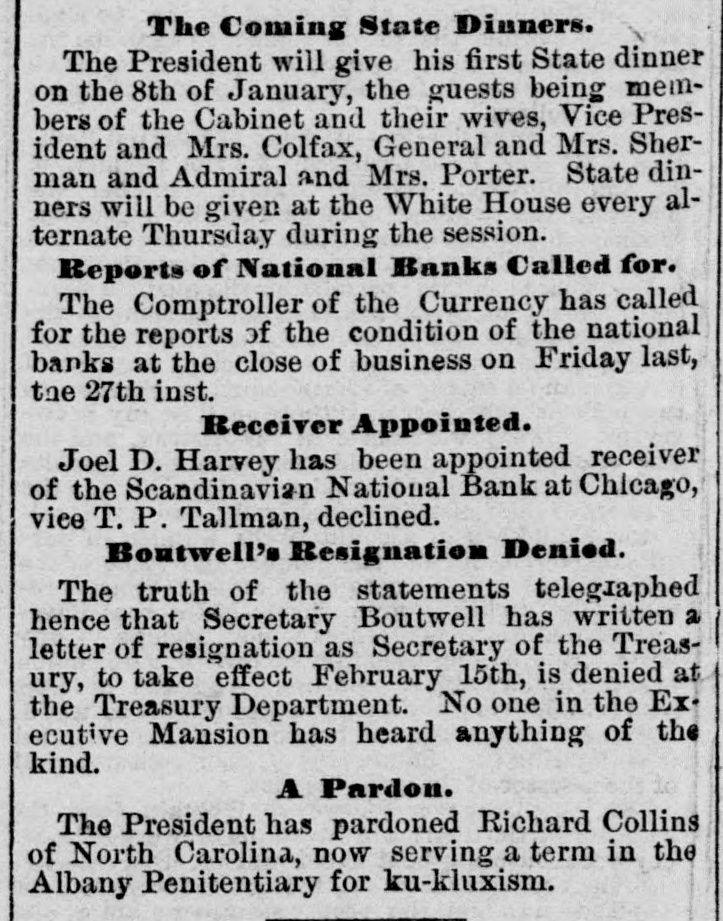
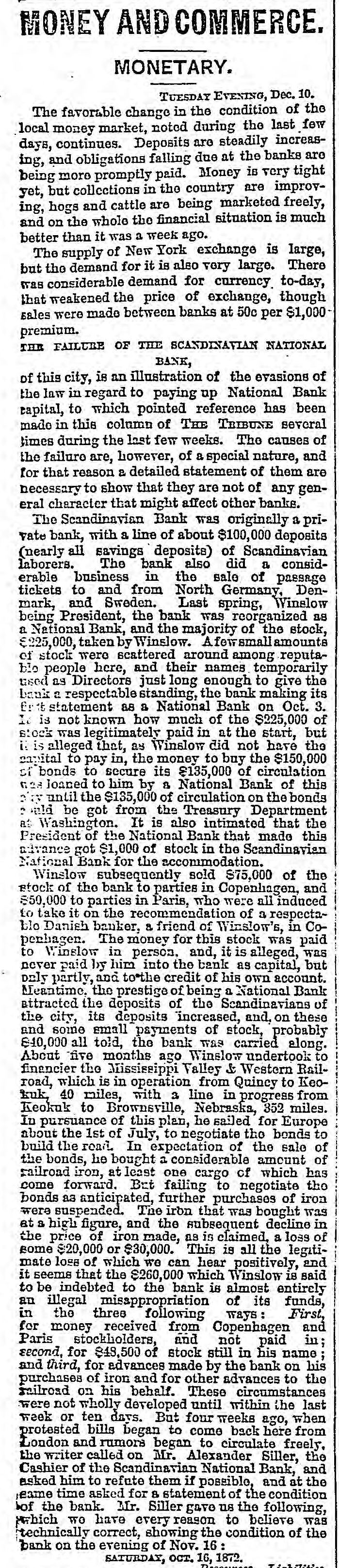
MONEY AND COMMERCE. MONETARY. TUESDAY EVENING, Dec. 10. The favorable change in the condition of the local money market, noted during the last few days, continues. Deposits are steadily increasing, and obligations falling due at the banks are being more promptly paid. Money is very tight yet, but collections in the country are improving, hogs and cattle are being marketed freely, and on the whole the financial situation is much better than it was a week ago. The supply of New York exchange is large, but the demand for it is also very large. There was considerable demand for currency to-day, that weakened the price of exchange, though sales were made between banks at 50c per $1,000 premium. THE FAILURE OF THE SCANDINAVIAN NATIONAL BANK, of this city, is an illustration of the evasions of the law in regard to paying up National Bank capital, to which pointed reference has been made in this column of THE TRIBUNE several times during the last few weeks. The causes of the failure are, however, of a special nature, and for that reason a detailed statement of them are necessary to show that they are not of any general character that might affect other banks. The Scandinavian Bank was originally a private bank, with a line of about $100,000 deposits (nearly all savings deposits) of Scandinavian laborers. The bank also did a considerable business in the sale of passage tickets to and from North Germany, Denmark, and Sweden. Last spring, Winslow being President, the bank was reorganized as a National Bank, and the majority of the stock, $225,000, taken by Winslow. Afewsmallamounts of stock were scattered around among reputabio people here, and their names temporarily used as Directors just long enough to give the bank a respectable standing, the bank making its 3. Est statement as a National Bank on Oct. 1. is not known how much of the $225,000 of stock was legitimately paid in at the start, but i. is alleged that, as Winslow did not have the cavital to pay in, the money to buy the $150,000 of bonds to secure its $135,000 of circulation 028 Joaned to him by a National Bank of this 0.00 until the $135,000 of circulation on the bonds and be got from the Treasury Department a Washington. It is also intimated that the President of the National Bank that made this advance got $1,000 of stock in the Scandinavian National Bank for the accommodation. Winslow subsequently sold $75,000 of the stock of the bank to parties in Copenhagen, and 850,000 to parties in Paris, who were all induced to take it on the recommendation of a respectablo Danish banker, a friend of Winslow's, in Copenhagen. The money for this stock was paid to Winslow in person. and, it is alleged, was never paid by him into the bank as capital, but only partly, and to*the credit of his own account. Meantime, the prestige of being a National Bank attracted the deposits of the Scandinavians of the city, its deposits increased, and, on these and some email payments of stock, probably €40,000 all told, the bank was carried along. About five months ago Winslow undertook to financier the Mississippi Valley & Western Railroad, which is in operation from Quincy to Keokuk, 40 miles, with 3 line in progress from Ileokuk to Brownsville, Nebraska, 352 miles. In pursuance of this plan, he sailed for Europe about the 1st of July, to negotiate the bonds to build the read In expectation of the sale of the bonds, he bought a considerable amount of railroad iron, at least one cargo of which has come forward. But failing to negotiate the bonds as anticipated, further purchases of iron were suspended. The iron that was bought was at a high figure, and the subsequent decline in the price of iron made, as is claimed, a loss of some $20,000 or $30,000. This is all the legitimate loss of which we can hear positively, and it seems that the $260,000 which Winslow is said to be indebted to the bank is almost entirely an illegal misappropriation of its funds, in the three following ways First, for money received from Copenhagen and Paris stockholders, and not paid in; second, for 848,500 of stock still in his name and third, for advances made by the bank on his purchases of iron and for other advances to the failroad on his behalf. These circumstances were not wholly developed until within the last week or ten days. But four weeks ago, when protested bills began to come back here from London and rumors began to circulate freely. the writer called on Mr. Alexander Siller, the Cashier of the Scandinavian National Bank, and asked him to refute them if possible, and at the eame time asked for 8 statement of the condition of the bank. Mr. Siller gave us the following, which we have every reason to believe was technically correct, showing the condition of the bank on the evening of Nov. 16: SATURDAY, OCT. 16, 1872.