Click image to open full size in new tab
Article Text
debts, dues, and demands due the state. Under this act many bonds were put out with coupons, which expressed on their face that they were receivable for taxes.
On the seventh of March, 1872, however, the general assembly passed another act pro- hibiting the officers charged by law with the collection of taxes from receiving in payment thereof anything else than coin, or treasury, or national bank notes. The supreme court of appeals of Virginia decided at its Novem- ber term, 1872, in the case of Antoni against Wright, that in issuing these bonds the state entered into a valid contract with all persons taking the coupons to receive them in pay- ment of taxes and state dues; that the act of 1872, so far as it conflicted with this contract, was void; and that the writ of mandamus was the proper remedy to compel a collector to accept the coupons in question when offered in payment of taxes.
On the fourteenth of January, 1882, the general assembly passed another act, entitled "An act to prevent frauds upon the common- wealth and the holders of her securities in the collection and disbursement of revenues," which provided, among other things, that coupons should not be received for taxes until their genuineness had been established by an appropriate judical proceeding, the nature of which the act duly set forth.
On the twentieth of March Andrew Antoni tendered to the treasurer of the city of Rich- mond a coupon for $415 in payment of taxes. It was refused and Antoni potitioned the su- preme court of appeals for a mandamus to re- quire its acceptance. That court being equally divided in opinion on the questions involved, denied the writ and the case was brought to this court for review Chief Justice Waite in delivering the opinion of the court says the question we are now to consider is not whether if the coupon tendered is in fact genuine, and such as ought un- der the contract to be received and the tender is kept good, the treasurer can proceed to collect the tax by distraint or such other process as the law allows, without mak- ing himself personally responsible for any trespass he may commit, but whether the act of 1882 violates any implied obligation of the state in respect to the remedies that may be employed for the enforcement of its contract if the collector refuses to take them.
The right of the coupon holder is to have his coupon received for taxes when offered. The question here is not as 'to that right, but as to the remedy the holder has for its enforcement when denied. At the time the coupon was issued there was a remedy by mandamus from the supreme court of appeals to compel the tax collector to take the coupon and cancel the tax. By the act of 1882 the following changes are made in the old remedy: First, the taxes actually due must be paid in money before the court can proceed after the collector has signified in the proper way his willingness to receive the coupons if they are genuine and in law receivable; second, the coupons must be filed in the court of ap- peals; and third, they must be sent to the local court to have the fact of their genineness and receivability determined, subject to an ap- peal to the circuit court and the supreme court of appeals. As the suit is for a mandamus all the provisions of the general law regulating the practice not inconsistent with the new law remain, and if the petitioner succeeds in getting his peremptory writ he will recover his costs. No issues are required that it would not have been in the power of the collector to raise be- fore the change was made, and there is no ad- ditional burden of proof imposed to meet the issues, so that the simple question is whether the requirements of the advance of the taxes and the change of the place and manner of trial impair the obligation of the contract on the part of the state to furnish an adequate and efficacious remedy to compel a tax col- lector to receive the coupons in payment of taxes in case he will not do it without com- pulsion. In the opinion of this court they do not.
Inasmuch as we are satisfied that a remedy is given by the act of 1882, substantially equivalent to that in force when the coupons were issued, we have not deemed it necessary to consider what would be the effect of a statute taking away all remedies. The judg- ment of the Virginia supreme court of appeals is affirmed. Justices Field and Harlau dis- sented.
### MR. JUSTICE FIELD DISSENTS.
Justice Field in his dissent says: "I am not able to agree with the majority of the court in the judgment in this case, nor in the reasoning on which it is founded. The legislation of Virginia which is sustained appears to me to be in flagrant vio- lation of the contract with her creditors under the act of Mar. 30, 1871, commonly known as the funding act; and the doctrines advanced by the court, though not so intended, do, in fact, license any disregard of her obligations which the ill-advised policy of the legislature may suggest. I find myself bewildered by the opinion of the majority of the court. I confess that I cannot comprehend it, so for- eign does it appear to be to what I have here- tofore supposed to be established and settled law, and I fear that it will be appealed to as an excuse, if not justification, for legislation amounting practically to the repudiation of the obligations of states and of their subordinate minicipalities-their cities and counties. It will only be necessary to insert in their statutes a false recital of the existence of forged and spurious bonds and coupons as a plausible protext for such legis- lation-and their schemes of plunder will be accomplished. No greater calamity could, in my judgment, befall the country than the general adoption of the doctrine that it is not a constitutional impairment of the obligation of contracts to embarrass their enforcement with onerous and destructive conditions and thus to evade the performance of them. I am of opinion that the judgment of the court of appeals of Virginia should be reversed and the cause remanded with instructions to award the mandamus.
### THE OTHER CASES DECIDED
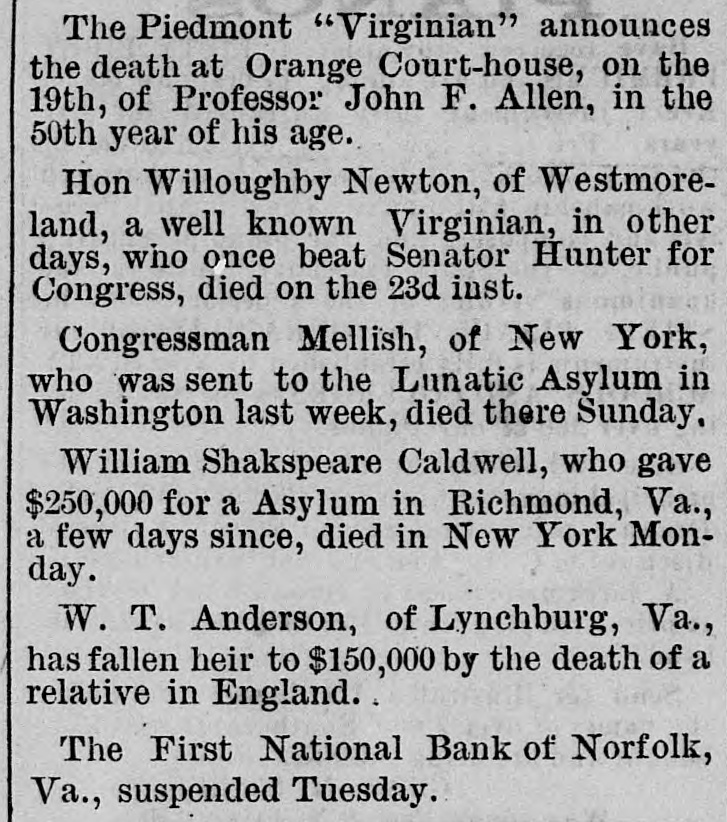
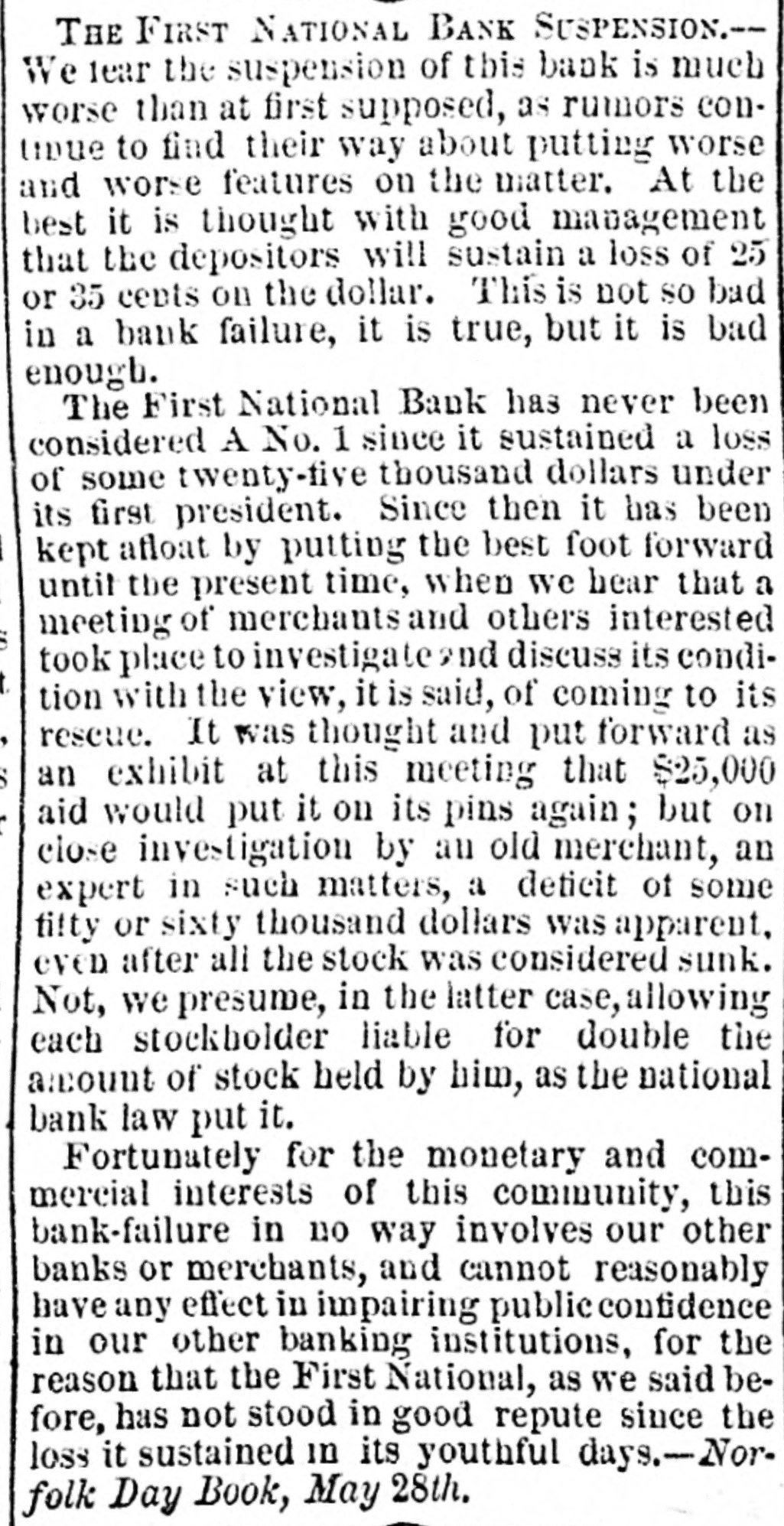
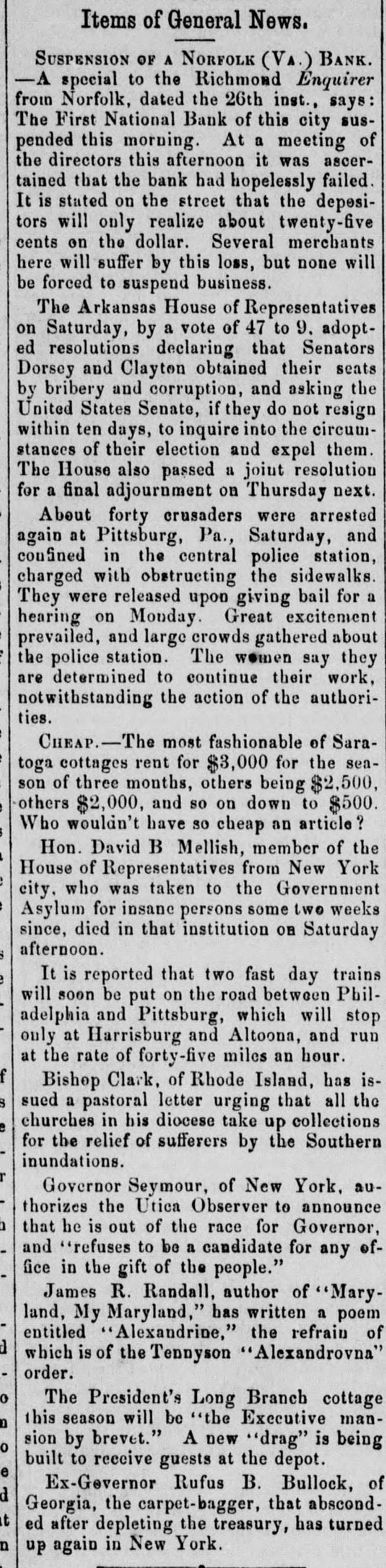
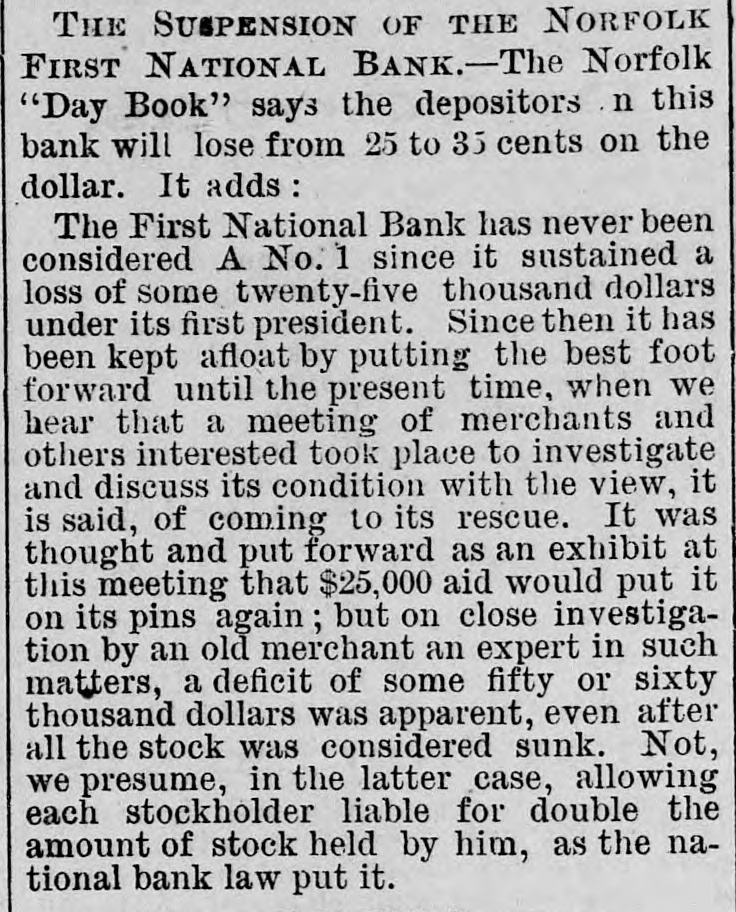
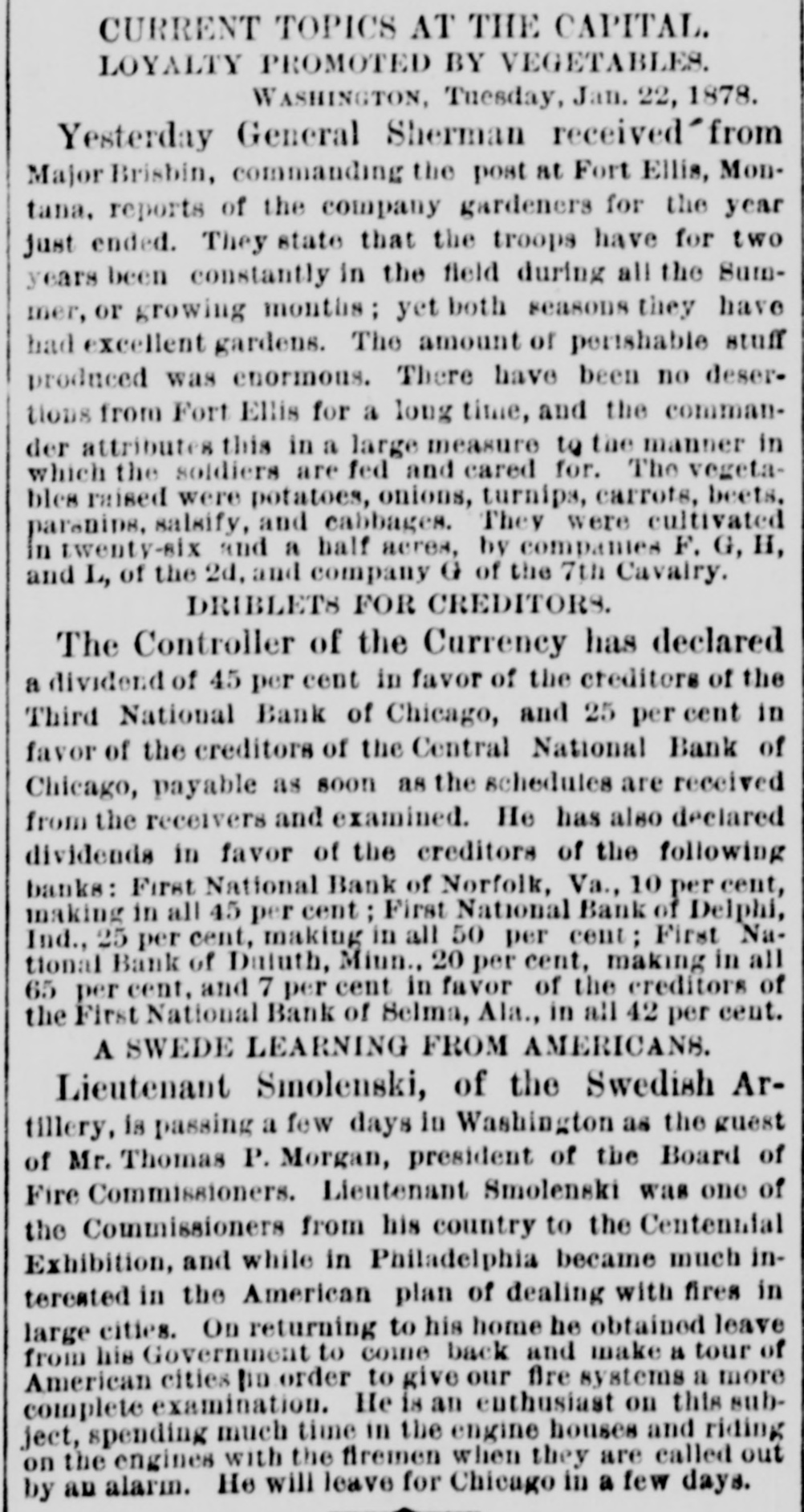
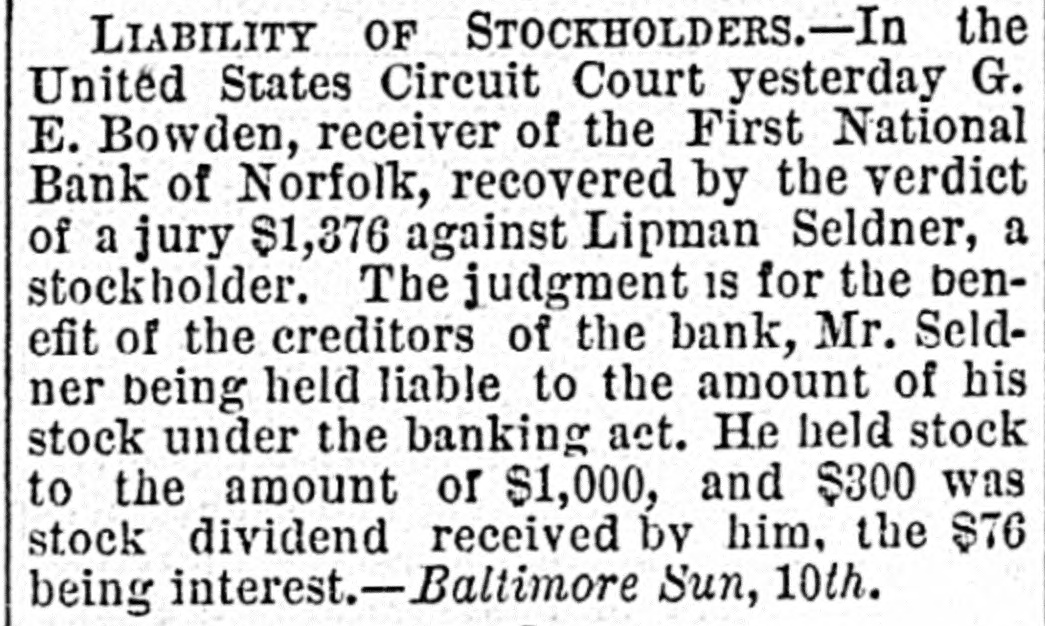
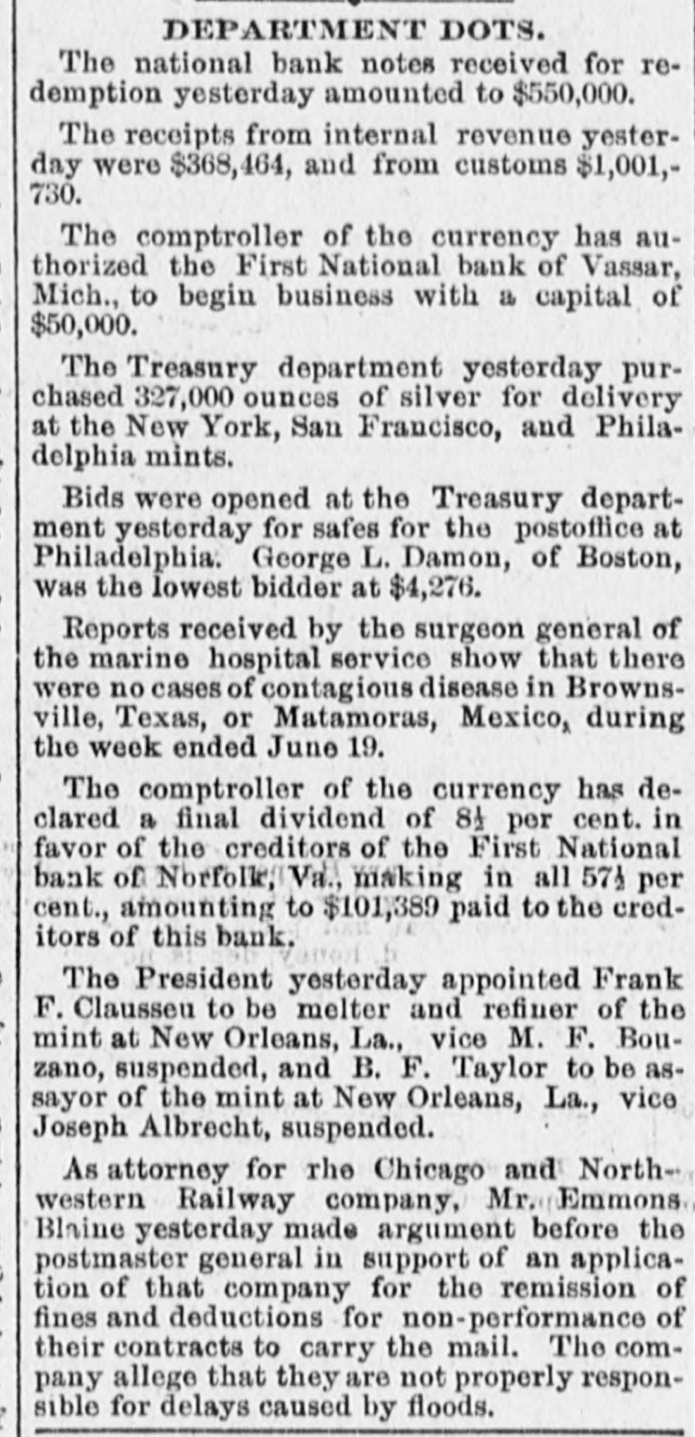
are as follows: No. 166, Orsor Adams, substi- tuted for George E. Bowden, as receiver of the First National bank of Norfolk, Va., ap- pellant vs. Jacob C. Johnston and Betsy Val- entine. Appeal from circuit court of the United States for the district of New Jersey. Decree reversed with costs and cause re- manded with directions to enter decree in conformity with the opinion of this court. Opinion of Mr. Justice Blatchford. No. 22, John N. Cushing et al. appellants vs. John Laird, the younger, et al. Appeal from the cir- cuit court of the United States for the southern district of New Yoak. Decree affirmed, with costs and interest. Opinion by Mr. Justice Gray.
No. 113. J. P. Giraud Foster and James Thomson, garnishees, appellants, vs. John N. Cushing, et al. Appeal from the circuit court of the United States for the southern district of New York. Decree affirmed, with costs.. Opinion by Mr. Justice Gray.
No. 51. James D. Russell et al., appellants, vs. Anne R. Allen et al. Appeal from the circuit court of the United States for the eastern district of Missouri. Decree af- firmed, with costs. Opinion by Mr. Justice Gray.
No. 82. Wallace S. Jones, executor, &c., et al., appellants, vs. Wm. N. Habersliam and Wm. Hunter, executors, &c. Appeal from