Click image to open full size in new tab
Article Text
CLAY NOT IN THE DEAL
STREET-CAR STOCK FLUCTUATIONS NOT CAUSED BY HIM.
Some Reasons Why the Recent Stories of His Interests in the Matter Are Not Considered Reliable.
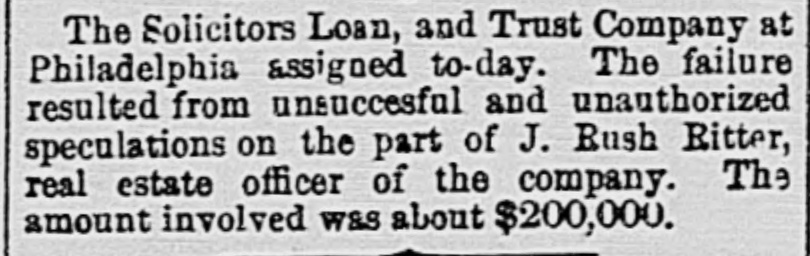
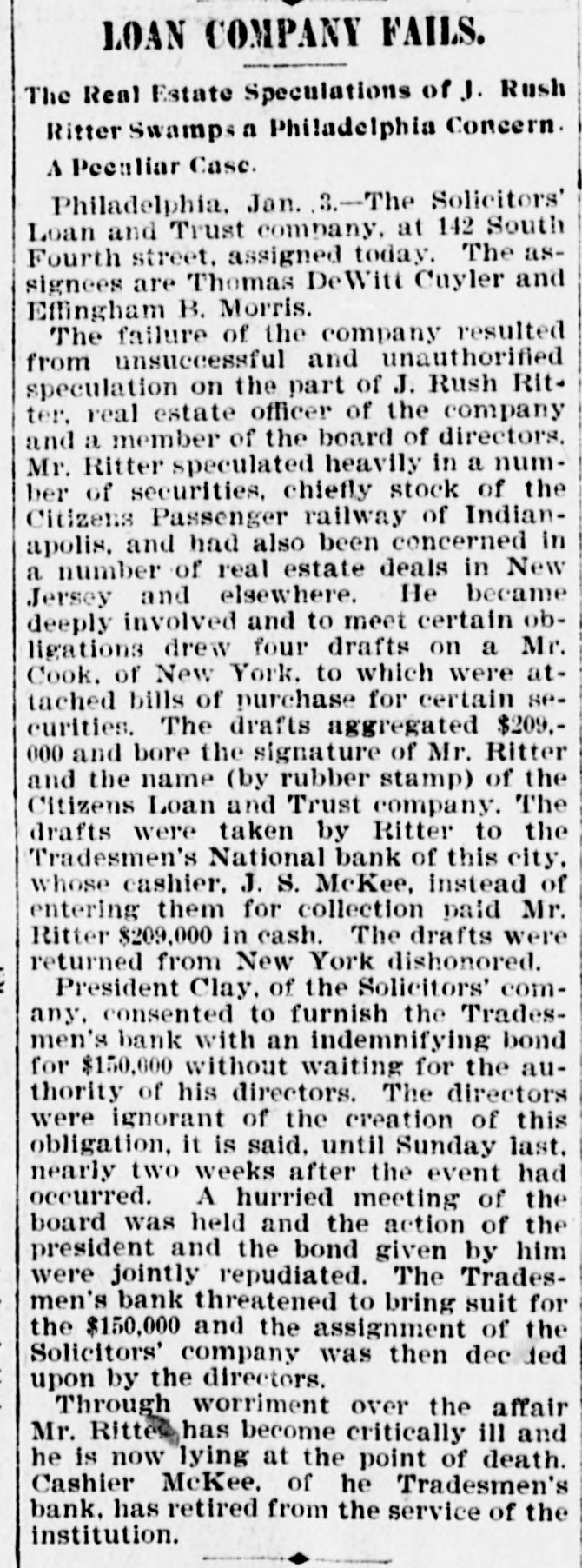
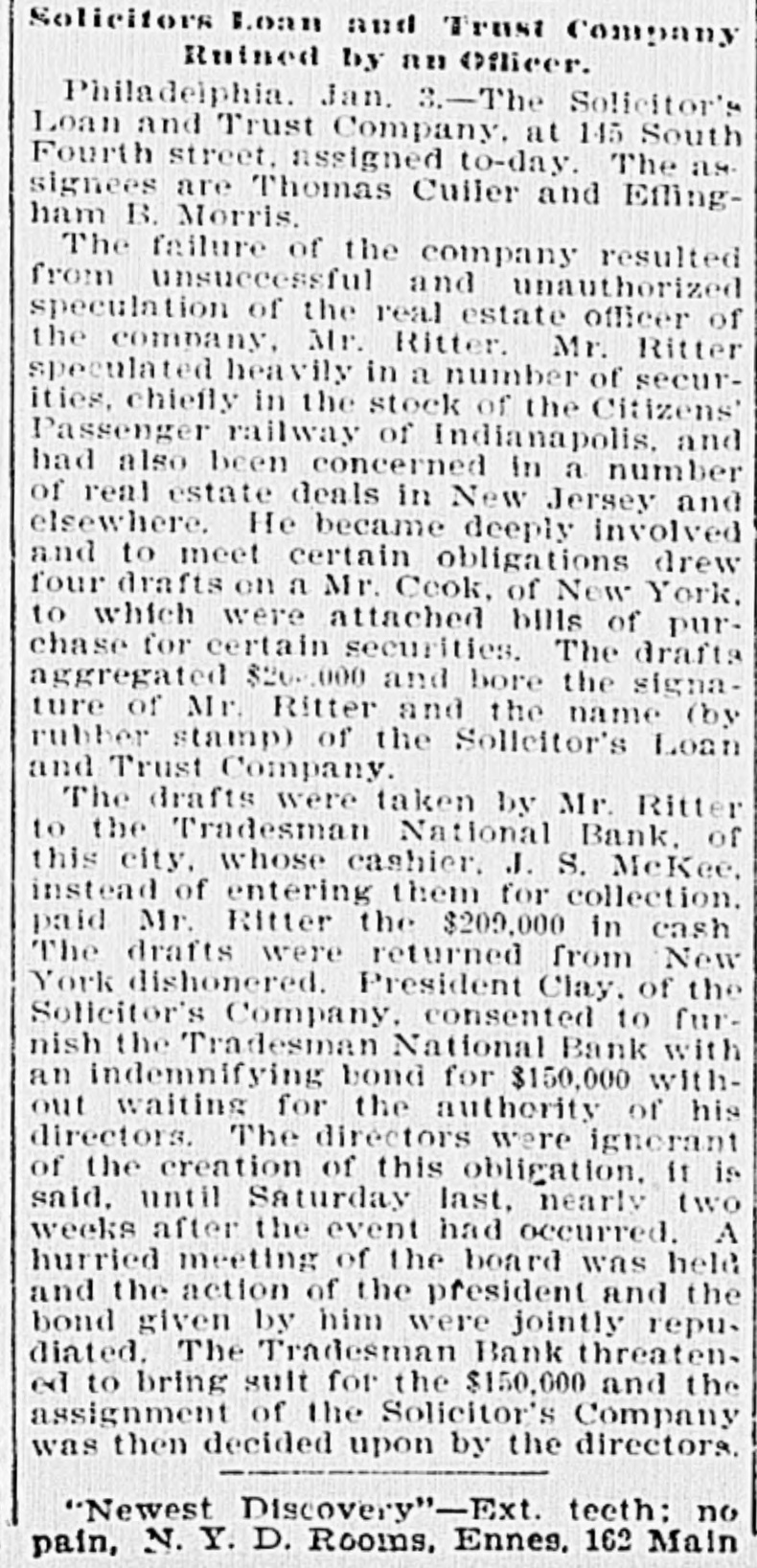
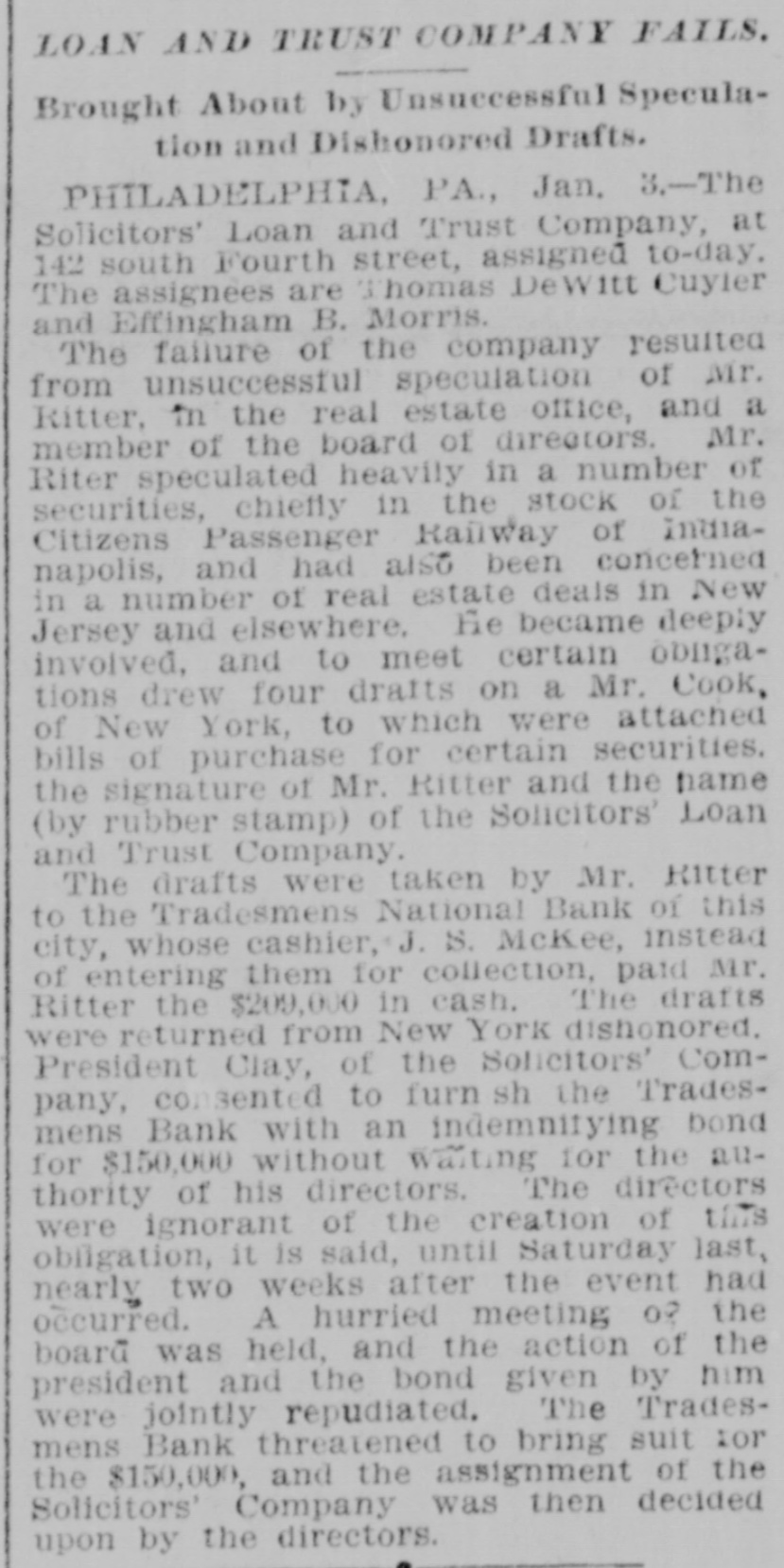
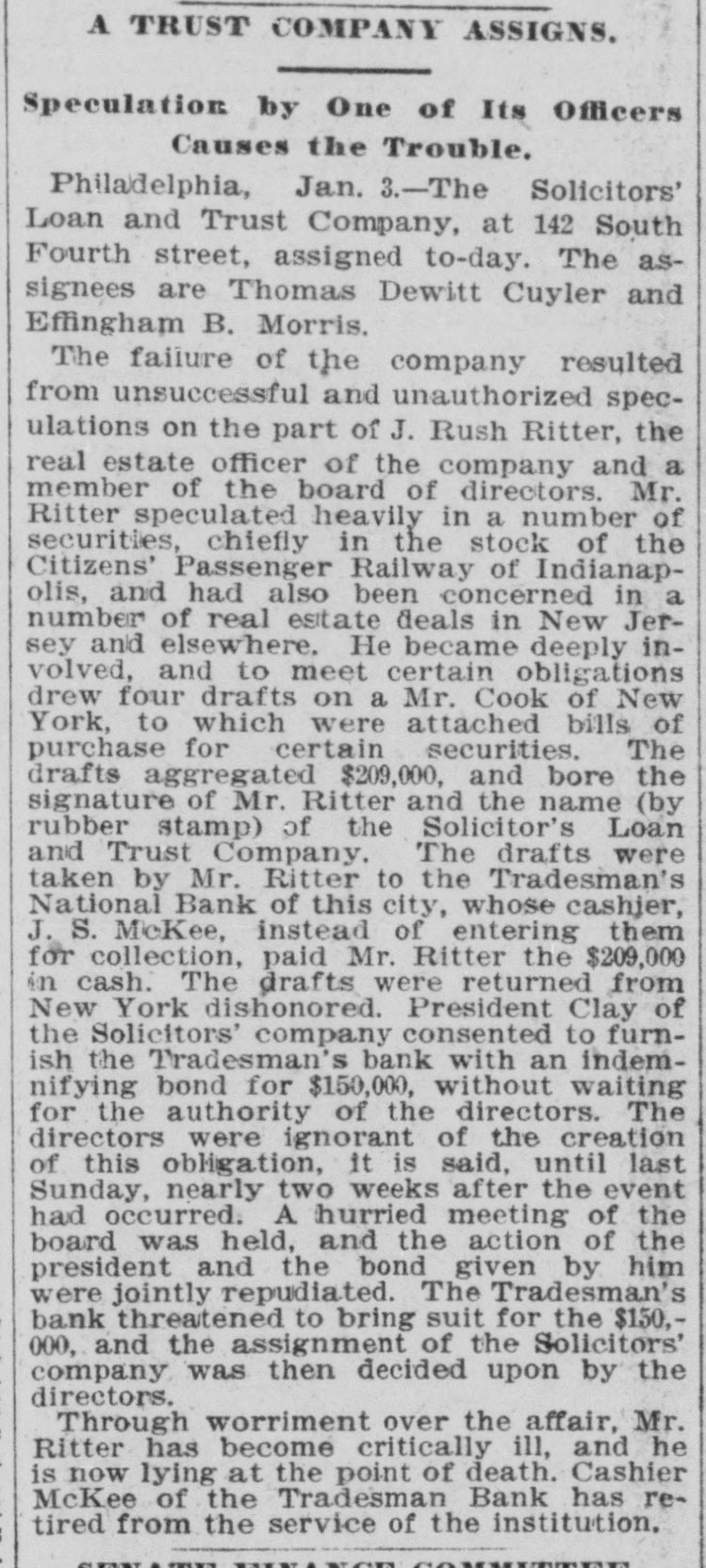
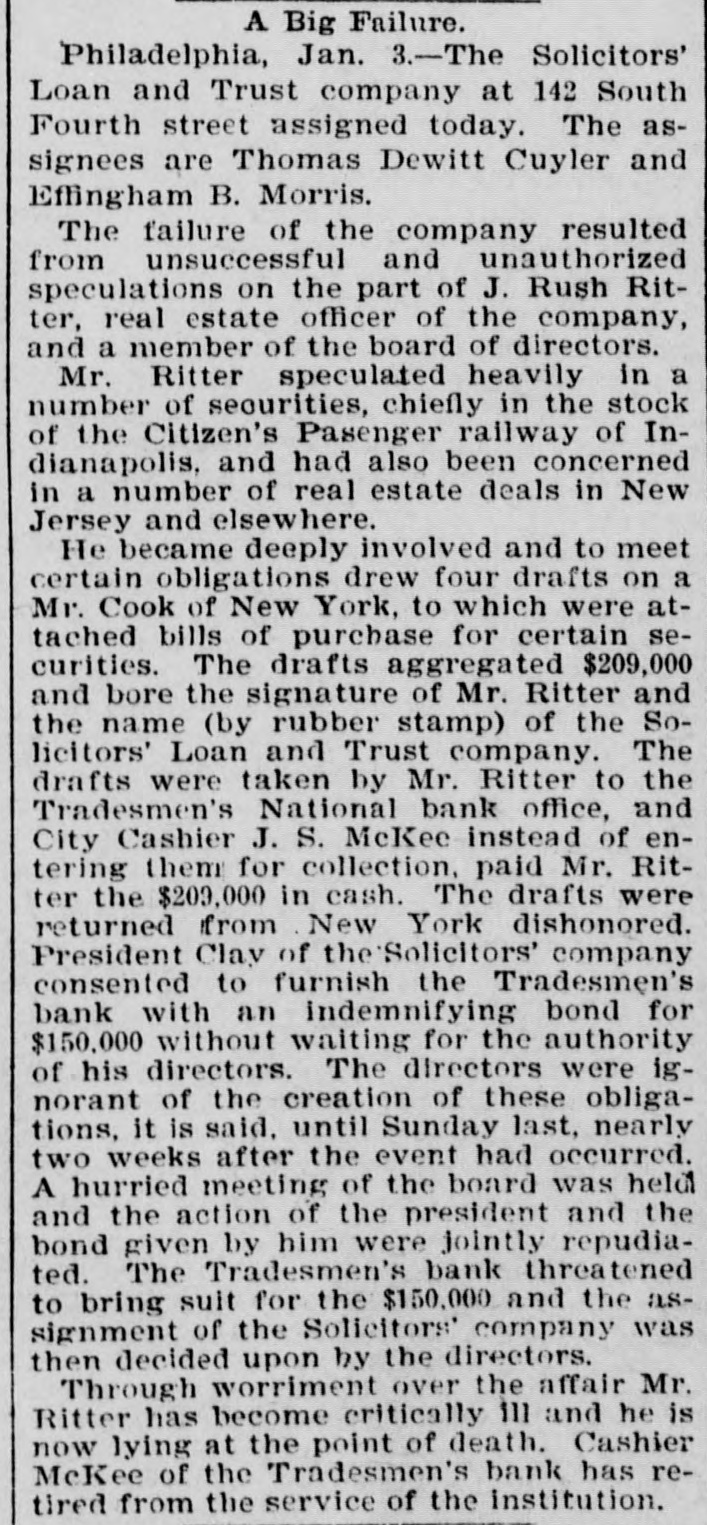
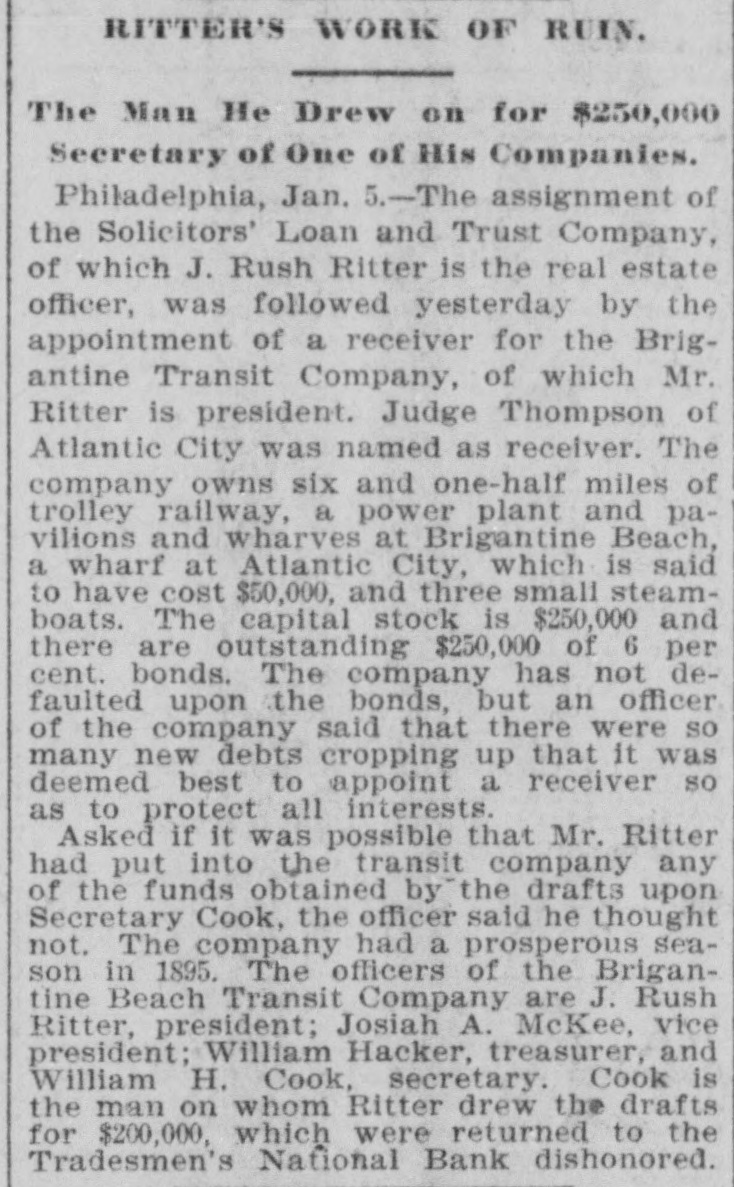
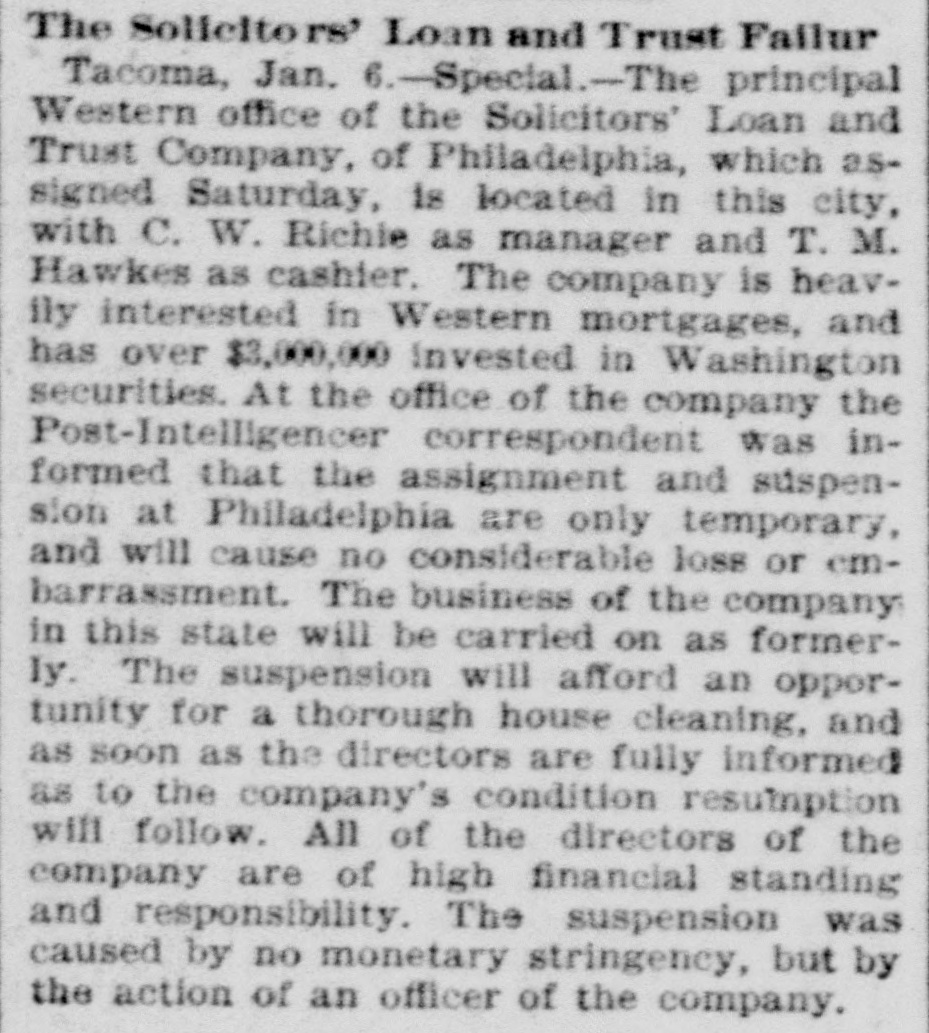
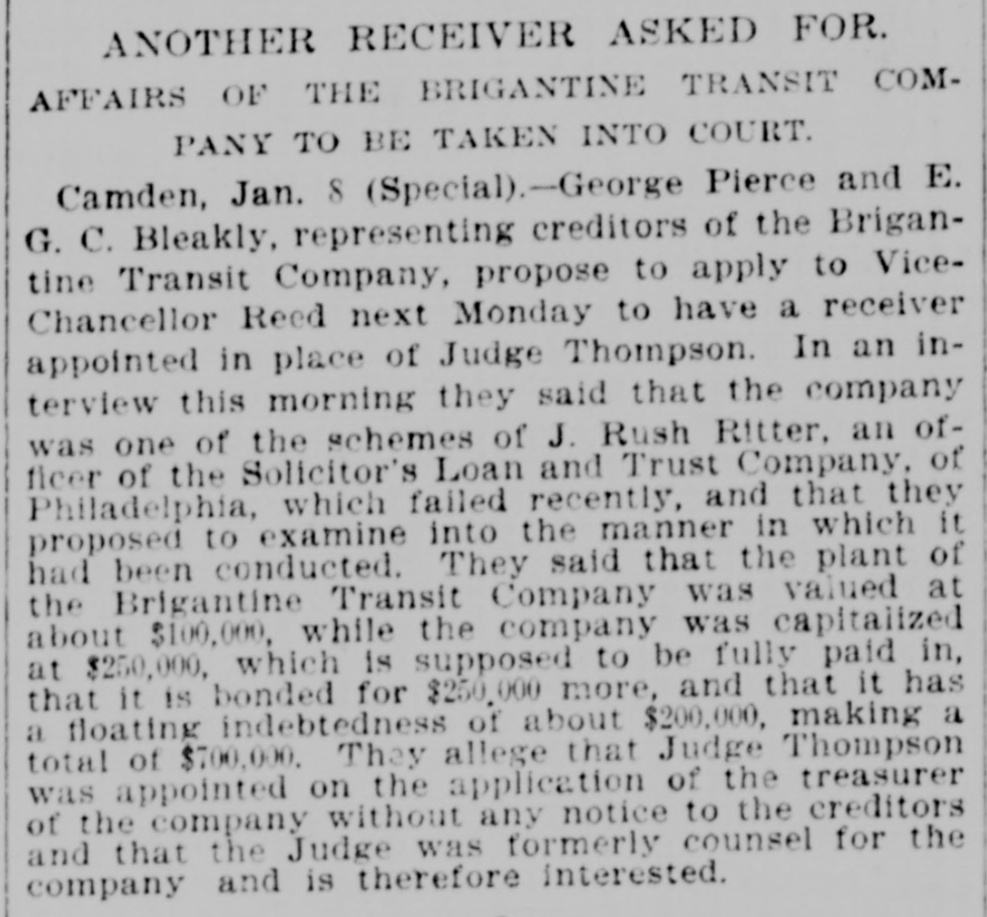
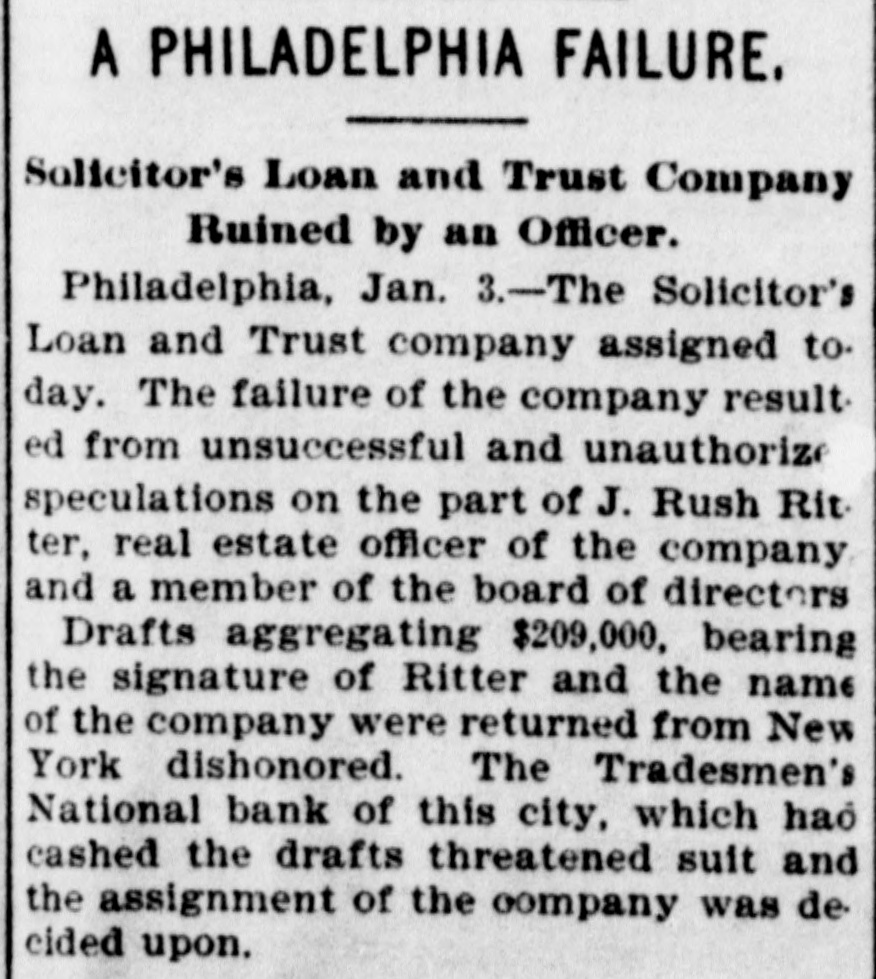
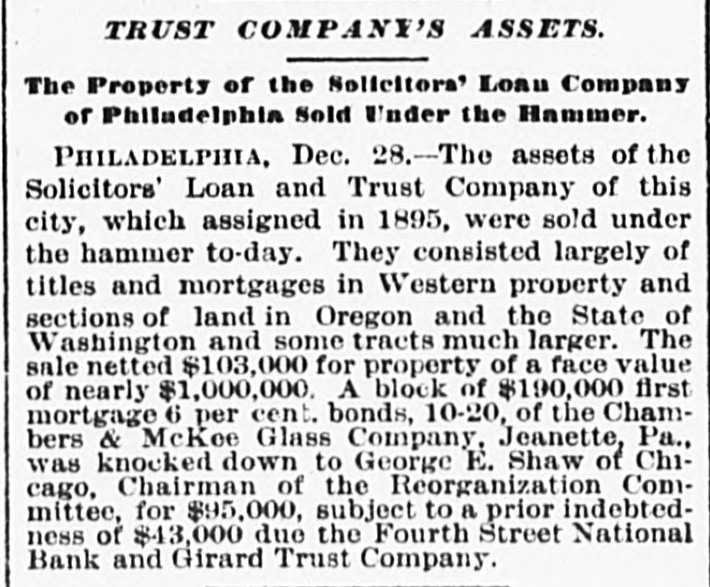
Some new light was thrown on the local stret-car situation last night. When the announcement of the failure of the Solie- itors' Loan and Trust Company, of Phila- delpiha, was made last week, a number of wild rumors were at once heard, owing to the fact that Richard W. Clay, president of the trust company, was thought to be largely interested in the Citizens' Street- railroad Company. It was said he and R. T. McDonald had formed a combination against Messrs. Verner and McKee, for the purpose of gaining a controlling interest in the property of the company. The failure of the trust company was pointed out as cne of the first moves in the game, the sug- gestion being made that the trust company held a large block of street railway stock, and that the failure would result in this stock being thrown on the market, when it would decline still lower, and McDonald and Clay would attempt to buy a controlling interest. No notice was taken of the fact that the trust company, a corporation, could not hold stock of another corpora- tion. If there was any attempt to cause the stock to go down, it was not made by Me- Donald or Clay. A man who is thought to be as well versed in street-car affairs as Verner and McKee themselves, is authority for the statement that Clay does not hold anything like a controlling interest; is in no position to acquire more stock, and is so deeply involved in the affairs of the trust company he would never resort to the strategy of forcing it to the wall, when his own safety depended largely upon his abil- ity to maintain the standing and integrity of that corporation. It is said on the same authority that, as a matter of fact, a num- ber of the stockholders in the trust com- pany who held street-car steck have been compelled to unload as a re- suit of this failure. The decline in stocks is partially accounted for in this way. Instead of being in any wise in- jured or embarrassed by the declining mar- ket, says the Journal's informant, McKee and Verner are, if anything, benefited. It is only a question of time when the stock will reach the lowest notch. A reaction will set in and markets take an upward turn. They have always bought on a falling and sold on a rising market. In this way they have been able to manipulate the stocks at will and still retain a sufficient margin under their immediate control to keep an upper hand in the management of the af- fairs of the company. They are in a fair way to double their money many times over by this sort of tactics.
Briefly stated, Clay had nothing to gain and everything to lose by the failure of the trust company, and instead of acquiring a stronger hold on street-car affairs, would be in danger of losing his grip entirely. As far as McDonald is concerned, he is never taken into consideration by the Eastern magnates, and when rumors of new deals reach their ears in which he is said to be the moving spirit they either regard him as an agent for some one else or dismiss the whole subject with a snap of their fingers. "McKee is always awake," said the Jour- nal's informant, "and they can never get the best of him, or Verner either, for that matter. Their interests are one and the same."