Click image to open full size in new tab
Article Text
Farm Lands' Demand Gains in Northwest
Milwaukee Bank Receiver Reports Satisfactory Sales of Property.
Young Farmers Lead in Purchases in Wisconsin, Minnesota.
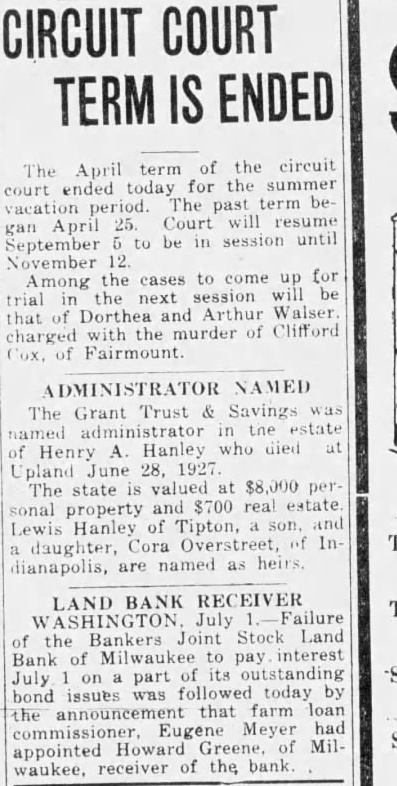
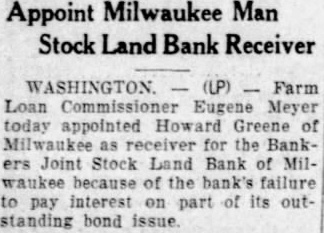
Striking improvement in the farm land of the during the last two years is evidenced by progress in the sale of foreclos. ed farms included in the assets of the Bankers Joint Stock Land bank of Milwaukee. which was closed July 1927. Colonel Howard Greene of Milwaukee receiver for the institution, said Friday in Minneapolis. Colonel Greene spent the day in the Twin Cities in conference with field men of his staff. who are looking after the bank's properties and collections.
15 Per Cent Dividend. In less than two years after its failure. the bank has been able pay dividend of 15 per cent to holders of its bonds, which, secured by farm mortgages, amount to $15,771.600, Colonel Geene said. The fore. closed farms which the bank receiver holds are scattered over its territory, including Wisconsin and Minnesota, although most of the Minnesota properties are in the Red Riv. "We have been able to dispose of very satisfactory number of the foreclosed farms,' Colonel Greene said. "The fact that farmers are able to buy and pay for more land is definite evidence of an improvement over the of few years ago. And it is farmers them. selves who are buying up the land held by the Milwaukee joint stock bank.
Majority Are Young Men. "Most of our buyers are young men, living in the of the places that we have had to foreclose on. Farm lands today are not being sold through organized colonization ovements. The day of those seems to have passed in this part of the country. The men who are doing the buying now are practical, experienced farmers- who give every indication of being able not only to pay for the farms but to operate them efficiently. There doesn't appear to be much of an element of speculation in the kind of land purchases that are being made from our bank.' Colonel Greene is handling the at. fairs of the closed land bank with combined experience as business man and farmer. He owns 1,600 acre daily farm, at Genesee, in Waukesha county, Wisconsin, and markets milk on a big scale. Well-balanced diversification in farming, including either dairying of stockgrowing or both, coupled with greater efficiency in farm management and operation, offers the only sound solution of agricultural prob. lems, Colonel Greene declared Fri. day.
N. W. Needs More Livestock. "The northwest more and better livestock on its farms, whether it be dairy cattle market animals or both." he said. "Likewise, our farms would produce greater profits under big scale operation, with equipment and efficiency not possible under the present system of individual operation. This does not mean that the small farmer is to be eliminated from the picture, that he is to lose his independence or become tenant or peasant. What have in mind is a co-operatve effort in seeding adjoining farms so as to make bigger grain fields, that could be planted and harvested more efficiently and economically by use of larger machines than the average farmer can own individually. That is one example of what could be done to cut down overhead and increase production per acre. In the last analysis, it means adoption of the practices that have build pros. perity for modern industry.