Article Text
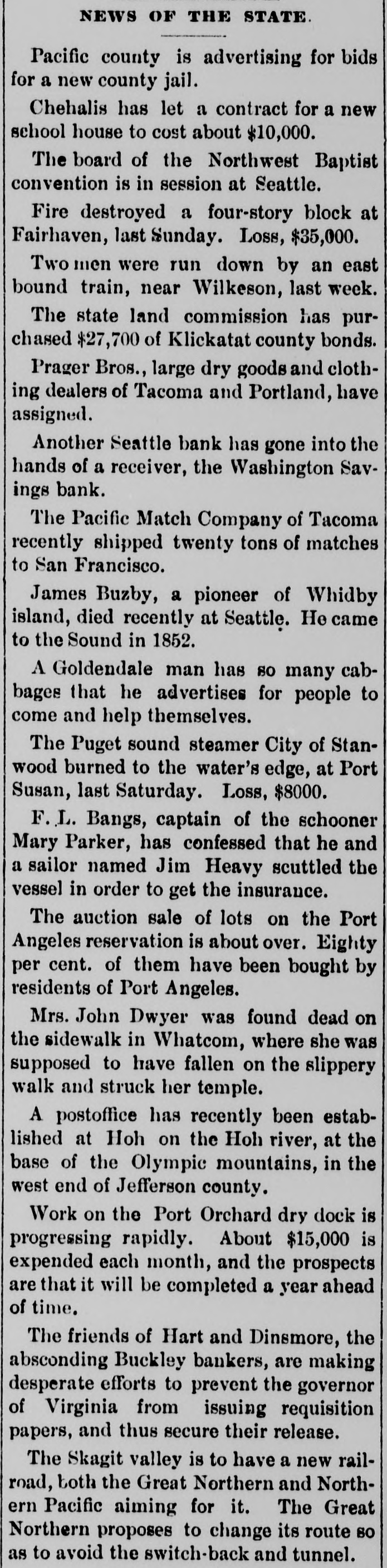
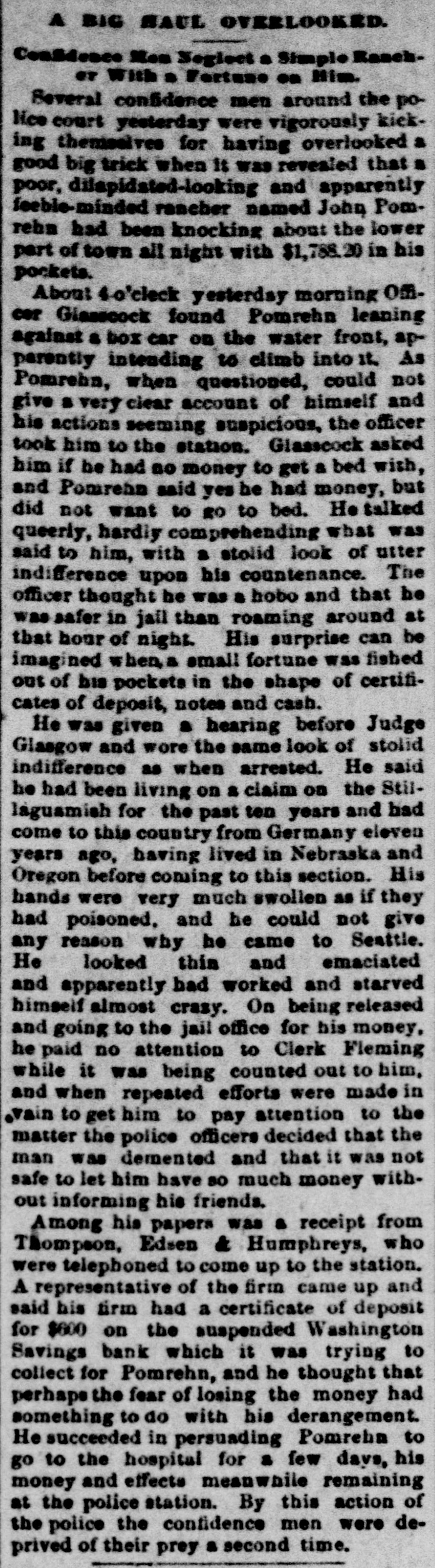
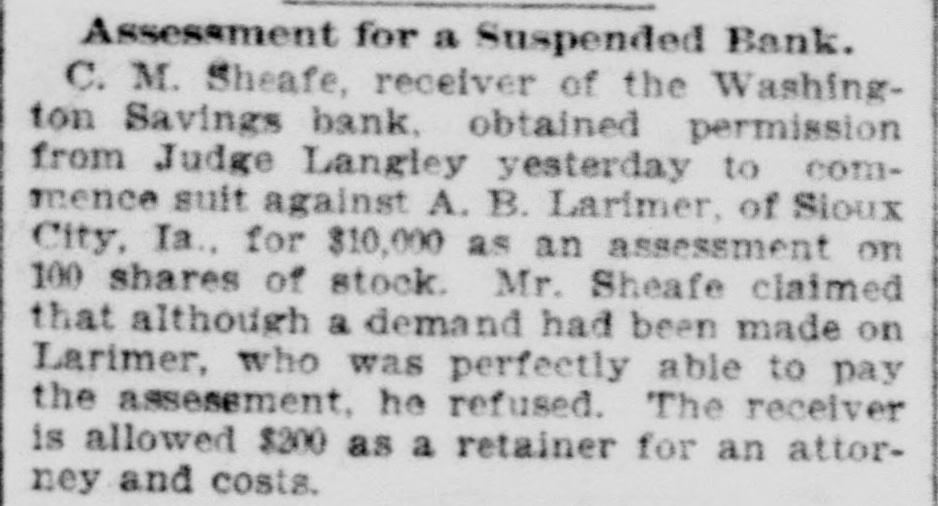
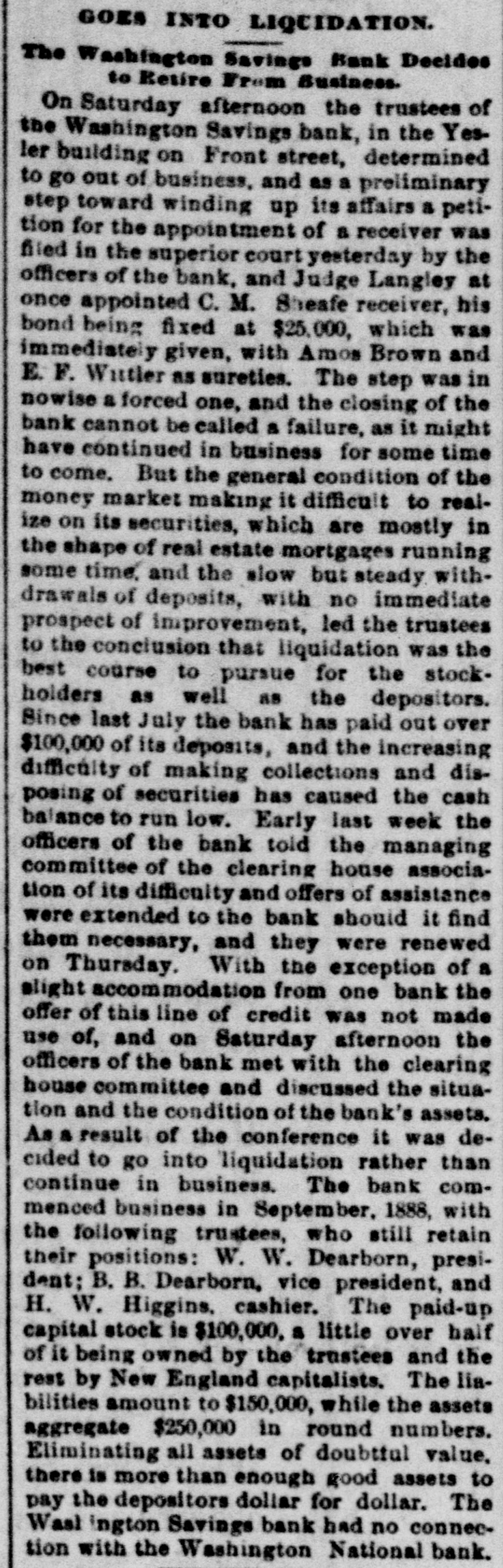
GOES INTO LIQUIDATION. The Washington Savings Bank Decides to Retire From Business. On Saturday afternoon the trustees of the Washington Savings bank, in the Yesler building on Front street, determined to go out of business, and as a preliminary step toward winding up its affairs a petition for the appointment of a receiver was filed in the superior court yesterday by the officers of the bank, and Judge Langley at once appointed C. M. Sheafe receiver, his bond being fixed at $25,000, which was immediately given, with Amos Brown and E. F. Wittler as sureties. The step was in nowise a forced one, and the closing of the bank cannot be called a failure, as it might have continued in business for some time to come. But the general condition of the money market making it difficult to realize on its securities, which are mostly in the shape of real estate mortgages running some time. and the slow but steady withdrawals of deposits, with no immediate prospect of improvement, led the trustees to the conclusion that liquidation was the best course to pursue for the stockholders as well as the depositors. Since last July the bank has paid out over $100,000 of its deposits, and the increasing difficulty of making collections and disposing of securities has caused the cash balance to run low. Early last week the officers of the bank told the managing committee of the clearing house association of its difficulty and offers of assistance were extended to the bank should it find them necessary, and they were renewed on Thursday. With the exception of a slight accommodation from one bank the offer of this line of credit was not made use of, and on Saturday afternoon the officers of the bank met with the clearing house committee and discussed the situation and the condition of the bank's assets. As a result of the conference it was decided to go into liquidation rather than continue in business. The bank commenced business in September, 1888, with the following trustees, who still retain their positions: W. W. Dearborn, president; B. B. Dearborn, vice president, and H. W. Higgins, cashier. The paid-up capital stock is $100,000, a little over half of it being owned by the trustees and the rest by New England capitalists. The liabilities amount to $150,000, while the assets aggregate $250,000 in round numbers. Eliminating all assets of doubtful value. there is more than enough good assets to pay the depositors dollar for dollar. The Wast ington Savings bank had no connection with the Washington National bank.