Click image to open full size in new tab
Article Text
ED. C. BROWN AND
SONS ARE INDICTED
Sheldon Banker and Railroad Commissioner Charged on Four Counts.
PULLS OUT OF THE RACE
Mr. Brown Announced That He Would No Longer Attempt to Press His Candidacy for Renomination This Year.
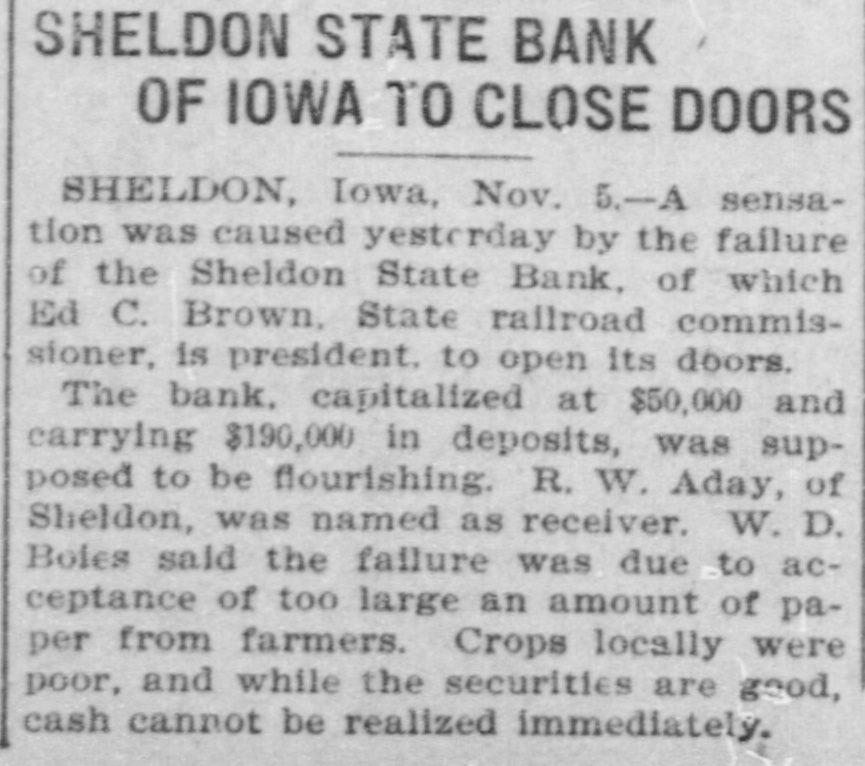
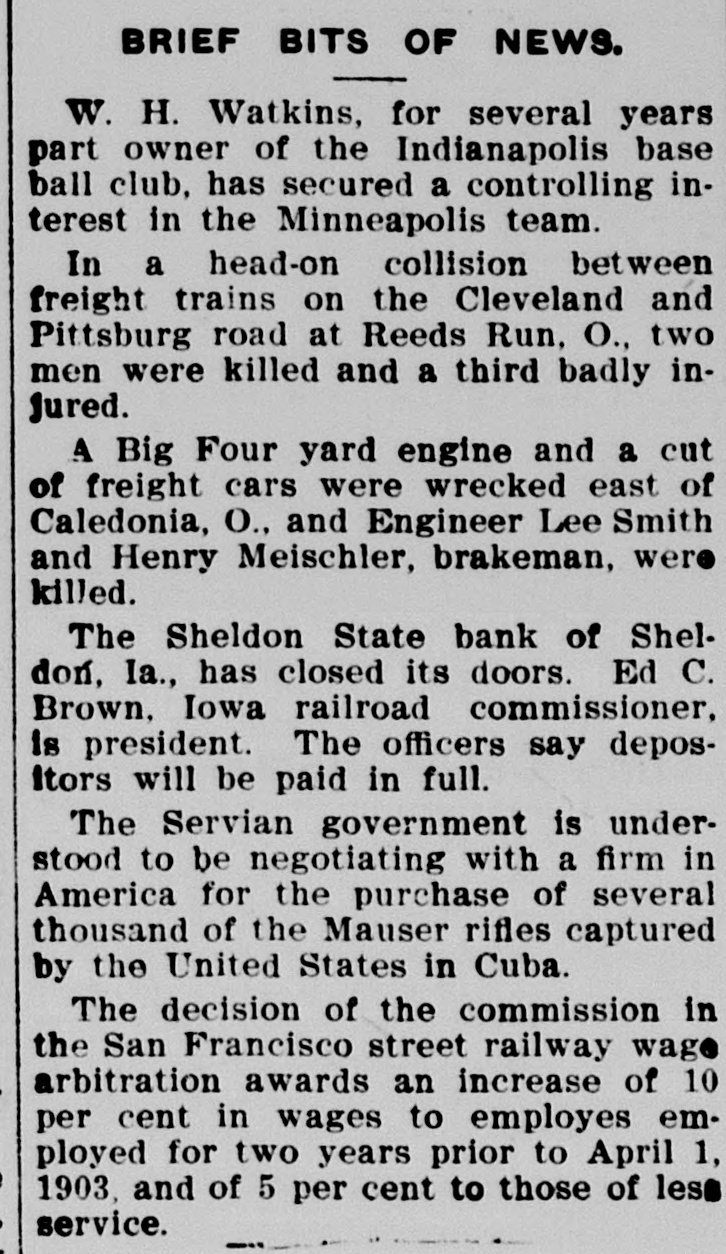
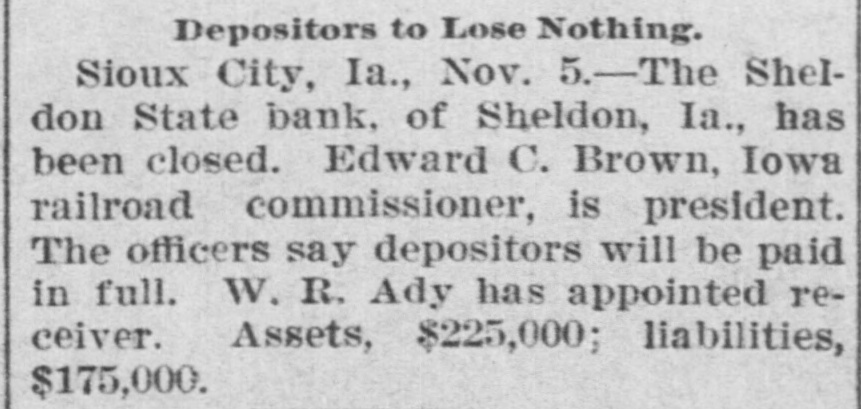
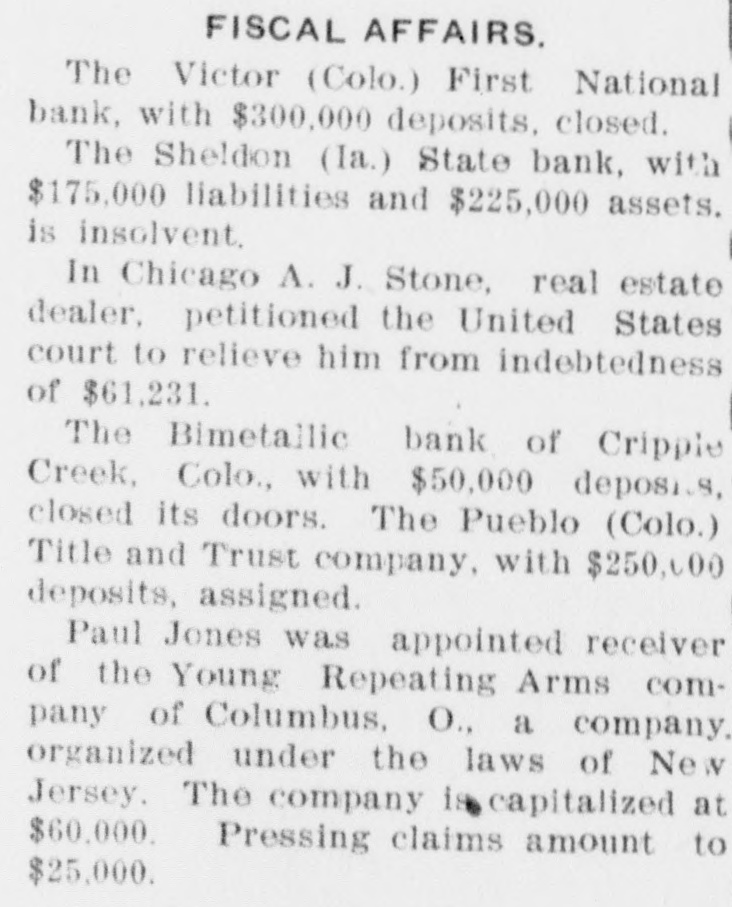
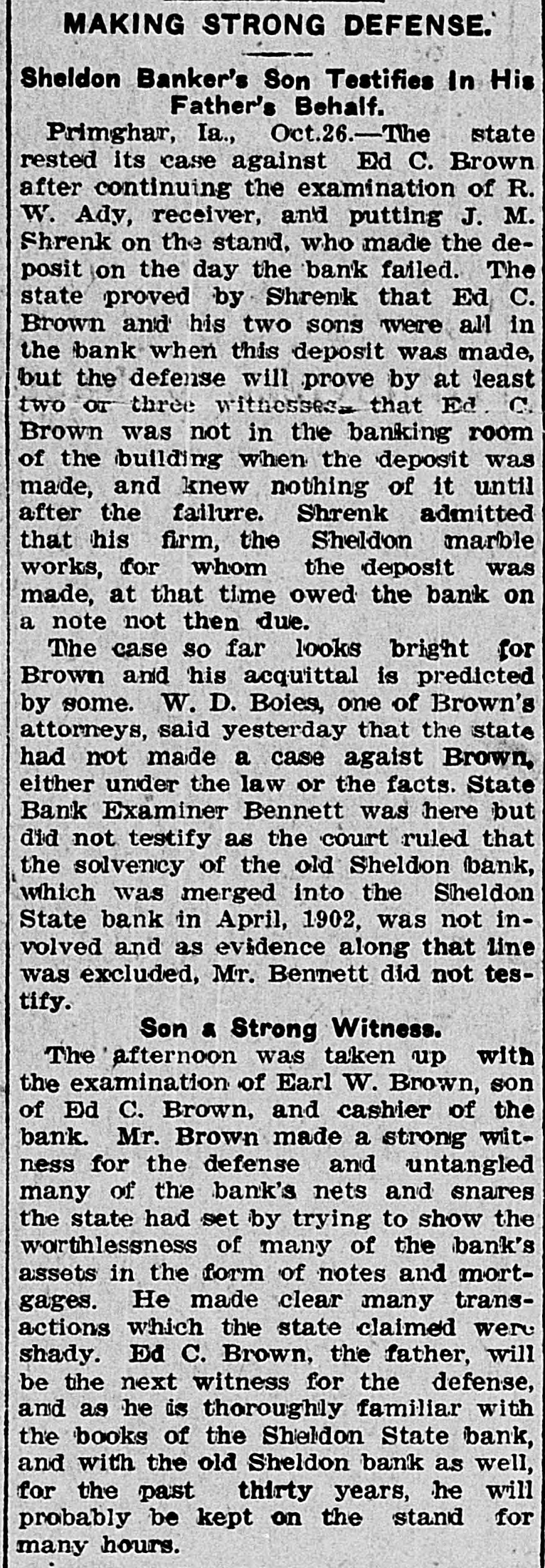
Sheldon, Ia., May 5.-The O'Brien county grand jury Tuesday afternoon voted five indictments against Ed C. Brown, chairman of the Iowa board of railroad commissioners and president of the failed Sheldon State bank of this place, for irregularities in connection with the bank's affairs, leading to its failure. They are understood to in- clude one and possibly two for em- bezzlement, one for declaring a divi- dend when the bank was insolvent, and at least one for receiving deposits after the bank was known to be insolvent. Earl W. Brown, cashier of the bank, and Ed C. Brown, jr., a director, both sons of President Brown, are also in- dicted on five counts each, the same accusations being made against all three. The Indictments were returned by the jury sitting at Primghar, the county seat.
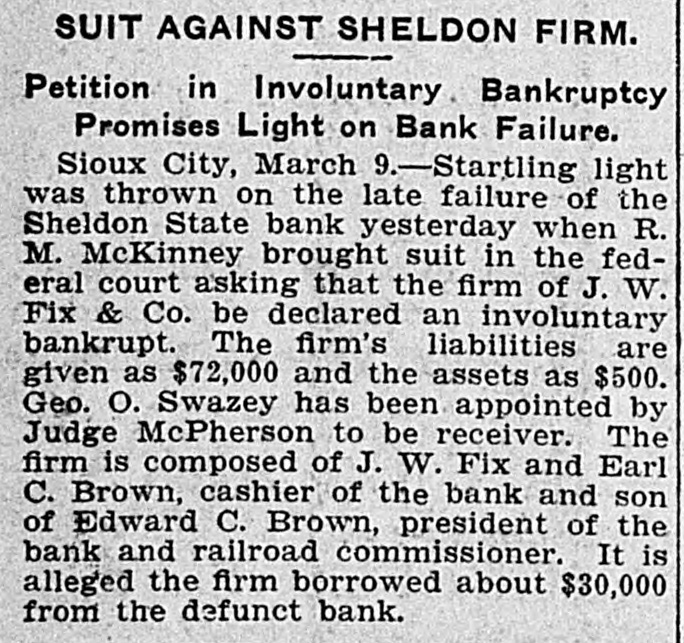
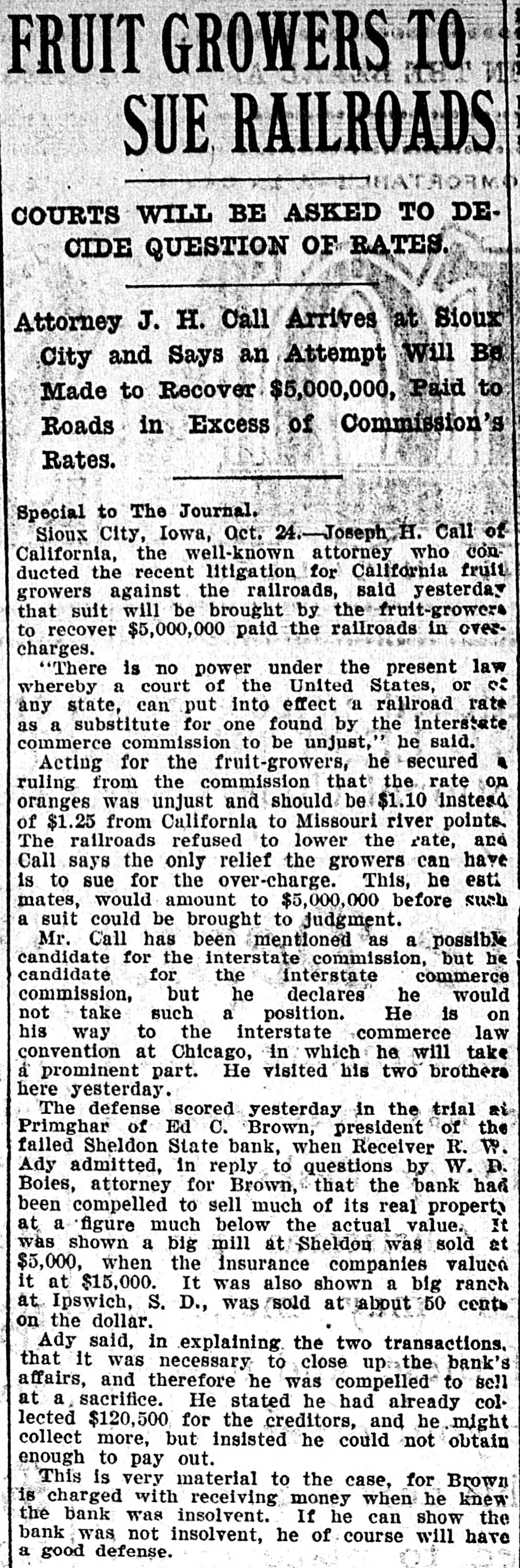
The indictments have not yet been reported to the court, but Mr. Brown was waiting to be called before the jury but it is understood was not called, the indictments being based on records. The largest embezzlement charged is based on a loan of $72,000 to J. W. Fix & Co., a firm of which Earl Brown, cashier and son of President Brown, was a member. Earl Brown signed the firm name of Fix & Co. to the notes, the loan being made without authoriza- tion of the directors, which is contrary to statute In case of an officer of the bank.
Paid Dividend When Insolvent.
It is charged in another indictment that on April 13, 1903, the band declared a dividend of nearly $4,000, being then insolvent.
In another, Brown is charged with having borrowed $6,000 from a Chicago bank on his personal note and later writing the bank to charge it against the bank, which is alleged to constitute embezzlement. There are several spe- cific charges of receiving deposits after the bank was insolvent.
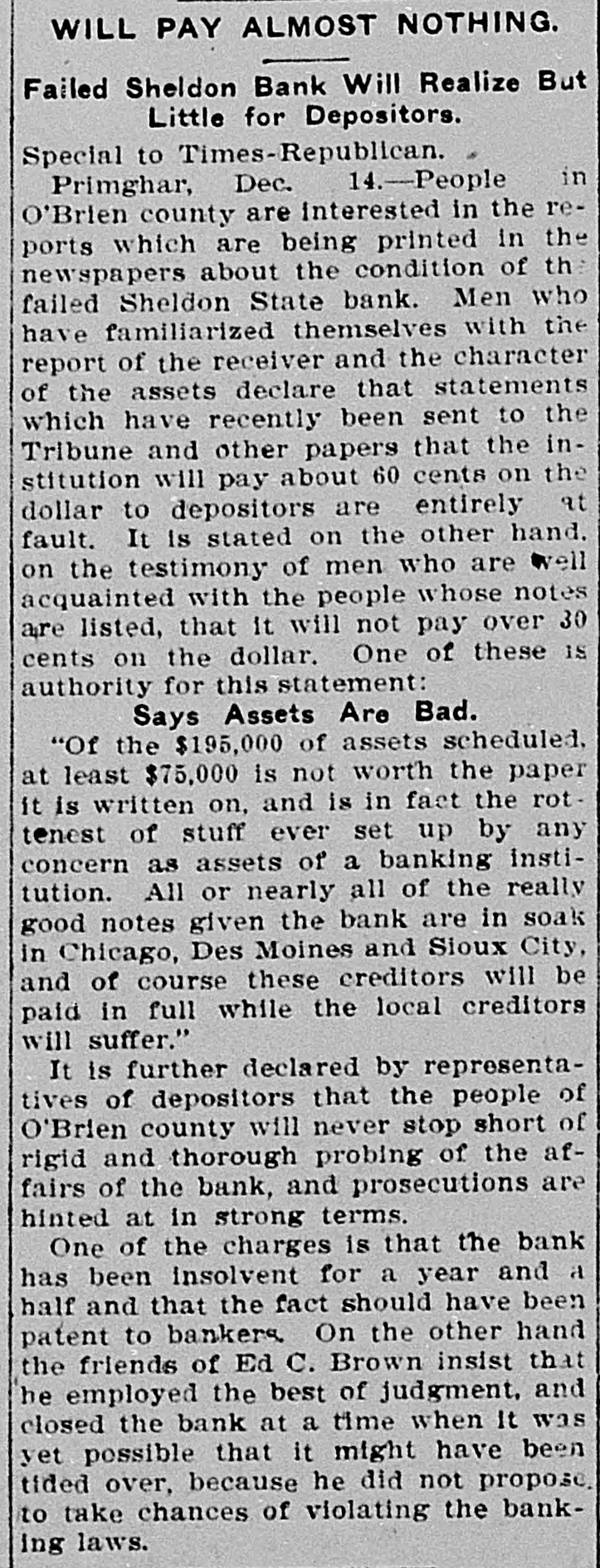
The bank originally had $100,000 cap- ital, but in 1892 was reorganized, the capital being cut to $50,000. It is charged with, carrying over $78,000 of practically worthless paper to the new organization, and therefore being in- solvent from the beginning of the new organization.
Ed C. Brown left Sheldon after it was given out that the indictments had been voted to attend the congressional con- vention at Cherokee. On the train he told friends that in view of his indict- ment he would not further attempt to stand as a candidate for renomination as railroad commissioner, his term ex- piring this year.
Will Pay 40 to 50 Cents.
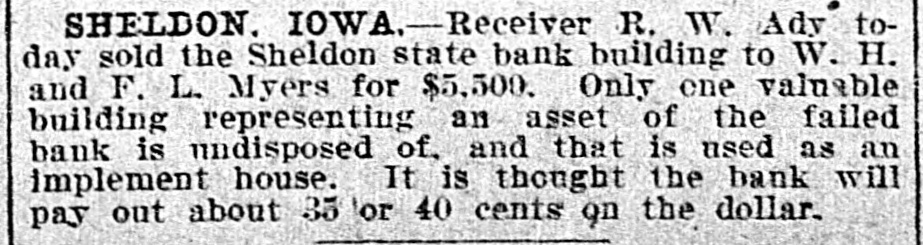
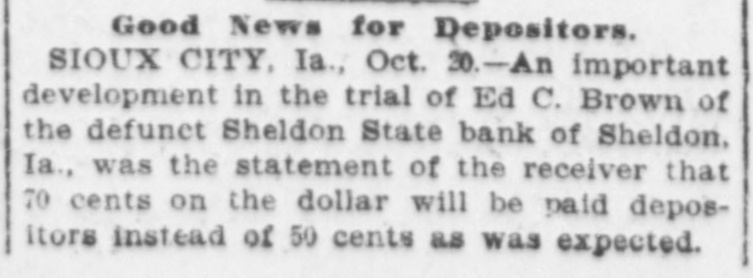
The bank is now expected to pay 40 to 50 cents on the dollar. An effort will be made to hold the original $100,000 of stock for a hundred per cent assess- ment on the ground that the bank was Insolvent when they reorganized and retired, and therefore they could not escape liability by merely reorganiz- ing. The stock at that time was held largely in Dubuque. Under the reor- ganization the $50,000 of stock was chiefly held in Dubuque, but was later bought by the Browns. Under the terms of purchase it continued to be held by the Dubuque people as collat- eral security, the Browns to pay for it in instalments. The Dubuque men re- tained the right to vote it. Creditors Insist that this was equivalent to con- tinued ownership by the Dubuque in- terests, therefore that an assessment against them will hold good. If these two assessment contentions are made good at law a large share of the liabili- ties will be paid, as the eastern Iowa people are wealthy.
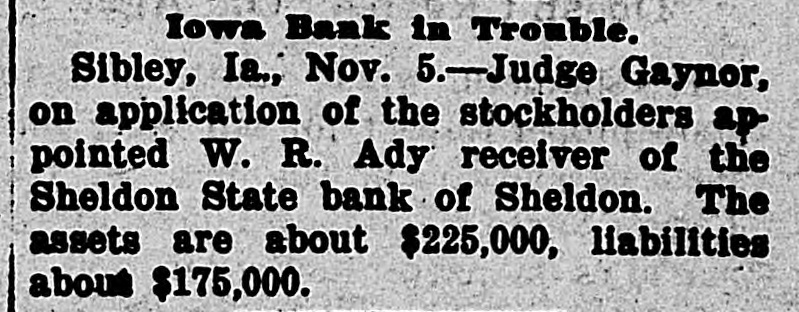
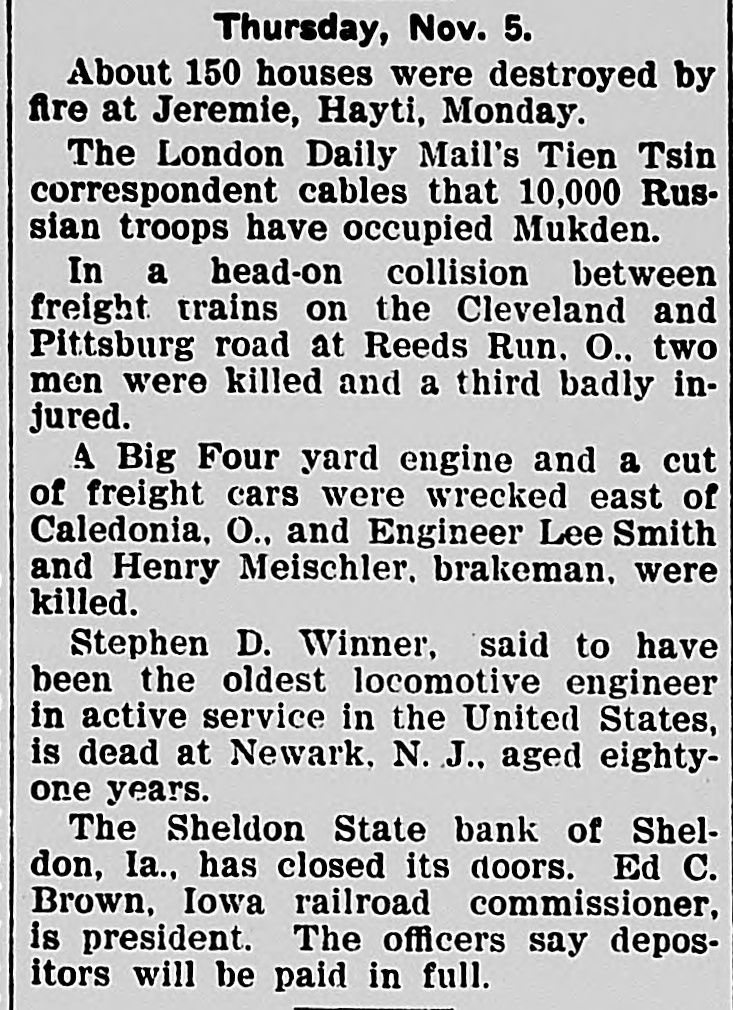
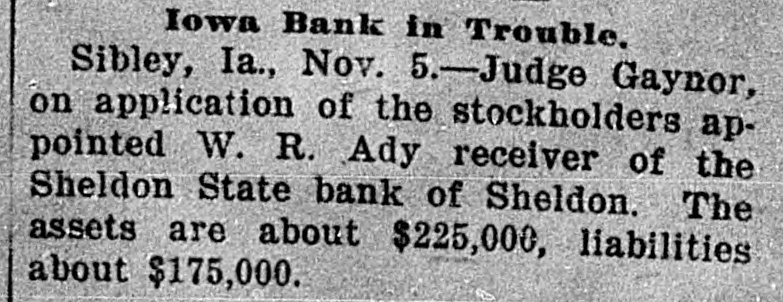
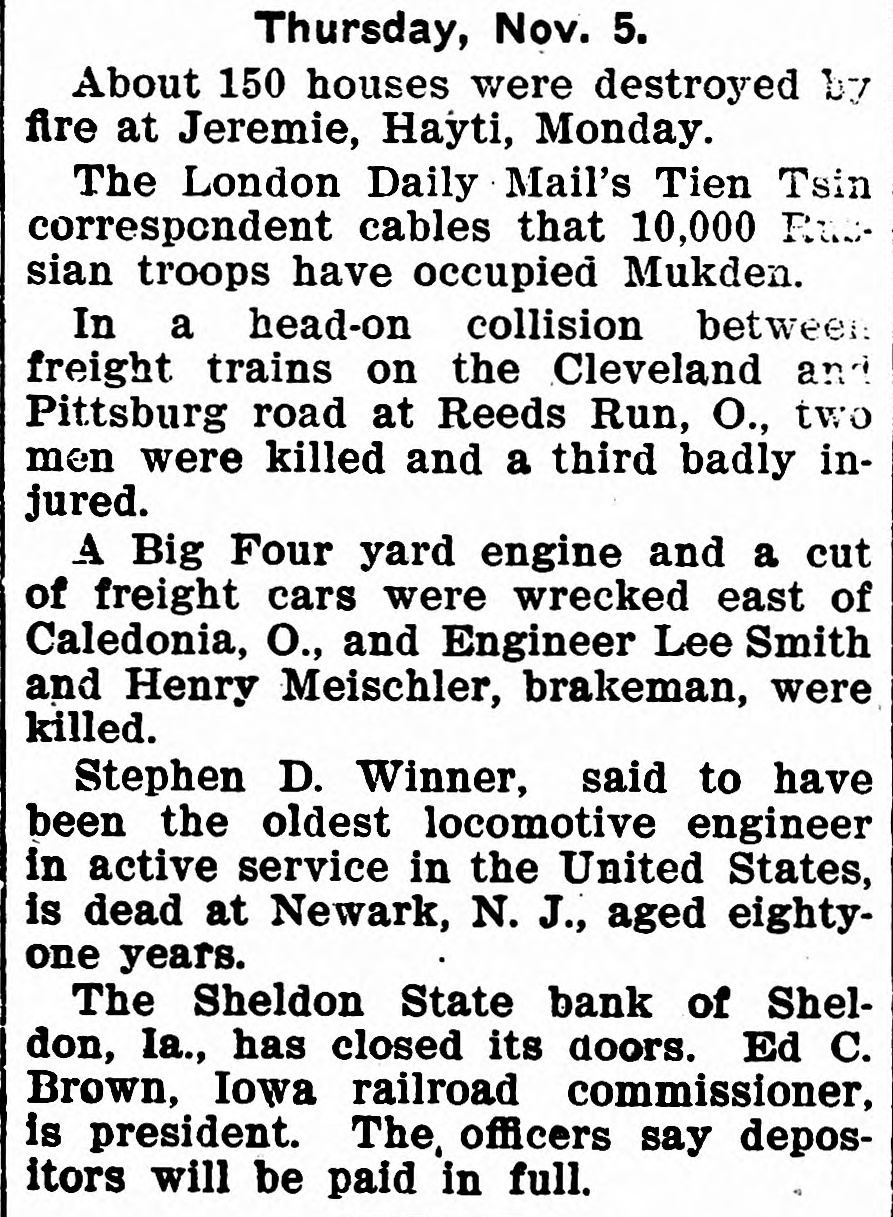
The bank had about $194,000 deposits when it failed, on November 3 last. R. W. Ady is receiver, W. D. Boies attor- ney for the receiver, and Joe Moreton of this city county attorney.
Sympathy for the Browns.
It has been expected for a long time that Mr. Brown, who is serving his first term as railroad commissioner, would retire from the race for a re- nomination if he should be indicted. His statement last evening following his Indictment, that he should no long- er attempt to be a candidate, occasion- ed no surprise, but it has resulted in a revival of expressions of sympathy. Without regard to plitics, people here feel a deep sympathy for Mr. Brown, who was always a public spirited citi- zen and a leader in the community, and for his family.
The bank matters were not taken up by the grand jury till yesterday, and there was little delay in voting the in- dictments. For a time after the failure there was much bitterness of feeling against the Browns, but the tide has turned recently, and expressions of re- gret are heard in all quarters.
The firm of Fix and company was handling a big ranch in North Dakota, in which the Browns invested too much money in a speculative transaction. This is not considered the only serious error of judgment, but it contributed largely to bringing about the crash.