Click image to open full size in new tab
Article Text
# TEXAS BANK GOES DOWN.
The House of Bonner & Bonner
Forced to the Wall.
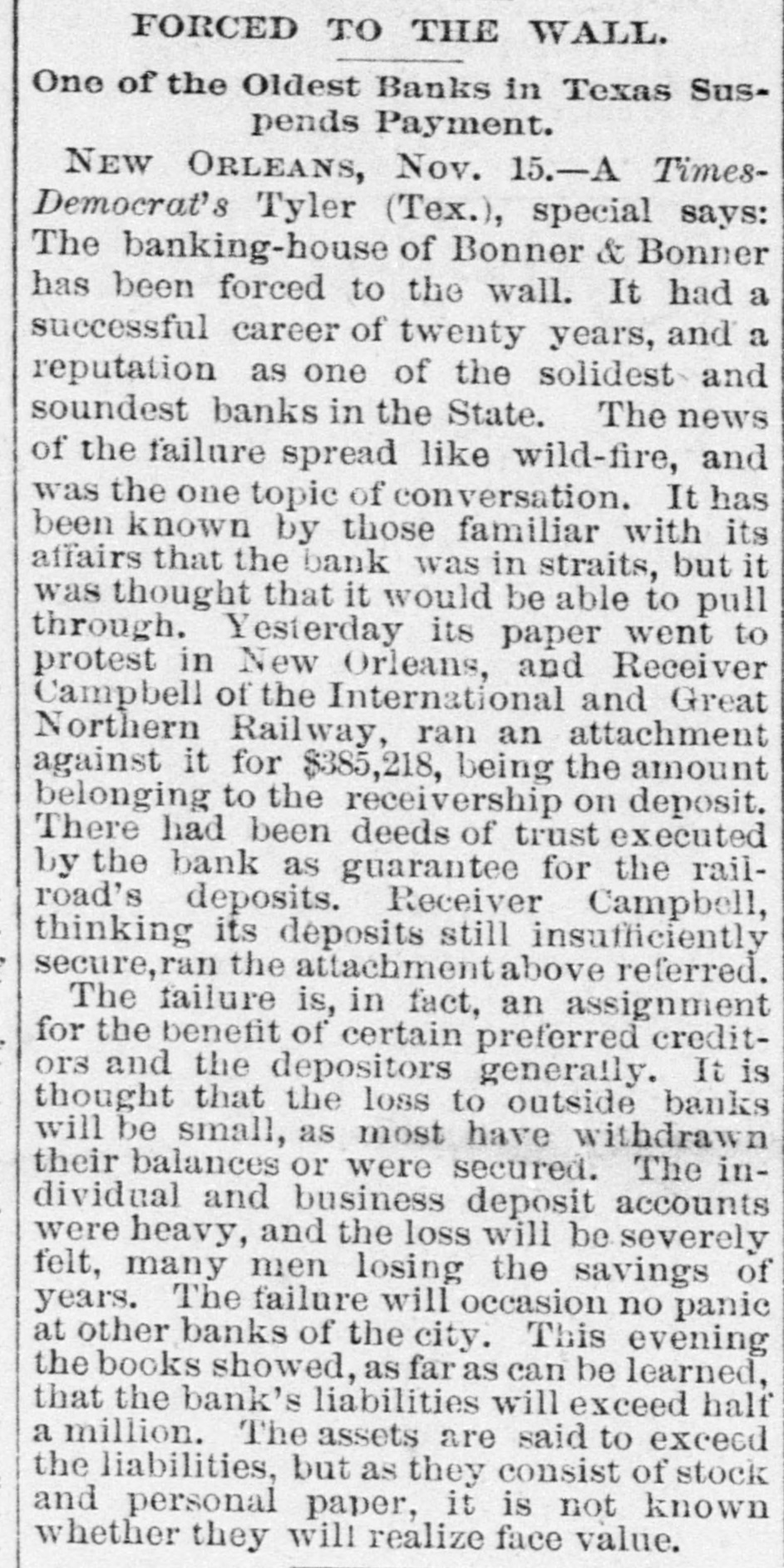
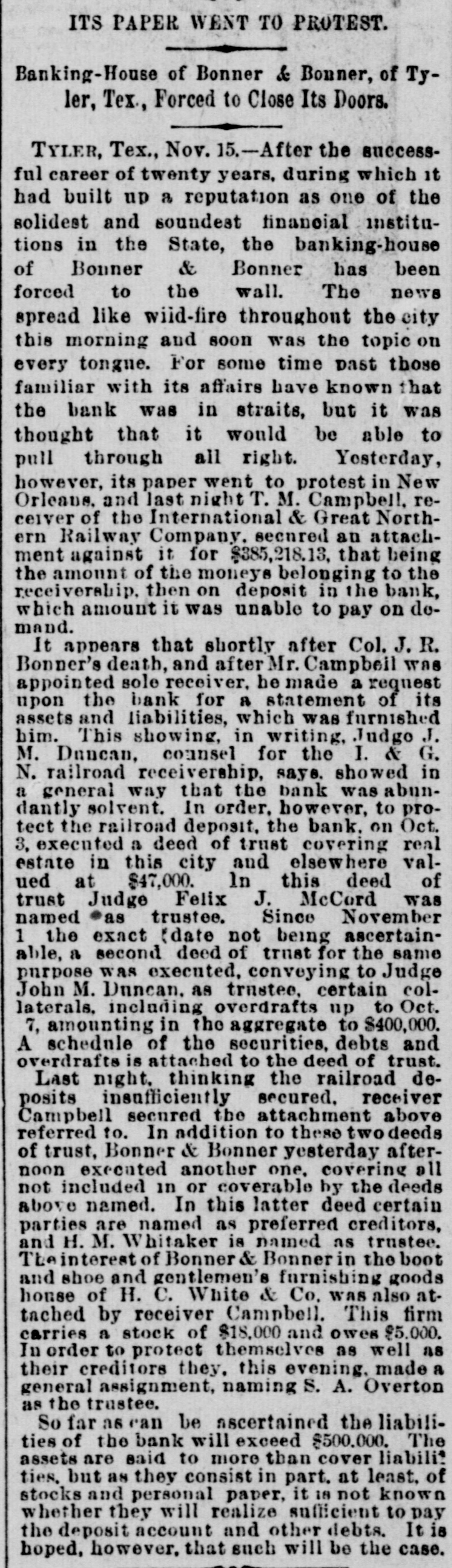
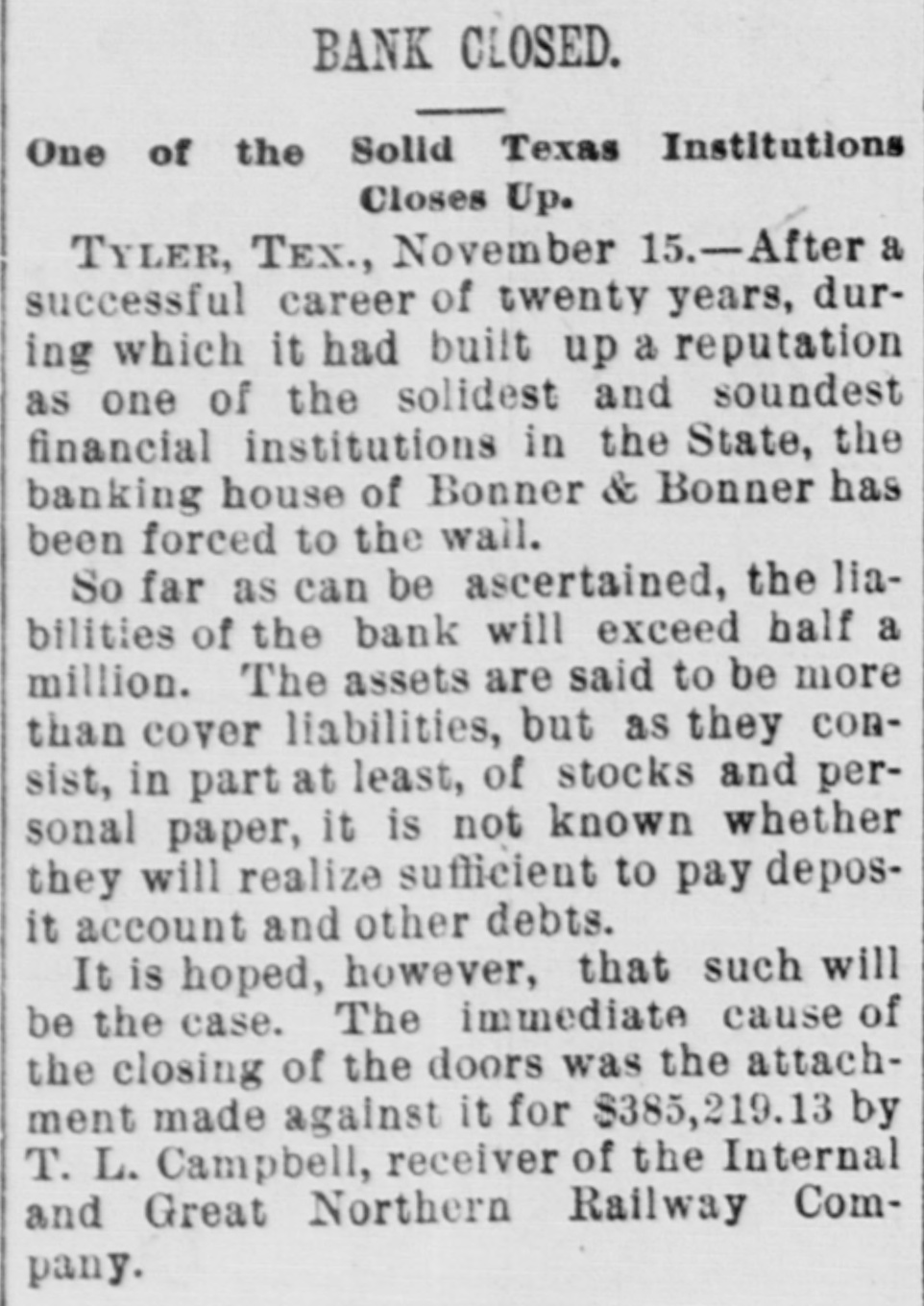
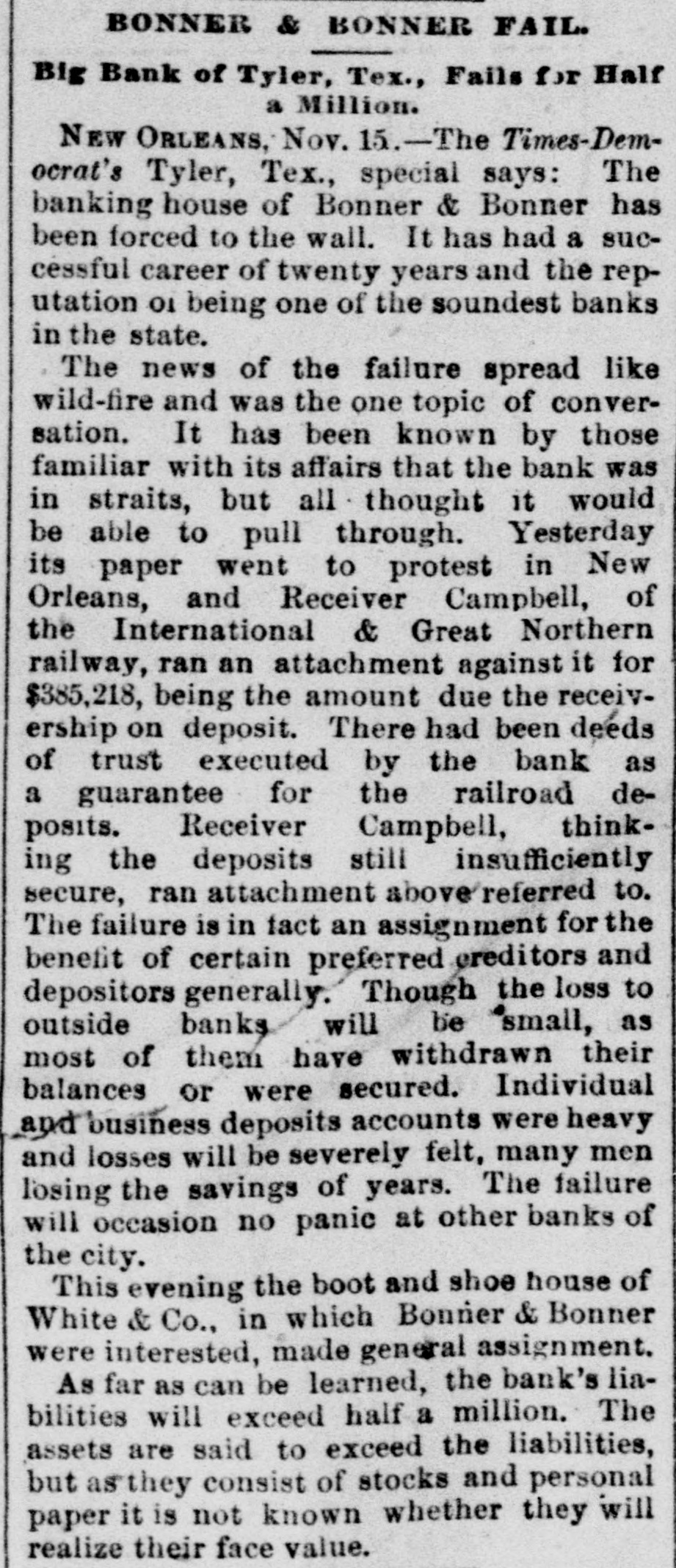
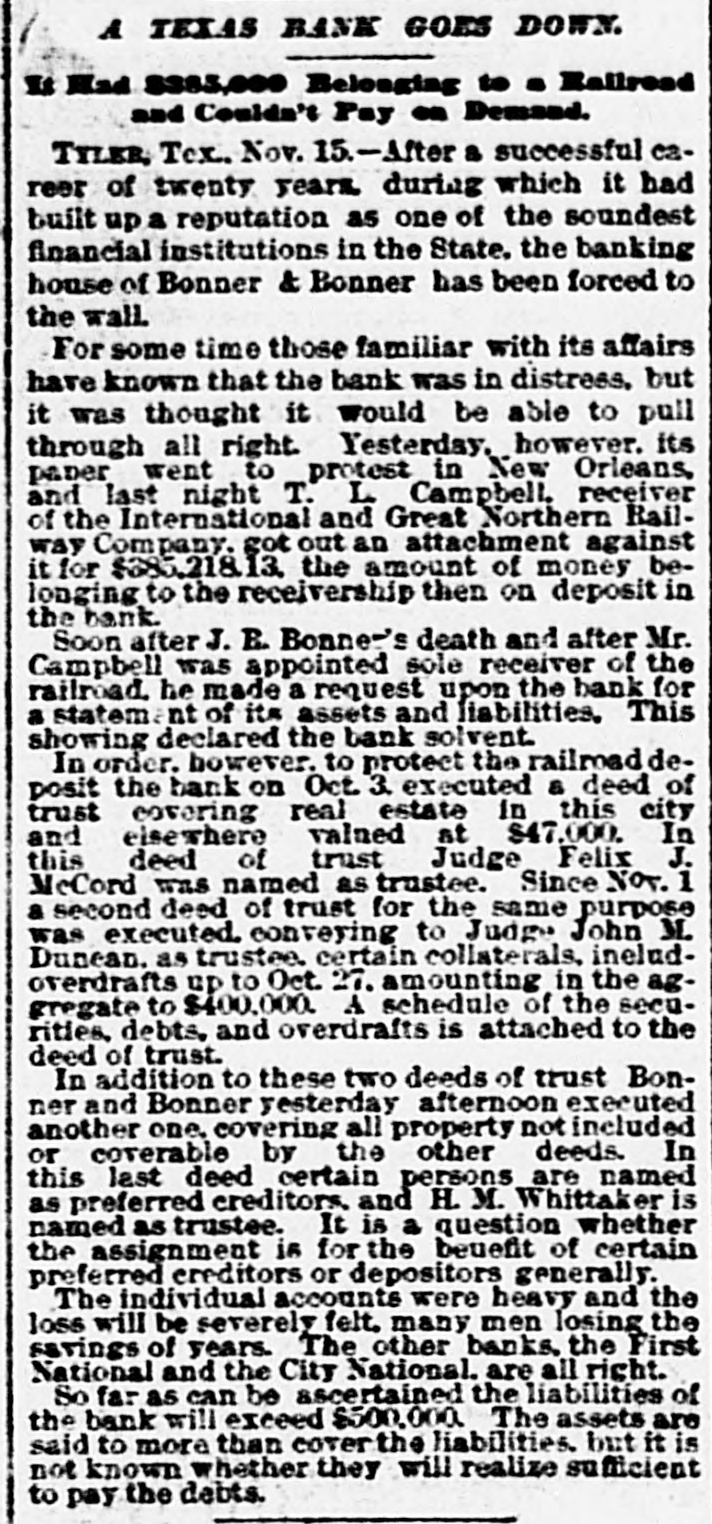
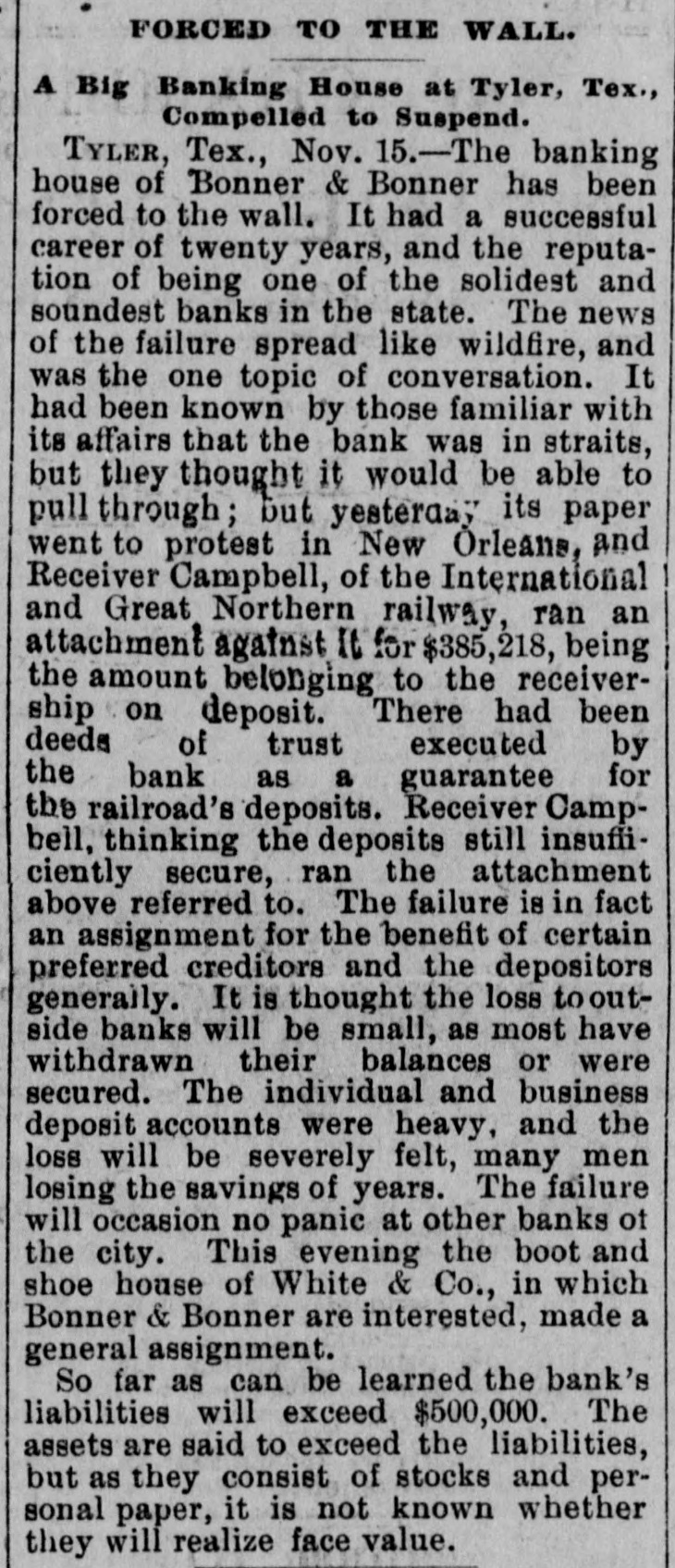
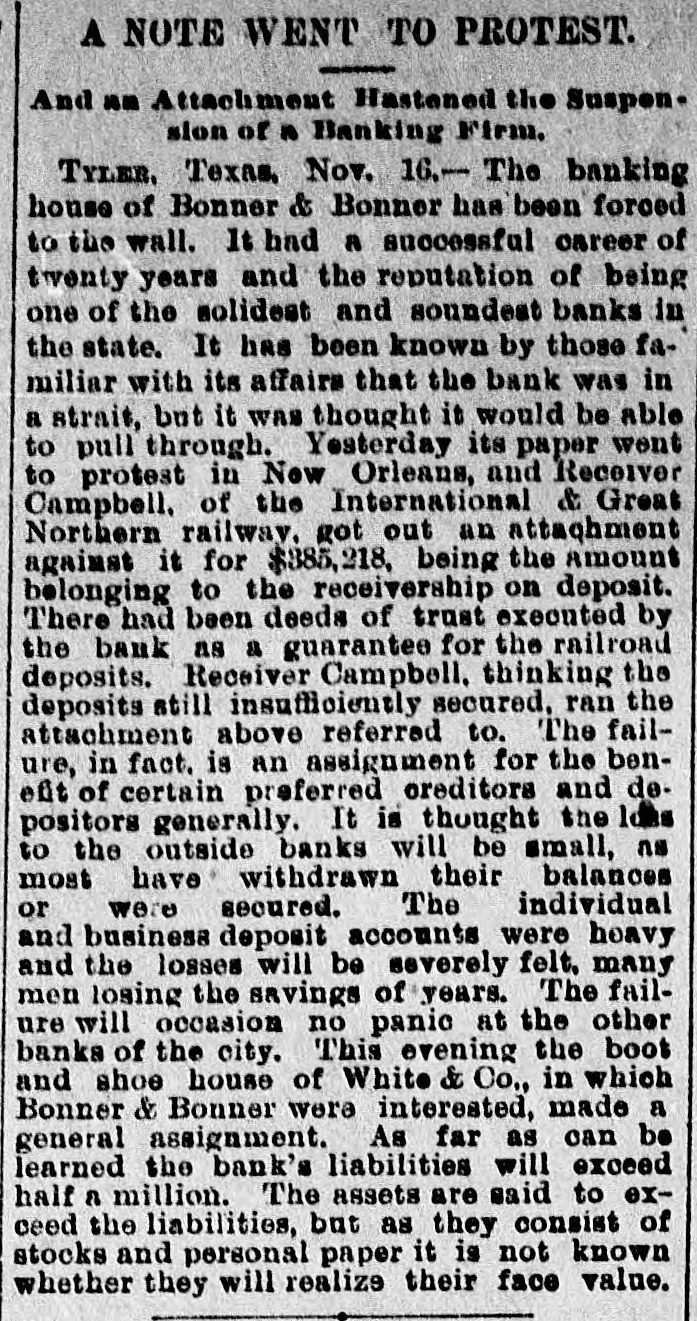
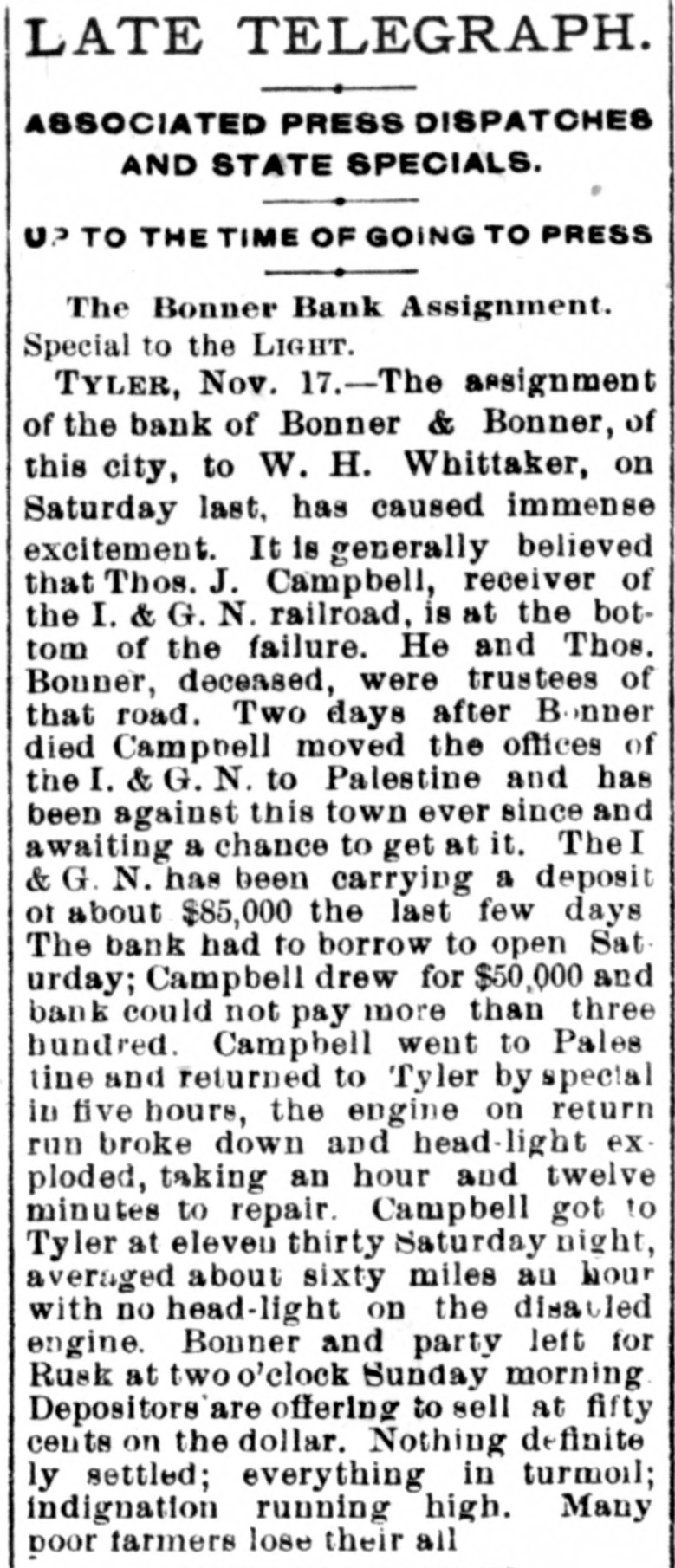
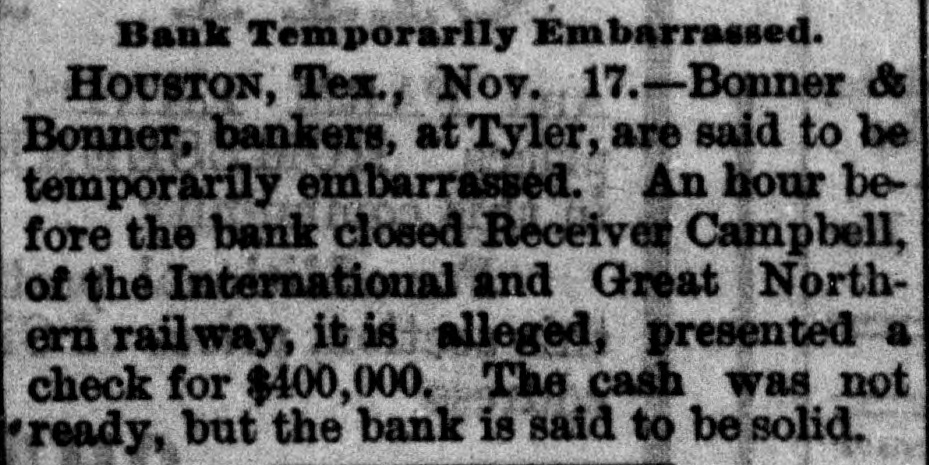
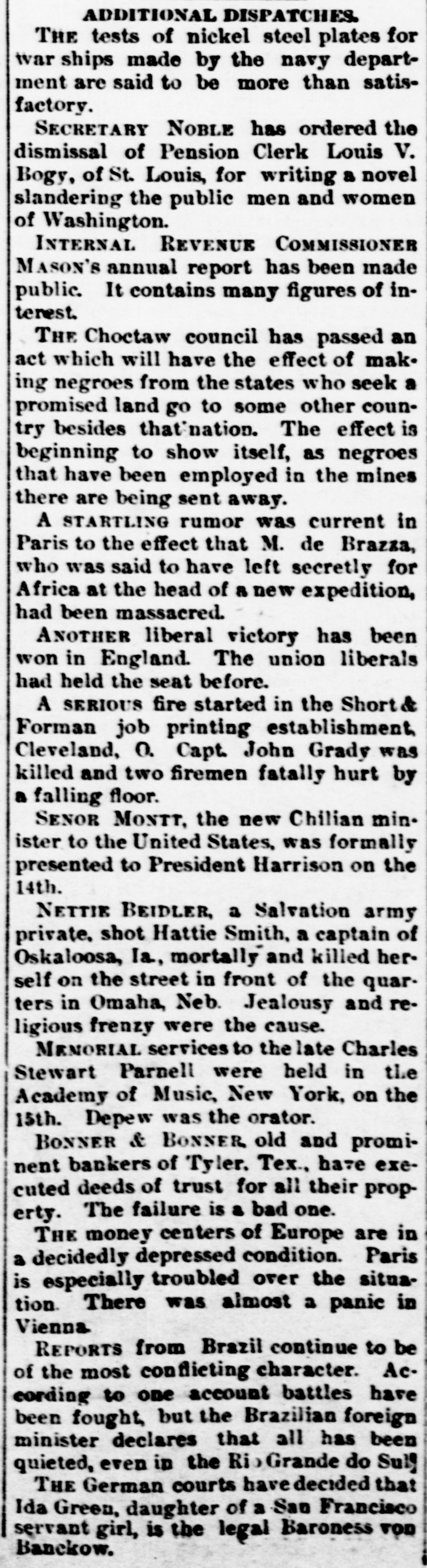
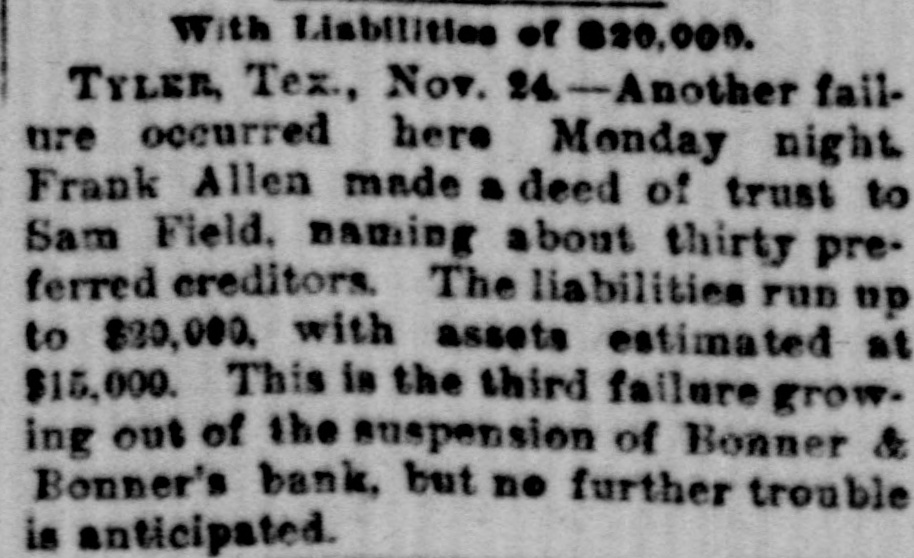
TYLER, Tex., Nov. 15. After a successful career of twenty years, during which it had built up a reputation as one of the solidest and soundest financial institutions in the state, the banking house of Bonner & Bonner has been forced to the wall. The news that it had failed spread like wild fire throughout the city this morning, and soon was the topic on every tongue. For some time past those familiar with its affairs have known that the bank was in a straight, but it was thought it would be able to pull through all right. Yesterday, however, its note went to protest in New Orleans, and last night T. L. Campbell, receiver of the International & Great Northern Railway company, ran an attachment against it for $385,000, being the amount of moneys belonging to the receivership, then on deposit in the bank, which amount it was unable to pay on demand. It appears that shortly after Col. J. B. Bonner's death, and after Mr. Campbell was appointed sole receiver, he made the request upon the bank for a statement of its assets and liabilities, which was furnished him. This showing in writing Judge J. M. Duncan, counsel for the International & Great Northern receivership, says showed in a general way that the bank was abundantly solvent. In order, however, to protect the railroad deposit the bank, on Oct. 3, executed a deed of trust covering real estate in this city and elsewhere valued at $47,000. In this deed of trust Judge Felix J. McCord was named as trustee. Since Nov. 1, the exact date not being ascertainable, a second deed of trust for the same purpose was executed, conveying to Judge John M. Duncan, as trustee, certain collateral, including overdrafts up to Oct. 27, amounting in the aggregate to $400,000. A schedule of the securities, debts and overdrafts is attached to the deed of trust.
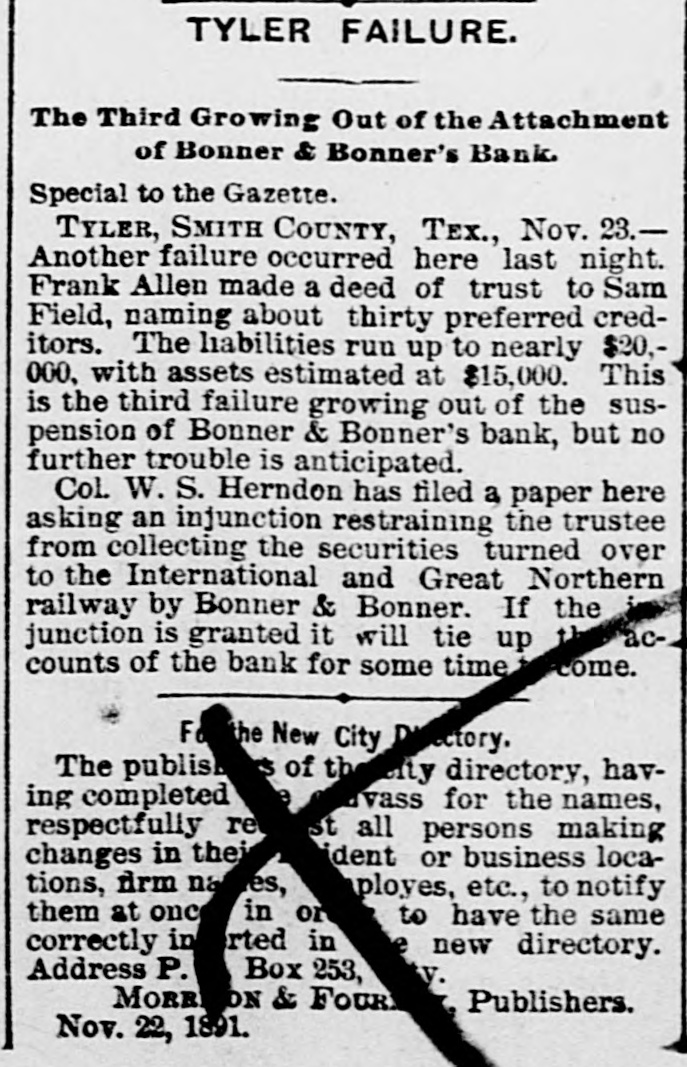
Last night, thinking the railroad deposits insufficiently secured, Receiver Campbell ran the attachment above referred to. In addition to these two deeds of trust, Bonner & Bonner yesterday afternoon executed another one covering all not included in or coverable by the deeds above named. In this latter deed certain parties are named as preferred crediters and H. M. Whitaller as trustee. It is, in fact, an assignment for the benefit of certain preferred creditors and depositors generally.
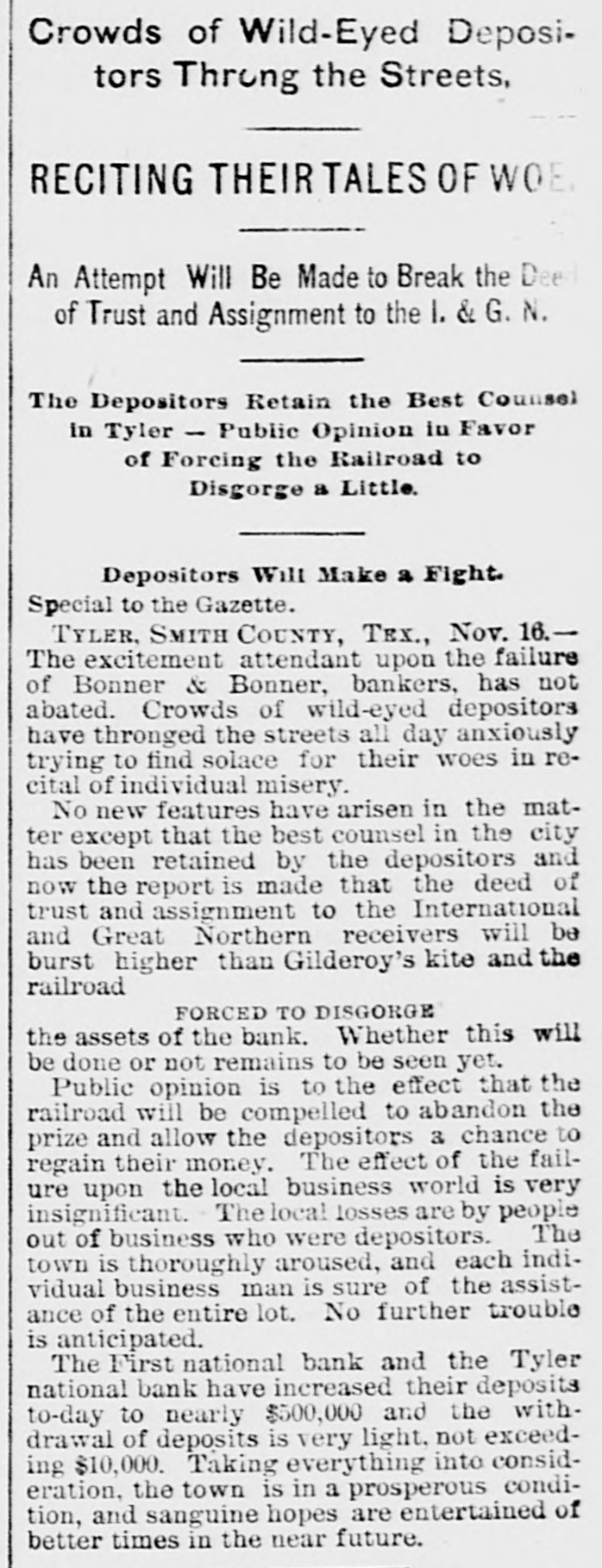
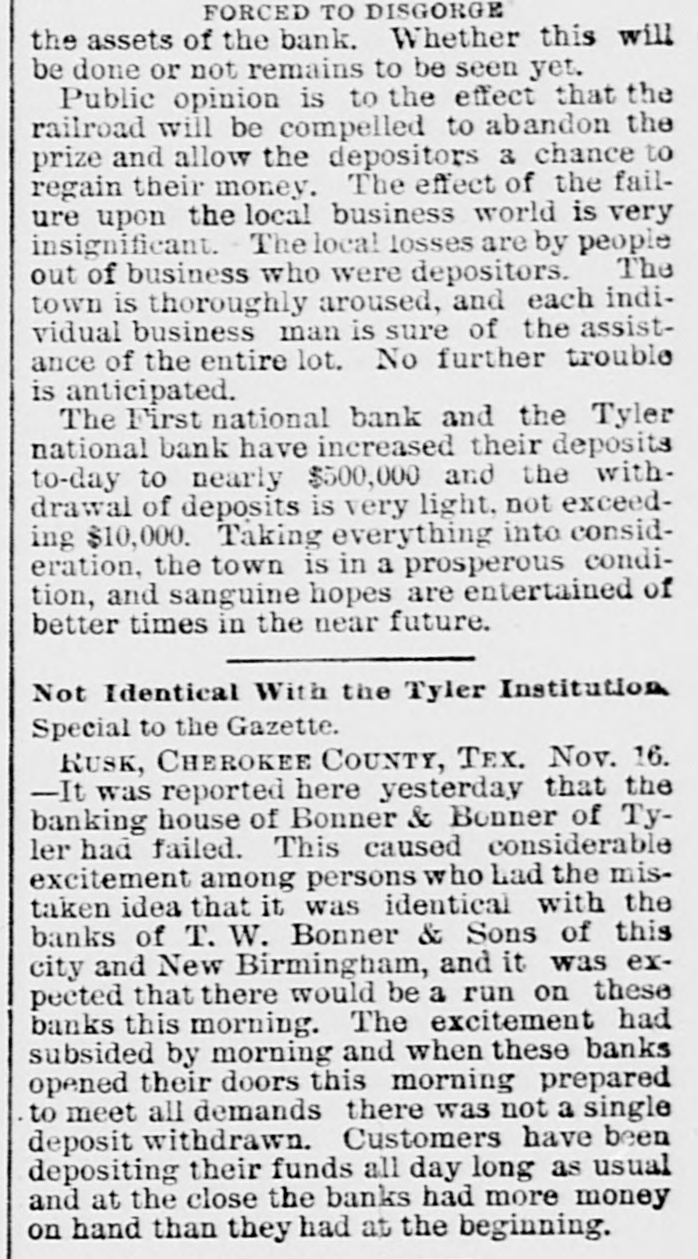
Just what the loss to outside banks will be cannot be learned, although it is thought it will be small, as most of them had withdrawn their balances or were secured. The individual and business deposits account was very heavy and the loss will be severely felt, many losing the savings of years. The other banks, the First National and the City National, are all right. They are strong and solvent and have the confidence of our people, who propose to stand by them. The failure will occasion no run on them nor the withdrawal of the single deposits.
The interest of Bonner & Bonner in the boot and shoe and gents' furnishing goods house of H. C. White & Co. was also attached by Receiver Campbell. This firm carries a stock of $18,000 and owes $5,000. In order to protect themselves, as well as their creditors, they this evening made a general assignment, naming S. A. Overton as trustee. Rumors flew thick and fast affecting the solvency of a number of leading firms, but careful inquiry developed the fact that they are not affected by the failure. Messrs. J. H. Brown & Co., the big cotton buyers, found unfounded rumors afloat about their firm and sent out the following telegram:
The failure of Bonner & Bonner will not affect us. Our assets are beyond liabilities, and, should our creditors treat us as considerately as heretofore, will meet every obligation. We shall conduct our business in the usual course, without extraordinary action. This wire to meet unfounded rumors afloat on account of Bonner & Bonner's heavy failure.
J. H. BROWN & Co.
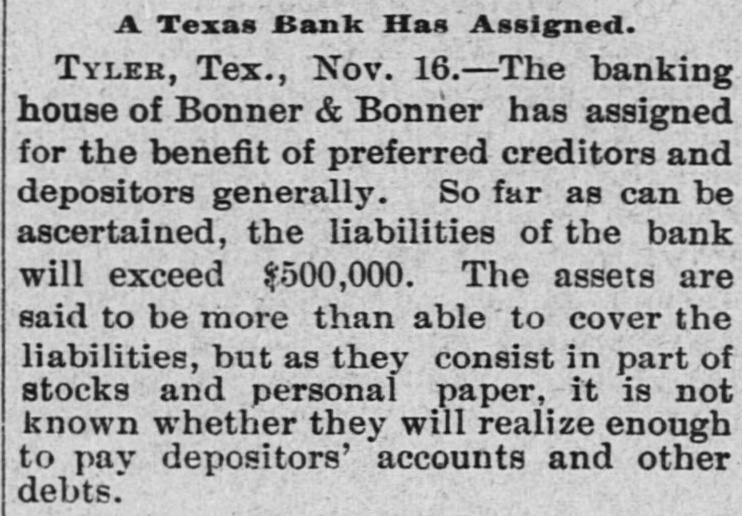
So far as can be ascertained the liabilities of the bank will exceed $500,000. The assets are said to be more than enough to cover liabilities, but as they consist, in part, at least, of stocks and personal paper, it is not known whether they will realize sufficient to pay deposits account and other debts. It is hoped, however, that such will be the case.