Article Text
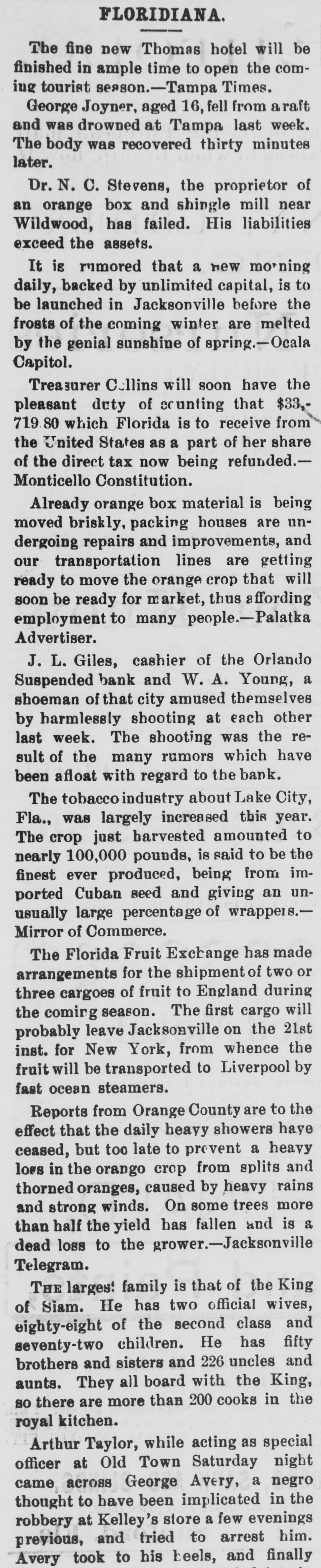
FLORIDIANA. The fine new Thomas hotel will be finished in ample time to open the coming tourist season.-Tampa Times. George Joyner, aged 16, fell from araft and was drowned at Tampa last week. The body was recovered thirty minutes later. Dr. N. C. Stevens, the proprietor of an orange box and shingle mill near Wildwood, has failed. His liabilities exceed the assets. It is rumored that a new mo'ning daily, backed by unlimited capital, is to be launched in Jacksonville before the frosts of the coming winter are melted by the genial sunshine of spring.-Ocala Capitol. Treasurer Cellins will soon have the pleasant duty of counting that $33,719.80 which Florida is to receive from the United States as a part of her share of the direct tax now being refunded.Monticello Constitution. Already orange box material is being moved briskly, packing houses are undergoing repairs and improvements, and our transportation lines are getting ready to move the orange crop that will soon be ready for market, thus affording employment to many people.-Palatka Advertiser. J. L. Giles, cashier of the Orlando Suspended bank and W. A. Young, a shoeman of that city amused themselves by harmlessly shooting at each other last week. The shooting was the result of the many rumors which have been afloat with regard to the bank. The tobacco industry about Lake City, Fla., was largely increased this year. The crop just harvested amounted to nearly 100,000 pounds, is said to be the finest ever produced, being from imported Cuban seed and giving an unusually large percentage of wrappers.Mirror of Commerce. The Florida Fruit Exchange has made arrangements for the shipment of two or three cargoes of fruit to England during the coming season. The first cargo will probably leave Jacksonville on the 21st inst. for New York, from whence the fruit will be transported to Liverpool by fast ocean steamers. Reports from Orange County are to the effect that the daily heavy showers have ceased, but too late to prevent a heavy lows in the orango crop from splits and thorned oranges, caused by heavy rains and strong winds. On some trees more than half the yield has fallen and is a dead loss to the grower.-Jacksonville Telegram. THE largest family is that of the King of Siam. He has two official wives, eighty-eight of the second class and seventy-two children. He has fifty brothers and sisters and 226 uncles and aunts. They all board with the King, so there are more than 200 cooks in the royal kitchen. Arthur Taylor, while acting as special officer at Old Town Saturday night came across George Avery, a negro thought to have been implicated in the robbery at Kelley's store a few evenings previous, and tried to arrest him. Avery took to his heels, and finally
