Article Text
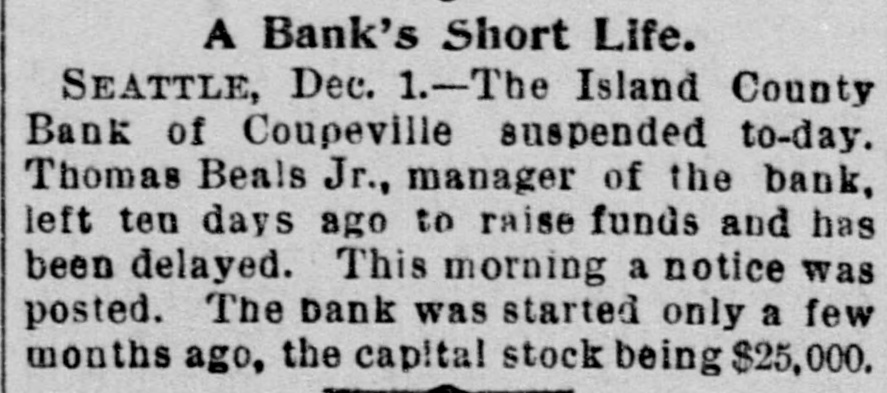
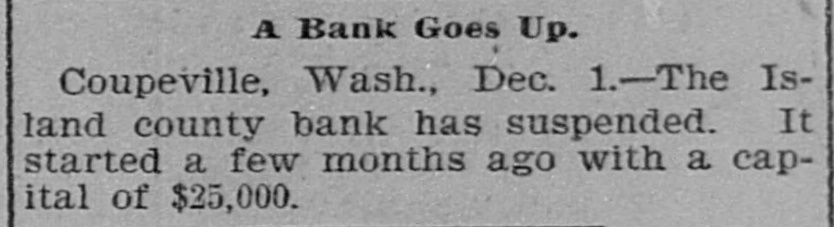
Probably the Heaviest Dealers in Skins in the World. BOSTON HOUSE ALSO CLOSED The Trouble Due to the Failure of the London Branch. Many Notes Permitted to Go to Protest -A Business of $5,000,000 a Year -Stock Too Large. NEW YORK, Dec. 1.-Abe Stein & Co., importers of goat skins, hides, etc., were placed in the hands of a receiver to-day. The house is the largest in its line in the United States and probably in the world, doing a business of $5,000,000. The receivership was precipitated, it is declared, by the sudden and unexpected suspension of the London house of Jacob Stein & Co., through which the New York firm did its business, Abe Stein, the senior partner, who is now in London, cabled that information, and also that drafts for a large amount had gone to protest. The liabilities of the firm are placed at $1,000,000, with large assets, the exact amount of which cannot be determined at present. The firm had a very extensive business, with branches in many foreign countries, and the effect of the fallure is expected to be far-reaching. David Wille was appointed receiver by Judge Bokslaver, of the Court of Common Pleas, to-day, on the application of Horwitz & Harshfield, attorneys for William H. Hildreth, one of the general partners, the bond being $50,000. The firm is a special CO. partnership, composed of Abe Stein and William H. Hildreth, general partners, Isaac P. Edwards and Edward S. Barrett, of Concord, special partners for $50,000 each. The latter two are in business in Boston, as Edwards & Barrett, wholesale dealers in foreign skins. Bradstreet's report states that Stein be gan the business about twenty years age and formed the firm of Abe Stein & Co. in 1883, composed of himself and S. P. Preston as general partners and Edwards & Barrett special partners for $12,500 each. This amount was subsequently increased until it is now $50,000. Mr. Preston retired from the firm in 1886 and Mr. Hildreth took his place. The partnership has been renewed several times, and on July 1, 1892, it was renewed for two years. Bradstreet's shaded the firm's credit rating one degree. The business of the firm during the late money stringency (was somewhat contracted and it met with losses by other failures and shrinkage, but the house was able to meet all obligations at maturity. In the application for the receiver it was stated that the firm was insolvent; that the concern had met with heavy losses and failures, $35,000 by John J. McConnell and $30,000 by Charles Tellingworth, both of Philadelphia; that bankers had curtailed credits, and that drafts to the amount of $60,000 had matured in London and could not be paid. It was also stated that the firm had been compelled to sustain a number of other firms in indorsing their commercial paper, to be discounted at the banks. It was further stated that Abe Stein had sent a cablegram from England that a large number of drafts held by parties who have discounted them, drawn by the firm and its branches on Jacob Stein & Co., of London, had matured and could not be paid. The assets are large, consisting of a stock of skins and hides and a large amount in good cutstanding accounts and bills receivable. The entire property of the firm has gone into the hands of the receiver without any preference whatever. Mr. Stein went to Europe about three months ago in the regular course of business, as he does every year, and he will leave London at once to return here to take personal charge of the adjustment of the firm's affairs. The attorneys thought that in all probability the firm would be able to speedily adjust its affairs and go on in business. The Boston House Also Fails. BOSTON, Dec. 1.-The leather firm of Edwards & Barrett, of this city, went under to-day as a result of their attempt to carry paper of the firm of Abe Stein & Co., of New York, for which a receiver has been appointed. Both members of the firm were special partners in the Stein concern. They had put $100,000 in the business. It is said that during the first part of their connection with the firm it paid a handsome profit, but they refused to draw it out and left the firm. When the panic came last summer Stein & Co. were caught with a big supply of goat skins on hand which they could not get rid of at any price, and, money being scare, they were forced to borrow largely. They easily obtained the indorsement of Edwards & Barrett to the firm's paper, and all along maintained that the firm was strong enough to outlast any panic. It is hinted that there was considerable speculating done by the New York firm, and that a good deal of money went in this direction. It is not known to what extent the Boston firm was on Stein & Co.'s paper, but it is a very large amount, and it is believed that the liabilities will reach close to $500,000. Other Business Troubles. NASHVILLE, Tenn., Dec. 1.-Messrs. Fite, Lyle & Davis, one of the largest wholesale dry-goods firms in the city, made a general assignment to-day for the beneflt of creditors. Thomas D. Fite is named as assignee. Liabilities, $156,347; assets, about $130,000. The failure was due to the general depression and inability to make collections. NEW YORK, Dec. 1.-An attachment for $45,000 against Beecher, Schenck & Co. in favor of the Southern National Bank was issued to-day. The attachment was granted on the ground that Beecher, Schenck & Co. was a foreign corporation. COUPEVILLE, Wash., Dec. 1.-The Island County Bank suspended to-day. The manager left to raise funds ten days ago, but was delayed. The bank started a few months ago with a capital stock of $25,000. A Murderer's Reason. TAYLORSVILLE, Ky., Dec. 1.-George Armstrong, colored, was hanged here at 7:20 o'clock this morning for the murder, about a year ago, of Kate Downs, a colored girl, with whom he had been intimate.