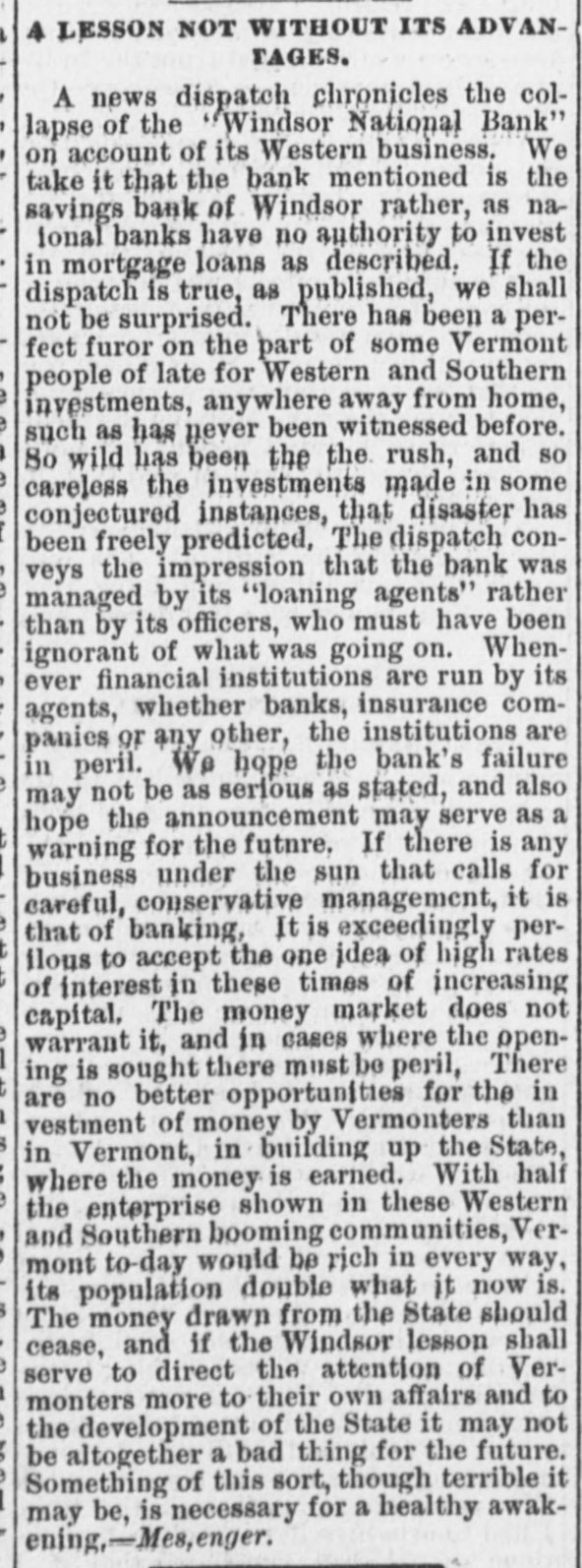
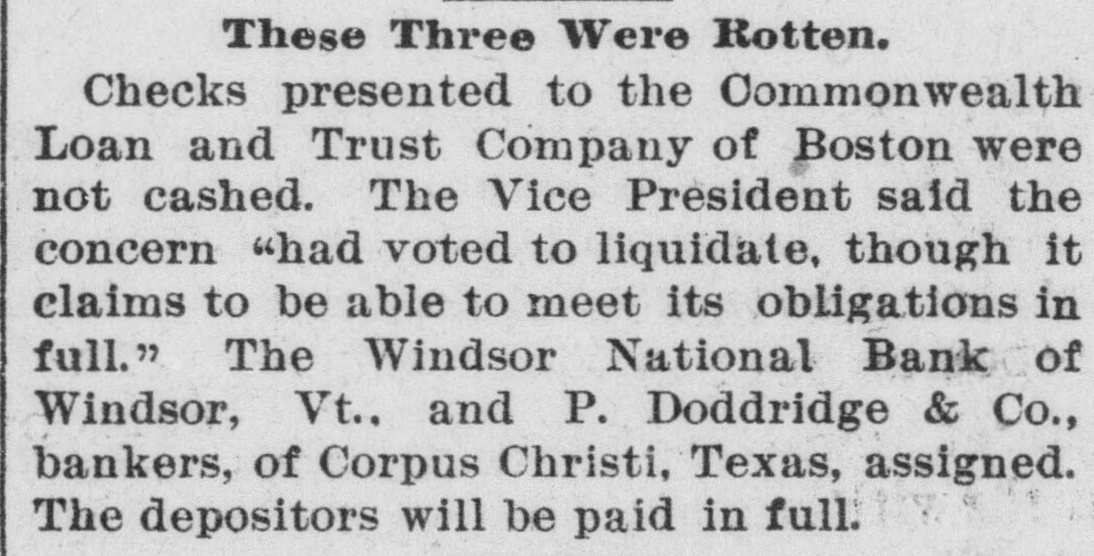
Article Text
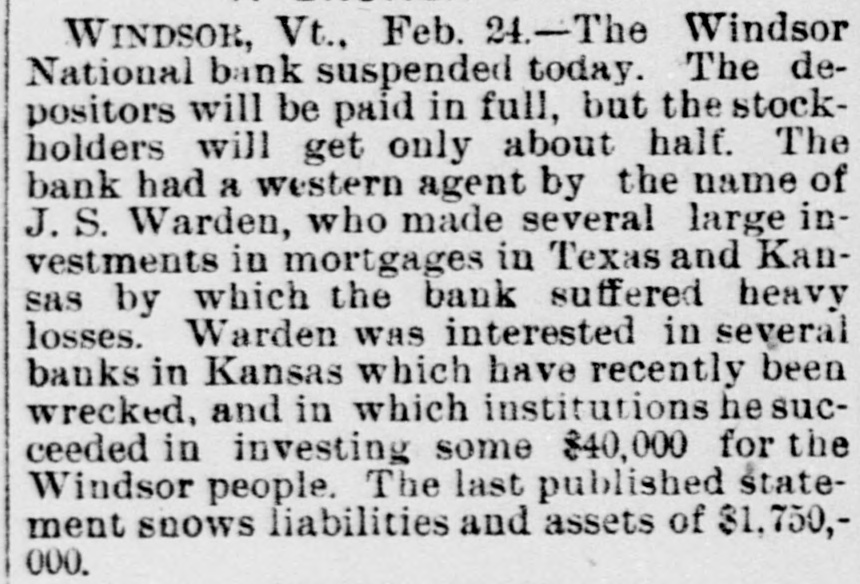
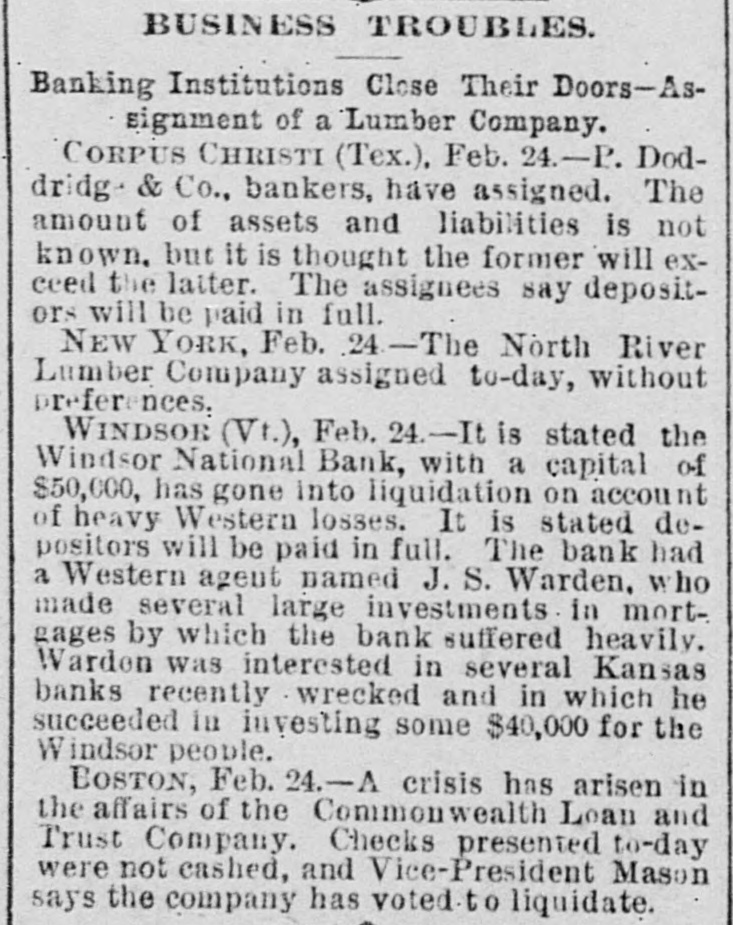
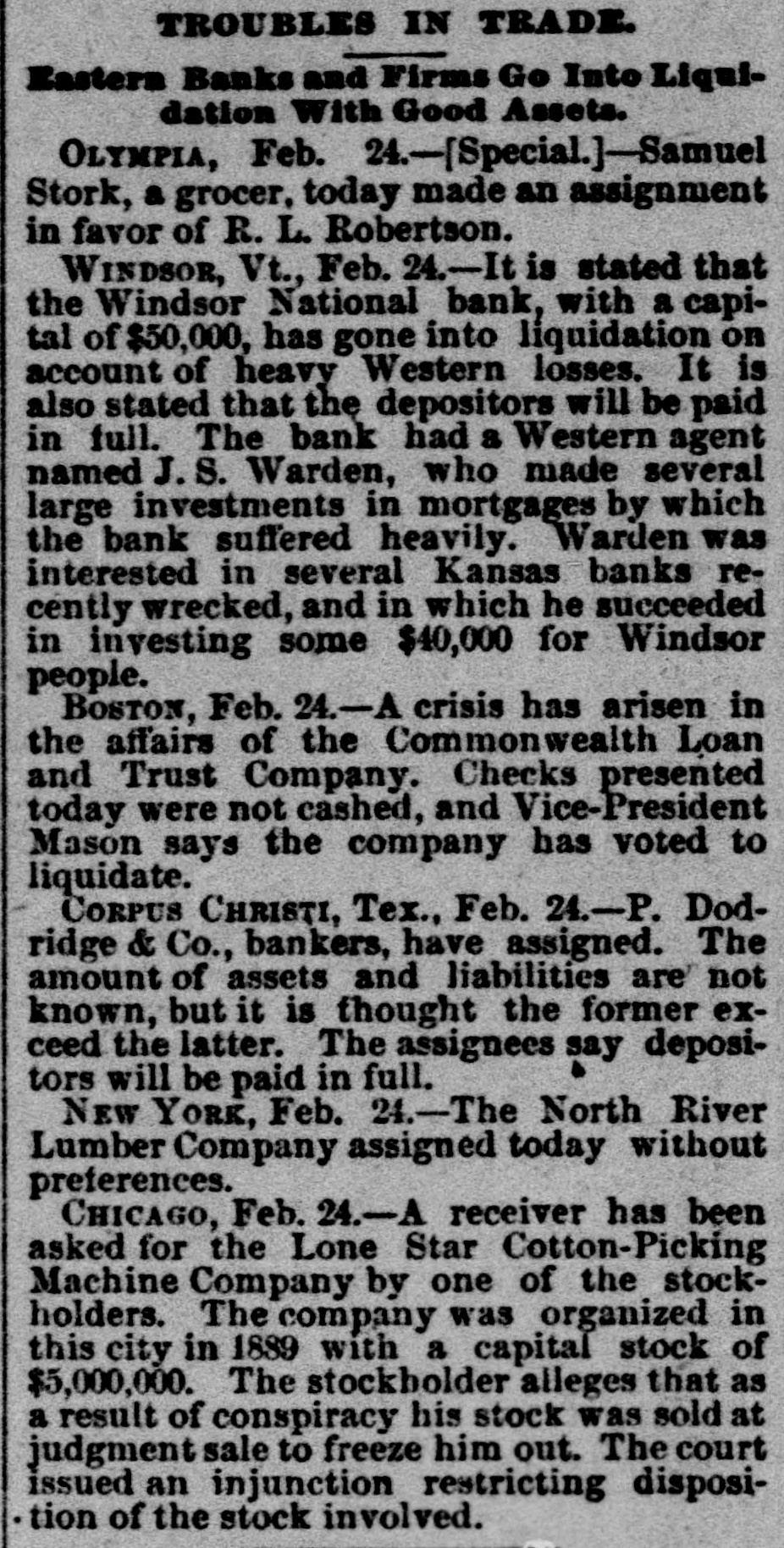
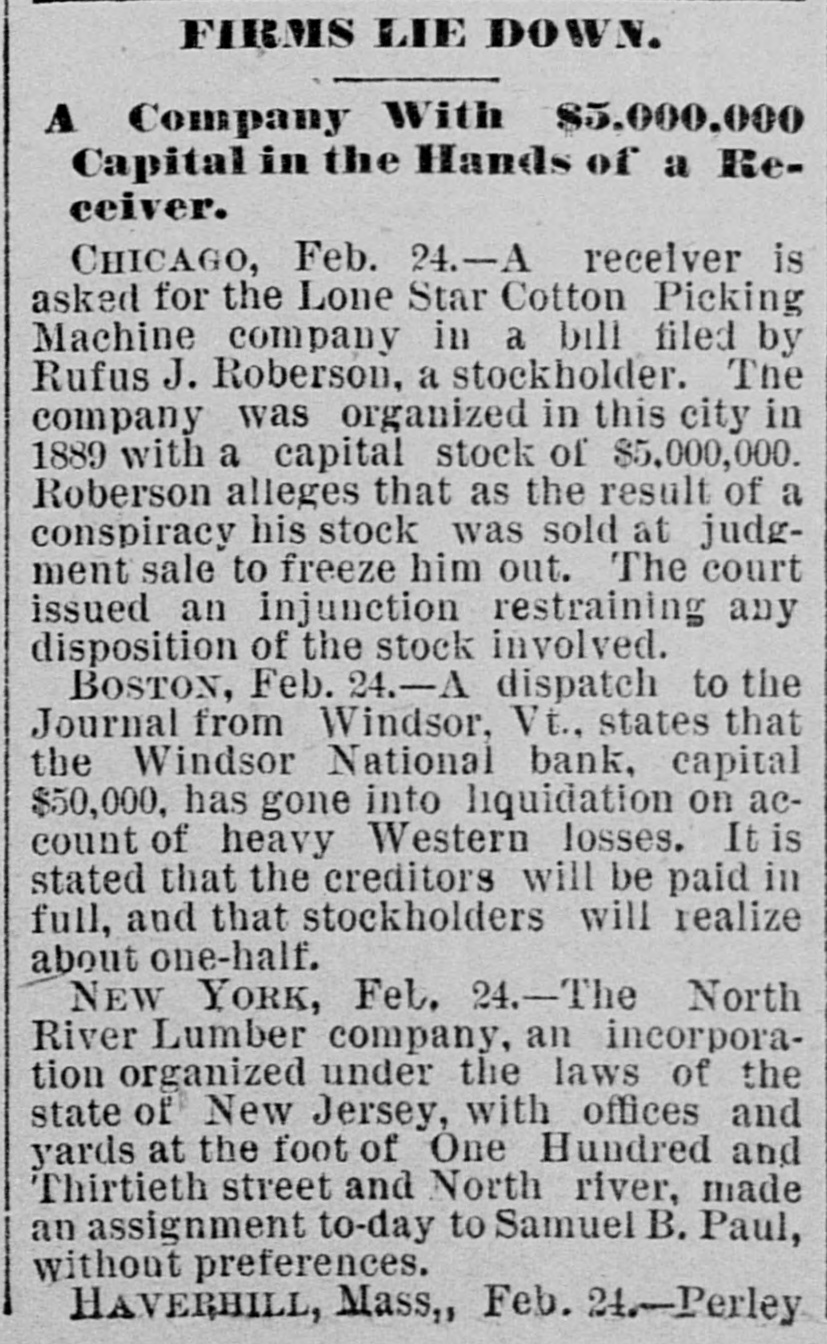
was Hero run the over at George depot 10 St Johnsbury Friday morning by mail train. bis bead was cut off. He was watching a freight train on the neit track Ice is Woodford Little pond. . few miles from Bennington, is still 12 to 14 inches thick. This is quite remarkable in view of th unusually mild season, although after the average winter it has not been uncommon to find it two feet thick as late as the last week in April E. T. Watkins of Westminister, Vt. died at Fort Payne, Ala., on Sunday evening of typhoid fever and hemorrhage of the bowels. He was buried there on the following afternoon. Joseph D. Billings, nearly 70 years old, and who 20 years ago was superintendent of the Central Vermont repair shops, is now an inmate of the Builand town poor farm. Master Mechanic McMaster of the Ben ington & Ratland railway has just received some solid steel wheels for the forward trucks of the locomotive E. D. Ben nett. Although steel wheels are in use on other roads, they are new to this part of the country, and Mr. McMaster intend* to give them a trial on the road. Iron wheels are in more general use than steel, but they are considered more treacherous than the latter. Steel wheels are guaran. teed for 150,000 miles, while an iron wheel is only guaranteed to rno 50.000 miles. With Ely's Cream Balm a child can be treated without pain or dread and with perfect safety. Try the remedy. It cures catarrb, bay fever and colds in the head. It is easily applied into the nostrils and gives relief with the first application. Price 50c. Secretary of War Proctor has promised the land and a $300 gift to start 8 Swed ish church in the town called by his family name. The great quarry owner is doing all hecan to encourage the Swedish influx Many Swedes are now employed by him The Newport Express says that Thomas Donaghy'y eight-year-old son, while lead ing a cow to water at Newport recently, was run away with by the animal and dragged 25 rods, receiving fatal injuries, The boy stumbled and fell, which frighten. ed the cow into a run. A new idea embraced in Ely's Cream Balm. Catarrb is cured by cleansing and bealing, not by drying up. It is not a liquid or snuff. but is easily applied into the postrils. Its effect is magical and a thorough treatment will cure the worst cases. Price 50c. The Rutland Telegram says: "Rev. Dr Lowell will not return to Ratland as pastor of the Methodist church. He has accepted a chaplaincy in the United States army to This is in compliance with an arrangement and request of Secretary of War Proctor during his recent visit. Mrs. A. E. Rankin of St. Johnsbury has t subscribed $5000 toward the erection of a chapel at Howard university, Washington, provided it be named in memory of her husband, "The Andrew Raokin Memorial Chapel." The president of the university is Rev. Dr. J. E Rankio, a brother of the late A. E. Rankin, # Frank Caldwell, 21 years old, who had recently bought the farm of Curtis o Slack, five miles from Chelsea village on A the Washington road, was found Friday 5 afternoon in the sugar place dead. He had committed suicide by hanging. He WH8 soon to be married to Mr. Slack's daughter E and no explanation can be given for the deed. F A meeting of the stockholders of the Windsor National bank will be de held May 5, to 600 what steps shall be take 08 FF o the future of the bank. By the failure it of several Kansas banks, and the collapse 0 of the Midland Accident Insurance com pany of Kansas City Mo., with other mis t1 ortunes, capital stock has been impairth d,and it will be uecessary to lay an assess. nent, or reduce the capital stock, or put he bank into liquidation. ro It is now said that Dr. J. H. Baxter, chief 80 medical purveyor of United States army' at looked upon in Washington as the most probable successor of Surgeon General M W Moore, who is to be retired in August. Dr. Baxter is a son of the late Portus Baxter 0' at by Vermont, and it 18 no more than reasonable o suppose that his superior claim to the bt osition will be duly recognized by Secre ary Proctor. He now outranks by at least C