Click image to open full size in new tab
Article Text
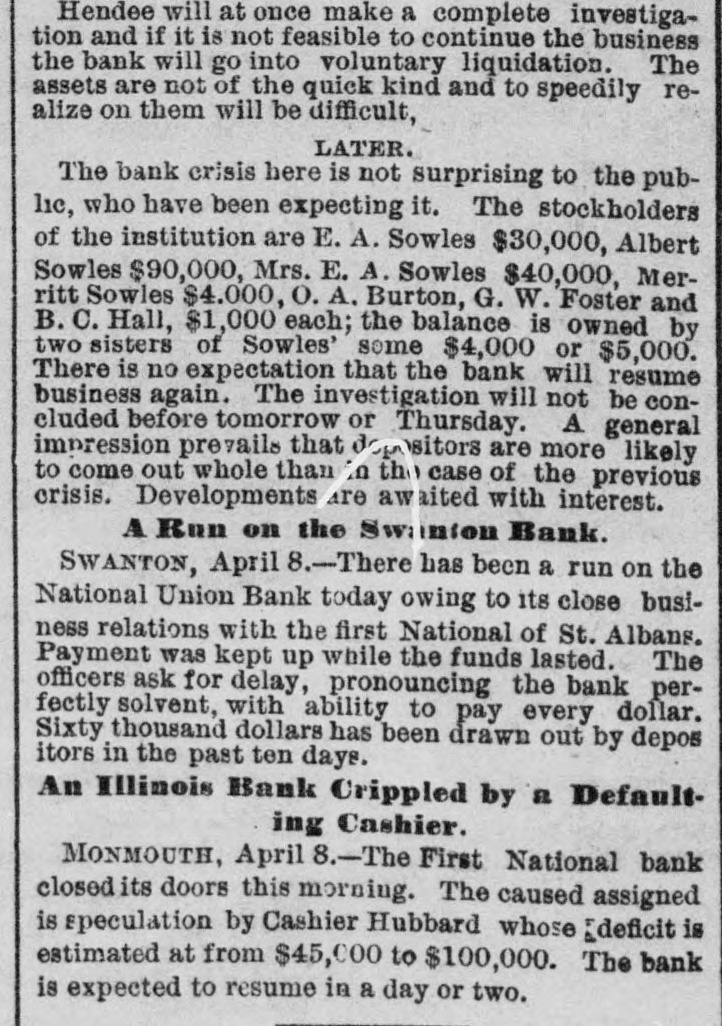
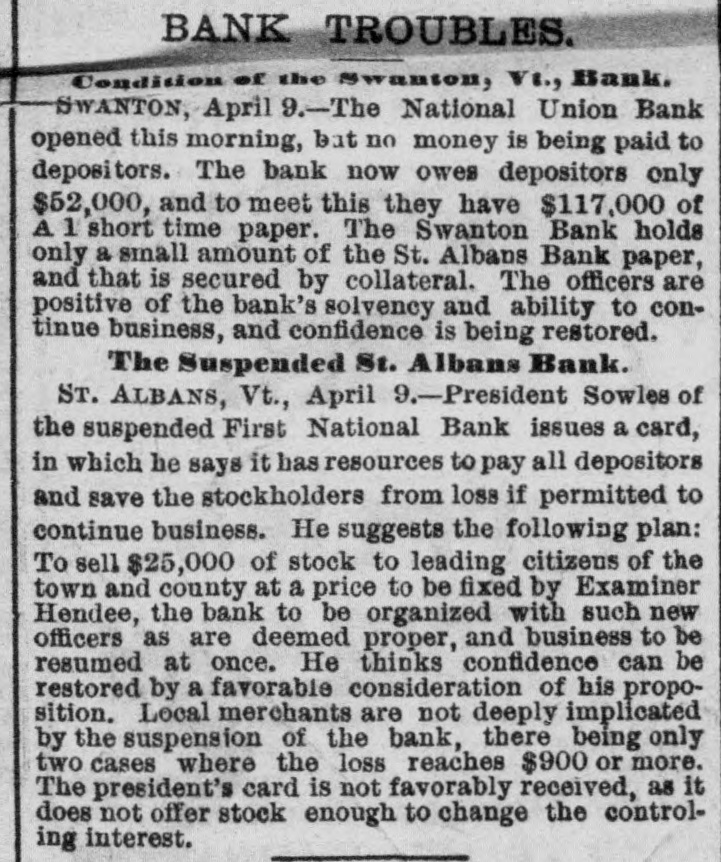
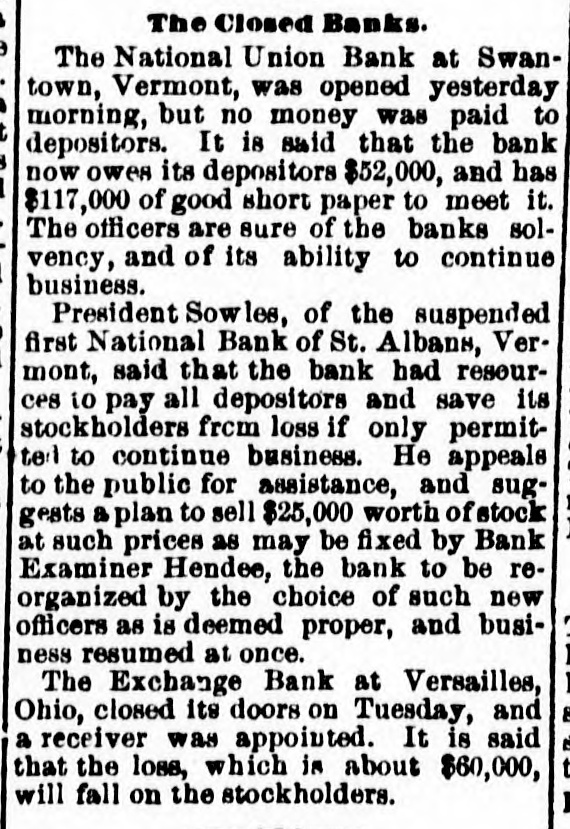
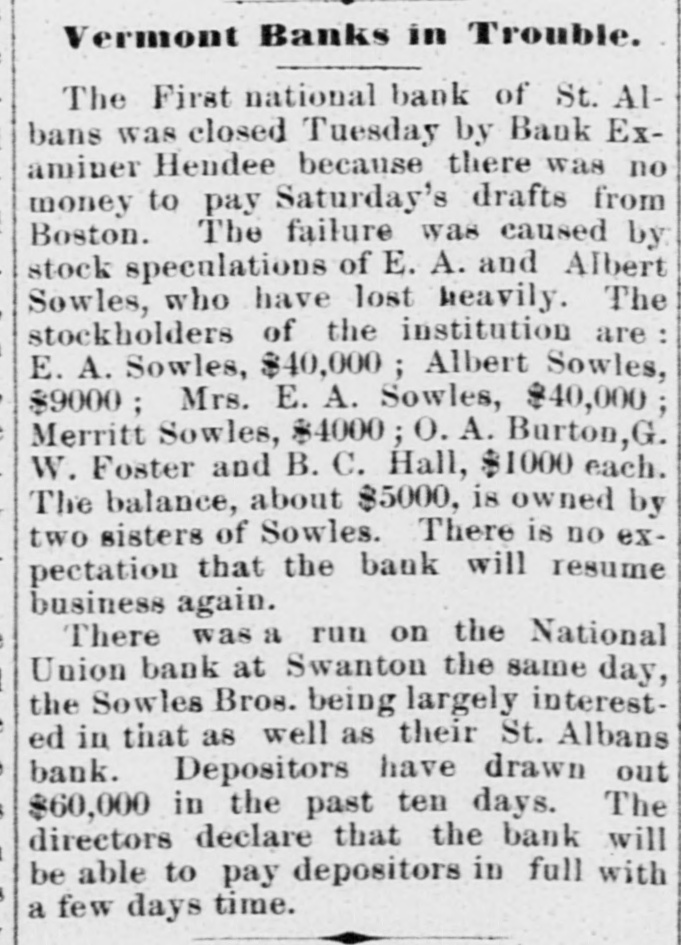
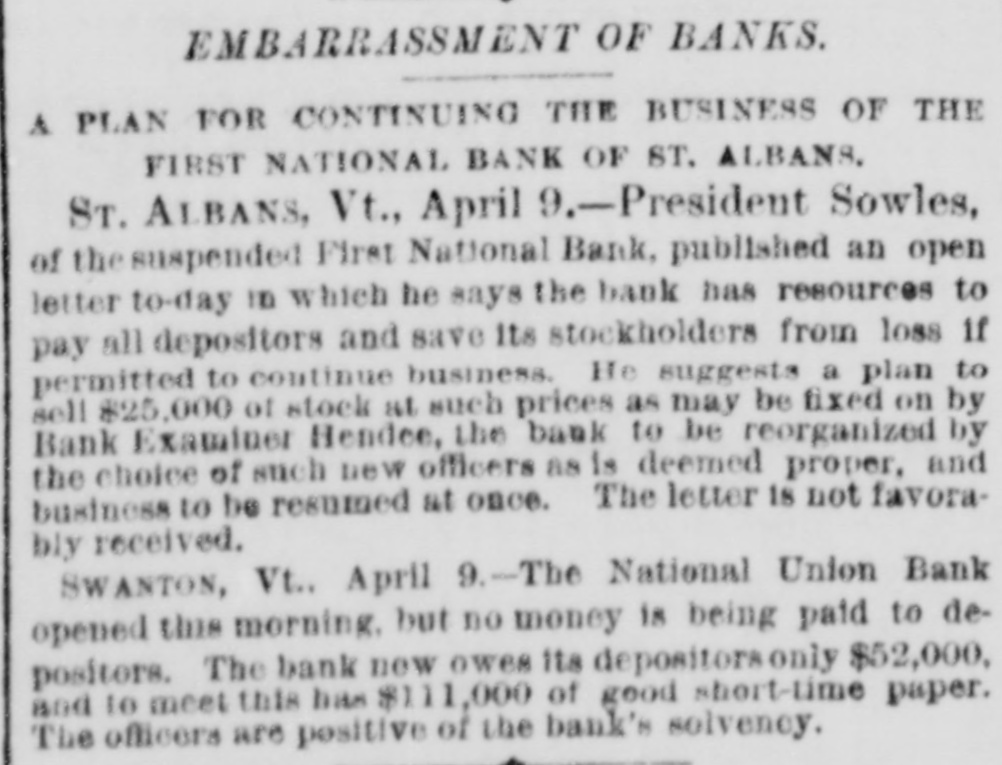
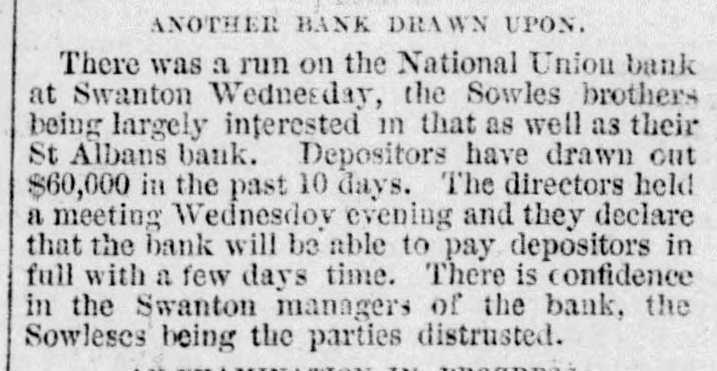
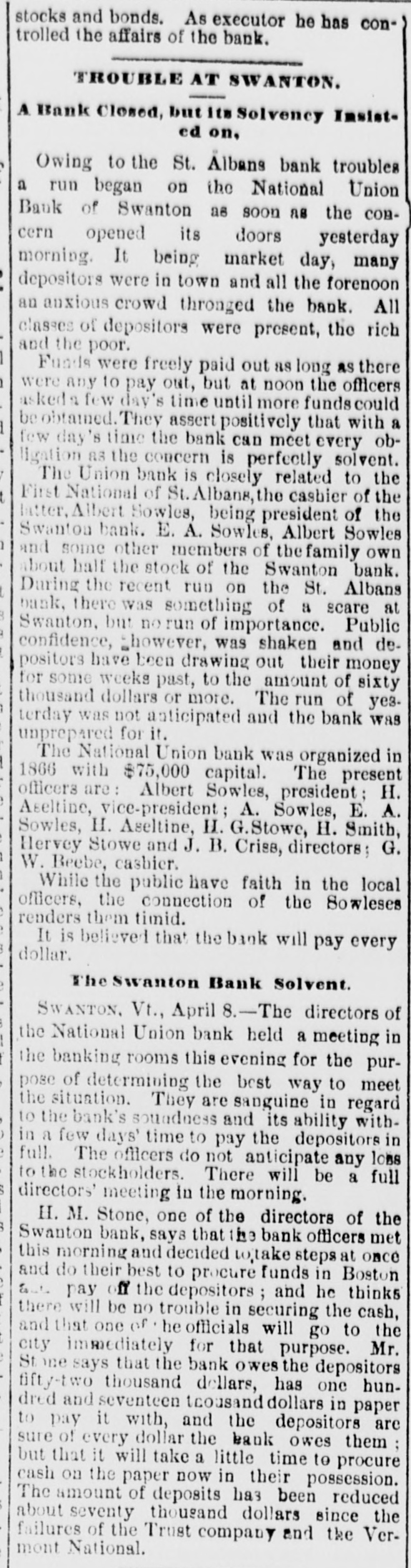
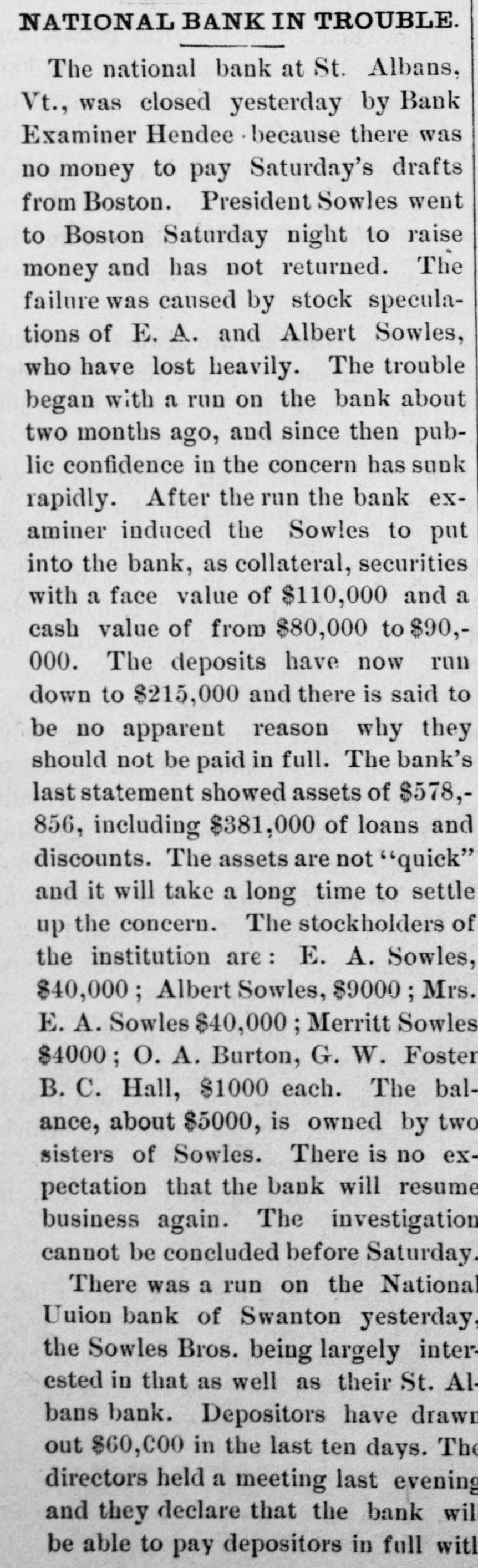
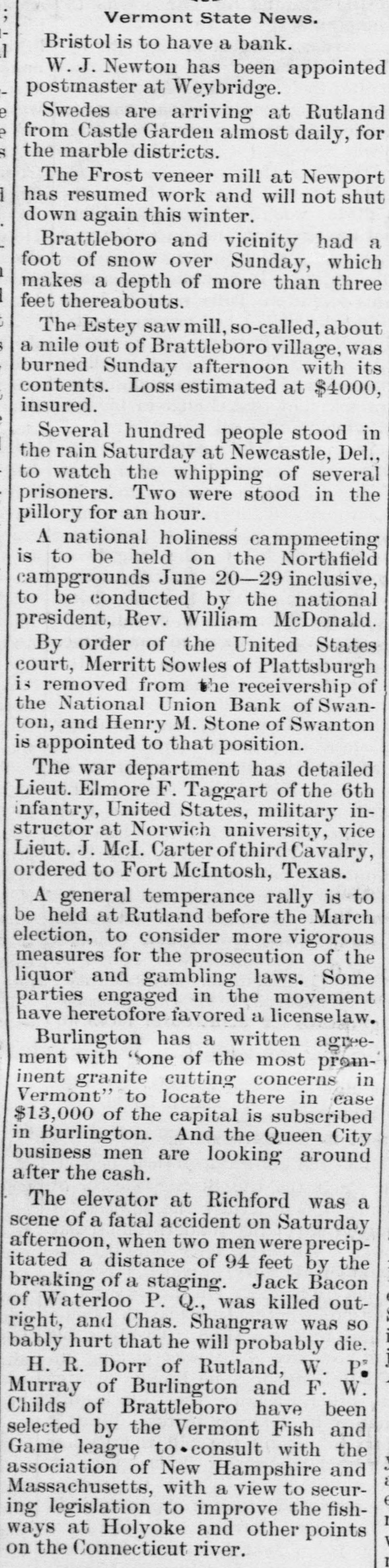
Vermont State News. BURLINGTON has a Herdic chariot.' THE Union National Bank at Swanton has been closed. RUTLAND is not likely to have the electric light before next fall. A VILLAGE improvement association has been formed at Swanton. THE reform school at Vergennes has sixtynine boys and eighteen girls in it. BRADFORD has five couples who have passed their golden wedding days. HOMER LYON of Shaftsbury caught a bear the other day in a trap set for a panther. THE Congregational church of Strafford has extended call to Rev. Charles Mills of Andover. Mass. BRATTLEBORO had a revival of Pinafore last week, under the auspices of the Philharmonic Society. MINISTER PHELPS will not only occupy Minister Lowell's ministerial shoes, but his London residence as well. ELEVEN grand lists of Wilmington people have been doubled this year because of their failure to file inventories. JOHN B. ROGERS, dealer in general merchandise, Walden, has been petitioned into insolvency. The libilities are $12,000; light assets. FRANK MOOR'S store, at Morgan Center, was entered Wednesday night of last week, and watches and jewelry to the amount of about $150 stolen. ALEXIS SKIFF of Hinesburg was found dead in his bed, Saturday morning, May 2. He was old gentleman about eighty, and was living with his granddaughter. IN Castleton, it is stated, it will cost thousands of dollars to repair or rebuild the miles of dilapidated farm fences, caused by the destructive high winds the last winter THE duties collected at St Albans during April amounted to $22,071.95. For the first four days of the present month the duties collected amounted to very nearly $1,000 a day. Z.A. MARSH, one of the older and most prominent men of Bridgewater, died Friday last. He had been postmaster in that town since the days of Lincoln, and has held many town offices. NONE of the bids made to Receiver Hendee of the Vermont National Bank at St. Albans are high enough to make the bank's debts good, and assessments on the stock will probably be ordered soon. THE members of the Rutland county Sheep Breeders' Union did not respond to the call for a public shearing at Castleton. inNot man nor sheep appeared. The dications are that the union is defunct. HERE is the March customs' for the district of Vermont: Value of imports, $289,950; duties, $62,223.94; value of domestic exports, $124,063; amount of entries to be transferred to other districts, $43,875. PROFESSOR SABIN'S position in the University of Vermont and as state chemist is being temporarily filled by Dr. Comey a recent graduate of Heidelberg. The medical class now numbers nearly two hundred. THE case of L. A. Drew vs. Rev. Thaddeus F. Stewart. an action for slander, that has been in the courts since 1883, has been settled, the defendant writing a letter of apology and paying the plaintiff's S counsel $40 and costs. WHILE Mrs. Jay Pierce of Starksboro was washing her dishes she said to her children that she thought she was dying, and. lying down on her bed. she expired immediately. She was aged about thirty and leaves five small children. TWENTY-FIVE men were discharged from the Boston & Lowell repair shops at St. Johnsbury, Thursday night, only six or eight being retained to clean up wrecks and do small repairs. The bulk of the repairs already goes to Concord, N. H. MR. AZRO F. SOULE, son of Mr. James M. Soule. hotel keeper at South Strafford, died Sunday. He had been in the employ of S. F. Frary & Co. twelve years or more and was young man of uncommonly good business abilities, who will be missed by all his friends. POWNAL planted one hundred trees Arbor Day: Franklin. two hundred fifty; Richford, five hundred: Arlington, one hundred; North Springfield, one hundred: Barnard, twenty-five Woodstock, five hundred: Cornwall, two hundred, and Rutland, three thousand. THE Brattleboro high school children have a fire drill as a part of their regular exercises. the children falling into line at a given stroke of the gong and marching out in proper order. Trial of this method shows that the building can be cleared in less than sixty seconds. d MRS. MIRANDA A. KELLOGG, widow of the late Judge Daniel Kellogg and daughter of the late Judge Asa Aldis of St. Albans, died at her home in Brattleboro, aged eighty-two Sunday- and exactly ten years after the death of her husband. She left her large estate to her brother, Judge Aldis, of the southern claims commission. THE St. Albans foundry has recently shipped to Smyrna, Asia Minor, one of their two horse powers and threshers complete for cleaning and threshing grain, and a large sized fodder shredder. They have been filling orders in Sweden and other foreign countries. besides many from different parts of the United States. THE COURT at Rutland refused to grant continuance in the state cases against Haven, on the motion made by Judge Dunton, supported by affidavits of himself and Mr. Haven, that a fair trial could not be had, on account of the prejudice against Haven, engendered by the Page trial. The court intimated that events might arise which would warrant a continuance, but did not think anything now sufficient. it THE Russell Paper Company of Bellows Falls is building another mill. in which they will put the largest paper machine in the United States. It is to be a Harper h Fourdrinier machine over one hundred forty feet long. The drive-rolls are fifty-four inches in diameter and over ninety inches long. This machine designed for newspaper, and makes three sheets at one time. It will cost about $20,000. a THE third annual encampment of the Sons of Veterans, Vermont division, was held at Rutland, Wednesday of last week. The following officers were elected and in11 stalled by Post Commander, Louis V. Green of Rutland: C. F. R. Jenne of Brattleboro, ncommander: George E. Terrill of Underhill. lieutenant comunder: J. S. Drenan of Hardwick, vice lieutenant commander and O. R. Leonard of Brattleboro, chaplain PATRICK TIGUE, asawyer in Sheldon's mill 11. at West Rutland, recently had narrow escape from death. While adjusting some d, machinery above a gang in motion he stepped on a plank which gave way and he of fell on the moving saw beneath. Withgreat presence of mind he managed to draw his body near an opening and to drop under ic the framework of the gang and thence to he place of safety. He escaped with a few e bruises. F McKNIGHT of Wallingford, about twenty. two years of age, returned from a day's hunting excursion, and. being somewhat exhausted. drank from a bottle which he suput posed contained liquor, but which proved to prebe alcohol and aconite, that had been