Click image to open full size in new tab
Article Text
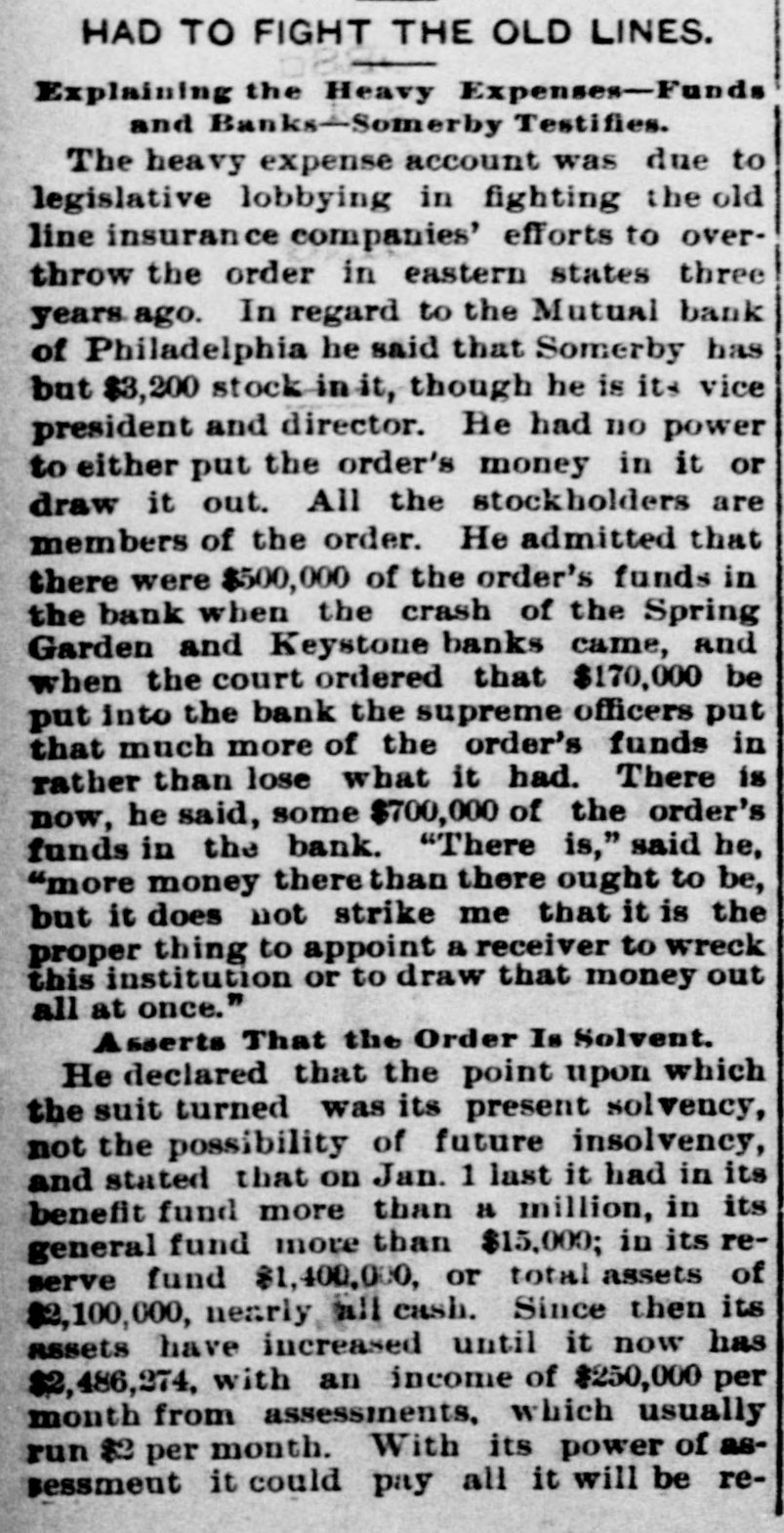
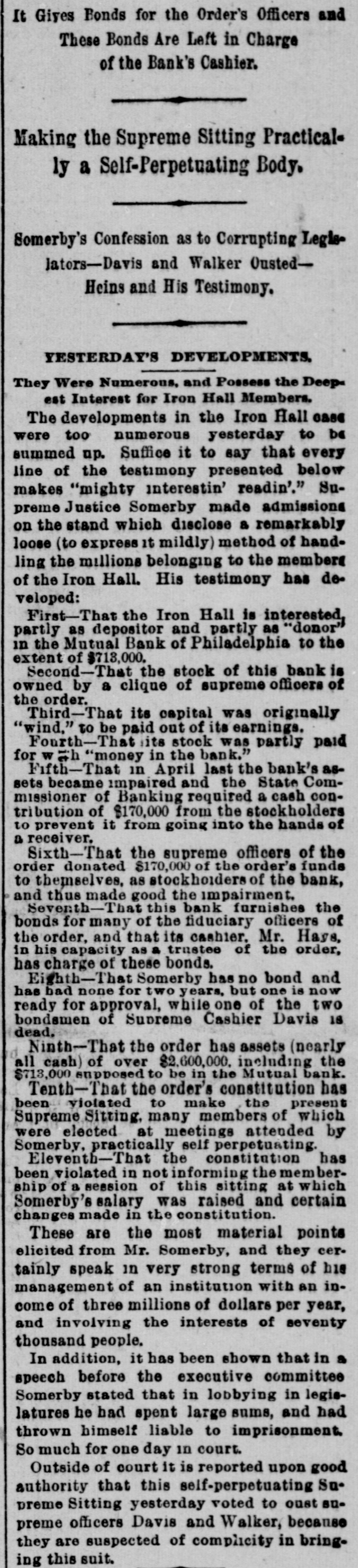
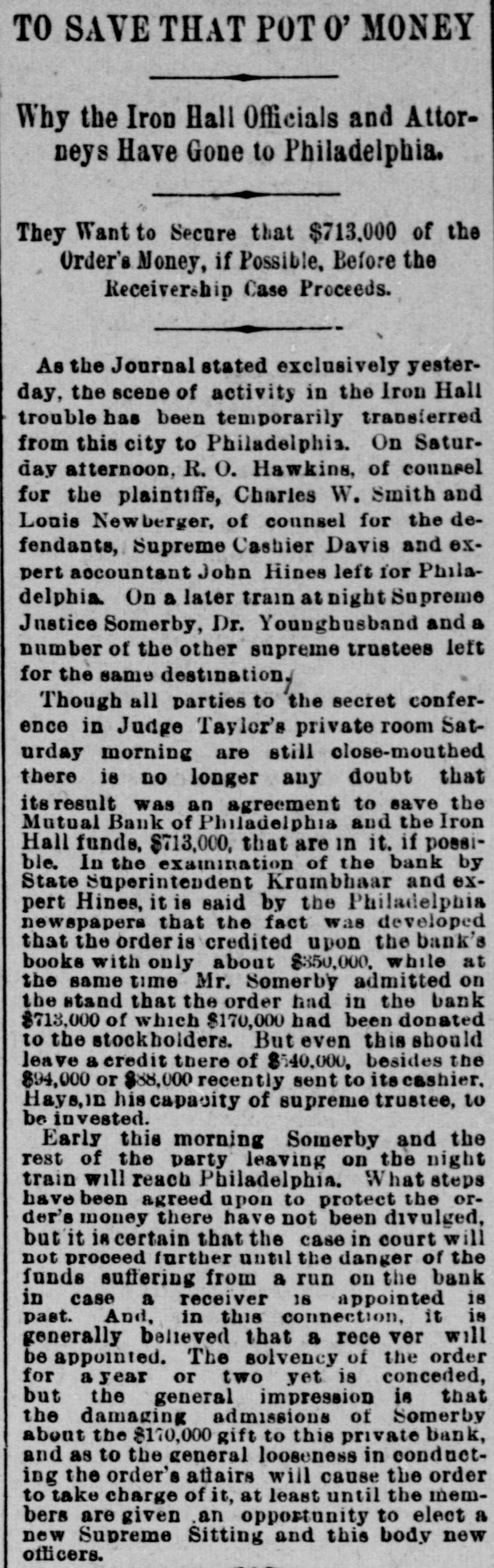
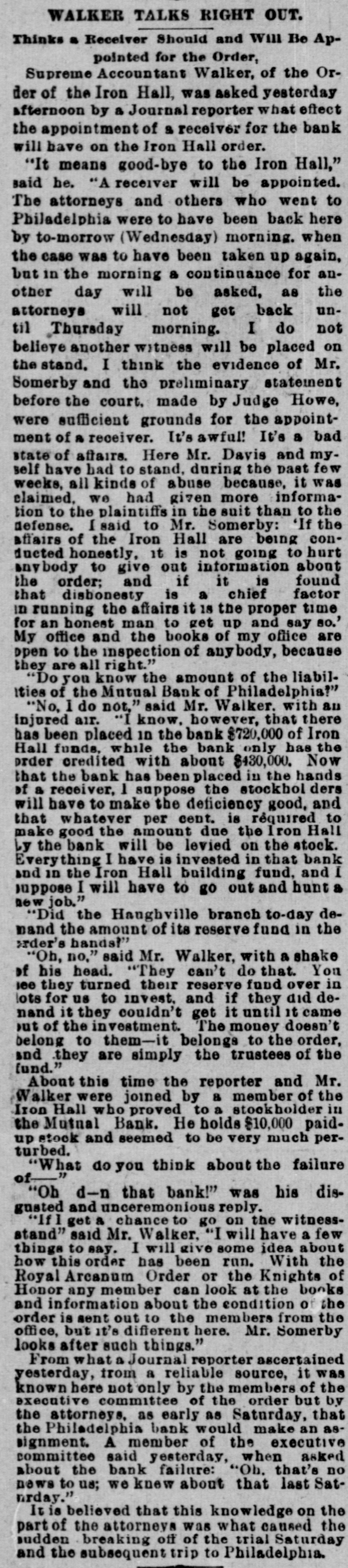
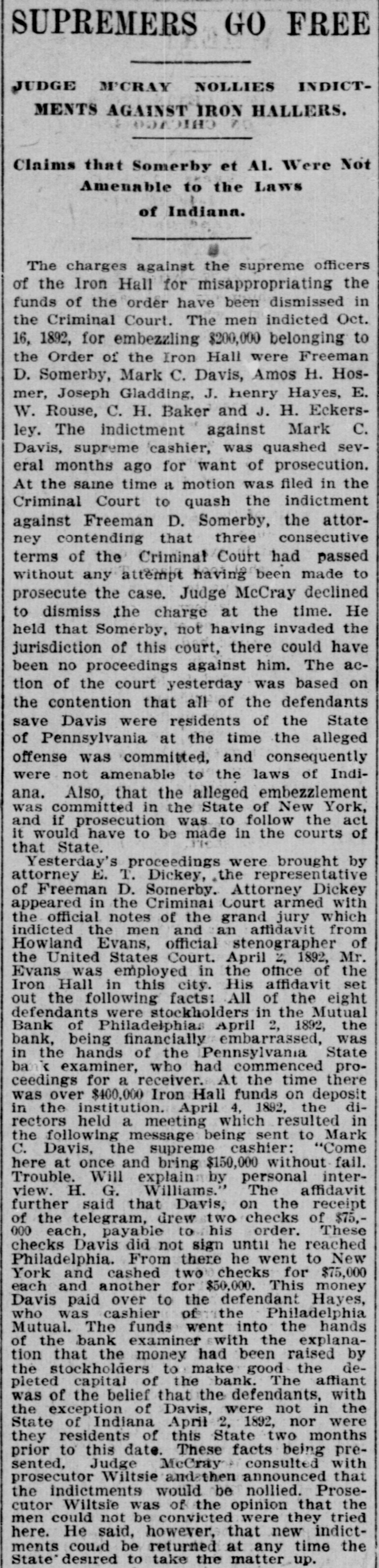
SUPREMERS GO FREE JUDGE M'CRAY NOLLIES INDICTMENTS AGAINST IRON HALLERS. 001 oTHo Claims that Somerby et A1. Were Not Amenable to the Laws of Indiana. The charges against the supreme officers of the Iron Hall for misappropriating the funds of the order have been dismissed in the Criminal Court. The men indicted Oct. 16, 1892, for embezzling $200,000 belonging to the Order of the Iron Hall were Freeman D. Somerby, Mark C. Davis, Amos H. Hosmer, Joseph Gladding, J. henry Hayes, E. W. Rouse, C. H. Baker and J. H. Eckersley. The indictment against Mark C. Davis, supreme cashier, was quashed several months ago for want of prosecution. At the same time a motion was filed in the Criminal Court to quash the indictment against Freeman D. Somerby, the attorney contending that three consecutive terms of the Criminal Court had passed without any attempt having been made to prosecute the case. Judge McCray declined to dismiss the charge at the time. He held that Somerby, not having invaded the jurisdiction of this court, there could have been no proceedings against him. The action of the court yesterday was based on the contention that all of the defendants save Davis were residents of the State of Pennsylvania at the time the alleged offense was committed, and consequently were not amenable to the laws of Indiana. Also, that the alleged embezzlement was committed in the State of New York, and if prosecution was to follow the act it would have to be made in the courts of that State. Yesterday's proceedings were brought by attorney E. T. Dickey, the representative of Freeman D. Somerby. Attorney Dickey appeared in the Criminal Court armed with the official notes of the grand jury which indicted the men and an affidavit from Howland Evans, official stenographer of the United States Court. April 2, 1892, Mr. Evans was employed in the office of the Iron Hall in this city. His affidavit set out the following facts: All of the eight defendants were stockholders in the Mutual Bank of Philadelphias April 2, 1892, the bank, being financially embarrassed, was in the hands of the Pennsylvania State ba k examiner, who had commenced proceedings for a receiver. At the time there was over $400,000 Iron Hall funds on deposit in the institution. April 4, 1892, the directors held a meeting which resulted in the following message being sent to Mark C. Davis, the supreme cashier: "Come here at once and bring $150,000 without fail. Trouble. Will explain by personal interview. H. G. Williams." The affidavit further said that Davis, on the receipt of the telegram, drew two checks of $75.000 each, payable to his order. These checks Davis did not sign until he reached Philadelphia. From there he went to New York and cashed two checks for $75,000 each and another for $50,000. This money Davis paid over to the defendant Hayes, who was cashier of the Philadelphia Mutual. The funds went into the hands of the bank examiner with the explanation that the money had been raised by the stockholders to make good the depleted capital of the bank. The affiant was of the belief that the defendants, with the exception of Davis, were not in the State of Indiana April 2, 1892, nor were they residents of this State two months prior to this date. These facts being presented, Judge McCray consulted with prosecutor Wiltsie andathen announced that the indictments would be nollied. Prosecutor Wiltsie was of the opinion that the men could not be convicted were they tried here. He said, however, that new indictments could bei returned at any time the