18954. Bank of Philadelphia (Philadelphia, PA)

Bank Information

Episode Type
Suspension → Closure
Bank Type
state
Start Date
October 14, 1857
Location
Philadelphia, Pennsylvania (39.952, -75.164)

Metadata

Model
gpt-5-mini
Short Digest
141b643e

Response Measures

None

Description

19th-century newspaper excerpts describe the Bank of Philadelphia's failure/suspension during a nationwide panic (context points to the panic of 1857 and the general bank suspensions around October 14). No article describes a depositor run specific to this bank — the failure is described as part of a systemic panic and resulted in suspension/closure.

Events (1)

1. October 14, 1857 Suspension
Cause
Macro News
Cause Details
Part of the nationwide panic of 1857 triggered by contraction of bank loans and rapid spread of alarm by telegraph; widespread bank suspensions on Oct. 14.
Newspaper Excerpt
The failure of the Bank of Philadelphia, was followed by that of the other banks of that city... The 14th of October was the date of the banks' suspension.
Source
newspapers

Newspaper Articles (2)

Article from Mower County Transcript, October 9, 1873

Click image to open full size in new tab

Article Text

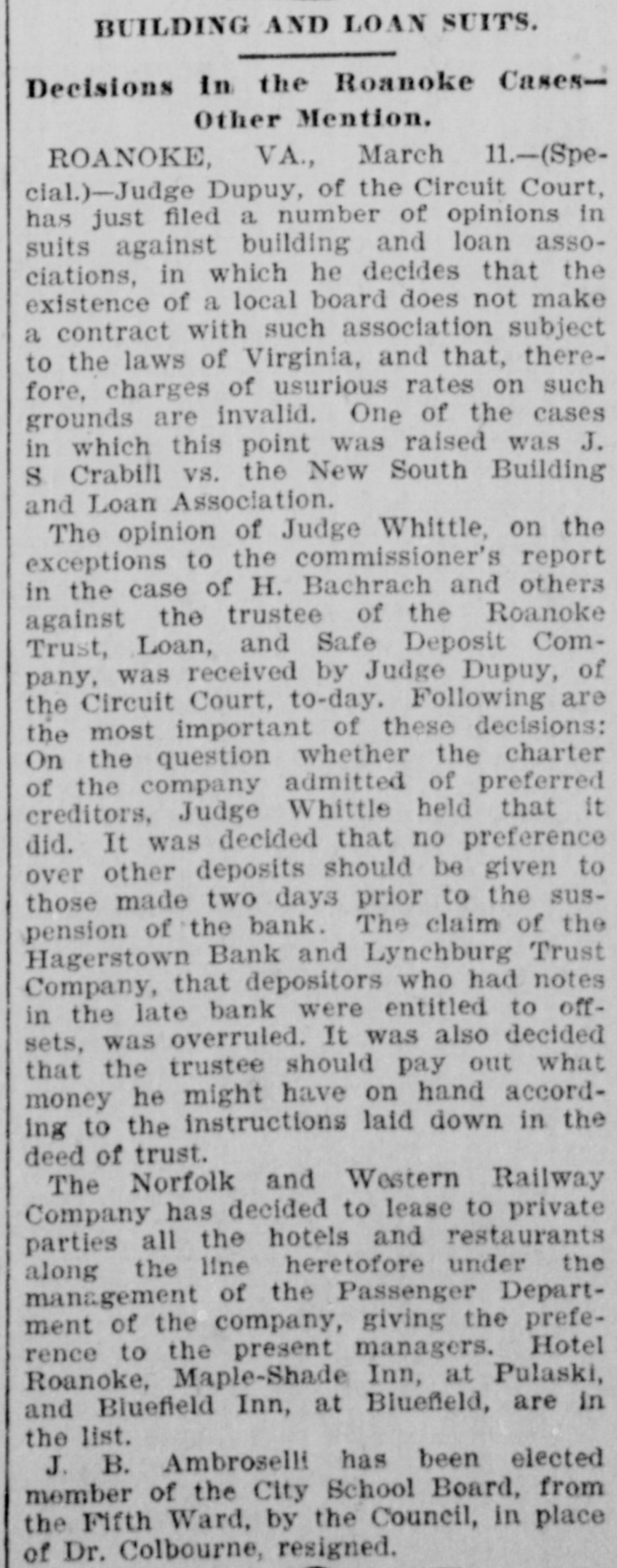
proved 7 fatal to all the business interests of the country, commercial affairs had been pursuing the even tenor of their way on the highroad to prosperity. Everything pointed to a still more prosperous figure. The mania for building railways had apparently been nipped, if not in the bud at least before it had extended too greatly the country's credit, and, although there were several hundred millions of foreign capital in use, in case of its being recalled the home market could register the bonds which represented it at half the par cost. The wisest Solomons of banking saw no indications of the coming storm in the commercial skies. When, on the 8th of August, the loans reached the unprecedented height of $122,000,000, even then a reduction of $10,000,000 or $12,00,000 during the autumn months without injury to commerce was declared possible. and in pursuance of this declaration the banks began to contract their loans. Never was an act followed by more fearful consequences. The prices of securities at the Stock Board imme diately fell. The failure of a heavy produce house, although accounted for by the depression of that particular interest in the market, and, the report of a defalcation in a leading railway company, caused a suspicion of a coming crisis to taint the public security, but failed to seriously affect the general confidence. On the 24th of the month the news of the suspension of the Ohio Life Insurance and Trust a Company came like thunder from clear sky. The financial circle vibrated to its center; banking officers, panicstricken by the suddenness of the blow, at once lost their heads. The days of '37 seemed once more upon them, and financial chaos was come again. Stocks and commercial paper were at once sacrificed at ruinous rates, other fail. ures were announced, and rumors exaggerated each calamity. The Clearing House report for August 29-the first after the suspension of the Trust Company-showed a reduction of $4,000,000 in the bank loans for the previous week. A defalcation was announced on the same day of $70,000 in one of the associated banks, and so great was the general mistrust, that other institutions immediately became suspected of similar dishonesty. The most substantial securities in the market sold for next to nothing at public sale, and while the regular discounts of bills by the banks had been nearly suspended, street rates for money on the most unquestioned securities rose to what was up to that time unheard of there, four and five per cent. a month, and money could not be had at any rate on ordinary promis+ sory notes and bills of exchange. Commercial house after commercial house, bankafter bank succumbed to thepanic. The panic extended through the entire country. The failure of the Bank of Philadelphia, was followed by that of the other banks of that city, and by those of Baltimore and the Southern Atlantic States generally, The panic was no respecter of persons. Merchants, bankers and moneyed corpora tions, and manufacturing companies were swept down without distinction. Commercial business was everywhere suspended; the purchase and transportation of produce entirely ceased, and the climax only was reached when on the 14th of October, the bank suspensions of New York and New England took place. For this almost 8 universal suspension the banks could not claim the want of faith among the depositors to be the cause. Despite t the distrust that early began to affect the entire country, the depositors stood well by their guns, and not till


Article from Fayette County Herald, October 16, 1873

Click image to open full size in new tab

Article Text

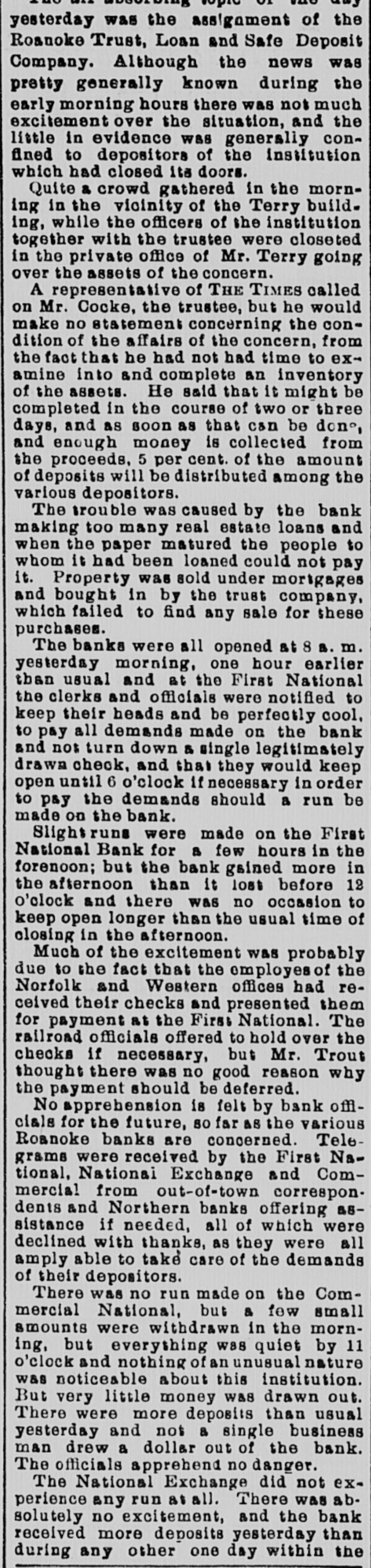
# THE PANIC OF 1857 of here-could not be had at any rate on ordinary promissory notes and bills of exchange. Commercial house after commercial house, bank after bank succumbed to the panic. The panic extended through the entire country. The failure of the Bank of Pennsylvania in Philadelphia, was followed by that of the other banks of that city, and by those of Baltimore and of the Southern Atlantic States generally. The panic was no respector of persons.- Merchants, bankers, monied corporations, and manufacturing companies were swept down without distinction. Commercial business was everywhere suspended; the purchase and transportation of produce entirely ceased; and the climax only was reached when, on the 14th of October, the bank suspensions of New York and New England took place. For this almost universal suspension the banks could not claim the want of faith among the depositors to be the cause. Despite the distrust that early began to affect the entire country, the depositors stood well by their guns, and not till the 29th of September did they begin to be alarmed. For the five successive weeks preceding, they withdrew less from the banks each week than the banks withdrew from them by the depression of loans. Although the panic started on the 25th of August, caused by the contraction of loans, and was at once carried by the telegram with the speed of light to all parts of the country, no marked withdrawal of deposits by individual depositors took place anywhere till more than an entire month later. Up to that time the depositors presented a steady front, apparently determined to sustain the public credit if anything else failed. But when October came in, resistance ceased at once to be a virtue, and on the third of that month, a marked change came over the spirit of the depositors. Over four millions of the deposits were withdrawn in the seven days following, and over fourteen millions in the next twenty. The 14th of October was the date of the banks' suspension. On the day following, withdrawals ceased and restoration began. One of the causes alleged by the banks themselves for their suspension was the sudden withdrawal of country ballances, and for this the telegraph was responsible. It not only took the news to the country banks of the collapse of credit in the city, but brought back their orders demanding their deposits in specie. The Clearing House, too, was alleged to aid in increasing the general collapse. Its daily settlements in coin forced smaller banks into contracting their loans, into sacrifices of property, and finally into bankruptcy. Default at the Clearing House became the Ban-gro's ghost and appeared at the bank Board of all the smaller institutions. The most universally accepted cause for the panic of 1857 is the violent contraction of bank loans immediately after the 24th of August. And this was entirely the action of the banks. and they had only themselves to blame. It was, too, the expansion of the banks previous to the panic that laid the foundation for the memorable crisis of 1857.