Article Text
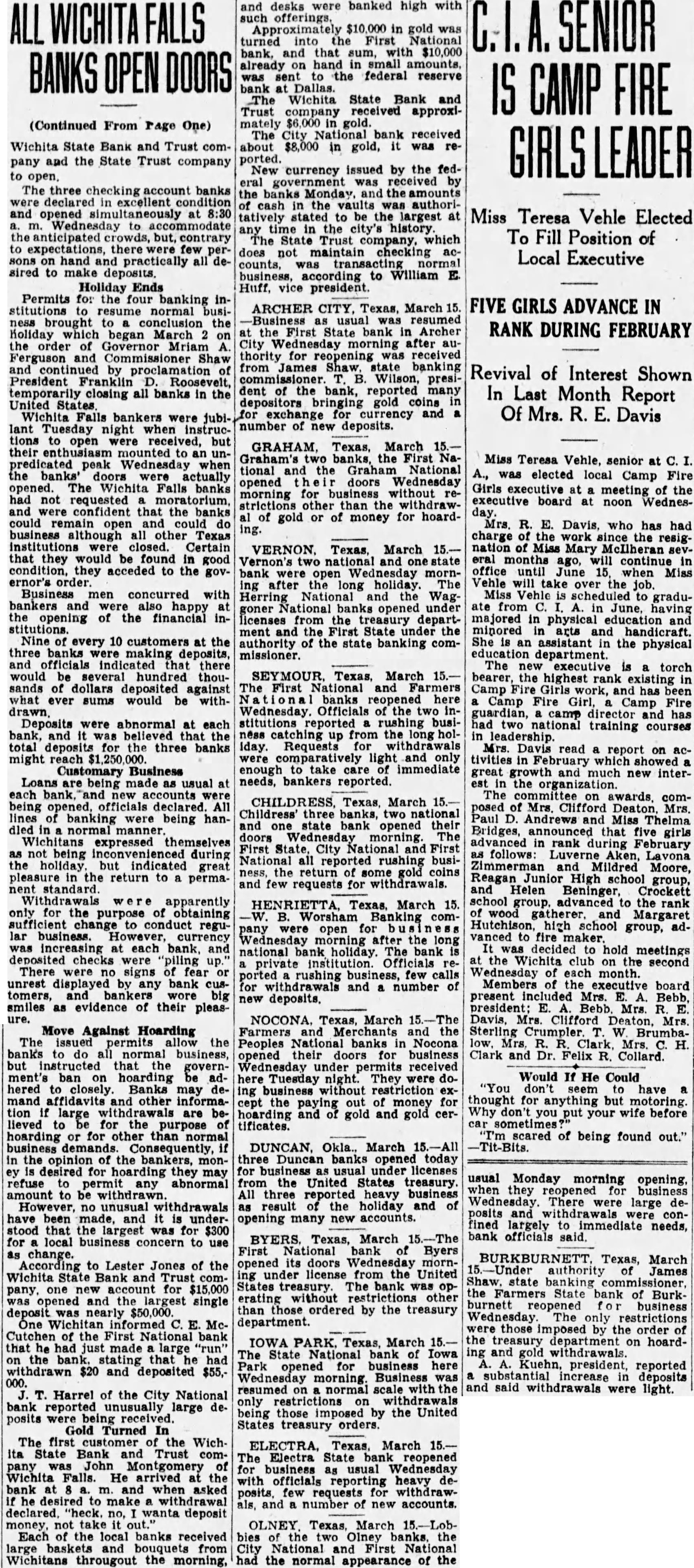
BANKS (Continued From Page One) Wichita State Bank and Trust company and the State Trust company The three account banks were declared excellent and opened simultaneously Wednesday to accommodate anticipated contrary expectations, sons hand and practically all desired to make deposits. Holiday Ends Permits for four banking institutions to resume normal brought conclusion the Holiday began March the order of Governor Mriam and by President Franklin Roosevelt, temporarily closing all banks in the United Wichita Falls bankers were jubilant Tuesday night when were but mounted to an predicated peak Wednesday the banks' doors actually opened. Wichita Falls banks not requested moratorium, that the banks business institutions closed. Certain they would be found condition, they acceded to the gov. ernor's order Business men concurred with happy the opening of the financial Nine every 10 customers at the three banks making deposits, officials indicated there would several hundred thousands dollars deposited against what ever sums would be withdrawn Deposits were abnormal at each bank, and believed total deposits the three banks might reach Business Loans are being made usual being opened, officials declared. All lines banking were being hanin normal expressed themselves not being during the holiday indicated in the return to permaWithdrawals apparently for the purpose of obtaining sufficient change to conduct regular business. increasing at each bank, and piling There signs fear unrest displayed by any bank customers, smiles as evidence of their pleas- Move Against Hoarding the normal business, the ment's on hoarding hered Banks may mand affidavits and other informaare lieved hoarding for other than business Consequently, in the opinion the bankers, mondesired for hoarding they may refuse permit any abnormal unusual withdrawals been and understood the largest for $300 for local business concern to use as change. to Lester Jones of the Wichita State and Trust for $15,000 opened and single deposit nearly One Wichitan informed E. Cutchen of the First bank had just made large bank withdrawn $20 and deposited $55,- T. Harrel of the City National bank reported large posits being received. Gold Turned In The the Wichita Bank Trust Wichita Falls. He arrived the and when asked he desired to withdrawal declared. "heck. no, wanta deposit not Each local banks received Wichitans througout the morning, and desks were banked high with $10,000 in gold was turned the First National bank, and that sum, with $10,000 already on hand small to the federal reserve bank Wichita State Bank and Trust company received approximately The City National bank received about $8,000 in gold, was reported. New currency issued by the federal government was cash the authoritatively stated to be the largest at time in the city's history State Trust company, which does maintain checking accounts, according to William E. vice president. ARCHER CITY, Texas, March -Business usual resumed the in Archer after thority for received from James banking Wilson, dent of the bank, reported many depositors bringing gold coins of deposits. GRAHAM, Texas, March Graham's banks, the First National the Graham National opened doors Wednesday morning for without strictions other than the withdrawgold of money for hoarding. bank were open Wednesday mornafter the long holiday. Herring National and the Waggoner opened under licenses the treasury department and State the authority the state com- SEYMOUR, Texas, March The First National and banks Wednesday Officials two stitutions reported rushing busifrom the long Requests comparatively light and enough take care needs, reported. CHILDRESS, Texas March three banks, two state opened morning. The First State, City First National all rushing busireturn some coins and few requests for withdrawals. HENRIETTA Texas. March 15. Worsham Banking comwere open for morning after the long national holiday. The bank Officials rushing few for and number new NOCONA. Texas, March Farmers and Peoples banks Nocona opened their for business Wednesday under permits received here Tuesday night. They doing business without restriction cept the paying out of money for hoarding gold and gold certificates. DUNCAN, Okla., March Duncan banks opened today for business usual under licenses from the United States treasury. All three reported heavy business as result of the holiday and of opening many new accounts. BYERS. Texas, March National bank Byers opened its doors mornlicense from the United States treasury. The bank was erating without restrictions other those ordered by the treasury department. IOWA PARK. Texas, March The State bank Iowa Park opened for business here Wednesday morning. Business resumed on normal being those by the United States treasury orders. ELECTRA, Texas. March The Electra State reopened as Wednesday with officials reporting heavy few requests for withdrawand number new accounts OLNEY. Texas, March City National First the normal appearance of the BURKBURNETT Texas, March authority James Shaw. state banking commissioner. the Farmers State bank of Burkburnett for business Wednesday The only those imposed by the order the treasury department on hoardand gold withdrawals. Kuehn, president, reported substantial increase in deposits said withdrawals were light.