Article Text
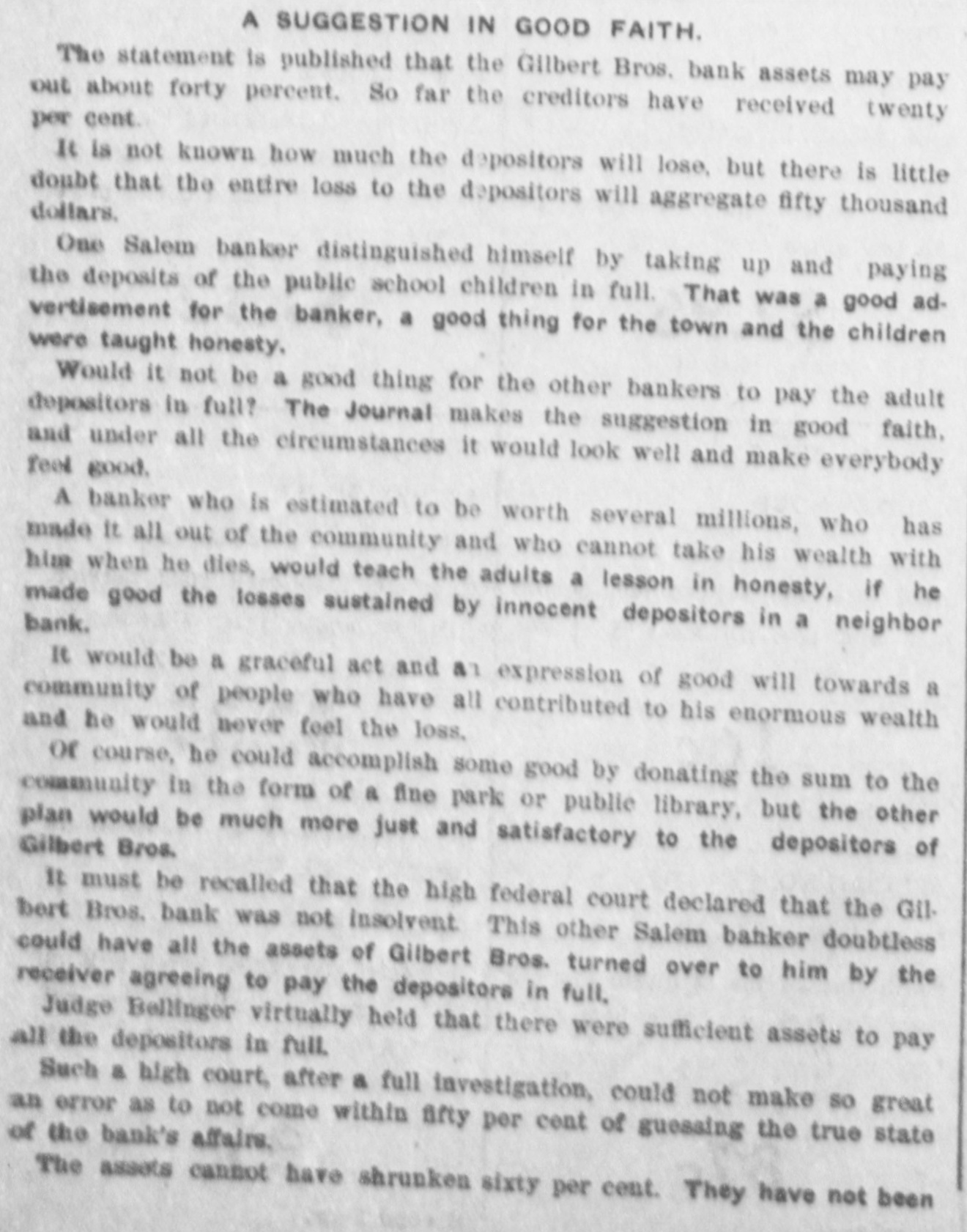
A SUGGESTION IN GOOD FAITH. The statement is published that the Gilbert Bros. bank assets may pay out about forty percent. So far the creditors have received twenty per cent. It is not known how much the depositors will lose, but there is little doubt that the entire loss to the depositors will aggregate fifty thousand dollars. One Salem banker distinguished himself by taking up and paying the deposits of the public school children in full. That was a good advertisement for the banker, a good thing for the town and the children were taught honesty, Would it not be a good thing for the other bankers to pay the adult depositors in full? The Journal makes the suggestion in good faith, and under all the circumstances it would look well and make everybody feel good. A banker who is estimated to be worth several millions, who has made It all out of the community and who cannot take his wealth with him when he dies, would teach the adults a lesson in honesty, if he bank. made good the losses sustained by innocent depositors in a neighbor It would be a graceful act and an expression of good will towards a community of people who have all contributed to his enormous wealth and he would never feel the loss, Of course, he could accomplish some good by donating the sum to the community in the form of a fine park or public library, but the other Gilbert Bros. plan would be much more just and satisfactory to the depositors of It must be recalled that the high federal court declared that the Gilbort Bros. bank was not insolvent This other Salem banker doubtless could have all the assets of Gilbert Bros. turned over to him by the receiver agreeing to pay the depositors in full. Judge Bellinger virtually held that there were sufficient assets to pay all the depositors in full. Such a high court, after a full investigation, could not make so great an error as to not come within afty per cent of guessing the true state of the bank's affairs. The assets cannot have shrunken sixty per cent. They have not been