Article Text
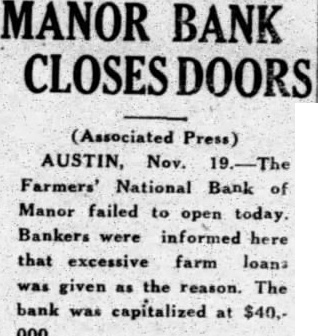
BANK (Associated Press) AUSTIN, Nov. Farmers' National Bank of Manor failed to open today. Bankers informed here that excessive farm given the reason. The bank was capitalized 000.
8d1611710c724b24None
Click image to open full size in new tab
BANK (Associated Press) AUSTIN, Nov. Farmers' National Bank of Manor failed to open today. Bankers informed here that excessive farm given the reason. The bank was capitalized 000.
Click image to open full size in new tab
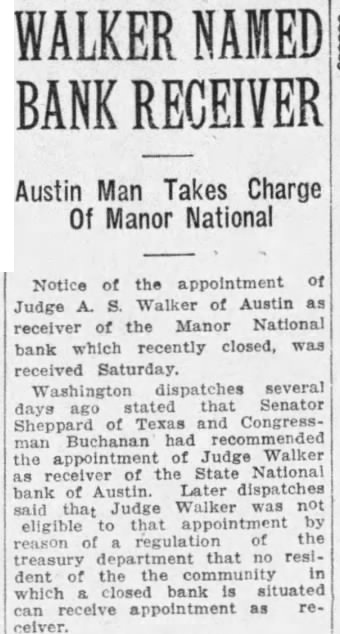
WALKER NAMED BANK RECEIVER Austin Man Takes Charge Of Manor National Notice of the appointment of Judge A. S. Walker of Austin as receiver of the Manor National bank which recently closed, was received Saturday. Washington dispatches several days ago stated that Senator Sheppard of Texas and Congressman Buchanan had recommended the appointment of Judge Walker as receiver of the State National bank of Austin Later dispatches said that Judge Walker was not eligible to that appointment by the reason of regulation of treasury department that no resident of the the community in which & closed bank is situated can receive appointment as receiver.
Click image to open full size in new tab
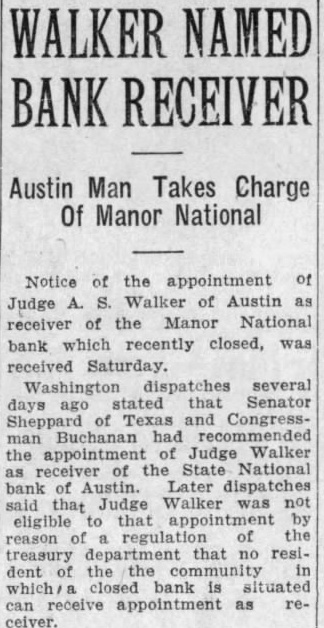
WALKER NAMED BANK RECEIVER Austin Man Takes Charge Of Manor National Notice of the appointment of Judge A. S. Walker of Austin as receiver of the Manor National bank which recently closed, was received Saturday. Washington dispatches several days ago stated that Senator Sheppard of Texas and Congressman Buchanan had recommended the appointment of Judge Walker as receiver of the State National bank of Austin. Later dispatches said that Judge Walker was not eligible to that appointment by reason of regulation of the treasury department that no resident of the the community in which closed bank is situated can receive appointment as receiver.
Click image to open full size in new tab
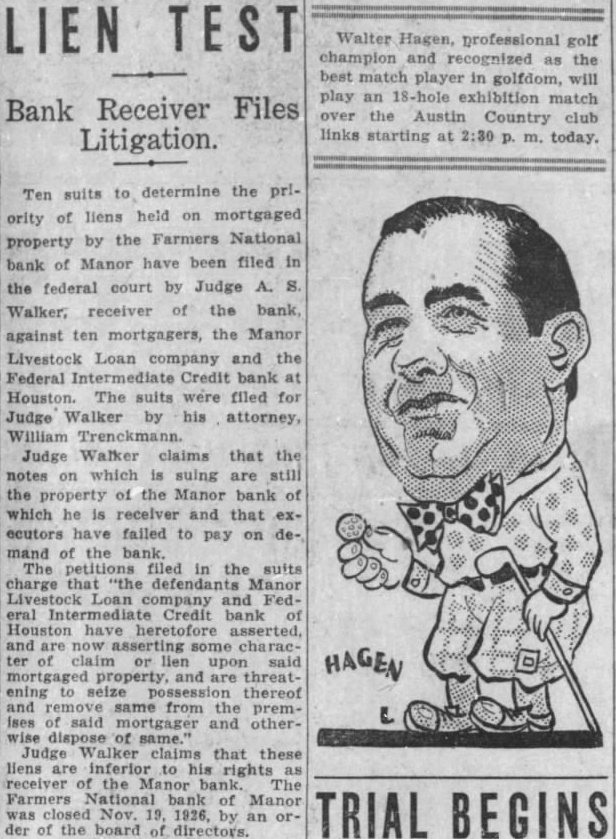
LIEN TEST Bank Receiver Files Litigation. Ten suits to determine the priority of liens held on mortgaged property by the Farmers National bank of Manor have been filed in the federal court by Judge Walker, receiver the bank against ten mortgagers, the Manor Livestock Loan company and Federal Intermediate Credit bank at Houston The suits were filed for Judge Walker by his attorney Judge Walker claims that notes which suing still the property the Manor bank of which he receiver and that ecutors to pay on demand of the bank the suits that defendants Manor Livestock company and FedIntermediate Credit bank asserted are said mortgaged property and are threatthereof same premof and otherJudge that these liens rights as receiver Farmers bank of Manor of board directors
Click image to open full size in new tab
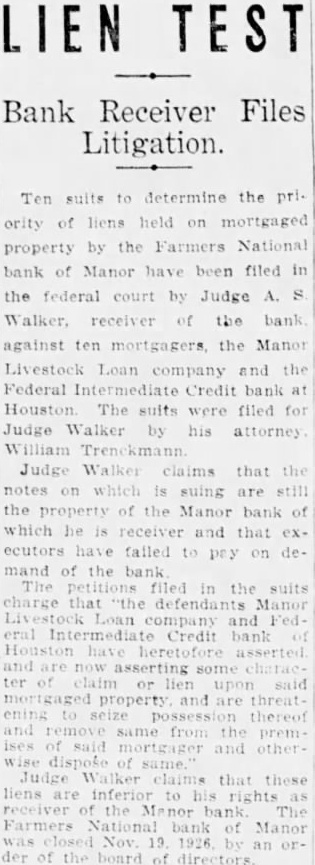
LIEN TEST Bank Receiver Files Litigation. Ten suits to determine the prlority of liens held on mortgaged property by the Farmers National bank of Manor have been filed in the federal court by Judge Walker, receiver of the bank, against ten mortgagers, the Manor Livestock Loan company and the Federal Credit bank at Houston. The suits were filed for Judge Walker by his attorney, William Trenckmann. Judge Walker claims that the notes which suing are still the of the Manor bank of which he is receiver and that executors failed to pay on demand of the The filed the suits charge that "the defendants Manor Livestock Loan company and Federal Intermediate Credit bank Houston have heretofore asserted, and are character claim lien upon and are threatening seize thereof same from the premof said mortgager and otherwise dispose of same. Judge Walker claims that these liens inferior to his rights receiver the The Farmers bank of Manor was closed Nov. 19. 1926, by an or- TRIAL BEGINS der of the board directors.
Click image to open full size in new tab
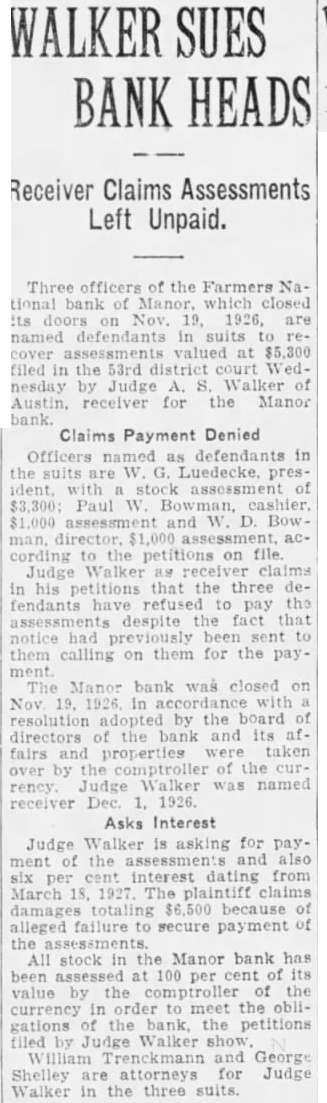
WALKER SUES BANK HEADS Receiver Claims Assessments Left Unpaid. Three officers of the Farmers National bank of Manor. closed its on 1926, are named defendants in suits cover assessments valued at $5,300 filed in the 53rd district court Wednesday by Judge S. Walker of Austin, receiver for the Manor bank. Claims Payment Denied Officers as defendants in the suits are W. Luedecke, pres$3,300 Paul W. Bowman, cashier, $1,000 assessment and W. D. Bow cording to the petitions on file. Judge Walker as claims in his petitions that the three defendants have refused pay the assessments despite the fact that notice had previously been sent to them calling on them for the pay. ment The Manor bank was closed on resolution adopted by the board directors of the bank and its af fairs and properties were taken over by the of the currency Judge Walker was named receiver Dec. 1926. Asks Interest Judge Walker is asking for payment of the and also six per cent interest dating from March 18, 1927. The plaintiff claims damages totaling $6,500 because alleged failure to secure payment of the All stock in the Manor bank has been assessed at 100 per cent of its value by the comptroller of the currency in order to meet the obligations of the bank, the petitions filed by Judge Walker show William Trenckmann and George Shelley are attorneys for Judge Walker in the three suits.