Article Text
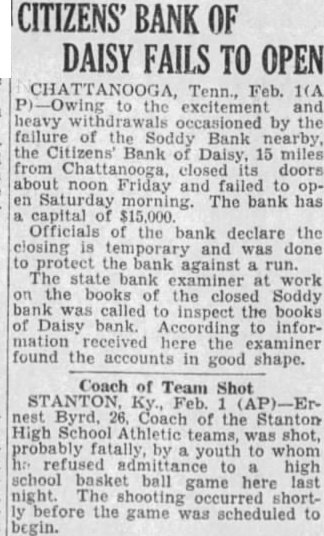
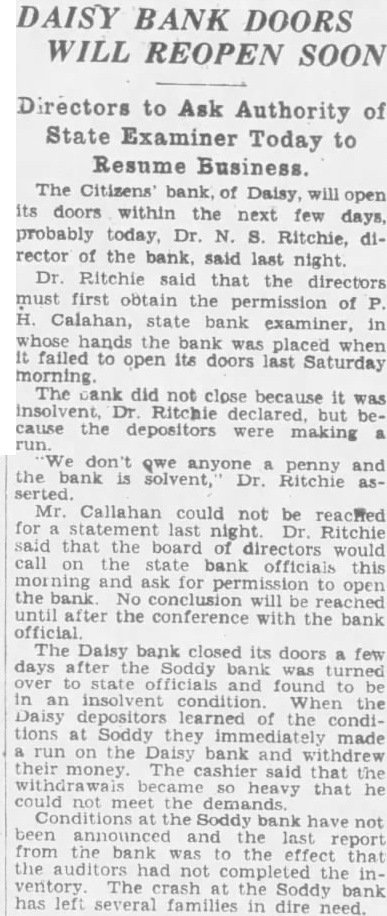
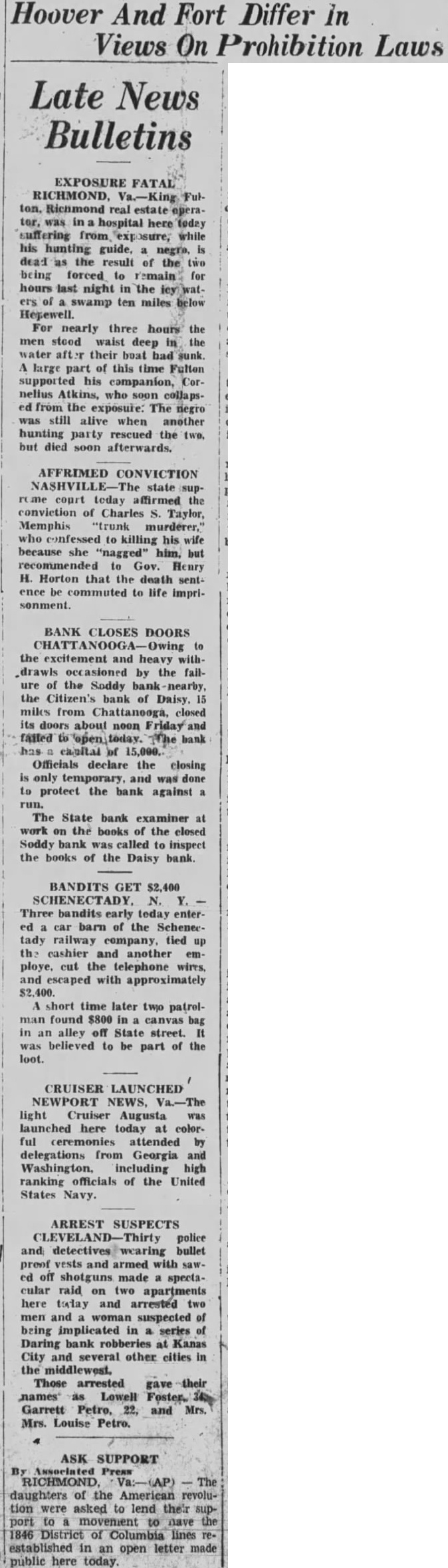
Hoover And Fort Differ in Views On Prohibition Laws Late News Bulletins EXPOSURE FATAL RICHMOND, Richmond real tor, was in hospital suffering from while his hunting guide, negro, dead as the result of the two forced to remain for hours last night in the of swamp ten miles below Hepewell. For nearly three hours the men stood waist deep in the water their boat had sunk. large part of this time Fulton supported his companion, Cornelius Atkins, soon collapsed from the exposure: The negro still alive when another hunting rescued the two, died soon afterwards. AFFRIMED CONVICTION state supcourt today affirmed the conviction of Charles Taylor, Memphis "trunk murderer," confessed to killing his wife because she "nagged" him, but recommended Gov. Henry H. Horton that the death sentence be commuted to life imprisonment. BANK CLOSES DOORS the excitement and heavy withdrawls occasioned by the failure the Soddy the Citizen's bank of Daisy, 15 miles from Chattanooga, closed its doors about noon failed to bank Officials declare the closing only and was done to protect the bank against run. The State bank examiner at work on the books of the elosed Soddy bank called to inspect the books of the Daisy bank. BANDITS GET $2,400 Three bandits today entered car barn of the Schenectady railway company, tied up cashier and another employe, cut the telephone wires, and escaped with approximately $2,400. short time later two patrolman found $800 canvas bag in alley off State street. believed to be part of the loot. CRUISER LAUNCHED NEWPORT NEWS, light Cruiser Augusta was launched here today at colorful ceremonies attended by delegations from Georgia and Washington, including high ranking officials of the United States Navy. ARREST SUSPECTS police and bullet proof vests and armed with sawoff shotguns made spectacular raid on two apartments here today and arrested two men and woman suspected being implicated in series Daring bank robberies at Kanas City and several other cities in the middlewest, Those arrested gave their names as Lowell Foster, Garrett Petro, 22, and Mrs. Mrs. Louise Petro. ASK SUPPORT Associated Press The daughters of the American revolution were asked to lend their support to movement to have the 1846 District of Columbia lines reestablished in an open letter made public here today