Article Text
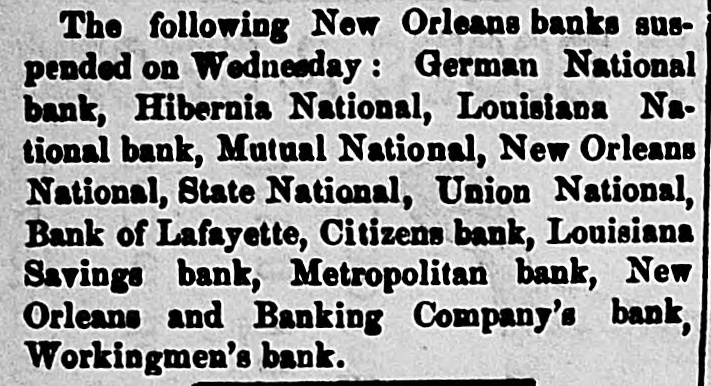
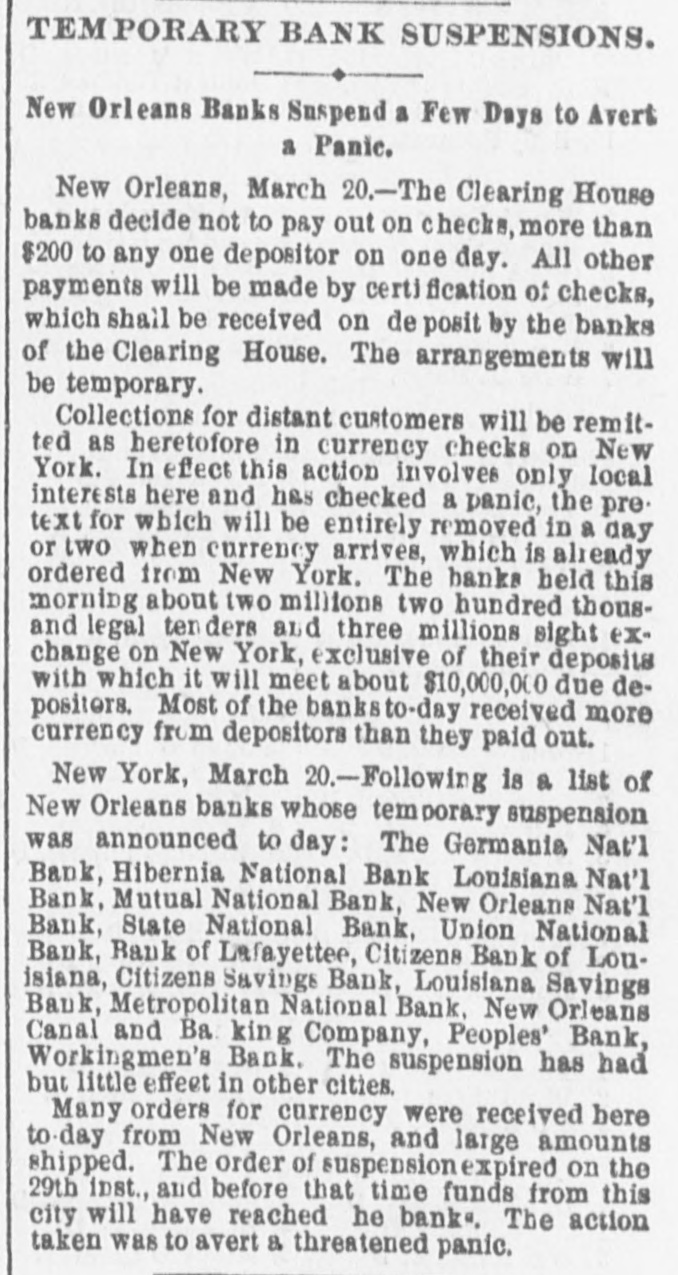
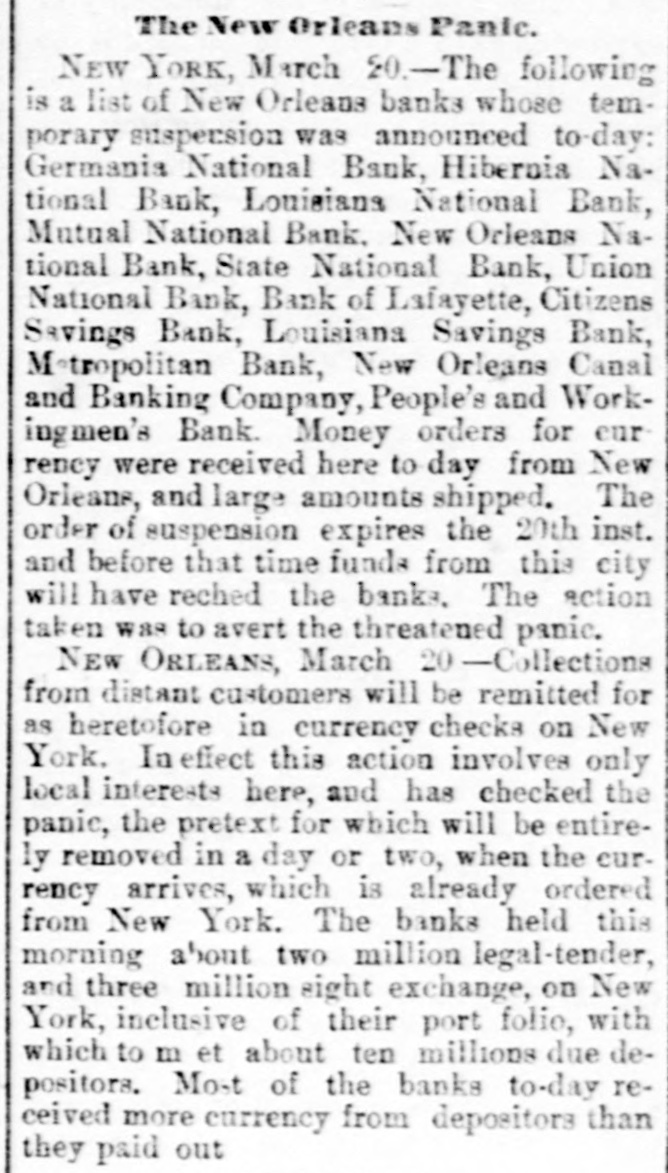
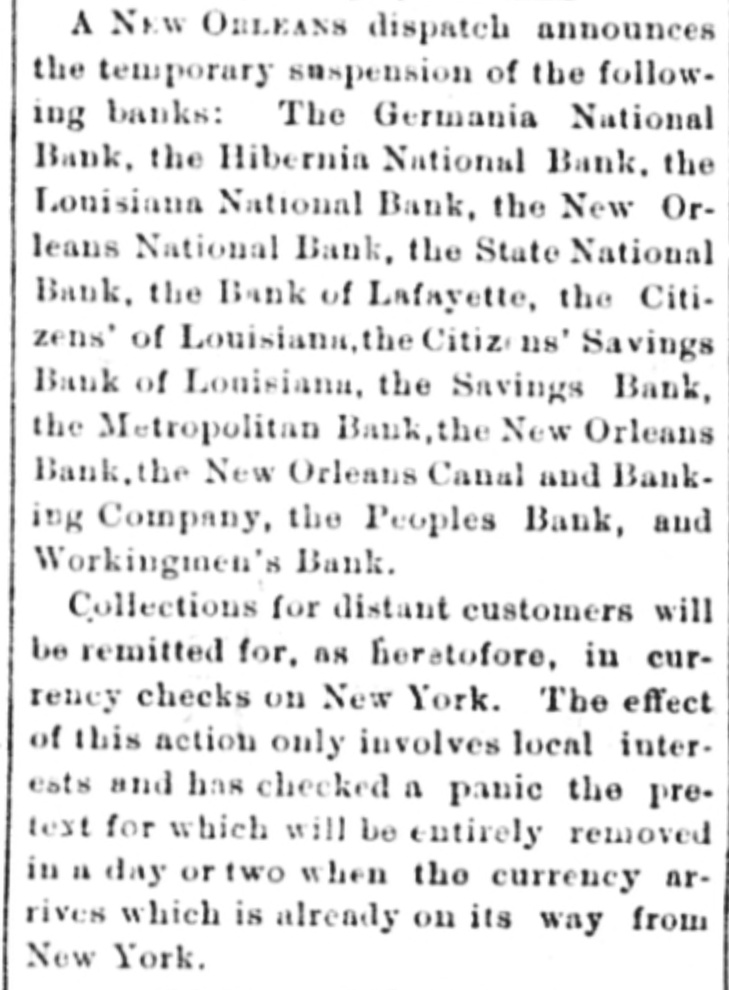
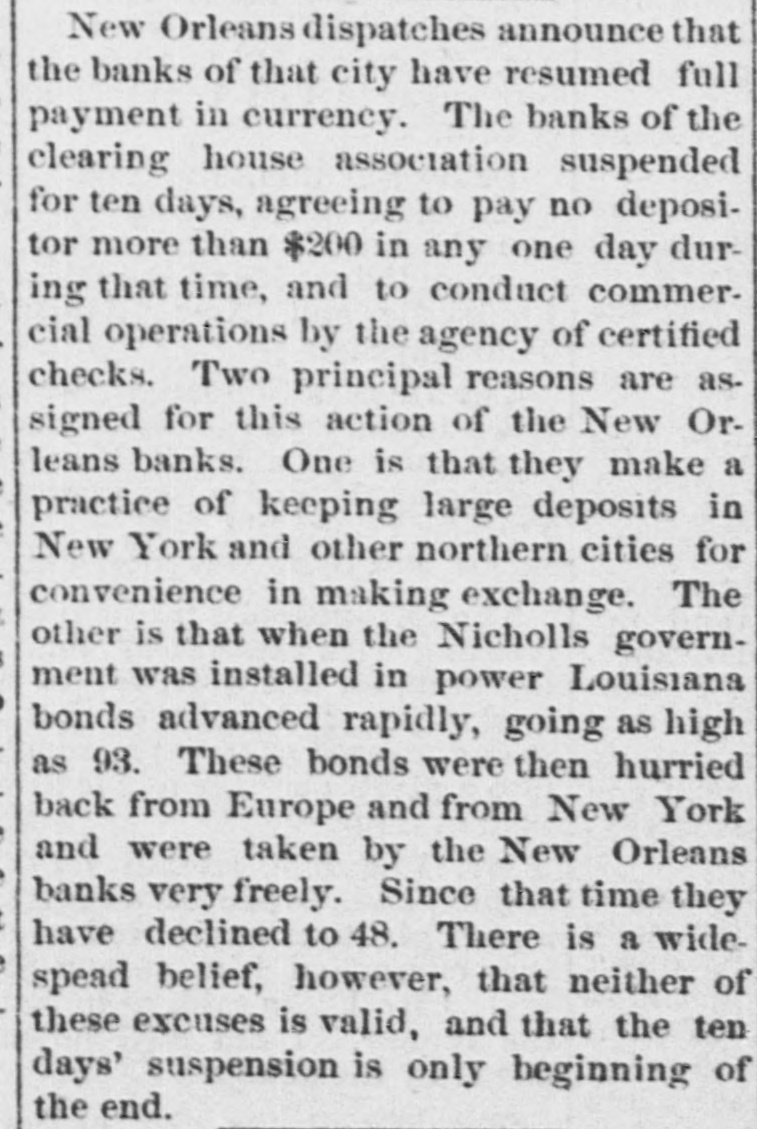
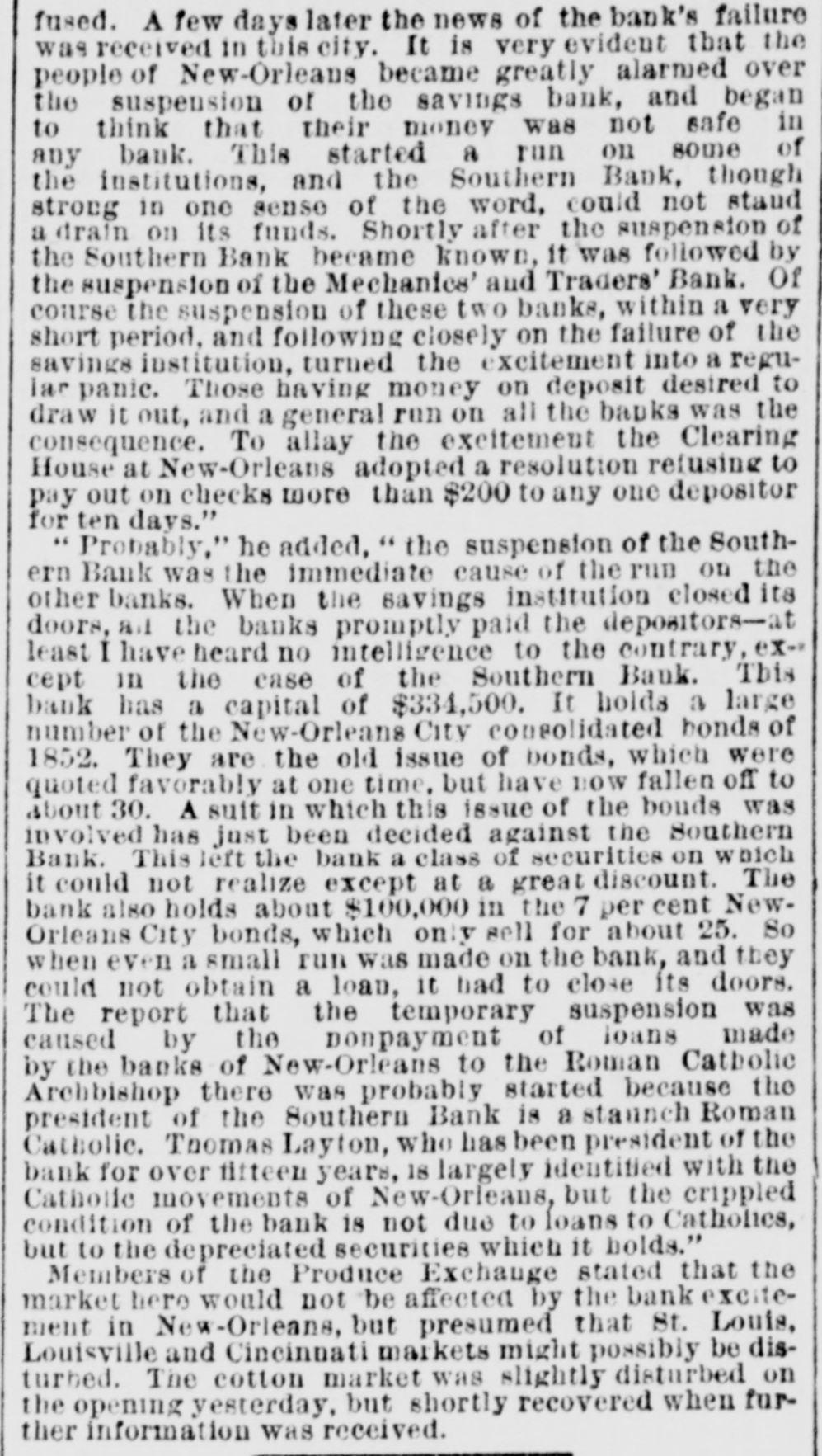
fused. A few days later the news of the bank's failure was received in this city. It is very evident that the people of New-Orleans became greatly alarmed over the suspension of the savings bank, and began to think that their money was not safe in any bank. This started a run on some of the institutions, and the Southern Bank, though strong in one senso of the word, could not stand a drain on its funds. Shortly after the suspension of the Southern Bank became known, it was followed by the suspension of the Mechanics' and Traders' Bank. Of course the suspension of these two banks, within a very short period, and following closely on the failure of the savings institution, turned the excitement into a regular panic. Those having money on deposit desired to draw it out, and a general run on all the bapks was the consequence. To allay the excitement the Clearing House at New-Orleans adopted a resolution refusing to pay out on checks more than $200 to any one depositor for ten days." " Probably," he added, " the suspension of the Southern Bank was the immediate cause of the run on the other banks. When the savings institution closed its doors, ail the banks promptly paid the depositors-at least I have heard no intelligence to the contrary, except in the case of the Southern Bank. This bank has a capital of $334,500. It holds a large number of the New-Orleans City consolidated bonds of 1852. They are the old issue of bonds, which were quoted favorably at one time, but have now fallen off to about 30. A suit in which this issue of the bonds was involved has just been decided against the Southern Bank. This left the bank a class of securities on which it could not realize except at a great discount. The bank also holds about $100,000 in the 7 per cent NewOrleans City bonds, which only sell for about 25. So when even a small run was made on the bank, and they could not obtain a loan, it had to close its doors. The report that the temporary suspension was caused by the nonpayment of loans made by the banks of New-Orleans to the Roman Catholic Archbishop there was probably started because the president of the Southern Bank is a staunch Roman Catholic. Toomas Layton, who has been president of the bank for over fifteen years, IS largely identified with the Catholle movements of New-Orleans, but the crippled condition of the bank is not due to loans to Catholics, but to the depreciated securities which it holds." Members of the Produce Exchange stated that the market here would not be affected by the bank excitement in New-Orleans, but presumed that St. Louis, Louisville and Cincinnati markets might possibly be disturbed. The cotton market was slightly disturbed on the opening yesterday, but shortly recovered when further information was received.