Article Text
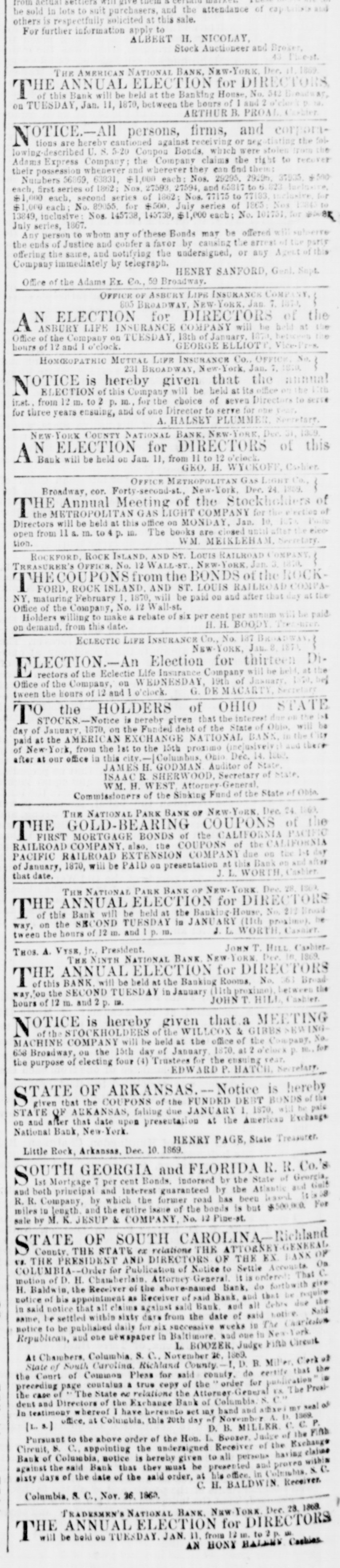
lots purchasers be others sold is solicited at For further information apply ALBERT to H. NICOLAY Stock Auctioneer and AMERICAN NATIONAL BANK, New-York Dec THE ANNUAL ELECTION for House, DIRI No. THE Bank will be held at the Banking of land PROA on TUESDAY, Jan. 11, 1870, between the ARTHUR hours B. and All firms, persons, NOTICE are cautioned against which or were sek to tions described U. 8. 5-20 Coupon Bonds the lowing Adams Express Company; the Company they claims can find their right their possession whenever and each: Nos. 29295. 29.99 Numbers 56869. 63831, $1,000 to of 1862 Nos 27593 27594, 77183 each, first series second series of 1862 Nos 77175 to 1863 + 1,000 each; each, No 89055 for $500 July series of No. 10:75: 13849, 1,000 inclusive: Nos 145738, 145739, $1,000 each; July series, 1867. to whom any of these Bonds may be offered Any person Justice and confer a favor by causing the Agent the offering ends the of saice, and notifying the undersigned, or any Company immediately by telegraph. Sept HENRY SANFORD, Office of the Adams Ex. en. 59 Broadway. OFFICE OF ASBURY LIPE INSURANCE 805 BROADWAY NEW YORK. the for DIRECTORS be A N ELECTION ASBURY LIFE INSURANCE COMPANY January Office of the Company on TUESDAY 13th of GEORGE ELLIOT hours of 12 and I clock. MUTUAL LIFE INSURANCE Co. Jan. OFF HOMORPATHIC 231 BROADWAY, New-York, the of this Company will be of seres NOTICE IS hereby given held that at its from 12 m. to p. m., for the Director choice to serve for inst. for three years ensuing, and of one A. HALSEY PLUMME of this NEW YORK COUNTY NATIONAL BANK NEW YORK, ELECTION for DIRECTORS A GEO. H. N Bank will be held OD Jan. 11, from 11 to 12 o'clock WYCKOFF GAS 24 OFFICE METROPOLITAN Dec. of Broadway, cor. Forty-second-st. New-York, Stock Annual Meeting of the COMPANY for 10 THE ANOPOLITAN GAS LIGHT Jan. the will be held at this office on MONDAY are closed open Directors from 11 & m. to 4 p. in. The books WM. MEIKLEHA tion. ROCK ISLAND AND LOUIS NEW-YORK RAILROAD ROCKFORD, OFFICE No. 12 WALL-ST , the TREASURER'S HECOUPONS the BONDS LOUIS of ROCK ISLAND. AND ST. and RAILRO after that maturing FORD. February 1. 1870 will be paid on NY. of the Company, No. 12 Wall-st. BOODY Office Holders w Filling to make a rebate of six percent H. H. per on demand. from this date. ECLECTIC LIFE INSURANCE Co., No. 187 NEW YORK, thirtee ELECTION.-A Election for rectors of the Eclectic Life FEDNESDAY, Insurance Company 19th of tween the hours of 12 Office of the Company, and on o'clock W G. DE MACARY STATE PO the HOLDERS of OHIO the interest will Notice is hereby given of that the State of STOCKS 1870, on the Funded debt NATIONAL BANK Obje. day of January AMERIC AN EXCHANGE lobs: of paid at the from the 1st to the 15th proximo Ohio Dec. 14. after New York at our office in this JAMES H. Columbus GODMAN Auditor of State of state R SHERWOOD. Secretary Obja ISAAC H. WEST Attorney General Commissioners WM. of the Sinking Fund of the State of 1:63, the THE NATIONAL PARK BANK OF COUPONS NEW YORK Dec 24 of THE GOLD-BEARING of the CALIFORNIA CALIFORNIA PACIF MORTGAGE BONDS COUPONS of the the due on RAILROAD FIRST COMPANY also, the COMPANY Bank PACIFIC RAILROAD EXTENSION at this Cashier J.L. WORTH that date. of January, 1870, will be PAID on presentation 1802 PARK BANK OF NEW YORK DIRECTORS Dec. 28 Casaler THE ANNUAL THE NATIONAL be ELECTION held at the Banking for House, (11th No proxime). Broad be the Bank SECOND will TUESDAY 10. in JANUARY J.L. WORTH way. tween on the hours of 12 in and 1 p. JOHN T. HILL Cashier THOS A. VYSE jr. President. BANK NEW YORN Pee 1869 THE NINTH ELECTION for 361 HE ANNUAL NATIONAL at the Banking Rooms. DIRECTORS No. between Bread the Cashier way, 'ou the 18. T of this BANK SECOND will TUESDAY be held in January JOHN (11th proximo). HILI hours of 12 m. and hereby given that a GIBBS MEETING SEWING No. for N JOTICE of the STOCKHOL is will be of held the at WILLCOX the office 1870 of & the Company. MACHINE COMPANY ou the 15th day of January for the ensuing 658 the Broadway, purpose of electing four (4) Trustees EDWARD F HATCH is hereby Notice STATE OF the COUPONS ARKANSAS. of the JANUARY FUNDED DEBT 1. 1870. BONDS of the will be pale on and after that date STATE given OF that ARKANSAS, upon falling presentation due at the American Exchange National Bank, New-York. HENRY PAGE State Treasurer Little Rock Arkansas. Dec. 10. 1869. Co.'s SOUTH GEORGIA and indorsed FLORIDA br the State R. of R. and Georgia, Gulf 1st Mortgage? and per cent interest Bonds. guaranteed road by has the been Atlantic learn 10:08 For and R. R. both Company, principal and by the which entire the issue former of the 12 bonds Pine-st is but $500,000 miles 10 M.K. length JESUP & COMPANY No. Richland sale STATE by OF SOUTH relations CAROLINA THE ATTORNEY THE EX BANK OF On Account County. THE STATE AND ex DIRECTORS OF to Settle c. " THE PRESIDENT for Publication of Notice General it sontent That th COLUMBIA motion of D. H. -Order Chamberlain. of the Attorney above-named Bank Bank, and do that fortbut be require give the H. Baldwin, appointment the Receiver as Receiver of paid Bank and all debit due Said in notice said of notice his that within all claims sixty against dars from said the date weeks of paid in The notice Charleston York same, be settled be published daily for six successive Baltimore and one is Ne Circuit notice Republican to and one of wspaper in L BOOZER. Judge Fifth At Chambers Columbia S.C., Richland November County 26. 1869 D. do B. certify Miller that Clerk the of . State Court of South of Common Carolina Please true for copy said of the county order for is The Prest at preceding the page contains State as a relations the Attorney.Genera Columbia seal 1369 the dent case and of Directors The of the I have Exchange bereunto Bank set of 10.7 hand November and adidas In tentimony office. whereof at Columbia. this 20th day of D. B. MILLER Judge of C. the Find (L.S.) to the above order of the Hon. L. Receiver Boozer. of the having Kichaux claims Circuit, Pursuant 8. C. appointing notice is the hereby undersigned given to all persona and prores within K.C. sixty Bank of Columbia, Bank that they must be presented bla office in Receiver. against days the of said the date of the haid order. C. at H. BALDWIN Columbia. 8 c., Nov. 36. 1862 1868 NATIONAL BANK NEW DIRECTORS Dec. 23 T HE will be TRADESMEN'S ANNUAL held ou TUESDAY ELECTION JAN. AN 11. from HONY for 12 m. HAILLY 102P. . Cashier