Article Text
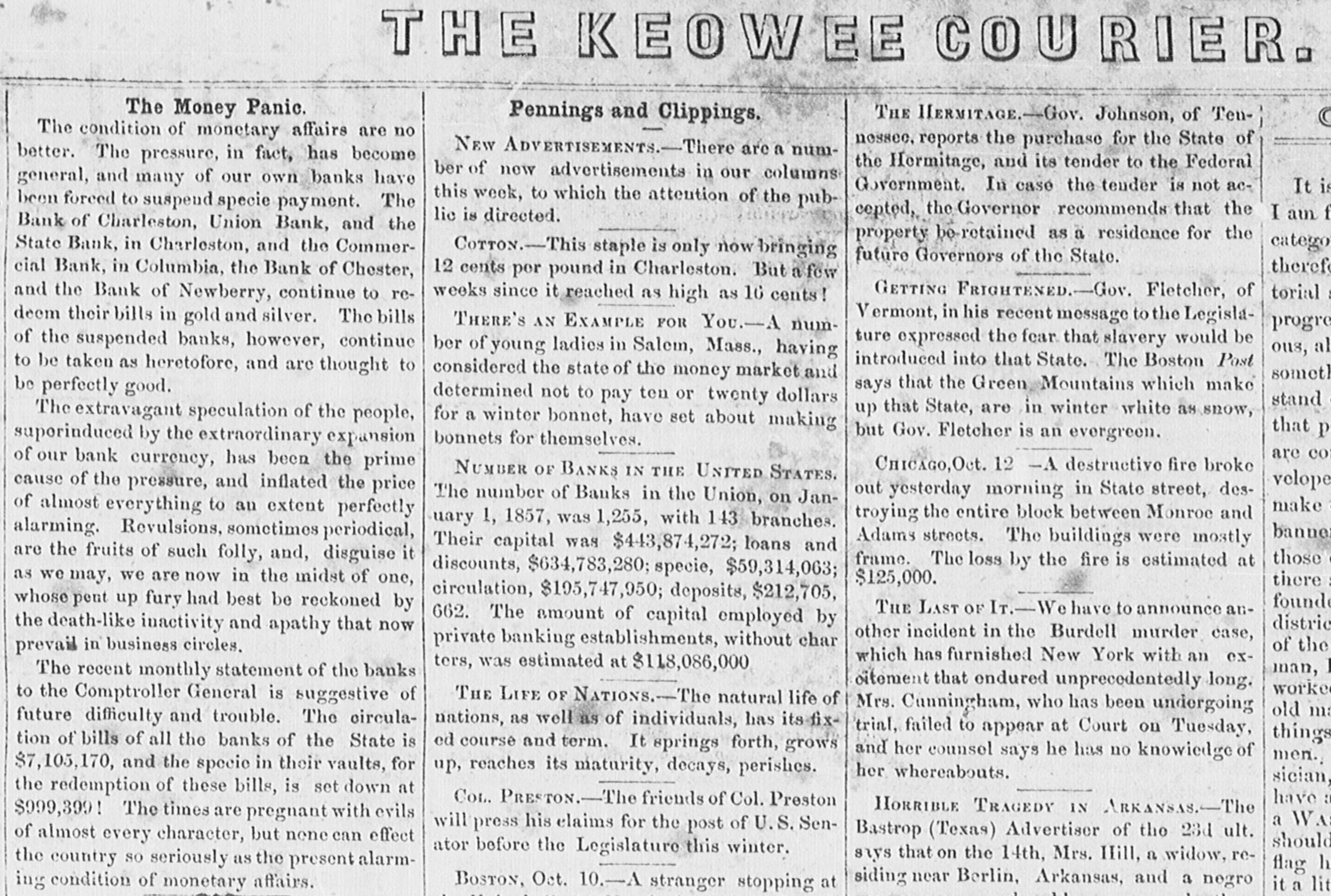
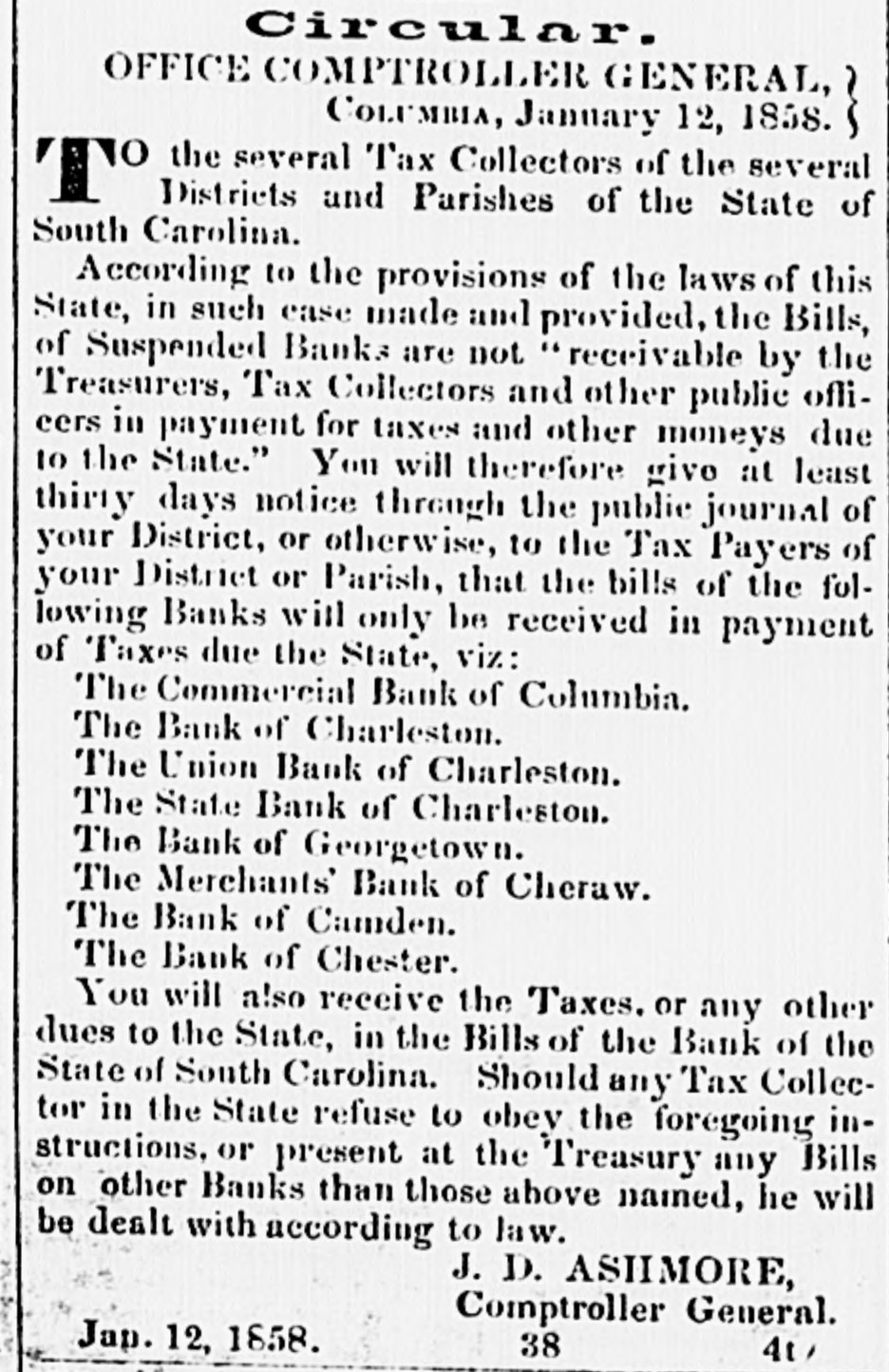
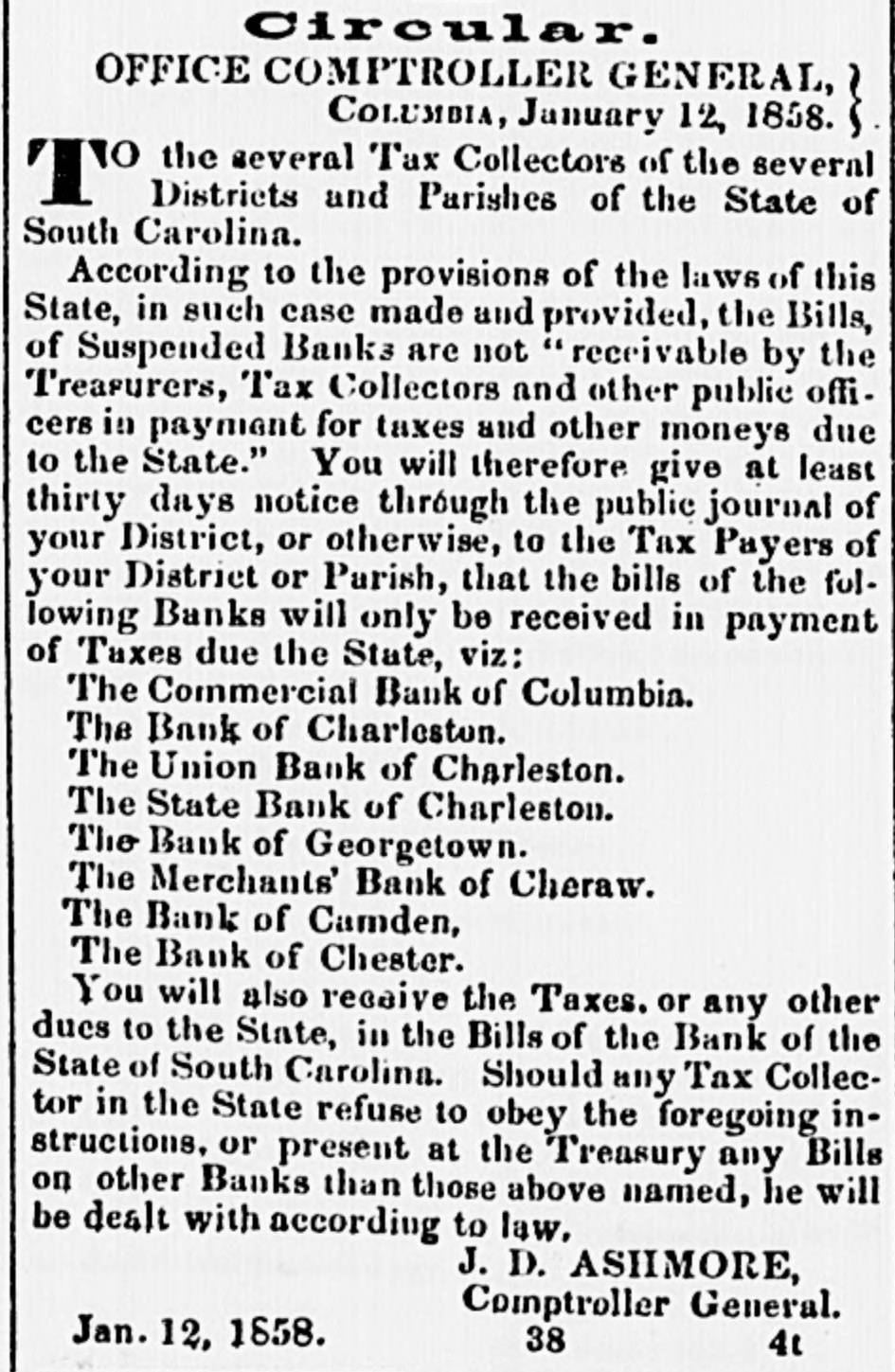
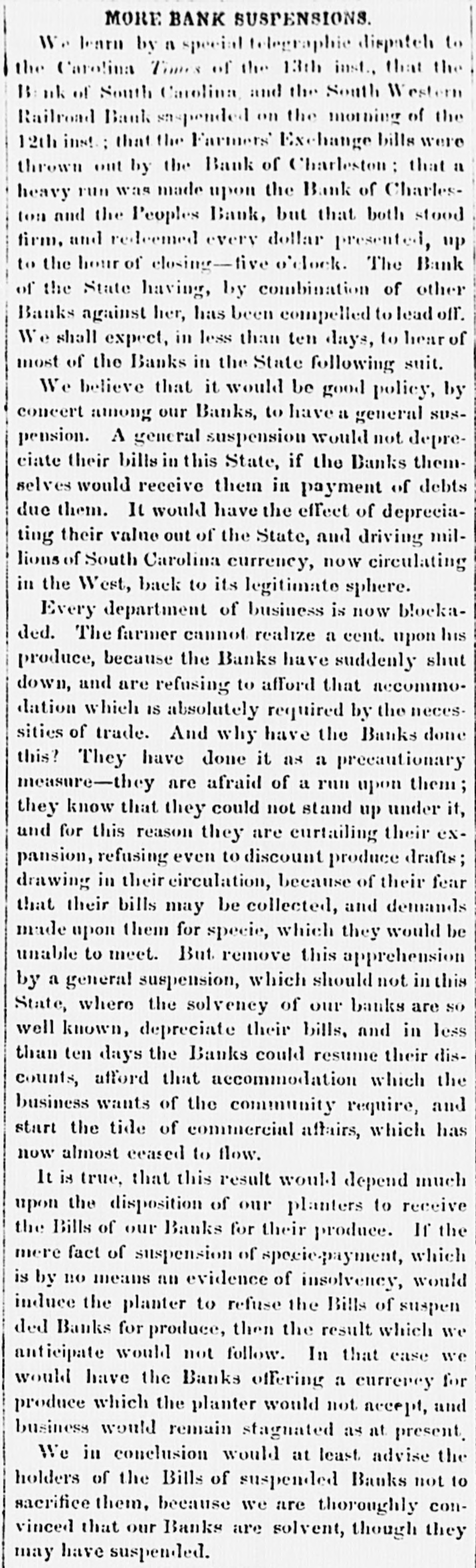
# MORE BANK SUSPENSIONS. We learn by a special telegraphie dispatch to the Carolina Times of the 13th inst., that the Bank of South Carolina and the South Western Railroad Bank suspended on the morning of the 12th inst; that the Farmers' Exchange bills were thrown out by the Bank of Charleston; that a heavy run was made upon the Bank of Charleston and the Peoples Bank, but that both stood firm, and redeemed every dollar presented, up to the hour of closing-five o'clock. The Bank of the State having, by combination of other Banks against her, has been compelled to lead off. We shall expect, in less than ten days, to hear of most of the Banks in the State following suit. We believe that it would be good policy, by concert among our Banks, to have a general suspension. A general suspension would not depreciate their bills in this State, if the Banks themselves would receive them in payment of debts due them. It would have the effect of depreciating their value out of the State, and driving millions of South Carolina currency, now circulating in the West, back to its legitimate sphere. Every department of business is now blockaded. The farmer cannot realize a cent, upon his produce, because the Banks have suddenly shut down, and are refusing to afford that accommodation which is absolutely required by the necessities of trade. And why have the Banks done this? They have done it as a precautionary measure-they are afraid of a run upon them; they know that they could not stand up under it, and for this reason they are curtailing their expansion, refusing even to discount produce drafts; drawing in their circulation, because of their fear that their bills may be collected, and demands made upon them for specie, which they would be unable to meet. But remove this apprehension by a general suspension, which should not in this State, where the solvency of our banks are so well known, depreciate their bills, and in less than ten days the Banks could resume their discounts, afford that accommodation which the business wants of the community require, and start the tide of commercial affairs, which has now almost ceased to flow. It is true, that this result would depend much upon the disposition of our planters to receive the Bills of our Banks for their produce. If the mere fact of suspension of specie-payment, which is by no means an evidence of insolvency, would induce the planter to refuse the Bills of suspended Banks for produce, then the result which we anticipate would not follow. In that case we would have the Banks offering a currency for produce which the planter would not accept, and business would remain stagnated as at present. We in conclusion would at least advise the holders of the Bills of suspended Banks not to sacrifice them, because we are thoroughly convinced that our Banks are solvent, though they may have suspended.