Click image to open full size in new tab
Article Text
Assets over ilabilities. $1,299,210 It wiil be seen from the above statement that the circulation has not been incinded in the liabilities; but a reference to the last report shows it to be $796,800, which is fully covered by deposits of bonds with the Comptroller of the Currency. Ninety per cent of these deposits, under the law, is forfeited to the government if it redeems the circulation, and the balance-$79,680, or ten per cent-comes back to the bank and becomes an asset. The Impression entertained by many not familiar with commercial transactions that deposits are made at Washington to secure individual depositors is erroneous. These deposits are merely to cover circulation. Mr. Davies is very sanguine of the ability of the bank in time to meet all its obligations, without loss to the stockholders or depositors, and thinks each of the latter's claims is worth
ONE HUNDRED CENTS UPON THE DOLLAR.
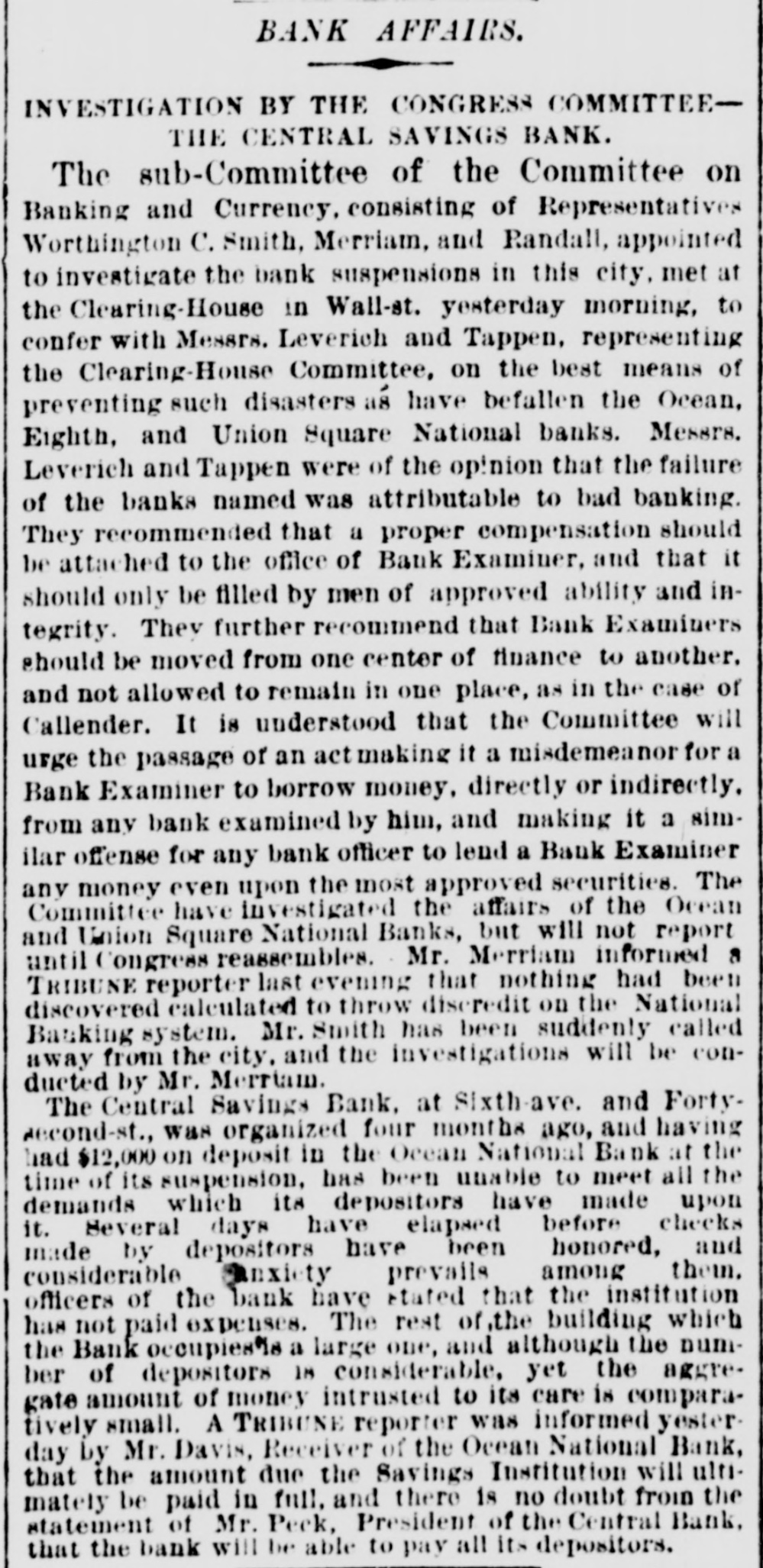
He also expressed his confidence in the genuineness of all the items given as the assets. He was ques-tioned as to the transactions Mr. Collender, the United States bank examiner, had with the bank, but on this point he was not so positive. He could not tell the amount of loans made to Mr. Collender, but replied that he would be in a position to do só this afternoon. He was, however, certain that all the loans made were fully covered by first mortgage bonds of
THE PORTAGE CANAL COMPANY,
an institution chartered by the State of Michigan. Mr. Davies expressed his belief that these mort-gages were worth all that had been loaned upon them; but in this other commercial men do not agree with him. Several gentlemen informed the re-porter that the Portage Canal Company's bouds are not negotiable upon the market at any price and not considered good securities, although Mr. Frothing-ham, the President of the company, a and other officers of it are responsible gentlemen. Mr. Collender was not to be found yesterday, and of course his expla-nation of the transaction could not be obtained. Much dissatisfaction has been shown and com-ment made at the appointment by the Comptrolier, who is a brother-in-law of Mr. Coilender, of Mr. Da-vies as the receiver, who was for some time, if not up to the time of the suspension, one of the counsel of the bank. This was on the part of de-positors, who do not for a moment doubt that Mr. Davies will give a faithful account of his stew-ardship, but who fear that the bank officers have induced this action to cover up some of
ITS ALLEGED IRREGULARITIES.
One gentleman suggested that the depositors had the right to apply to the State Courts for the ap-pointment of a receiver; but as this is a national bank this view of the case is a very questionable one. Mr. Davles reports that the bank will resume busi-ness.
### The Union Square National Gone Down-A Receiver Appointed.
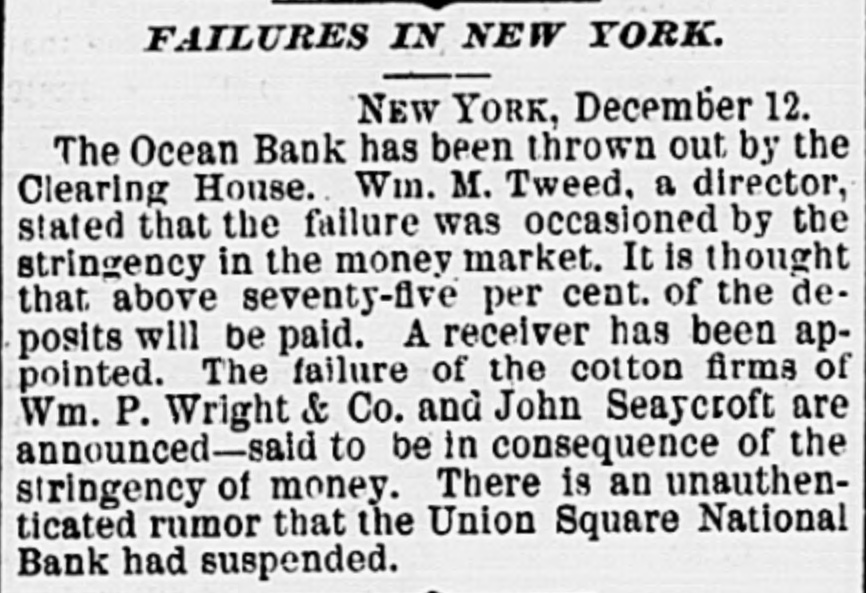
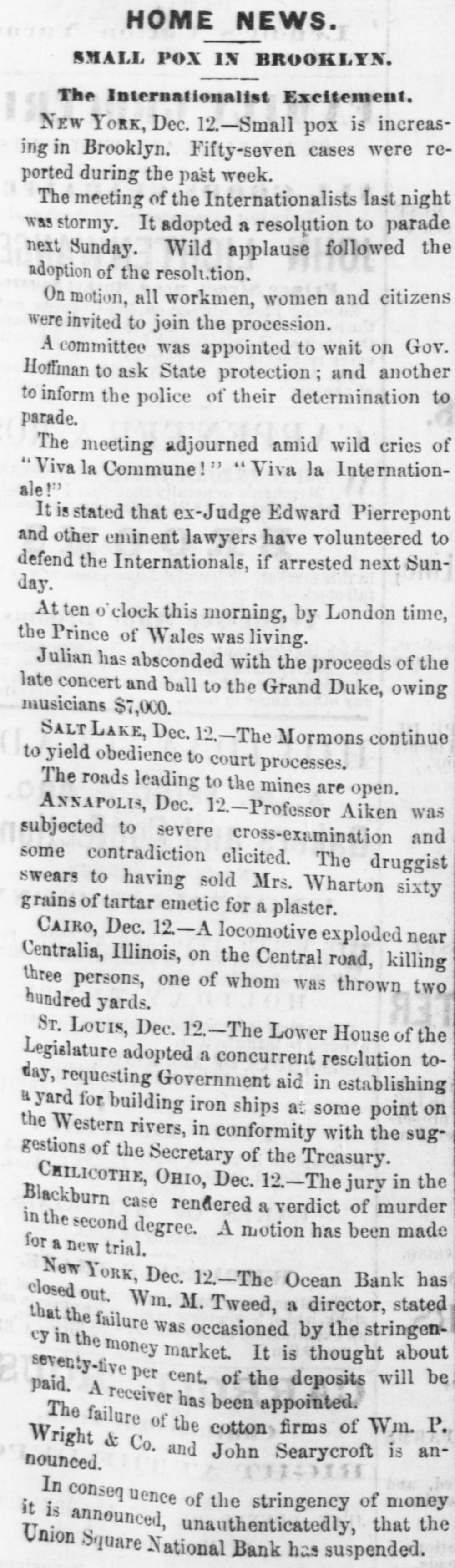
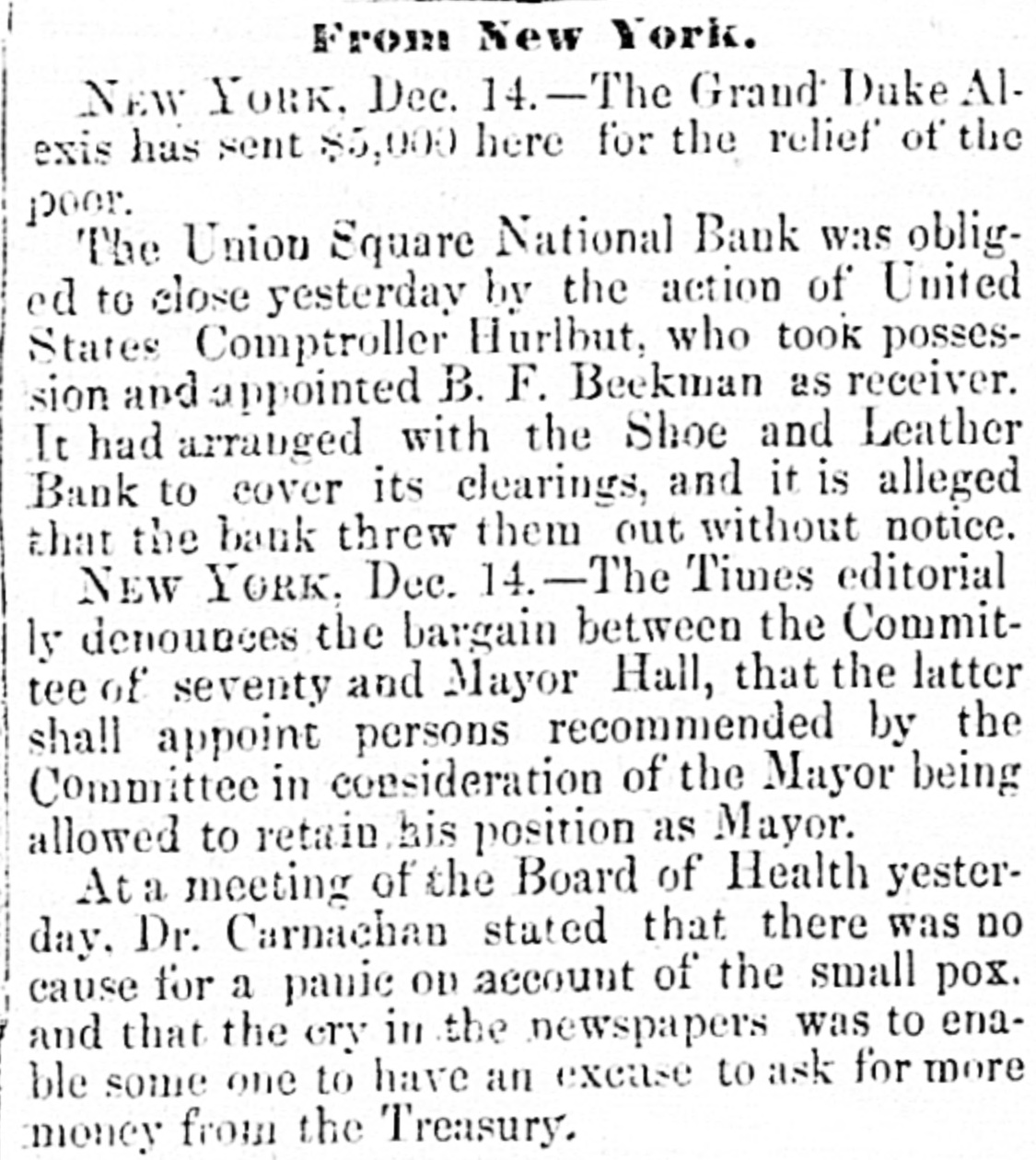
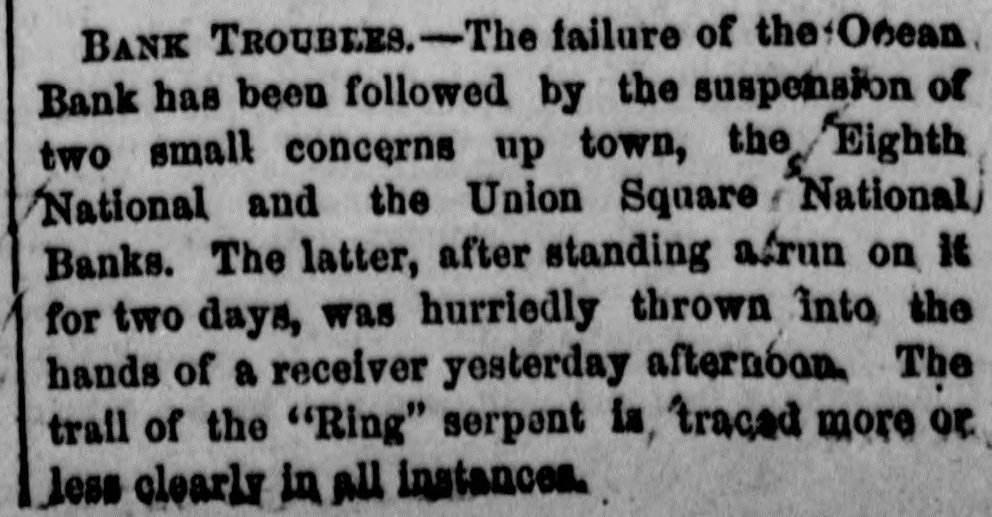
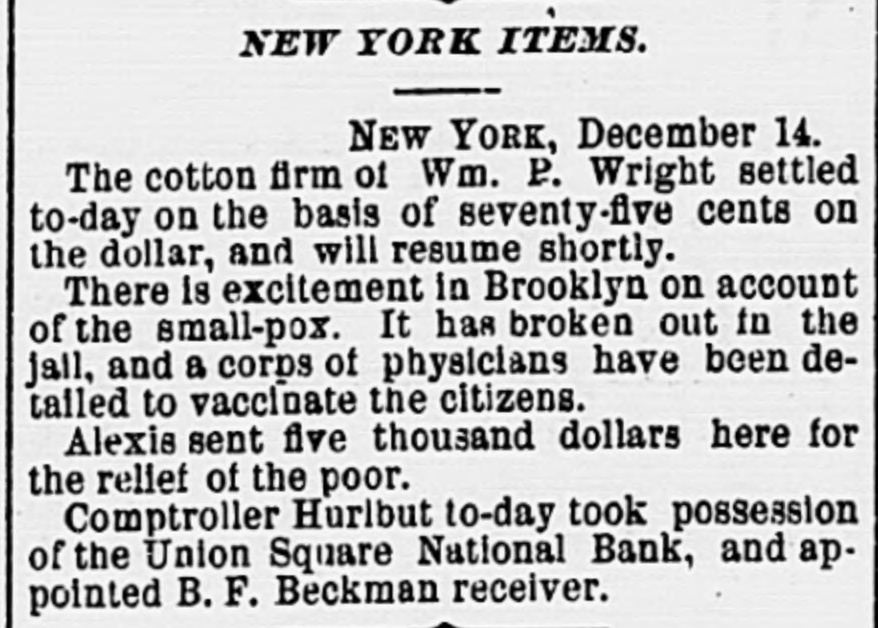
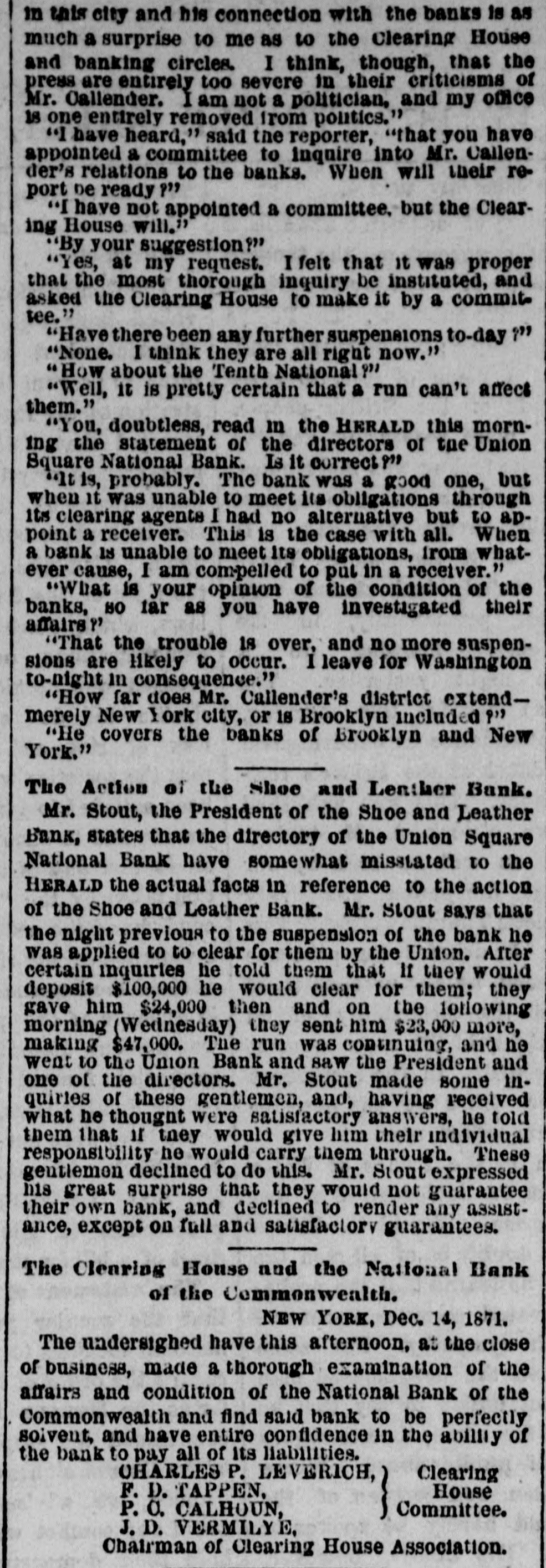
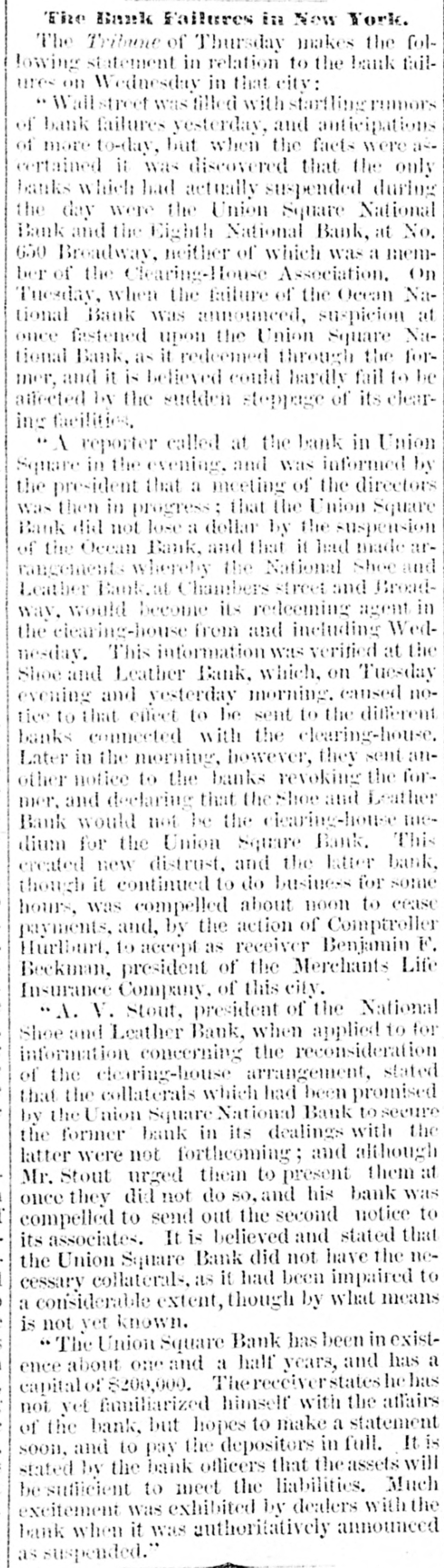
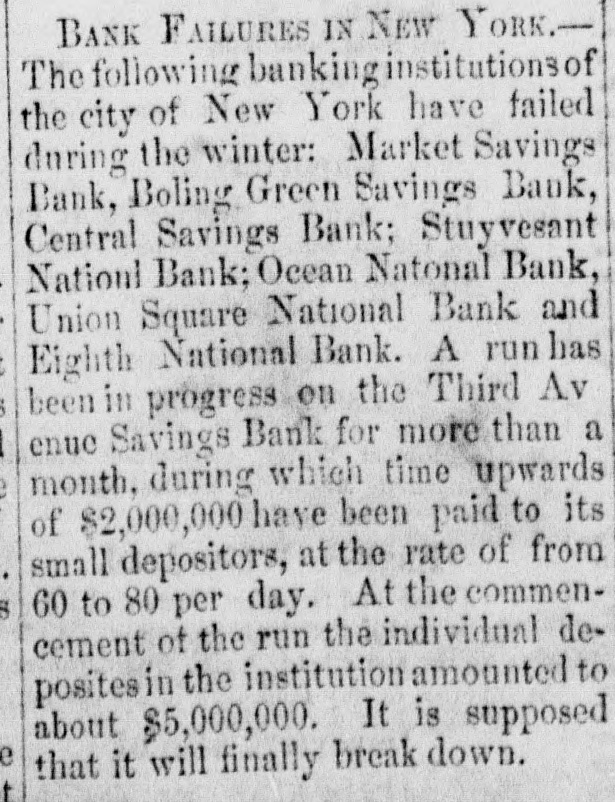
Notwithstanding the rumors of Tuesday that the Union Square National Bank was affected by the demise of the Ocean its credit remained unimpaired until yesterday. On Tuesday evening the direc-tors arranged with the Shoe and Leather National Bank to attend to its clearances and amply secured them for this accommodation. They opened the bank yesterday as usual, and
PAID DOLLAR FOR DOLLAR.
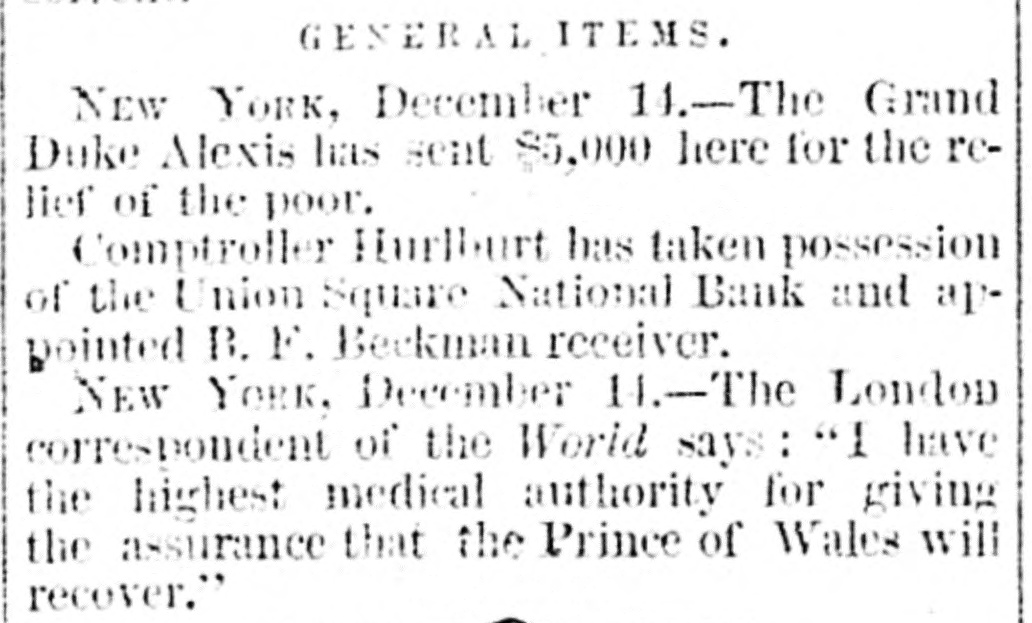
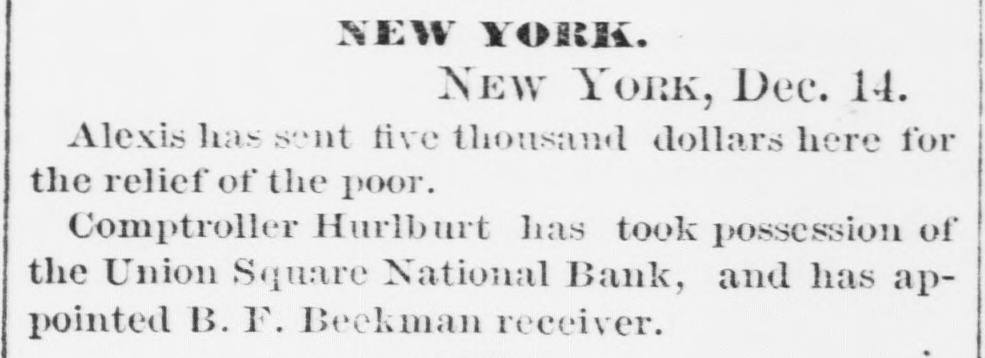
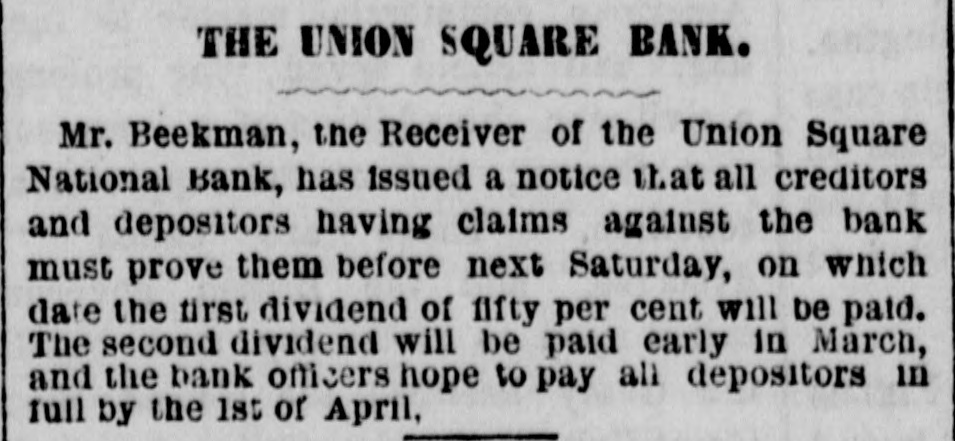
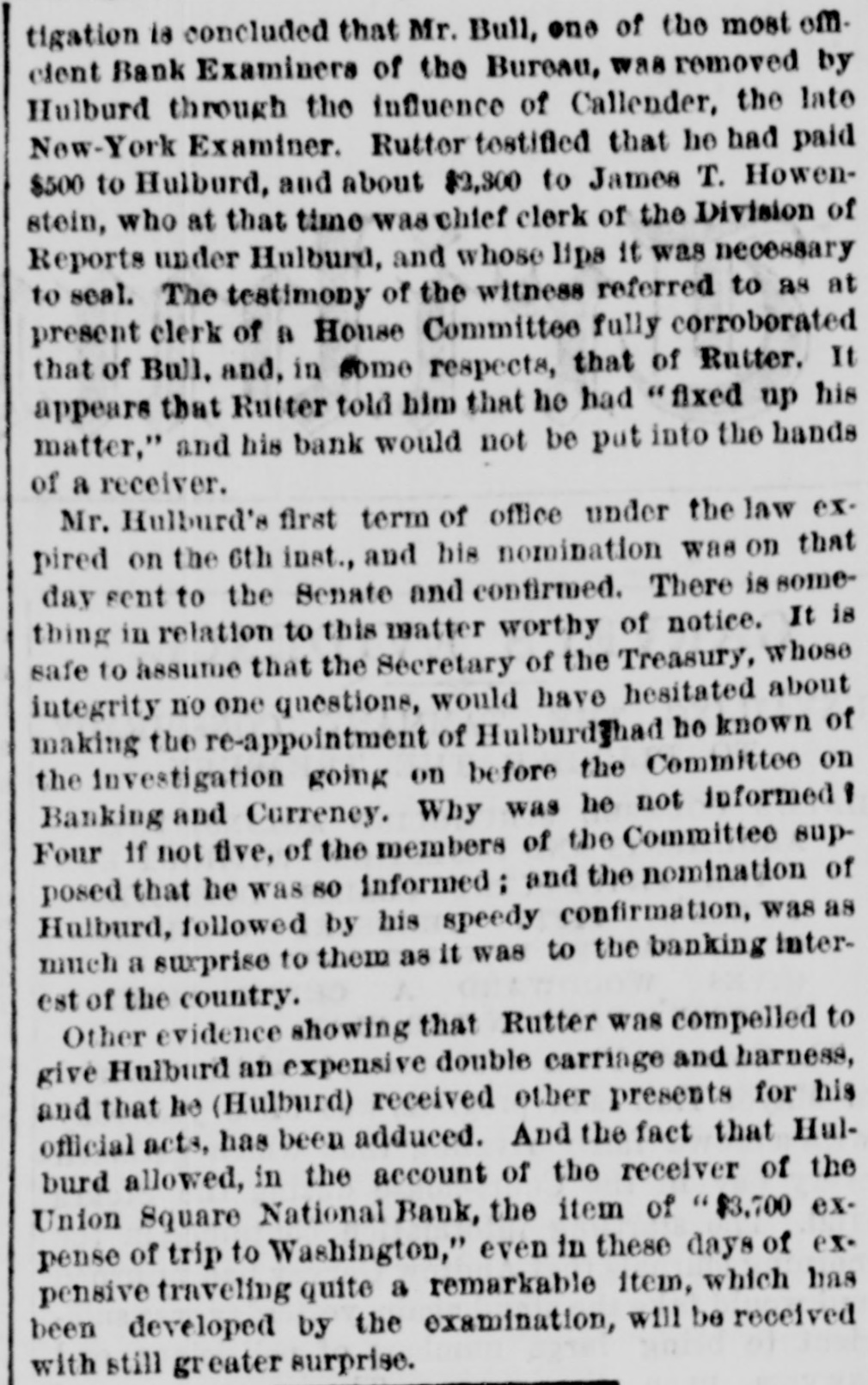
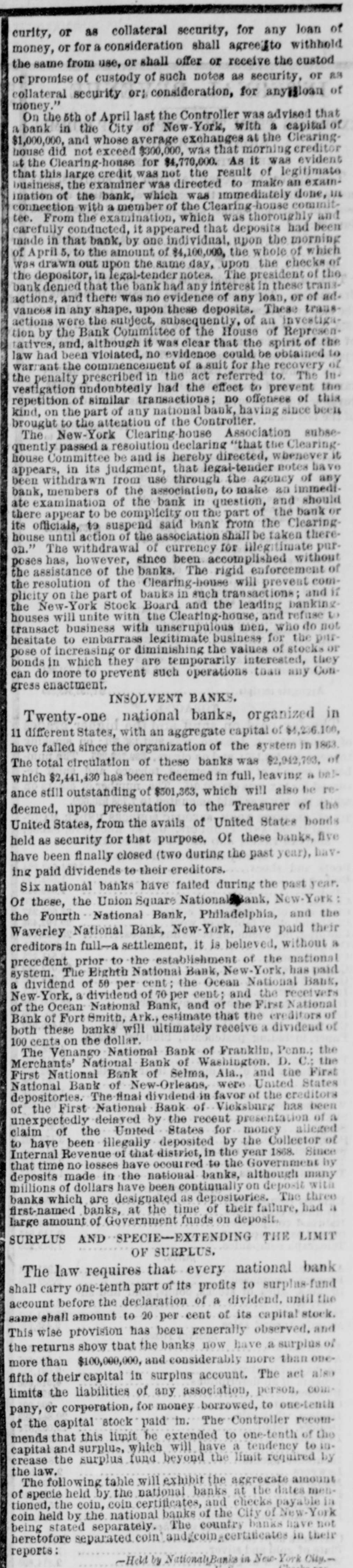
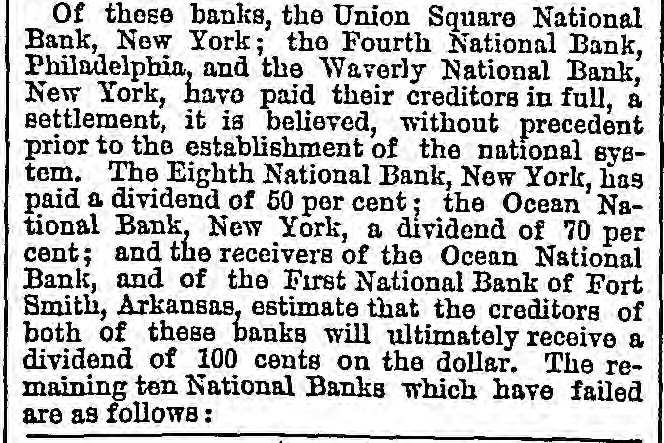
on all checks made upon them, until half-past two in the afternoon, when Mr. Hurlburt, Comptroller of the Currency, without a word of warning, entered, and, taking possession, appointed as receiver a re-tired merchant, Mr. Benjamin F. Beekman. A reporter of the HERALD had an interview with the directory of the institution later in the day, and they declare their ability to pay every cent due de-positors and expect to have a large balance to dis-tribute among the stockholders. They attribute their difficulties to
### A BREACH OF COMMERCIAL FAITH
on the part of the Shoe and Leather Bank, who, after entering on Tuesday night into an agreement to become their Clearing House agent, yesterday morning withdrew from their compact without notifying them, and they first learned of its action from the East River National Bank. Up to fifteen minutes past three o'clock yesterday afternoon the Shoe and Leather Bank had not notified them of their breach of contract, notwith-standing the Union Square Bank had deposited with them
ONE HUNDRED AND TEN THOUSAND DOLLARS TO COVER CLEARANCES.
"It is a remarkable course to pursue," said one of the directors, "and had any other bank in the city-even tire Unemical-been treated as we have been treated by the Shoe and Leather, it would have suc-cumbed and been forced to go under. The truth is, the Shoe and Leather was "panicked," and we are the victims of it. Since the present board of direct-ors entered upon their duties last spring the deposits have more than trebled. We are a bank of small circulation-only $50,000-and the rules of the Clearing House are so arbitrary and