16751. banks in New York (New York, NY)

Bank Information

Episode Type
Suspension → Reopening
Bank Type
state
Start Date
December 31, 1861
Location
New York, New York (40.714, -74.006)

Metadata

Model
gpt-5-mini
Short Digest
e2748714

Response Measures

None

Description

The articles refer to the collective suspension of specie payments by banks in New York (and other cities) in Dec. 1861. This is a broad, system-level suspension (not a run on a single bank) connected to wartime policy and advice from Treasury Secretary Chase; historically these suspensions were temporary, so classification is suspension_reopening. Bank name is generic (multiple banks), so marked unsure. OCRed text corrected (e.g., 'an New York' -> 'in New York').

Events (1)

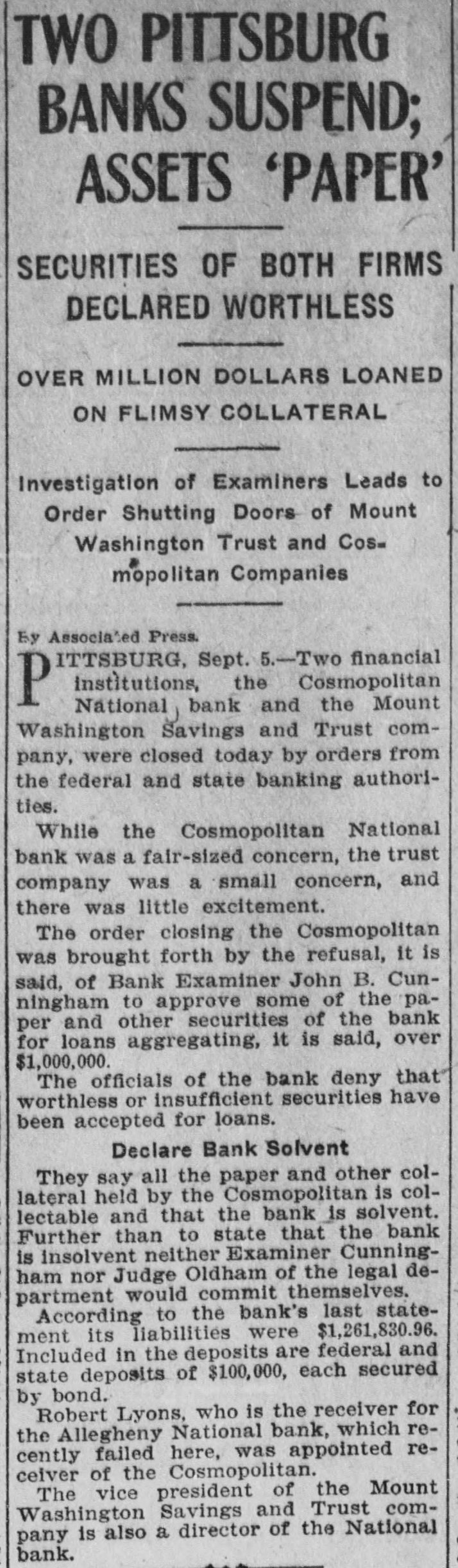
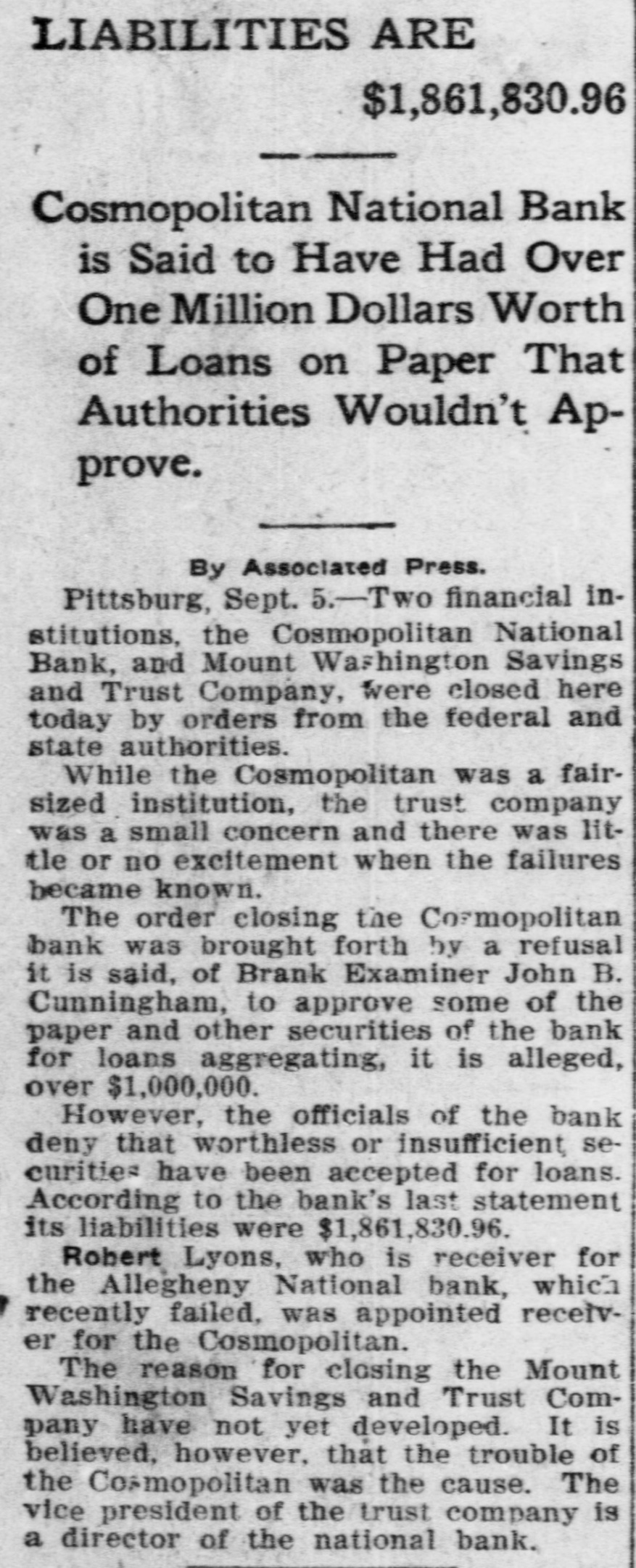
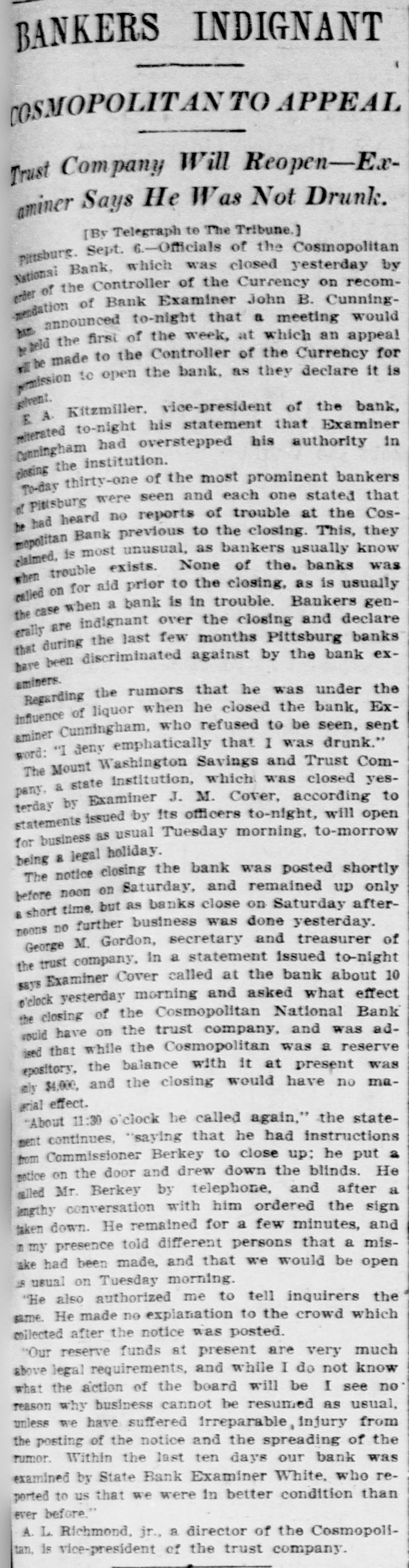
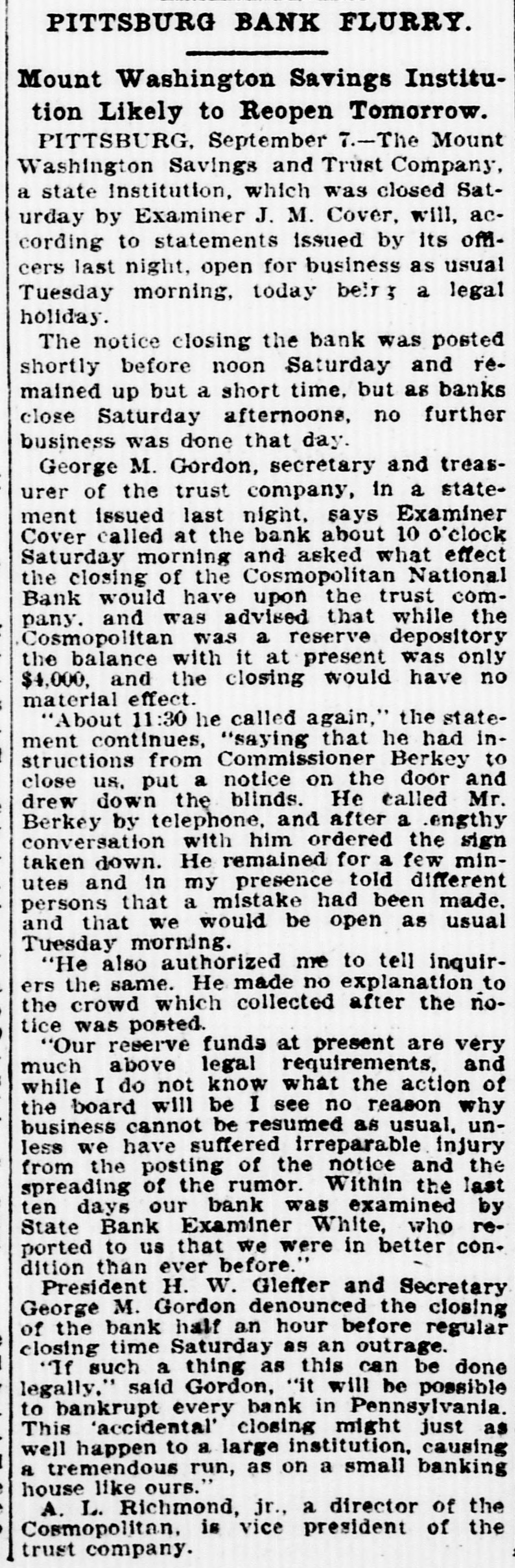
1. December 31, 1861 Suspension
Cause
Government Action
Cause Details
Banks suspended specie payments likely with advice of Secretary Chase to check specie drain and support wartime finance; a coordinated suspension by major city banks (New York, Boston, Philadelphia).
Newspaper Excerpt
The Suspension of Specie Payments. We learn by our telegraphic despatches that the news of the suspension of specie payments in New York and Boston was received...
Source
newspapers

Newspaper Articles (5)

Article from The Daily Green Mountain Freeman, December 31, 1861

Click image to open full size in new tab

Article Text

'The Suspension of Specie Payments. We learn by our telegraphic despatches that the news of the suspension of specie payments an New York and Boston was received in business circles in other loyal cities with a sense of relief,-and this expresses the feeling undoubtedly of nine-tenths of the commercial interest of the Country. The act of the banks should also be regarded as an indication of a Governmental and National policy for the good of the Country, and demanded by the pubdie exigencies, and not as a result of any straitened condition, or necessity of the banks, which are now SO largely furnishing the sinews of war 00 the Government. These institutions which furnish 60 large an amount of the medium through which commercial transactions are accomplished, are as sound to day, and as able to meet all their liabilities as they were six months ago. But in the present disturbed condition of this Country its paper evidences of debt, whether private or public, would naturally enough not be regarded quite equal to gold and silver by those desiring to pay debts abroad or to send funds to other countries for investment, and the natural and inevitable result would be a drain of specie from the banks and an exportation of it to foreign countries. It is for the purpose of giving a check to the evils of such a direction of the bullion in the United States that the banks have, undoubtedly with the advice of Secretary Chase, suspended the payment of specie, and now if it is wanted for exporta tion, those who get it will be obliged to pay for it. The country banks will of course follow the lead of the cities, though as they will still redeem in Boston and New York as usual, which is practically their method of specie payment, the difference that the suspension will make in our currency will be hardly perceptible. Money will doubtless be a little easier by reason of it, fout the bills of our banks, which are all secured by the abundant bonds of the managers of these institutions, will continue to furnish, as they have hitherto done, a safe and thor roughly sound corrency.


Article from Gallipolis Journal, February 6, 1862

Click image to open full size in new tab

Article Text

[For the Gallipolis Journal.] # LETTER FROM COLUMBUS. COLUMBUS, O., Jan. 30, 1862. EDITOR OF JOURNAL:-Since my last letter to you, much progress has been made in the way of legislation. Some bills have become laws, others are under consideration in Committee, and others again have received their quietus by an indefinite postponement. To a looker on it would seem as if little had been done, and yet such is not the fact. The work of legislation is done principally in Committees, and when they shall have sufficiently matured the proposed changes in the present laws to bring the matter before the House, it will then be perceived that much has been done. The bank suspension act has become a law. I am satisfied that it was a measure of imperative necessity. The suspension of the banks in New York created a demand for gold, and made it an object to obtain it for sale; consequently all the brokers and money sharks in the large cities, not only in this State, but in other States, even to far off Wisconsin, actively commenced "running" the paper of our banks home, and drawing therefrom the gold; in consequence of which the reserve of the banks was rapidly being exhausted, and a forced suspension a necessary result. ($170,000 was withdrawn from the Capitol city banks in twenty-four hours.) The question then was narrowed down to this: Whether the banks should suspend and go into liquidation as provided for by their charter, or should the legislature legalize it, or rather, suspend the penalties. I thought the latter course the more preferable, and for the following reasons: First. A forced suspension would have obligated the winding up of the banks. This would have caused a depreciation of their paper from five to ten per cent, and perhaps even a greater depreciation, and a bringing into market for immediate sale all the State stocks deposited to secure the circulation of their notes. It would also have depreciated State stocks very considerably, and eventuated in a loss to the bill holder; and, also, prevented the State from borrowing money on its stock at par rates. Second. The demand notes of the Government would have depreciated, and become to these money sharks an object of merchandise. You will readily understand the evils of such a state of affairs. With the amendments made to the bill in the Senate, the following good results from it: Firstly. The paper of the banks remains at par, and insures a good and safe currency for the people. Secondly. The banks are compelled to pay taxes as individuals, which will put several thousand dollars in the treasury. Thirdly. They are compelled to receive the demand notes of the Government at par, and thereby prevent a depreciation of them. Fourthly. It does not prevent any one having one of their bills from obtaining the gold by suit, if he so desires. Your valuable paper did not reach me until some time after its publication, owing, I suppose, to the high water and consequent irregularity of the mails. The question of adjournment has not yet been seriously considered. We might get through by the first of March, but will not before all fools' day. Too much "gab" for expeditious working. In regard to the Senatorship, I can speak with no certainty. There are numerous candidates, but who is the most prominent and likely to succeed, it is difficult to say. The question is hardly mooted as yet. All guesses made by the correspondents of the Cincinnati dailies are of small value; got up to say something sensational, and perhaps create a feeling in favor of or against some particular person. For instance, the correspondent of the Commercial is "writing" Wade "down," and Chase "up;" while the correspondent of the Gazette, "Turner," who is Mr. Coggeshall, the intelligent and gentlemanly State Librarian, and has "no axe to grind," gives you a more correct statement of the feeling of the legislature upon the question. As I see no particular reason for making the election this winter, I shall vote for postponement until next winter, unless advised otherwise as to the wishes of my constituents. LAWRENCE


Article from Connecticut Western News, December 24, 1891

Click image to open full size in new tab

Article Text

December 30. 40-Titus, son of Vespasian, born; took Jerusalem in 70; became emperor; died 81. 1504-Queen Isabella of Spain, patron of Columbus, died. 1568- Roger Ascham, tutor of Queen Elizabeth and famous scholar, died; born 1015. 1780-John Wilson Croker, British statesman and author, born in Galway, Ireland; died 1857. 1787-Otto Von Kotzebue, explorer of the coast of Russian America, born in Revel, Russia: died there 1846. 1861-The - banks in New York, Boston and Philadelphia suspended specie payments. 1862-Hard fighting at Parker's Cross Roads, Tenn., and first serious defeat of the Confederate General Forrest. 1863-Minor battles at Matagorda Bay, Tex.; St. Augustine, Fla.: Greenville, N. C., and Waldron, Ark. 1865- Henry Winter Davis, statesman, died in Baltimore; born 1817.


Article from The Marion Daily Mirror, December 30, 1908

Click image to open full size in new tab

Article Text

Wednesday, December 30, 1908. and WEATHER-Threatening colder tonight. Thursday fair and much colder. Dec. 30 In History. 40-Titus, Roman emperor, born; died 81. 1504-Queen Isabella of Spain, patron of Columbus, died; born 1451. 1787-Otto von Kotzebue, explorer, born; died 1846. 1861-The banks in New York, Philadelphia and Boston suspended specie payments. 1903-The Iroquois theater burned in Chicago; 583 lives lost.


Article from The Daytona Daily News, December 30, 1910

Click image to open full size in new tab

Article Text

Dec. 30 In American History. 1851-Lajos (Louis) Kossuth, Hungarian patriot and exile, visited Washington on invitation of congress. 1861-The banks in New York, Philadelphia and Boston suspended specie payments. 1865-Henry Winter Davis, Maryland statesman and orator, died in Baltimore; born 1817. 1903-The Iroquois theater burned in Chicago; 583 lives lost.