Click image to open full size in new tab
Article Text
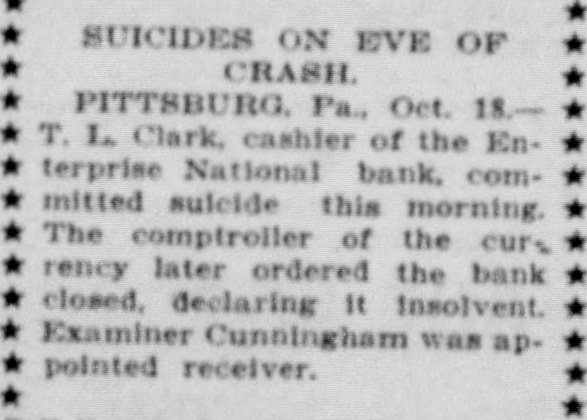
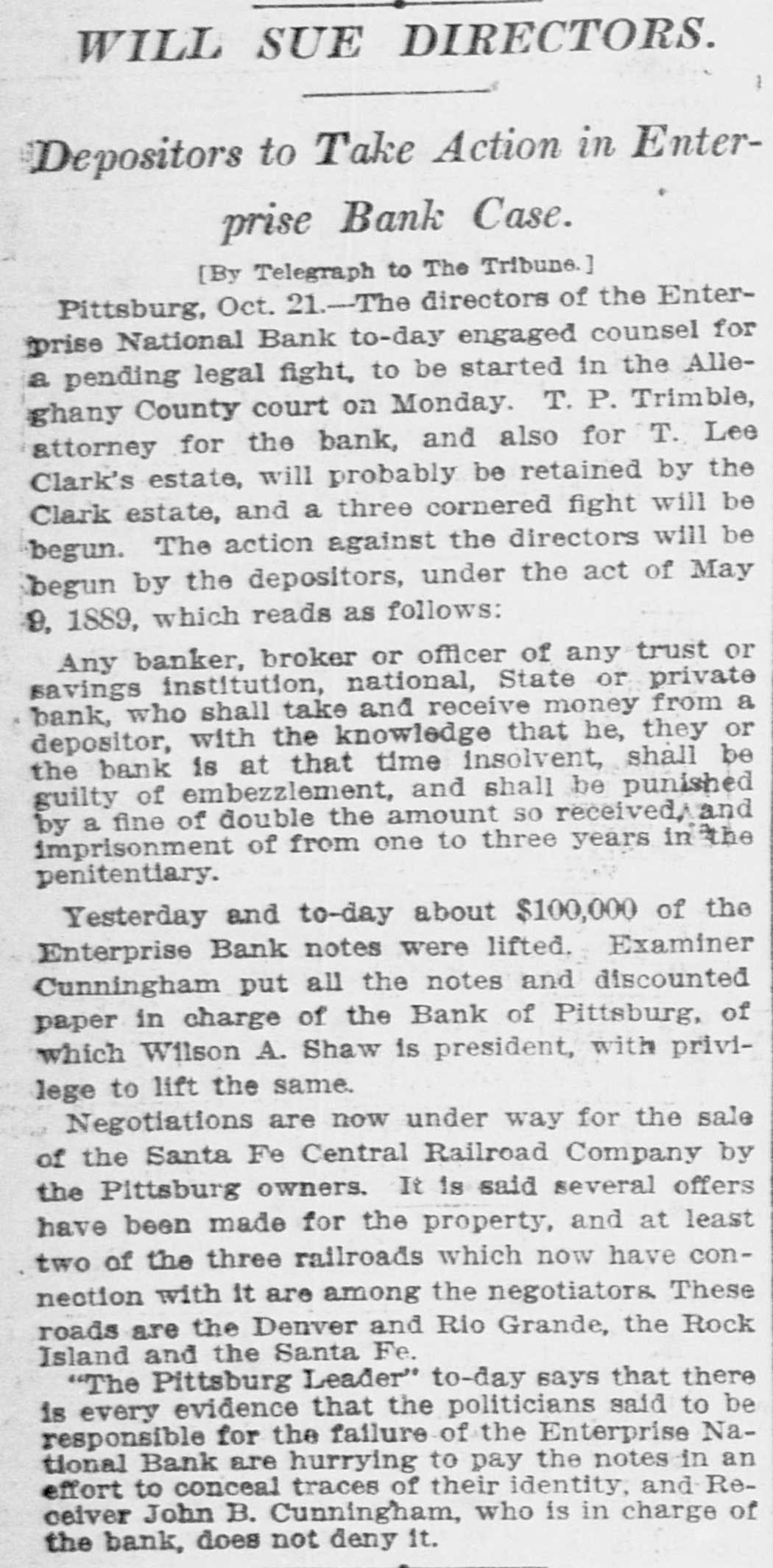
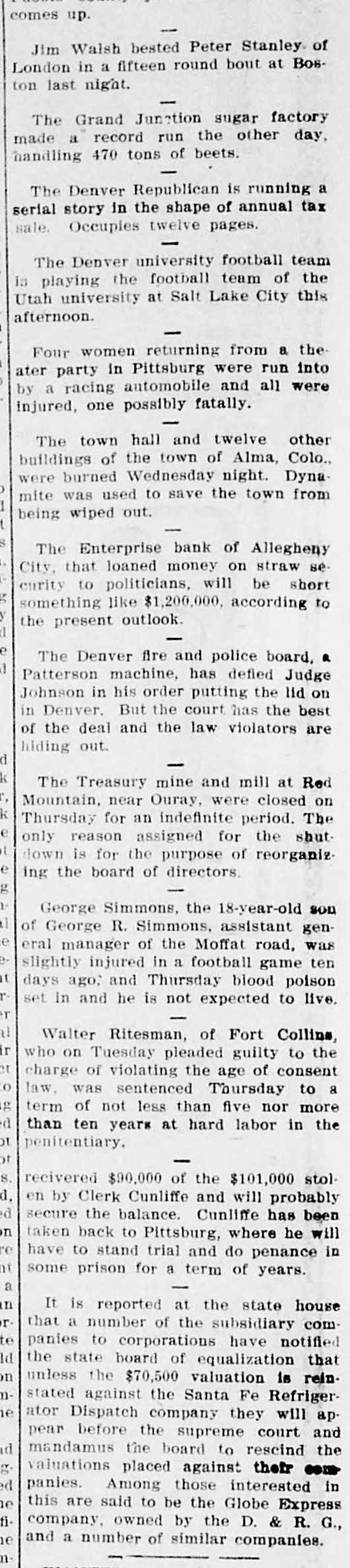
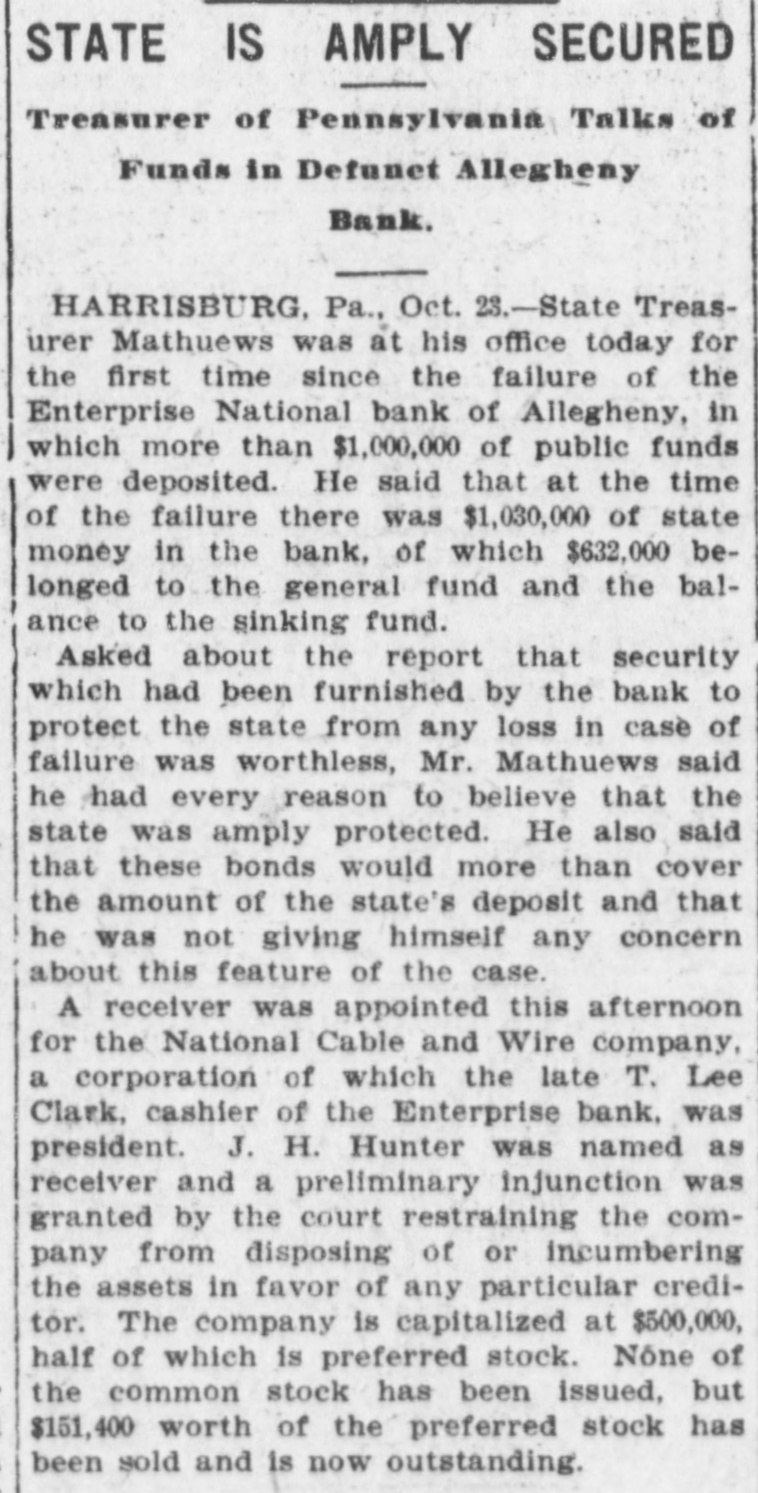
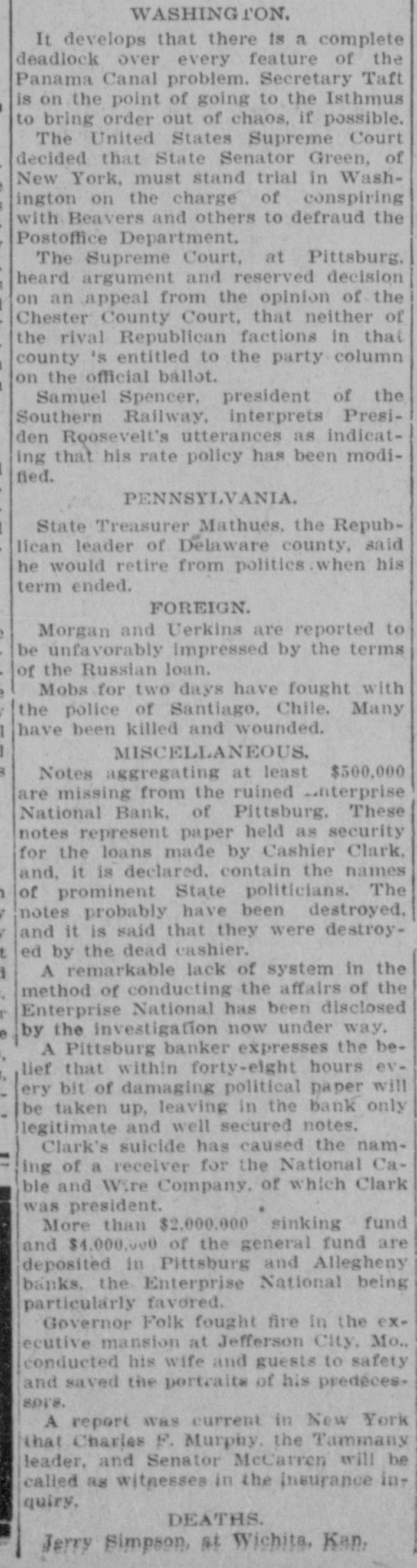
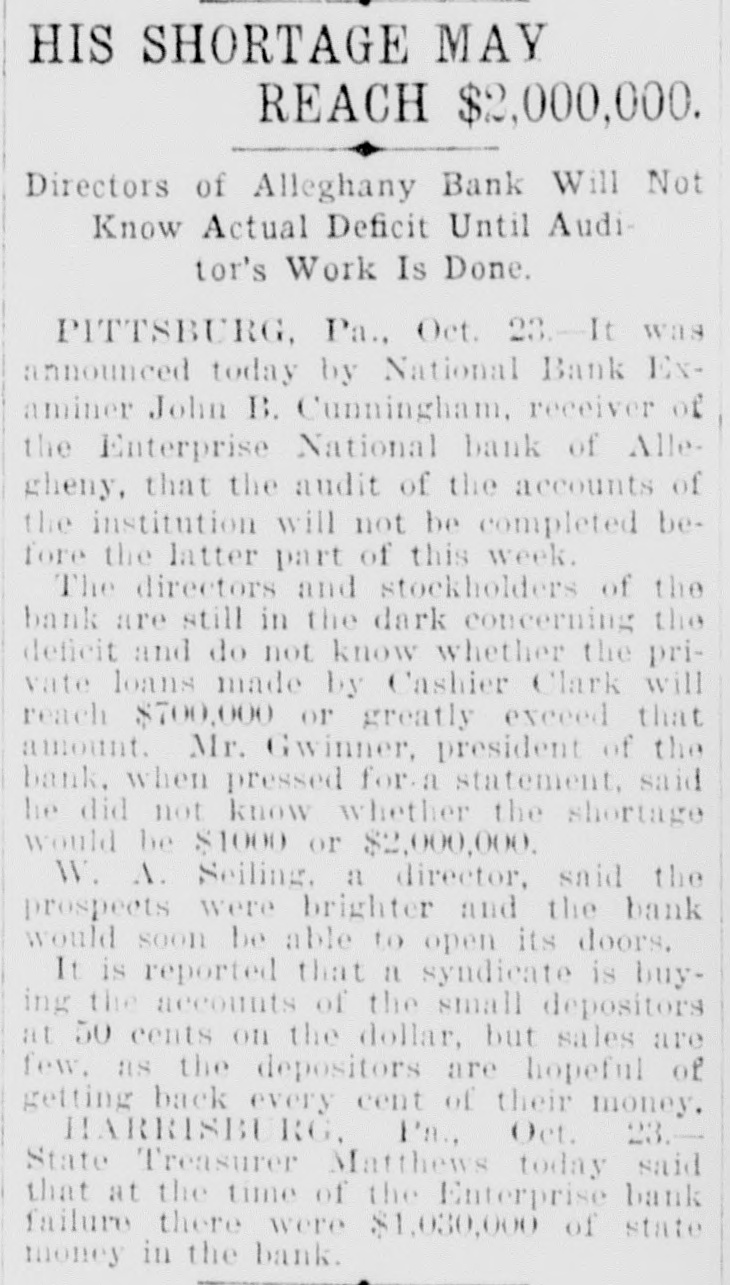
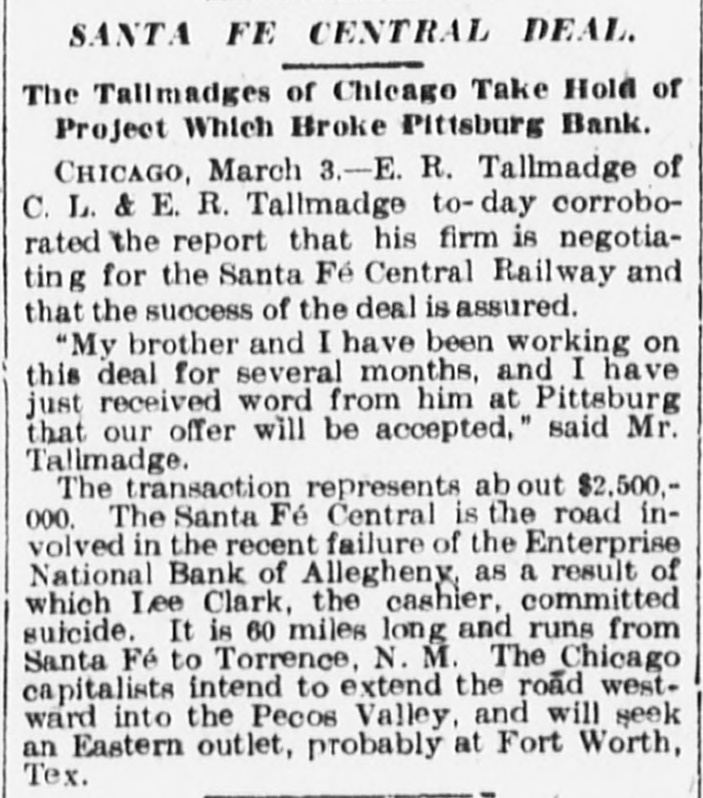
like $7,500,000 has been stolen by dishonest bank employes in that city. The banks have concluded that the best course before them-while not wisbing to east suspicion upon anyone is to photograph every one of their employes and take their measurements by the Bertillon system, SO that, when a next defalcation may occur, the police authorities all over the world will have the last embezzler marked down as minutely as though he were the most elusive Max Shinburn who ever alternated between safe-cracking and jail service. If there was one bank officer who would have surrendered his complete control of millions rather th submit to being "mugged" by the police, it was William Montgomery, cashier of the Allegheny National, under arrest in connection with the disappearance of $839,000 of deposits and the entire $500,000 worth of capital stock. He was the intimate friend and confidant of Senator Quay. the man who placed Quay's bets during the Harrison campaign, when Quay won $250,000, and the trusted handler of the moneys of the political machine in that section of the State. When the Allegheny National went down-or up- -the State was backing it with $532,000 of deposits and the city of Pittsburg with $1,532,000. Private depositors were SO wary that they let it have little. When the crash came, after a series of speculations in stocks, the police reported the discovery of no photograph of Montgomery, even during their investigations of the suddenlyacquired fortune of a Pittsburg widow whose wealth leaped in eight years from $10,000 to $333,000. and of other women in Pittsburg and neighboring cities, whose real estate investments had increased with remarkable facility. While the fate of the Allegheny National's money still hung in the balance. pending the decision of Montgomery's allies as to restitution of the million that had gone, a man returned to Pittsburg who for nearly three years had left the police bitterly regretful that the Bertillon system was not compulsory there before the Enterprise National of Allegheny co!lapsed in October. 1905. He was Thomas W. Harvey, teller of the Enterprise. who, in the vain hope of escaping the penalty for his share in the crime, had given up his identity and his home, to wander amid agonies of dread until his fearful spirit could no longer bear the strain. He surrendered himself to the Federal authorities, and on the same day was sentenced to seven years in the penitentiary-and that with no more notoriety than if he were a purse snatcher. Pittsburg was learning to wash its dirty linen with neatness, silence and dispatch. Yet the Enterprise embezzlements were among the most sensational ever known in the State of Pennsylvania. The losses amounted to $1,500,000. It was a "political" bank, like the Allegheny National, and hundreds of thousands of its deposits had gone out to politicians on notes which, unsecured at best, had disappeared when the cashier, T. Lee Clark, both poisoned and shot himself, to make sure of death. Speculation, women and gambling was the way the stolen millions went When the Union Trust Company of Pittsburg discovered its loss of $385,000 in 1906, almost on the anniversary of the Enterprise run. the thieves proved to be a couple of mild young persons, Clinton B. Wray, the teller, and C. S. Hixton, the individual bookkeeper. The gambling crooks took it off these two marks in large chunks Both received ten years apiece when their defalcations were discovered. While the gamblers were enjoying the Union Trust Company's cash, the bucket shops were getting during the year between March, 1907, and March of this year $520,000 taken from the Farmers' Deposit National Bank by Henry Reiber, the paying teller, and John Young. the auditor. They proved themselves fools as simple over wildcat curb adventures as the boys of the Union Trust did over crooked cards. For ten years those two presumably experienced financiers had been stealing $1,105,000 from the Farmers' Deposit Bank. and no one, among either officers or directors. had suspected them. They, too, have been sentenced to ten years each. Pittsburg's example has given the State of Pennsylvania a record that puts the dashing depredations of bank robbers in the Southwest, with their masks and their revolvers, to the blush of poignant shame. SHORT NEWS NOTES. Fire in the lumber yards of the Lake