16663. Union Dime Savings Bank (New York, NY)

Bank Information

Episode Type
Run Only
Bank Type
savings bank
Start Date
July 30, 1893
Location
New York, New York (40.714, -74.006)

Metadata

Model
gpt-5-mini
Short Digest
1467462e

Response Measures

Accommodated withdrawals

Description

Articles from July 30–Aug 1, 1893 describe heavy withdrawals and a run (depositors seeking funds) at the Union Dime Savings Bank. The bank remained open and relaxed or enforced the 30/60-day rule for some customers but did not suspend or close. Cause is the broader banking panic/regulatory action affecting many savings banks (general financial nervousness), not a specific misinformation event.

Events (1)

1. July 30, 1893 Run
Cause
Macro News
Cause Details
General banking nervousness following new savings-bank withdrawal regulations and wider financial distress in July 1893 leading to heavy withdrawals at many savings banks.
Measures
Availing of the sixty-day (30/60) notice clause; paying small sums (e.g., $100) on demand; relaxed rule in some cases to pay depositors in full when necessity shown.
Newspaper Excerpt
Colonel Sprague, president of the Union Di[e] Savings Bank, said 'There was a large increa[s]e in the withdrawals of deposits from this bank 1 day. We are paying $100 on account, and ha[ve] availed ourselves of the sixty-day clause in o[ur] charter.'
Source
newspapers

Newspaper Articles (3)

Article from New-York Tribune, July 30, 1893

Click image to open full size in new tab

Article Text

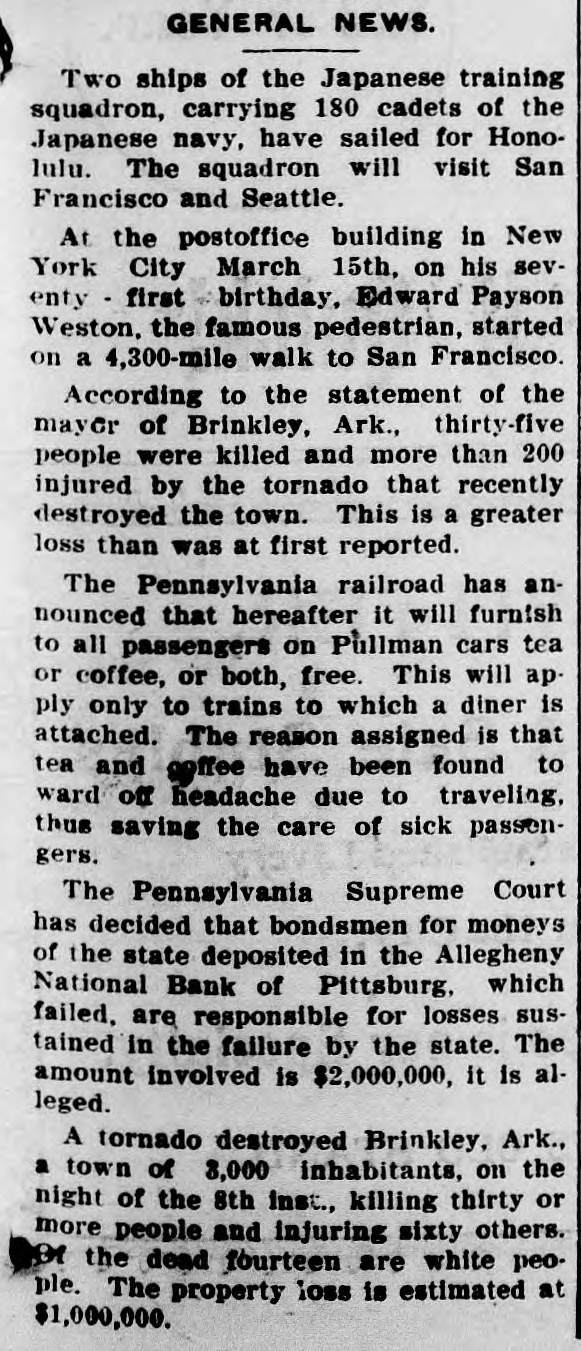
ment. In New-York City there are twenty-five 8 ings banks, and on January 1 last they had deposit $340,406,930, placed there by 815,2 depositors. In Kings County there are fourt savings banks, which, on the same date. I $105,947,231 in the names of 270,032 depositor Edward Baker, president of the Bowery Savi Bank, when seen in the bank yesterday morni said: We have not enforced the sixty days' rt It is a good rule in case of a panic, but otherwise. No action will be taken by this ba until the trustees have considered the questi The officers of the bank will wait for a meet of the board of trustees, which will be held ea in the week. The trustees will probably ta such action as may be necessary to empower officers in case of trouble to act at once. We an extra heavy business this morning. but depositors were not at all alarmed. The savi banks are experiencing a great need of bills small denominations." ALL DEPOSITORS ON AN EQUAL FOOTING Andrew Warner, president of the Institut for the Savings of Merchants' Clerks, No. Union Square, said: The Board of Trust have not met yet, but if we think it necess a meeting will probably be called for Mond We have given no notice to our depositors, a we will keep on in our usual way until trustees take action. I consider the action good one, beneficial both to the savings bar and the depositors. It will put all the deposit on the same footing. do not think this acti will have any bad effect on the banks, for telligent depositors will understand it. withdrawals of deposits have been only sligh larger than usual at this time of the ye Confidence will be readily restored when depos ors see that they can easily obtain their mon I look upon all the savings banks in this St: as sound and capable of paying all they owe a having a surplus left. These institutions 80 hedged about by law and their investment are of such a character that it is difficult depositors to be injured. The chief purpose the sixty-day notice would be to stop the imr diate withdrawal of the whole amount on posit. I consider it a wise action. and doubti all the banks will take advantage of it." THE TIME CLAUSE ENFORCED. Colonel Sprague, president of the Union Di Savings Bank, said 'There was a large increa in the withdrawals of deposits from this bank 1 day. We are paying $100 on account. and ha availed ourselves of the sixty-day clause in o charter. The women depositors seem to be 1, frightened than the men. It was remarkab however, that 15 per cent of the money withdray was immediately redeposited after the people sa that we had plenty of cash on hand to pay. large amount of the money paid out was in gold DEPOSITORS WELL PROTECTED. The provisions of the Banking law protect ( positors in savings institutions at every ste Before a savings bank can begin business t Superintendent of the Banking Department mi be satisfied as to whether the responsibility a character of the organizers are such as to eo: mand the confidence of the place in which t savings bank is to be located also as to whetl the opening of a bank, in the place propose will be a public benefit. Thirteen corporators : necessary. of whom a certain number must reside the county where the bank is to be opened. and t thirteen are subject to the obligations and dut imposed by law on trustees of an express tru No savings bank can receive deposits until has sent to the Banking Department the nam residence, and address of each of its officers. is provided that: No trustee of any such corporation shall have a interest, direct or indirect. in the gains or profits there nor as such, directly or indirectly. receive any pay emolument for his services, except as hereinafter provide and no trustee or officer of any such corporation sh directly or indirectly for himself or as an agent or parts of others, borrow any of Its funds or deposits. or In o manner use the same except to make such current 1 necessary payments as are authorized by the Beard Trustees: nor shall any trustee or officer of any such poration become an indorser or surety or become in manner an obliger for moneys loaned by or borrowed such corporation. A trustee who violates this provision, or W becomes connected with any other savings bar forfeits his position ipso facto. Trustees who as officers, or as members of the committee examine vouchers and assets, may receive a CO pensation, whose amount is fixed by the majori of the other members of the Board. HOW THE MONEY MAY BE INVESTED. In this time of general depreciations, the sa guards as to the securities in which deposits m be lawfully invested are specially interestir Those securities are of six classes: (1 Governme and District of Columbia interest-bearing oblig tions, i. e., bonds or notes: (2) interest-bearing ligations of this State: (3) interest-bearing oh gations of any State of the Union which has n defaulted in payment of principal or inter within ten years; (4) city. town, country, villa and school bonds issued pursuant to law in tl State: (5) first mortgages on real estate situat in this State worth twice the amount loan thereon not more than 65 per cent of all t deposits can be loaned in this way. and only per cent of its actual value may be loaned on 11 improved property (6) real property necessa for the transaction of a banking business, a such as is purchased at sales on foreclosure mortgages owned in the bank The trustees are prohibited from loaning ti moneys deposited with them, or any part there upon notes, bills of exchange, drafts. or any oth personal securities whatever." Dealing or tra ing in real property otherwise than as has bes indicated. or in any goods, wares, merchandis or commodities whatever, buying or selling e change. or gold or silver. or collecting promisso notes on time bills, or making or issuing any ee tificates of deposit payable either on demand at a fixed day are also prohibited. CASH ASSETS LIMITED IN AMOUNT. For the purpose of meeting current expenses, per cent of the amount of the deposits may 1 kept in a State or National bank or trust con pany but this amount must not exceed one-quart of the capital stock of such depository. TI


Article from Evening Journal, July 31, 1893

Click image to open full size in new tab

Article Text

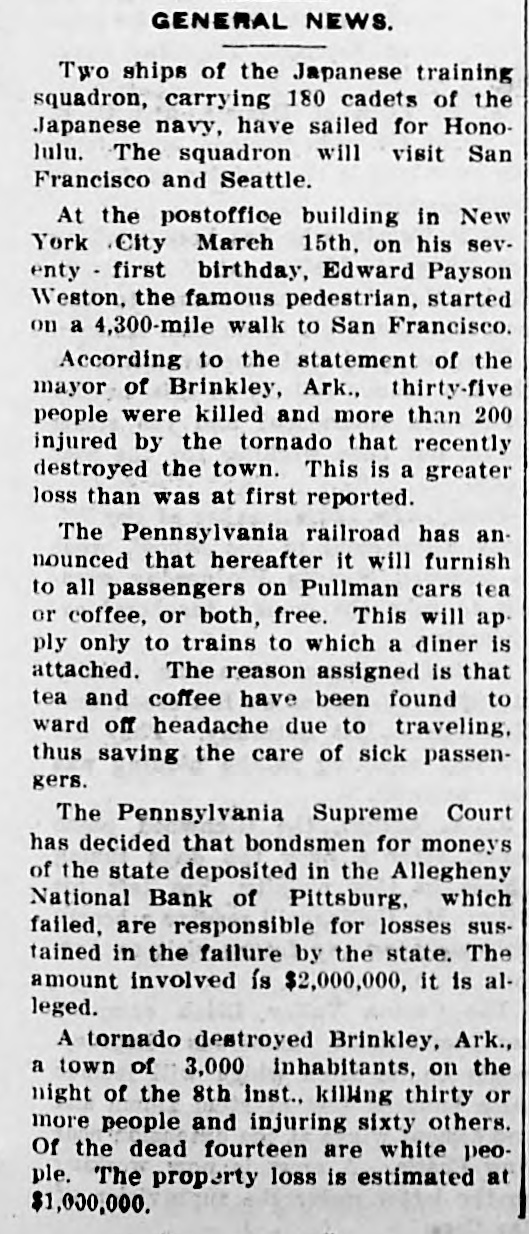
A RUSH OF DEPOSITORS Chaotic Crowds Congregate About the Banks AND OLAMOR FOR DEPOSITED CASH New York All Astir Over the Bank Regulations Which Went Into Effect This Morning-Police Had to Be Called Upon Early This Afternoon-Business Disturbances of To-day. NEW YORK, July 31. In many of the savings banks notices was pasted to day to the effect the bank of withdrawal rule adopted by the savings banks last|week was in effect. One or two banks made the limit of withdrawal 100 requiring the legal notice for withdrawal of greater sums. The action of the banks has not caused what might be called 8 panie, but there were heavy withdrawals at most of the savings banks and doubtless the check on depositors will go into effect generally to-morrow. At the Seaman's Savings Bank there were 250 people demanding their money; at the Dry Dock Savings Bank, 500; at the Bowery Savings Bank, 200; at the the Union Dime Savings oBank, 150; at German Savings Bank, 300; at the Bleecker Street Savings Bank, 400. At the latter institution the crowd was so e haotic and disorderly that the police were sent for. The police formed the crowd in line and each depositor drew out all his book called for. The legal notice was not asked for by the bank, but the directors will probably order the rule enforced after to-day Bankers are of the opinion that if the rule is not enforced to-morrow a senseless run will result and millions of dollars taken out of circuit. All the banks are sound and their money is well invested but to force the instant payment of the immense sums deposited would wreck many of them. In Brooklyn, Williamsburgh and in several cities throughout the state heavy withdrawal deposits are reported. Several Brooklyn banks compelled depositors to give the legal notice but the rules have not gone into effect generally. The crowds at the savings banks increased toward noon and 'at that hour most of the savings institutions posted the rule governing withdrawals. Money at noon on the stock exchange was 48 per cent. and the Clearing House Loan Committee issued a million dollars worth of clearing house certificates with a promise of a million more before the day ended to ease the market. Nearly half a million of gold came from Havanna to-day and half a million was started from London to New York,


Article from New-York Tribune, August 1, 1893

Click image to open full size in new tab

Article Text

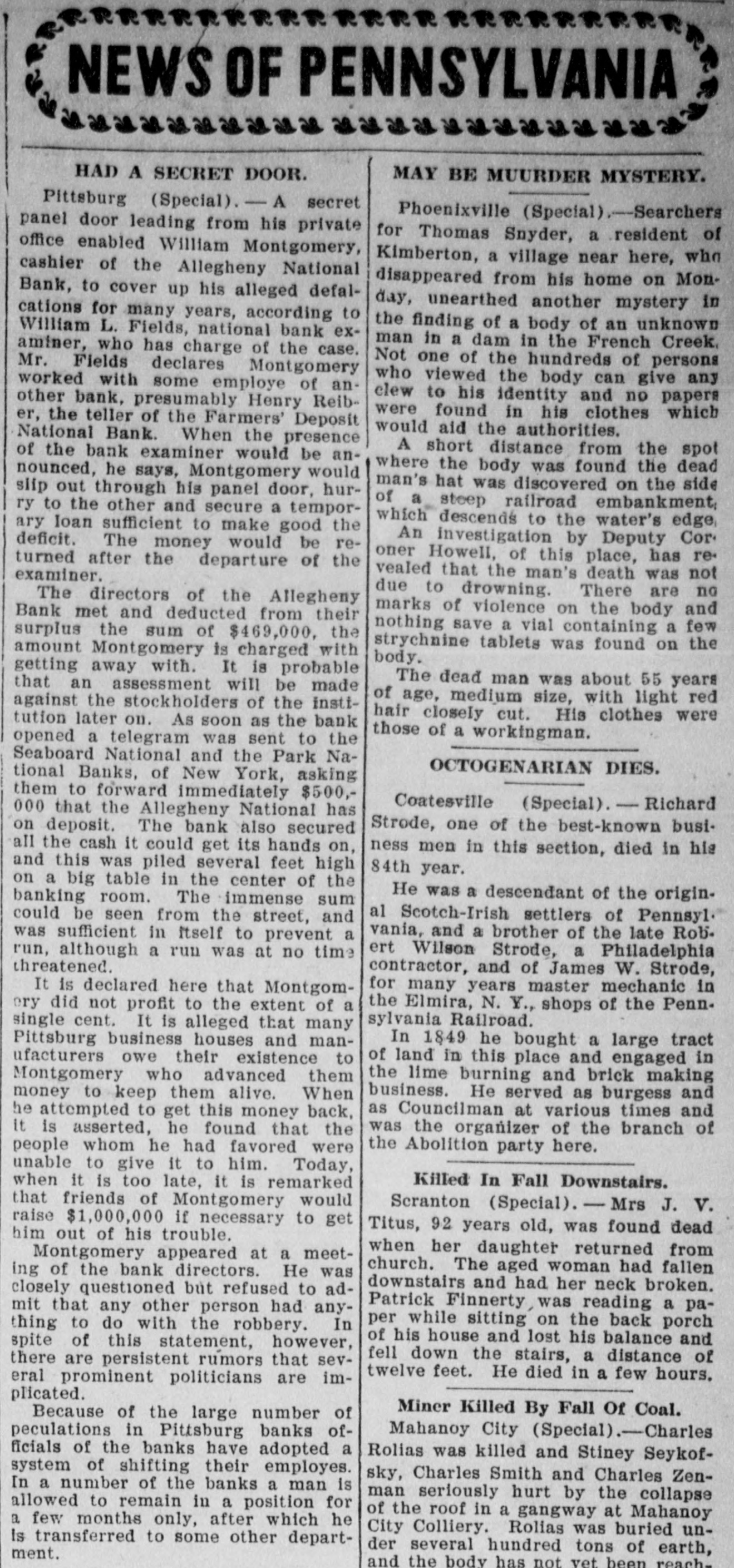
$53,200, and that 275 had deposited $25,834.12. Much of the last-named amount came in in gold. Some poor women who had got their $50 each before noon returned in the afternoon and put it back again. A crowd of excited Polish Hebrews eddied around the Citizen's Savings Bank, at No. 58 Bowery yesterday, and made life miserable for several bluecoats who were keeping order. "More grocery stores were bought to-day," said Edward A. Quintard, president of the bank. "than 1 believe existed. Every second Hebrew who drew money or gave notice of withdrawal intended to buy a grocery store, pay a mortgage, or was going to get married. We are enforcing the time clause, and we pay all sums up to $100, except in cases where we are sure that the money is necessary to carry out a contract. We have paid out to-day about $25,000. about double our usual amount." At noon yesterday several hundred depositors were waiting at the doors of the Dry Dock Savings Bank, at Third-ave. and Third-st. The rapidity with which small accounts were closed served to allay fear in some cases, and there were thirteen new accounts opened in one half an hour. The rule for the bank in the morning was to pay depositors in full, but later a meeting of the directors was held and it was decided to enforce the thirty and sixty days rule. Many depositors who drew their money on Saturday reopened accounts yesterday. Up to the time of closing at the Manhattan Savings Institution. at Broadway and Bleecker-st., no action was taken regarding the time clause. Every depositor was paid in full on demand. This served to reassure some of the depositors, who came back shortly to redeposit their money. At no time during the day was there a long line at the paying-teller's window. Where special necessity was shown. the Union Dime Savings Bank. at Broadway and Thirtysecond-st., relaxed its sixty-day notice rule and paid depositors in full. Few depositors gave notice, but took $100, and were satisfied. At the Institution for the Savings of Merchants' Clerks, in Union Square, about $4,000 was withdrawn. Large depositors, unless obligations were to be met by them. were asked to give sixty days' notice of withdrawal, but few of them did so.