Article Text
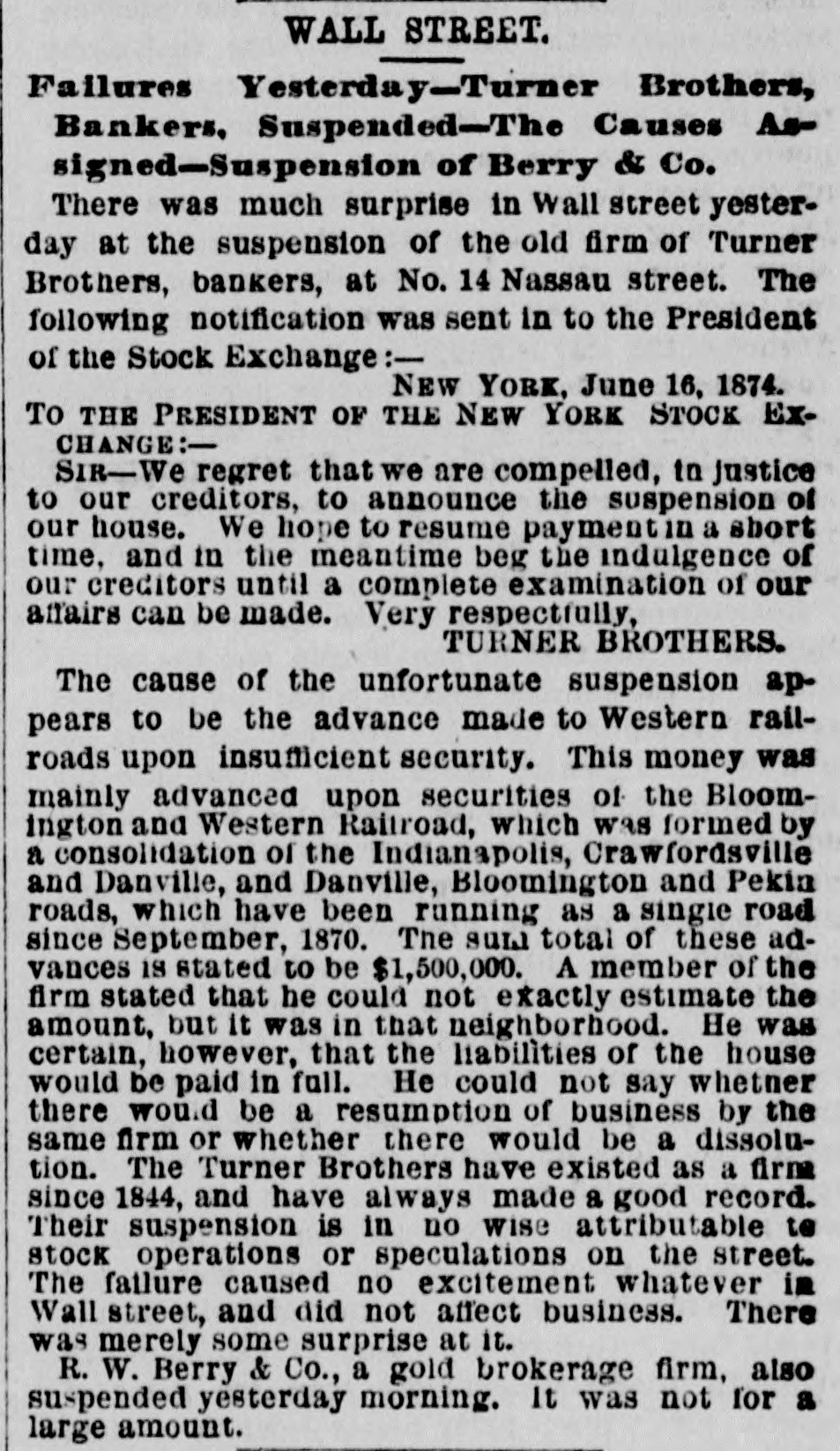
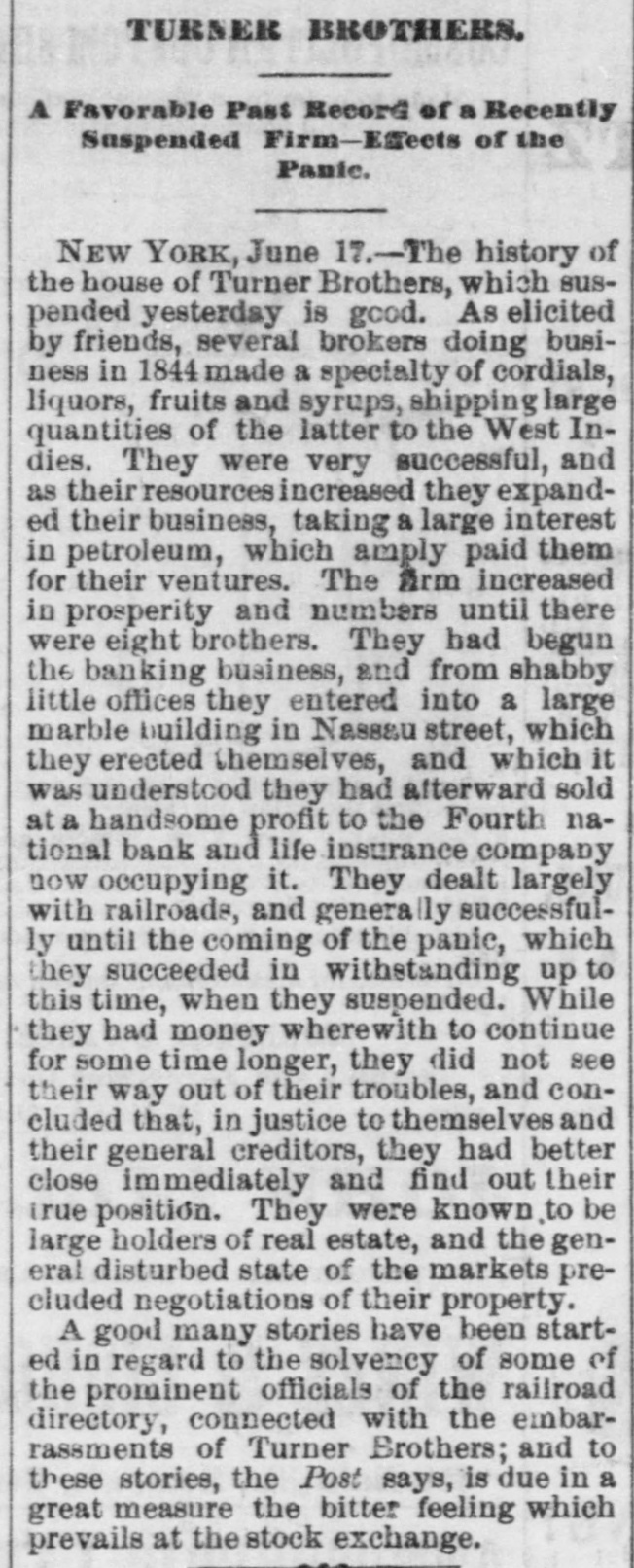
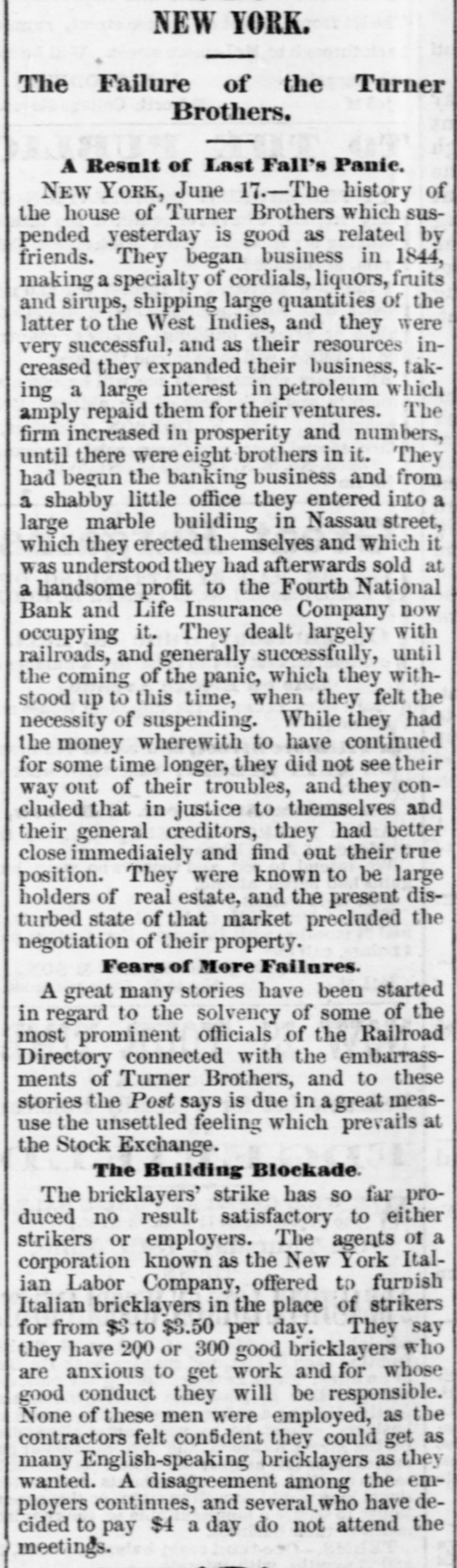
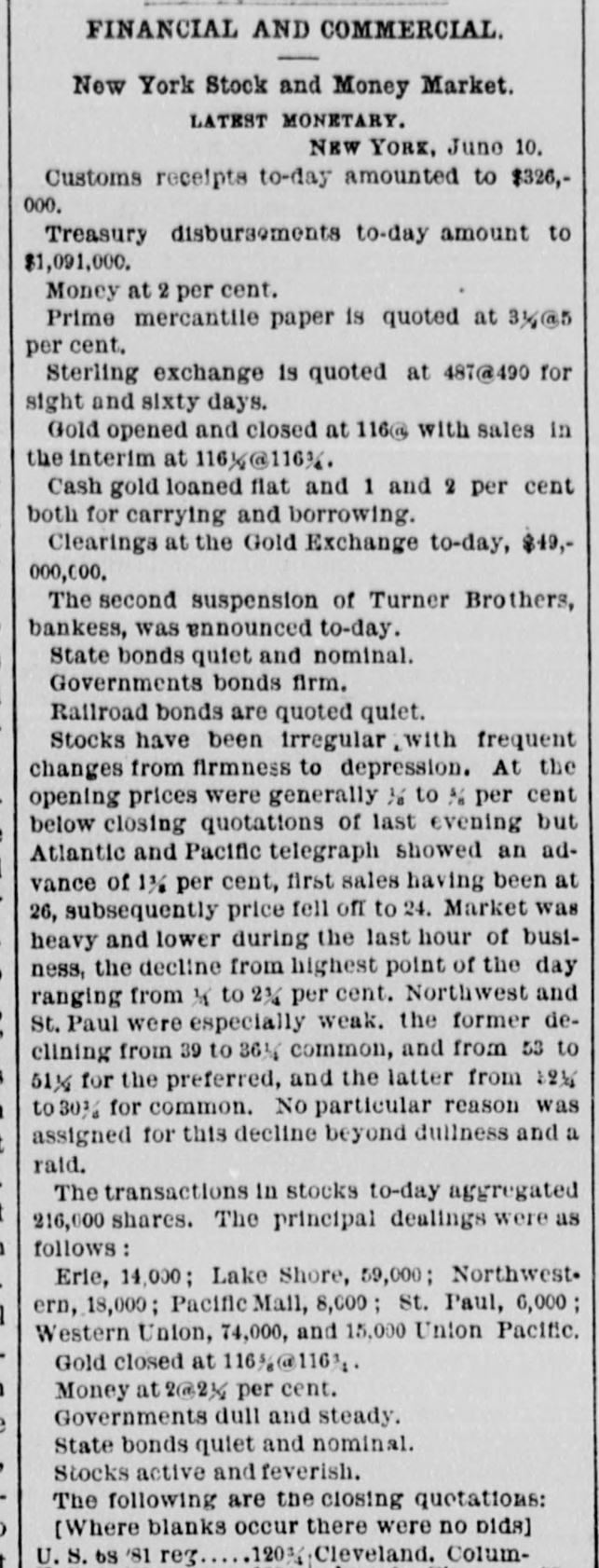
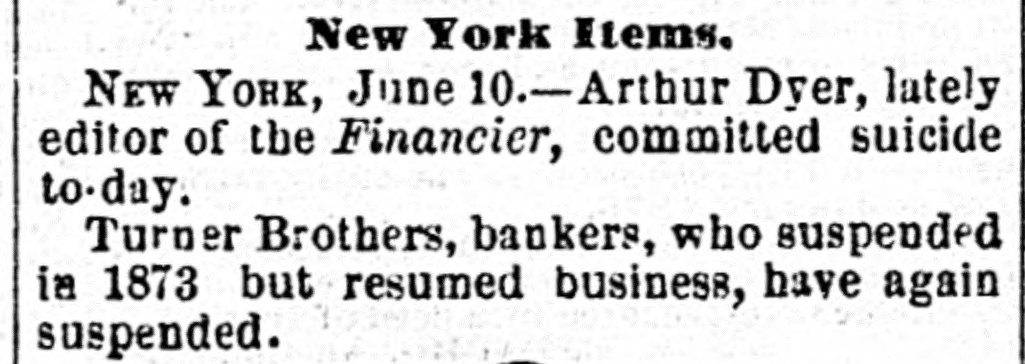
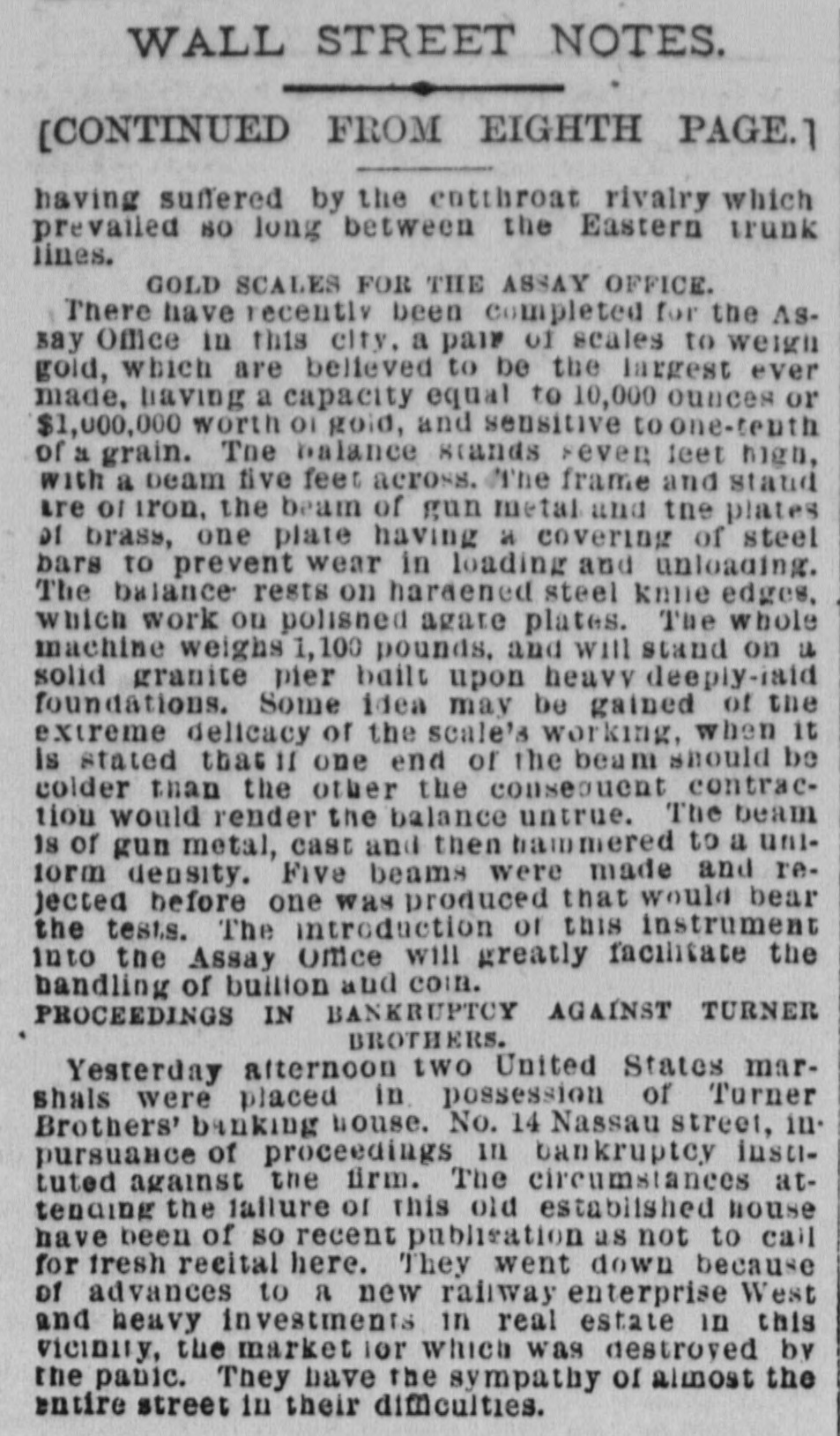
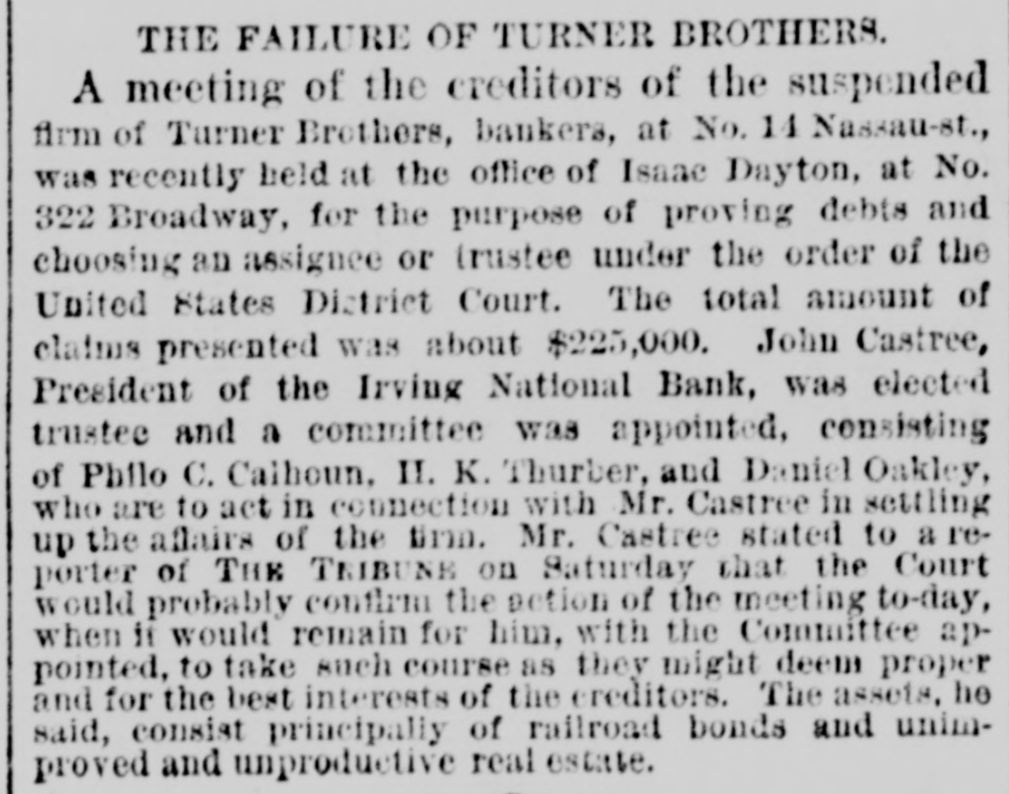
NEW YORK. Bricklayers' Strike-Railroad Matters-Suspension of Turner Brothers. NEW YORK, June 17.-The bricklayers' strike has so far produced no result satisfactory either to the strikers or employers. Many who struck on Monday have resumed work at the old wages, while some did not cease work at all until yesterday. At a meeting of the employers yesterday, a resolution to the effect that the employers would agree to pay four dollars for a day of ten hours, but not more than $3.50 for a day of eight hours, was unanimously adopted. Agents of the corporation known as the New York Italian Labor Company offered to furnish Italian bricklayers in place of the strikers for from $3 00 to $3 50 a day. They say they have two or three hundred good bricklayers who are anxious to get work and for whose good eonduct they will be responsible. None of these men who were employed as contractors felt confident that they could get as many English-speaking bricklayers as they wanted. The disagreement among the employers continues, and several who have decided to pay four dollars a day do not attend meetings. At last night's session of the Bricklayers' Council several more of the bosses were reported as having agreed to an increase of wages. Sidney Dillen, President of the Union Pacific railroad, has returned from his tour of inspection over the road, and reports everything working satisfactorily. Among the results of his visit has been the settlement of the question of the junction of the Union and Central Pacific railroad. In Boston to-day the question of establishing rolling mills for the manufacture of the company's rails will be considered. The history of the house of Turner Brothers, which suspended yesterday, is good. As elicited by friends, several brokers doing business in 1844 made a specialty of cordials, liquors, fruits and syrups, shipping large quantities of the latter to the West Indies, and they were very successful, and as their resources increased they expanded their business, taking a large interest in petroleum, which amply repaid them for their ventures. The firm increased in prosperity and numbers until there were eight brothers. They had begun the banking business, and from shabby little offices they entered into a large marble building in Nassau street, which they erected themselves, and which it was understood they had afterward sold at a handsome profit to the Fourth National Bank and Life Insurance Company, now occupying it. They dealt largely with railroads, and generally succesfully until the coming of the panic, which they succeeded in withstanding up to this time, when they suspended. While they had money wherewith to have continued for some time longer, they did not see their way out of their troubles, and they concluded that, in justice to themselves and their general creditors, they had better close immediately and find out their true position. They were known to be large holders of real estate, and the present disturbed state of that market precluded negotiations of their property.