Click image to open full size in new tab
Article Text
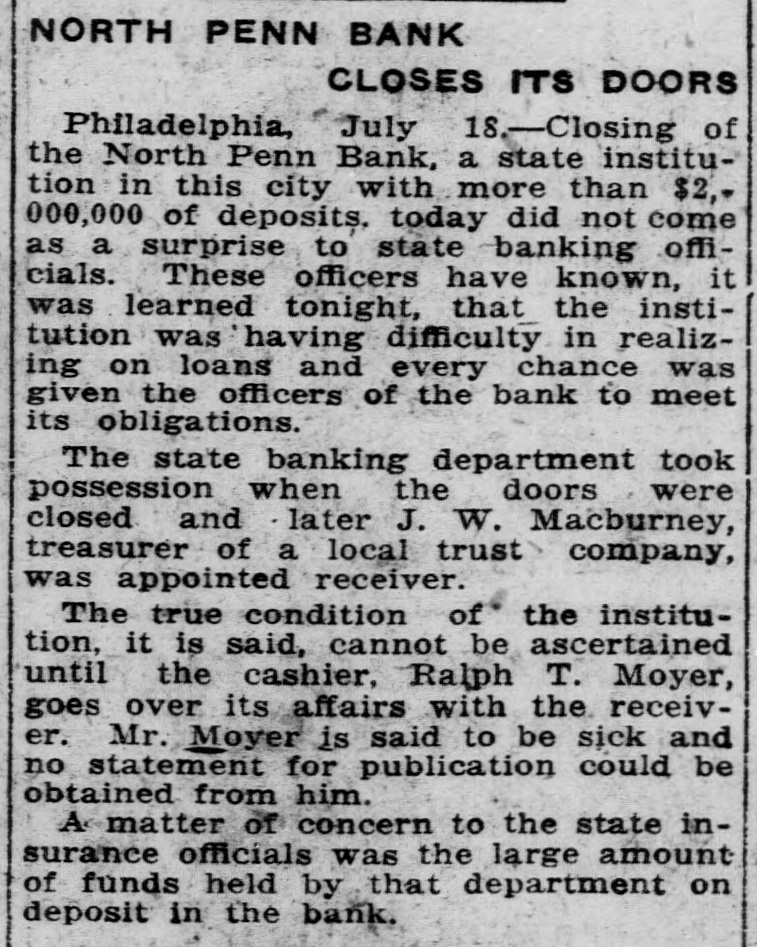
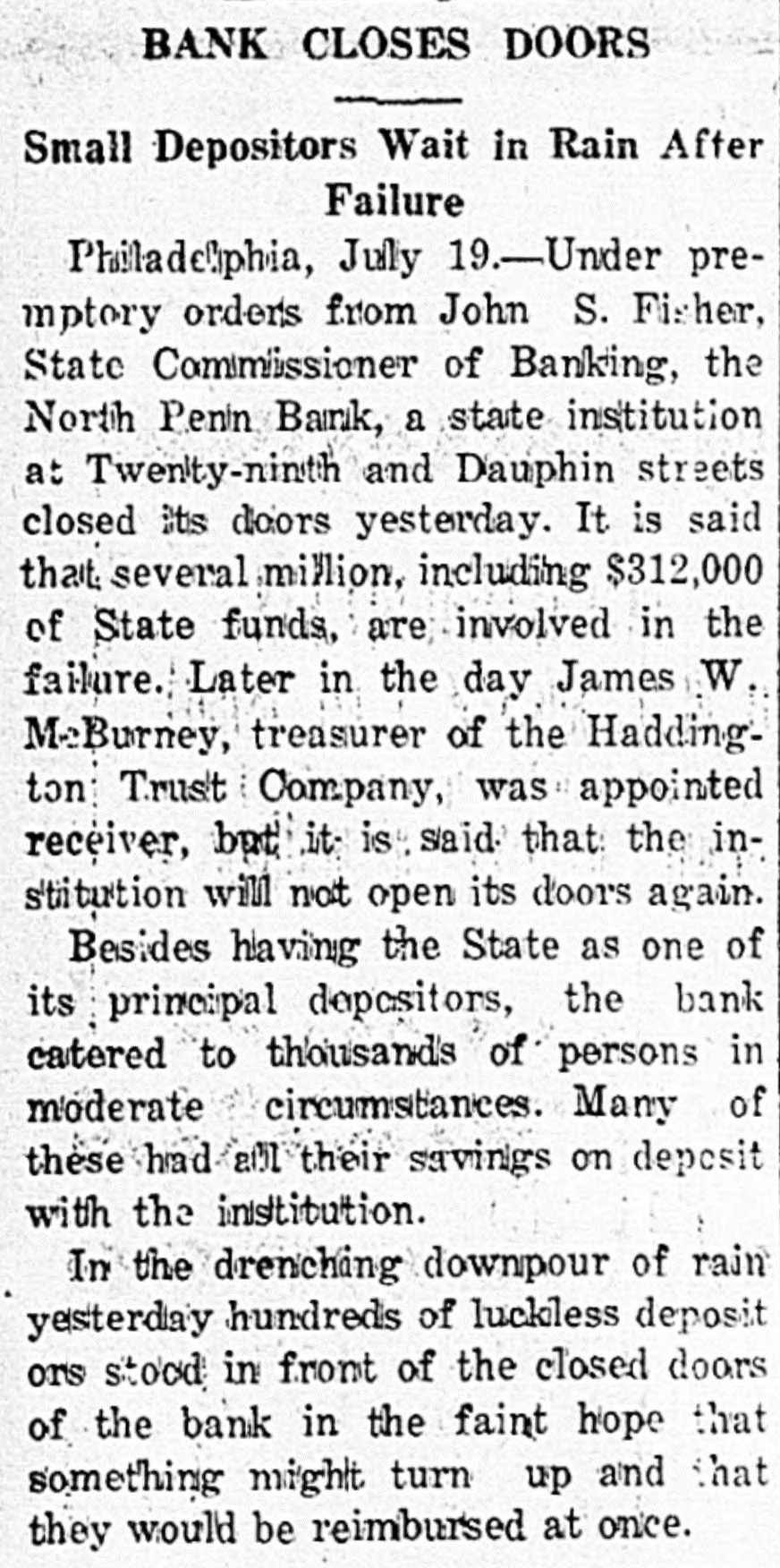
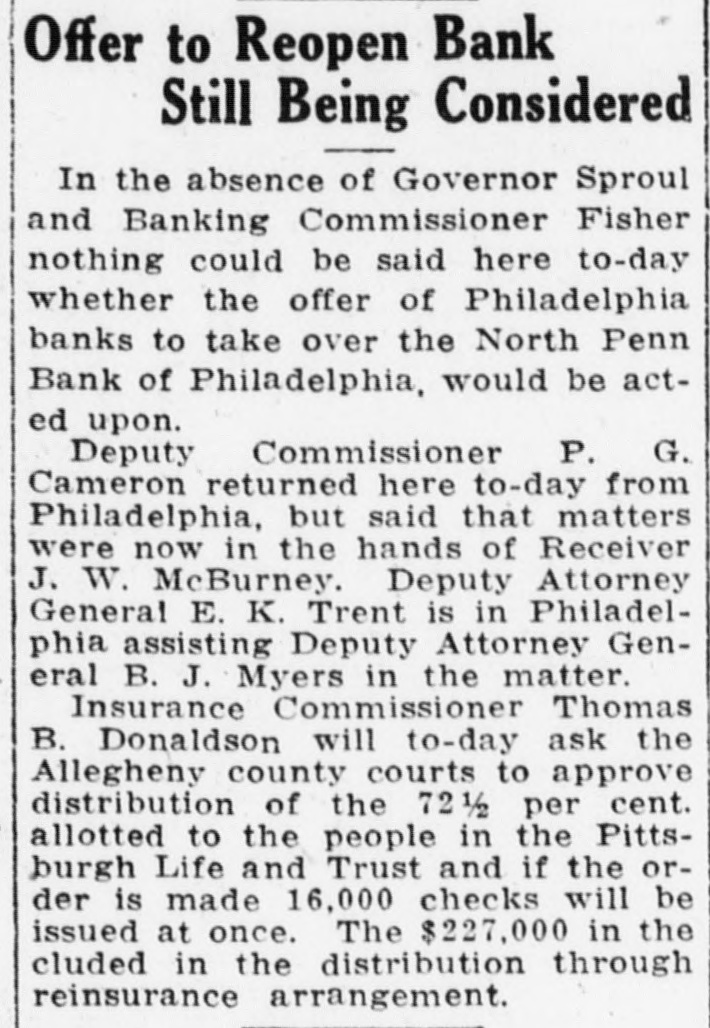
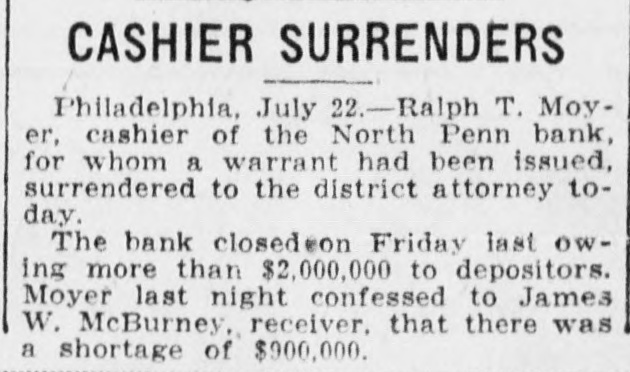
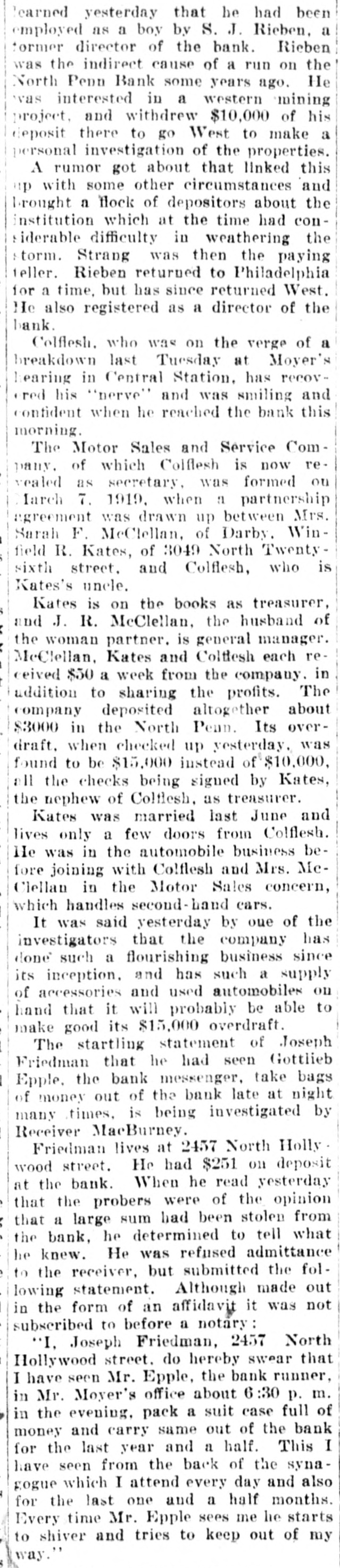
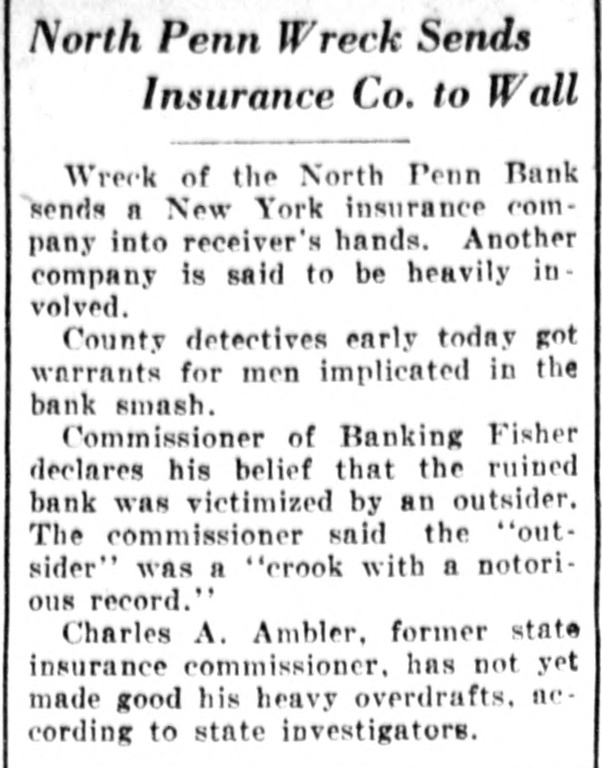
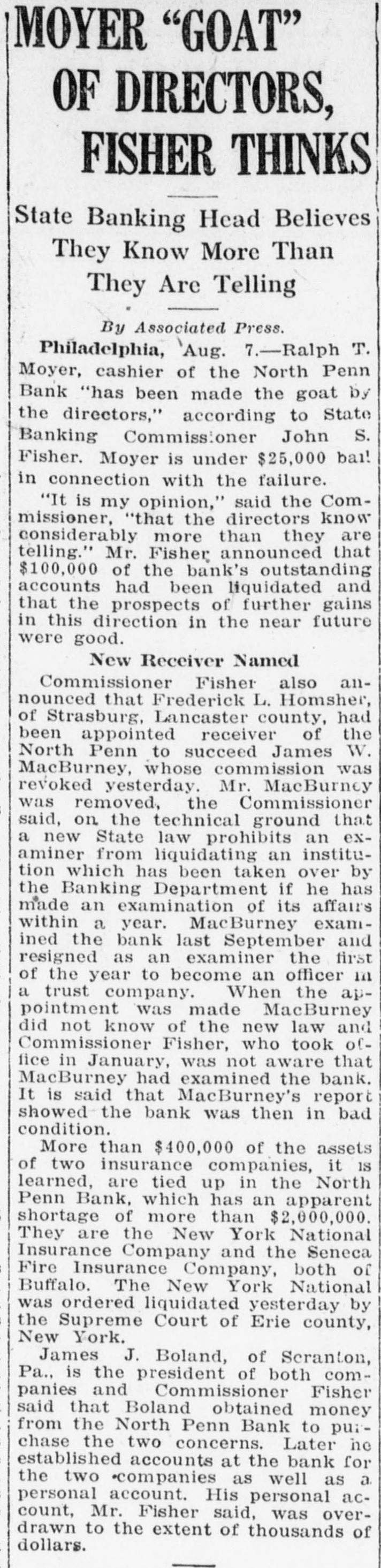
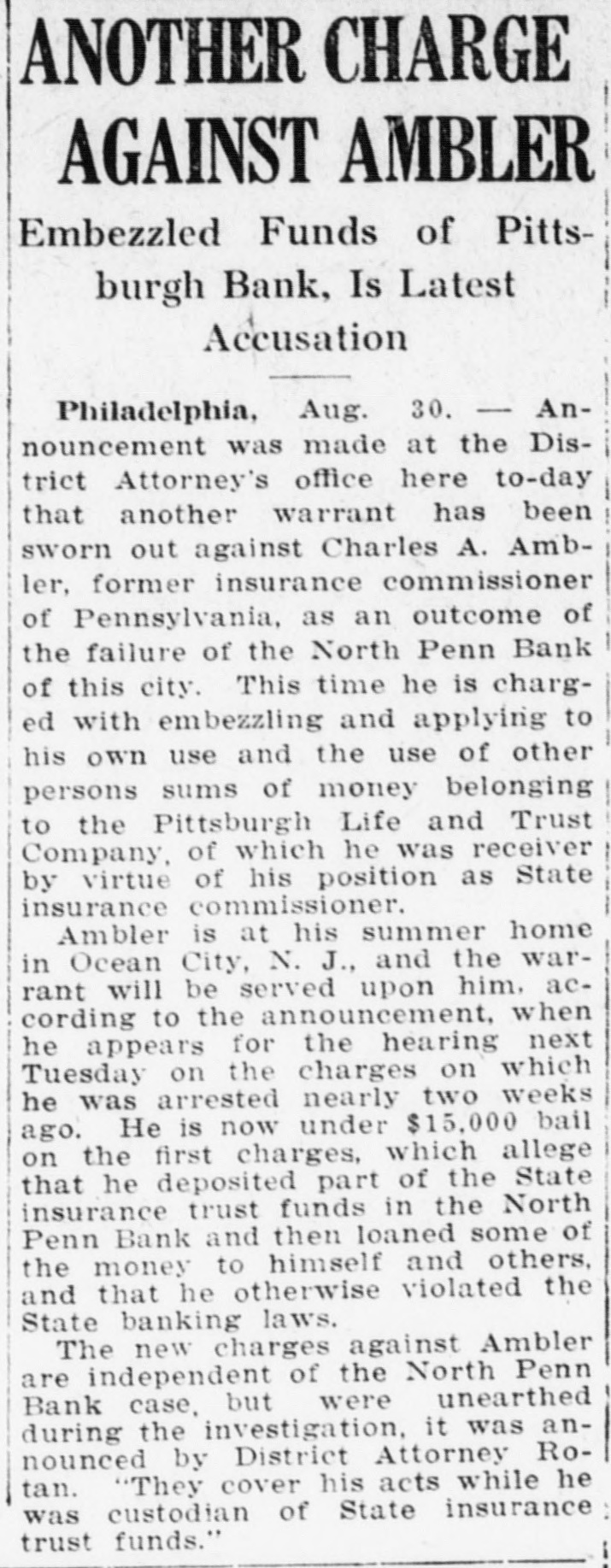
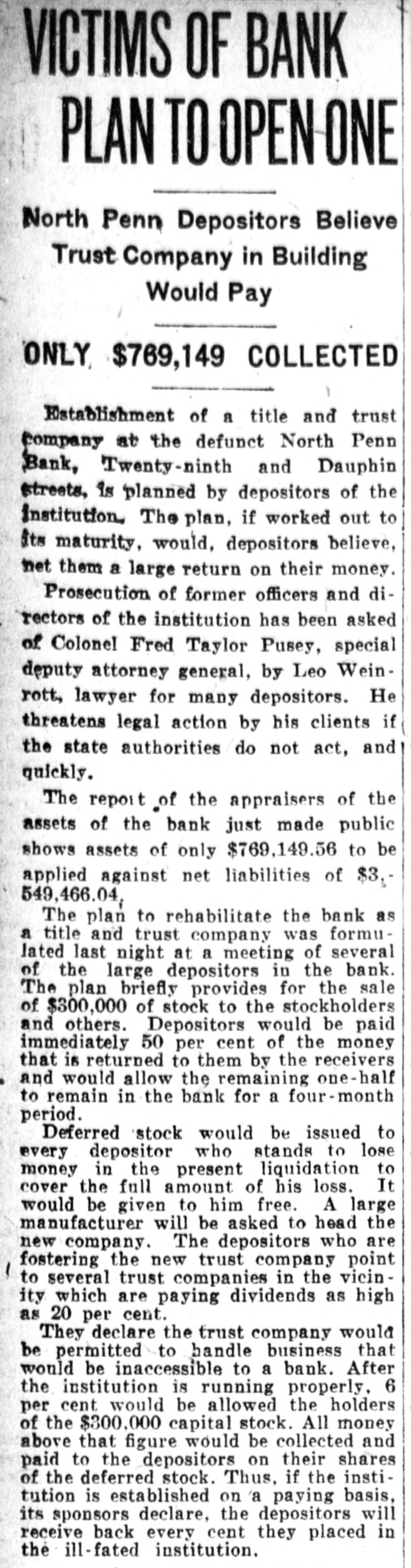
Mr. and Mrs. John Skinner, Baltimore, were visitors of Mr. and Mrs. J. D. Crowl, Center street, this week. Mr. and Mrs. John Truss, Baltimore, were Sunday guests at the same place. Misses Irene, Nellie and Louise Lippy, Charlotte Zepp, Margaret Michael, Earl Lippy and Lawrence Zepp, this city spent Tuesday at Gwynn Oak and Druid Hill Parks, Baltimore. Mr. and Mrs. Edgar Smith and Mrs. Arthur W. Smith and son, Ray, of Dayton, Ohio, have returned home after spending a pleasant visit to their mother, Mrs. Harry Smith, of near Marston. Mr. and Mrs. J. Burner and daughters, Elizabeth, Gladys and Virginia, took a touring trip to Virginia to spend a week. They also spent a few days in Hagerstown with their mother and friends. It cost Nessin Hiken, of Milwaukee, Wis., $25 to recover a 50-cent handkerchief which his wife had accidentally dropped into another automobile. Hiken caught the car. He was pinched for speeding. It is said that spring clothes will cost most. However, we can go into training by wearing a thin summer suit in the winter, and if we survive till spring we shall be SO tough that we shall need no clothes at all. Sergt. T. B. Myers, of the 81st F. A., who is stationed in Kentucky. is now touring the country recruiting for the Army and visited his parents, F. H. Myers, Mount Pleasant a few days. He returned to Tennessee. William Stimax, who is at the Union Protestant Infirmary suffering from injuries received by being struck by the Hagerstown express at Cranberry on August 21, is improving and is expected home next week. The farmers will now have to look out for a new crop pest-the corn horer. This insect is said to have been imported from Europe, like the Bolshevik, and it's none too soon to start vigorous measures against him. Mr. and Mrs. Frank Beachtel, Mr. Edward Slifer. Mr. and Mrs. Albert Kindig and son, Allen, Mr. and Mrs. Luther Slifer and Miss Minnie Harner. all of Littlestown, Pa., sent Sunday with Mr. and Mrs. Henry Willet, Mt. Pleasant. Chief of Police John A. Stem, East Green street, has improved SO much in the past two weeks that he is permitted to leave his residence. He has been automobiling a few times. Patrolmen Stem has been ill about two months from being overcome by the heat. Long Island City grave diggers are on strike for $4 a day, and the high cost of dying may come to rival the high cost of being sick, with $3 a visit for the doctor. That dying comes only once in a life time, however, is a consideration not to be ignored. It appears that we are now to have jokes of the aircraft, aerial humor, as it were. Take, for instance, this, picked up from an English paper: Small Boy (to pilot)-If you be a-goin' up, zur, would ye see if ye can find Billy's kite driftin' about, wot e lorst larst Toosday? How do you know it was whisky and not a substitute, asked the attorney for an accused saloonkeeper at Pittsburgh. "I've been a whisky gauger for 20 years,' was the reply by the witness. "That's sufficient, I think,' the judge concluded, and the saloonist was held for court. By driving his Dodge Sedan through a wire fence/ opposite the old tollgate proerty on the Baltimore pike Tuesday afternoon the owner prevented a smash up with another automobile. The Dodge was considerably damaged in front and had to be towed to Klee & Hoff's garage for repairs. Those who spent Sunday at the home of Wm. H. Meyers and wife were as follows: Mr. John Seipp and wife, of Baltimore; Mr. Harry Black, wife and children, Frances, George and Clayton Black and Albert Hann, of Manchester; Mr. Clarence Feeser, wife and daughter, Nadine, and Mr. Floyd Geiman and wife, of Deep Run. Md. The Real Estate Company sold for D. Snider Stephan his properties and lots on Carroll street Tuesday to the following: "Paul I. Whitmore and William R. Bowman, double weatherboarded house and 38 foot lot, subject to a ground rent of $3 annually for $3450. Thomas Babylon, 141 feet, with an annual ground rent of $9 for $2100. Daniel F. Lafean, former state commissioner of banking, was arrested in York, Pa., charged with being implicated in the wrecking of the North Penn Bank, of Philadelphia. The warrant for the arrest was issued by the district attorney of Philadelphia. It charges that he permitted the wrecked bank to remain open knowing it to be insolvent. Mr. Wm. Frizzell and Misses Gertrude and Cora Green, of near Statewood, motored to Baltimore Sunday August 24 and there joined Mr. Oscar Green, Mrs. John Carney, Misses Theima Green and girl friend, Ruth, and spent the day on the steamer Dreamland to Cheasapeake beach. The scenery was gorgeous on land and water. Everyone returned home happy after spending such a pleasant trip on the water. Mr. Luther L. Bankard, Bond street, formerly with the Western Maryland Railway, with offices in Baltimore, has accepted a similar position with the U. S. Railroad administration in the car service sec-