16316. National City Bank (New York, NY)

Bank Information

Episode Type
Suspension → Reopening
Bank Type
national
Bank ID
1461
Charter Number
1461
Start Date
April 8, 1932
Location
New York, New York (40.714, -74.006)

Metadata

Model
gpt-5-mini
Short Digest
e4012ee9

Response Measures

None

Description

Articles include (1) an April 1932 newspaper rumor that National City Bank had suspended payments which the bank denied (a misinformation rumor; no suspension occurred), and (2) March 1933 coverage of the statewide bank holiday (Gov. Lehman's bank moratorium) under which National City remained closed by order — a government-ordered suspension during the 1933 bank holiday. The governor and papers expected banks to reopen shortly thereafter. Classification: suspension_reopening (suspension due to government action, later reopening).

Events (4)

1. July 17, 1865 Chartered
Source
historical_nic
2. April 8, 1932 Other
Newspaper Excerpt
denial today of statement printed yesterday saying the National City Bank of New York had suspended payments ... extended its most sincere apologies to the National City and our readers.
Source
newspapers
3. March 5, 1933 Other
Newspaper Excerpt
I hope and I think the banks will be able to open on Tuesday, he said. I am going to stay right here on the job to work toward that end (Governor expected banks to reopen).
Source
newspapers
4. March 5, 1933 Suspension
Cause
Government Action
Cause Details
Statewide bank holiday declared by Governor Lehman (mandatory moratorium/holiday); banks remained closed by order.
Newspaper Excerpt
The Chase National, National City, Manufacturers' Trust and other big banks obeyed Gov. Lehman's holiday declaration to the letter, and remained closed throughout the day.
Source
newspapers

Newspaper Articles (6)

Article from Brooklyn Eagle, April 8, 1932

Click image to open full size in new tab

Article Text

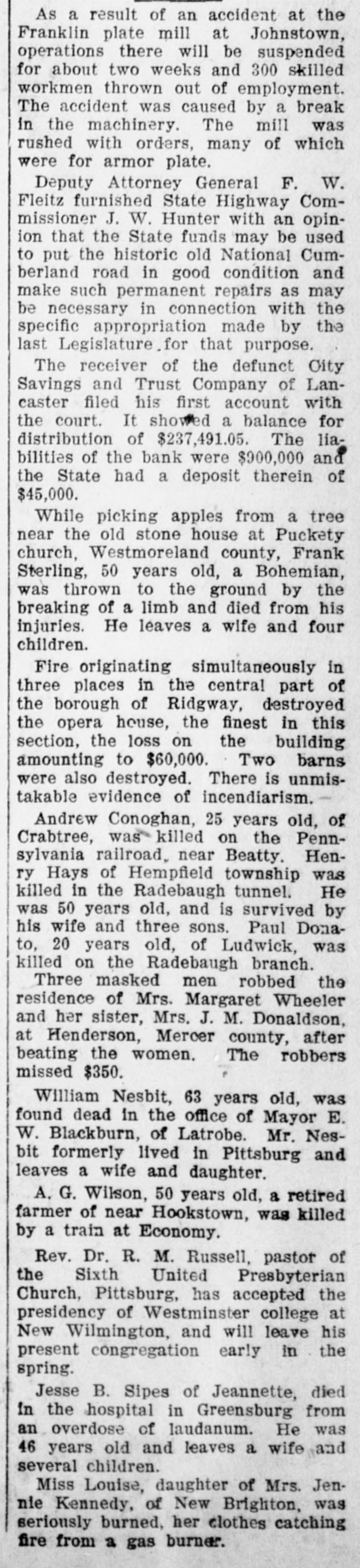
Bank Canard Denial Made small newspaper of Nationalist tendencies. issued denial today of statement printed yesterday sav. ing the National City Bank of New York had suspended payments The paper extended its "most sincere apologies the National City and our readers. The statement printed yes terday. coincidentally extracts from article by Sir Walter Layton. British economist on the situation and prospects of the dollar in which he foreshadowed its fall. Prompt derial the statement was made in financial circles yes terday The dollar has been weak for days closing vesterday with unofficial quetations low 25.32. It opened today at


Article from The Morning Call, April 9, 1932

Click image to open full size in new tab

Article Text

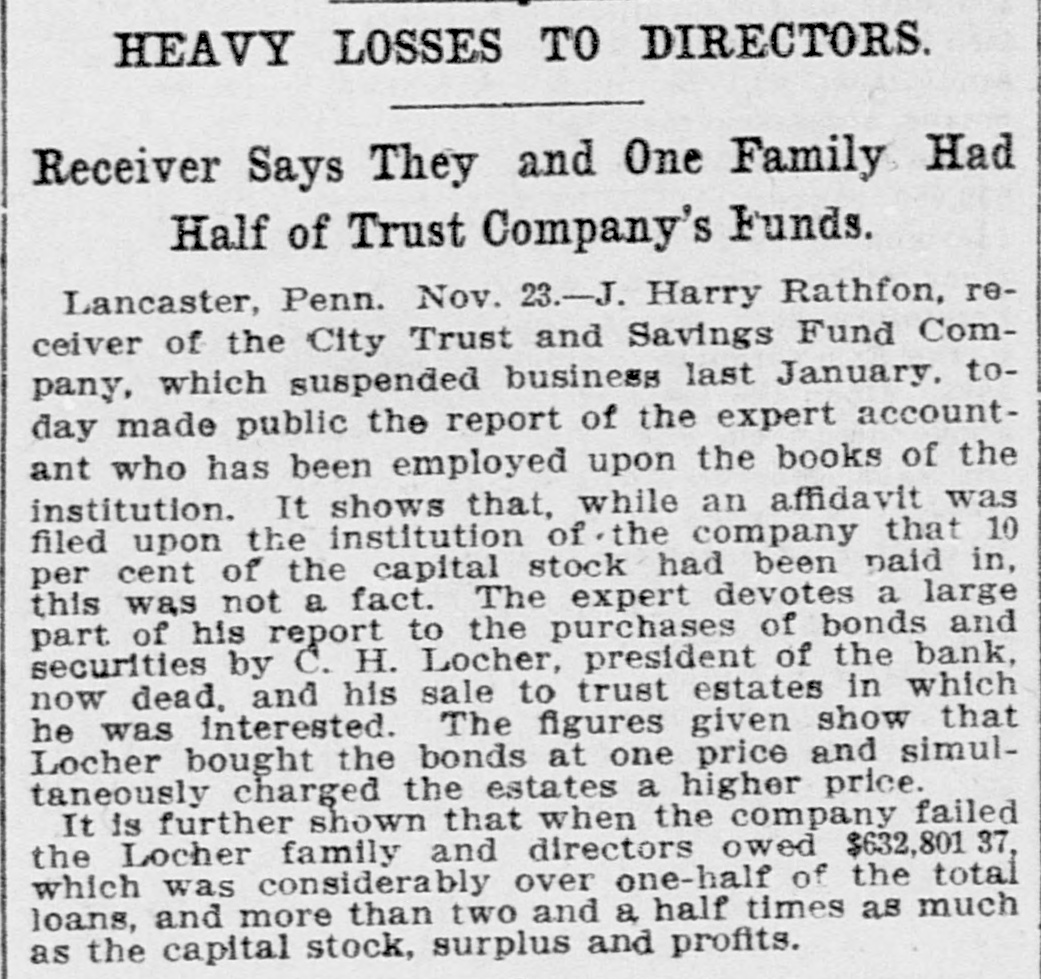
because think he knows the ney stop about the bulls, want everything about these sales this whether liquidation short sales or wash or records which Mr. Whitney directed him Washington the going first into the story that brought this week's decline in stock in recent history. Whitney him "necesto following: list all in whose there at the close number of shares of there short interest stock exchange members through whom such stock traded. names clients for whom stock shares for each client in cess 200 shares. persons from whom stock the so bornumbers shares." On the senate Harriarguing against Reed resolution order tariff commission inquiry the effect depreciated upon that might interpreted move the States gold standard. Harrison expressed confidence in American and joined Fess Ohio, Republicans, going off the gold The also expressed similar confidence process recent deflation security prices brought the could legislafederal reserve credit facilities. PARIS. April small today National City bank New York the readers statement printed its yesterday to the suspended made the British Sir article which Sir Walter Walter fall dollar was likely. said the the National City bank had suspended today There the dollar, which the bourse, opened firm point under yesterday's close.


Article from The Charleston Democrat, March 3, 1933

Click image to open full size in new tab

Article Text

Big Banks Violate the Law O. E. Mitchell resigned as president of the National City Bank, New York, second largest in the world this week, when some of his admissions before senatorial committee tended to show tendency to violate the banking law, if it did not directly violate it. Ex Vice-President Daues has admitted a "technical" violation of the banking laws also. He is the man who was recently loaned money when there was a run on his bank which would probably have otherwise have closed it was averted. Big bnsiness that defies law is an outlaw as much as any other outlaw, and deserves greater punishment because of the greater responsibility involved. wonder so many smaller banks went blooey in recent years, with such shining examples of mgn finance before them.


Article from Daily News, March 5, 1933

Click image to open full size in new tab

Article Text

Bank Holiday Sequel ple along-all this needs is a little bit of common sense," Police Commissioner Edward P. Mulrooney said, in ordering one patrolman posted at every branch bank. The largest crowd assembled in front of the East 42d St. branch of the Bowery Savings Bank, where women who could not speak English, bank books in their hands, straggled up to the doors as early as 6:30 A. M. By 10 A. M. there were 600 persons around the bank, most of them of foreign birth. They dispersed quickly when police informed them of the bank holiday. About 300 assembled at the headquarters of the same bank, Bowery and Grand St., but departed when told of the holiday. Almost all were poorly dressed. Payroll Checks Cashed. The Corn Exchange Bank Trust Company, with multiple branches, as well as the Central Hanover Bank and Trust Company and the Irving Trust, paid cash on all payroll checks, and also on other small checks from depositors. When the Corn Exchange, which had been allowing depositors to withdraw 10 per cent. of amount on deposit, learned that the bank holiday was mandatory, it closed its branches at 11 A. M. The Irving Trust continued to cash payroll checks until the regular closing hour at noon. R. H. Elmedorf, assistant vice-president, said this action was taken to ease the strain. He declared he didn't know what policy would be pursued tomorrow, but added his institution "will do nothing that would seem to be in viclation of the understanding of the clearing house banks." Throughout the Bronx, Brooklyn, Queens and Staten Island, branches of various banks paid payroll checks until it was learned the Governor's order was considered mandatory. The Chase National, National City, Manufacturers' Trust and other big banks obeyed Gov. Lehman's holiday declaration to the letter, and remained closed throughout the day. The only real run on a bank was in Brooklyn-and a strange one it was. A long line of persons streamed from the Brooklyn main Post Office headquarters of the Postal Savings Bank, into the street. They were almost all waiting to deposit money which they had withdrawn from othe banks Friday. This created an absurd parallel, because the Government operated Postal Savings Bank is required, by law, to deposit its funds in national banks. The Governors of the Stock Exchange allowed Gov. Herbert H. Lehman only two hours' sleep before they got on the telephone to ask him if he would permit them to open for business. After the Governor issued his declaration of a bank holiday in New York State, the climax of wearying conferences with representatives of J. P. Morgan & Co. and heads of savings banks in the Lehman town house at 820 Park Ave., the Governor did not retire until 7:30 A. M. He bent over a pile of financial data trying to work out definite recommendations for Presidentelect Franklin D. Roosevelt, with whom he had been in telephone communication until late Friday night. At 9:15 A. M. the Stock Exchange Governors assembled and conferred until 9:45. They were in favor of opening, believing that stocks would go up because a large number of persons would buy them in a new-deal, speculative mood. They also had learned, over the grapevine underground, that President Roosevelt would make a stimulating speech, and they expected this would shoot stocks up. The Governors favored opening the market on the ground that this would bolster public morale, but were timorous about Gov. Lehman's reactions, SO they telephoned him at 9:45 A. M. "Are you opposed to the Stock Exchange doing regular business today the Stock Exchange spokesman asked Gov. Lehman, who had been routed from bed. "I am," replied the Governor. He then breakfasted and at 10:30 A. M. genially received reporters. Expects Opening Tuesday. "I hope and I think the banks will be able to open on Tuesday," he said. "I am going to stay right here on the job to work toward that end, and will be unable to attend the inaugural at Washington." When pressed at this time for a definite statement that the banks of this city certainly would open on Tuesday, the Governor merely shook his head. During the panic of 1907 the Stock Exchange remained open. The exchange also functioned during the tension of Sept., 1931, when England went off the gold standard, despite the pressure in favor of closing. The Stock Exchange closed at the outbreak of the World War.


Article from Daily News, March 5, 1933

Click image to open full size in new tab

Article Text

ASK CONGRESS TO APPROVE CITY'S SCRIP (Continued from page 4) ing from bank holidays, became SO enormous the local- institutions simply lacked the facilities to handle it. It was this lack of facilities for handling demands, more than anything else, which really forced the bank holiday declared by Gov. Lehman, according to the bank officials. In some cases bankers admitted they were caught napping by the bank moratorium, which began in Detroit Feb. 14, but was never expected to sweep the country the way it has done. Although crowds milled around banks there was no disorder. However, at Geneva, N. Y., angry muttering of crowds around closed banks led to troops being called out to protect public buildings. "Instruct the men to jolly peo- Bank Superintendent Broderick Confers with bankers. ple along-all this needs is a little bit of common sense," Police Commissioner Edward P. Mulrooney said, in ordering one patrolman posted at every branch bank. Payroll Checks Cashed. The-Corn Exchange Bank Trust Company, with multiple branches, as well as the Central Hanover Bank and Trust Company and the Irving Trust, paid cash on all payroll checks, and also on other small checks from depositors. When the Corn Exchange, which had been allowing depositors to withdraw 10 per cent. of amount on deposit, learned that the bank holiday was mandatory, it closed its branches at 11 A. M. The Irving Trust continued to cash payroll checks until the regular closing hour at noon. R. H. Elmedorf, assistant vice-president, said this action was taken to ease the strain. He declared he didn't know what policy would be pursued tomorrow, but added his institution "will do nothing that would seem to be in violation of the understanding of the clearing house banks." Throughout the Bronx, Brooklyn, Queens and Staten Island, branches of various banks paid payroll checks until it was learned the Governor's order was considered mandatory. The Chase National, National City, Manufacturers' Trust and other big banks obeyed Gov. Lehman's holiday declaration to the letter, and remained closed throughout the day. The only real run on a bank was. in Brooklyn-and a strange one it was. A long line of persons streamed from the Brooklyn main Post Office headquarters of the Postal Savings Bank, into the street. They were almost all waiting to deposit money which they had withdrawn from other banks Friday. This created an absurd parallel, because the Government operated Postal Savings Bank is required, by law, to deposit its funds in national banks. The Governors of the Stock Exchange allowed Gov. Herbert H.


Article from The Springfield News-Leader, March 10, 1933

Click image to open full size in new tab

Article Text

Into which are often tossed things well, worth while LIGHT AND TRAC- TION the board of directors immedi- of directors chairman of the board, reelected to that position and also president of the company This indicates the Doherty company complete control and will retain Clarence Nichols elected vice president and will no doubt run the Federal company to details Mr Doherhas such vast that not probable he will care to into the detailed work of the Federal company. Mr. Nichols touch with all things of the Federal company including the Springfield properties which used manage Mr. Nichols has complete the organisince the start and make most valuable In the time thought Doherty will make him president. beautiful troubled hearts Noell Kinney, Prisco tation agent of the Frisco at has left the hospital here and returned duties at Rolla He has been the for 53 years and the oldest "agent in of the system will retire years started with the Frisco when boy He son of Frank Kinney who died SNOW goodbye winds bloom Mrs Arthur Lamar Mo Hall. was for many one of the leading jewelers of the seriously ill his home. of man sterling worth and many friends who hope he will regain his health. National bank of City New York divorce its subsidiary, the Na. tional City This alliance should have been made. The revelations concerning this company made by Charles Mitchell, which forced Mitchell resign from the position as of the board was probably the cause of the recent heavy withdrawal of funds from banks Many can't distinguish between banks and believe banks are run in the same manner which grave The victims of Mitchell's bune in Springand there did not feel that way but they certainly would not trust Mitchell or any- thing he The with stockholders of the National City have felt the same Hence he had to get out. Haymes one of few voted perfection of the for the repeal of the McCawley state bone bill The senator ran dry and is standing by his guns, Dewey Short is in and will soon go he writes friends believed he will be appointed position on the flood control as he made of reputation on that kind of when member of congress The position not political. The dominent political faction of party started out early the game to get places for Mrs. Ethel Charles Love and Howard Curtis All have landed. Stories continue float around that W. Greenwade may be made postmaster of Springfield Mr. Greenwade the close of the campaign said he did not want the position as he expected to devote his time to his private business but things may be changed. It lieved he can have the place wants Why Turnback creek named? The Mount Vernon Chieftian in its years ago column explains The which demolished 51 years still put forth reason for name The Chieftian Turnback creek. clear gushing stream which meanders through the eastern part the county the of strangers through the counthe peculiarity of its name One sure to conjecture with the manner which title and generally runs that some pioneers having come to that were discouraged the appearance fugged hills which that they judged the whole of rence county and "turned back." not the Judge John and Daniel first settlers this country reached that stream in October. 1831. and were there overtaken by snow storm their Delaware town until they could come and prepare for them. And thus the historic received its Judge Williams had been here before and knew of the beautiful country lying beyond and was not discouraged by the hills Lead markets are showing more life considerable buying Lead companies say the buying for American firms which have been slow in filling their requirements. Wonder the situation in the far east has anything to do with it? Higher lead prices should benefit lead is dug up in the Ozarks territory. There have been lead discoveries in Greene Christian counties and some mining has taken the whole mining around not paid Connelly, attorney with street, has about name the Kansas but they were their names are exactly the same. The Kansas historian wrote great deal about Wild Bill. The in where Wild Bill marshal. He never Bill but are Bill as in