Article Text
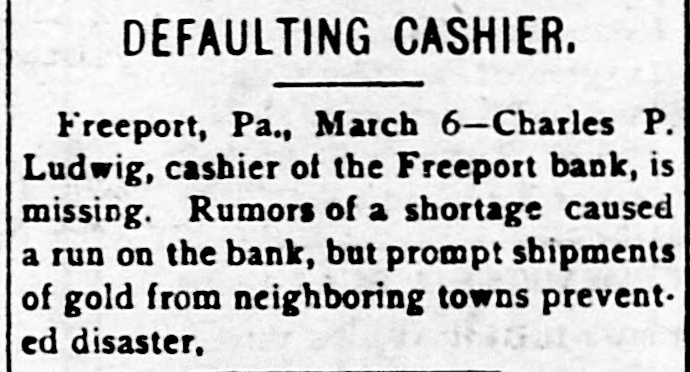
DEFAULTING CASHIER. Freeport, Pa., March 6-Charles P. Ludwig, cashier of the Freeport bank, is missing. Rumors of a shortage caused a run on the bank, but prompt shipments of gold from neighboring towns prevented disaster,
c593ba5121fdbdcbNone
Click image to open full size in new tab
DEFAULTING CASHIER. Freeport, Pa., March 6-Charles P. Ludwig, cashier of the Freeport bank, is missing. Rumors of a shortage caused a run on the bank, but prompt shipments of gold from neighboring towns prevented disaster,
Click image to open full size in new tab
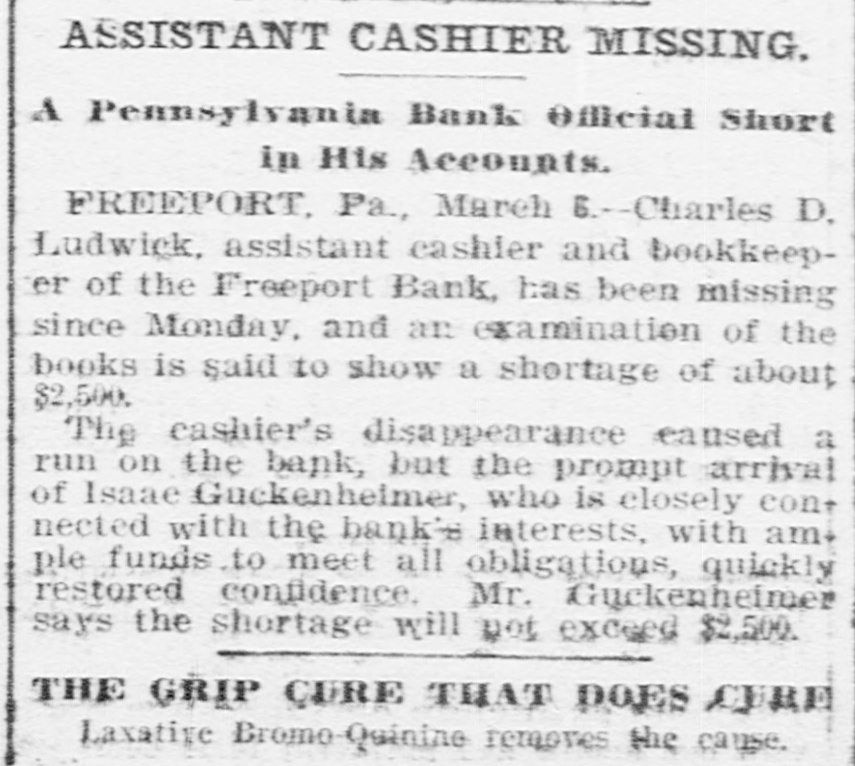
ASSISTANT CASHIER MISSING. A Pennsylyania Bank Official Short in His Accounts. FREEPORT, Pa., March B.--Charles D. Ludwick, assistant cashier and bookkeeper of the Freeport Bank, has been missing since Monday, and an examination of the books is said to show a shortage of about $2,500. The cashier's disappearance leaused a run on the bank, but the prompt arrival of Isaae Guckenheimer, who is closely cont nected with the bank's interests, with am+ ple funds to meet all obligations, quickly restored confidence. Mr. Guckenheimer says the shortage will not exceed $2,500. THE GRIP CURE THAT DOES CURE Laxatire Bromo-Quinine removes the cause.
Click image to open full size in new tab
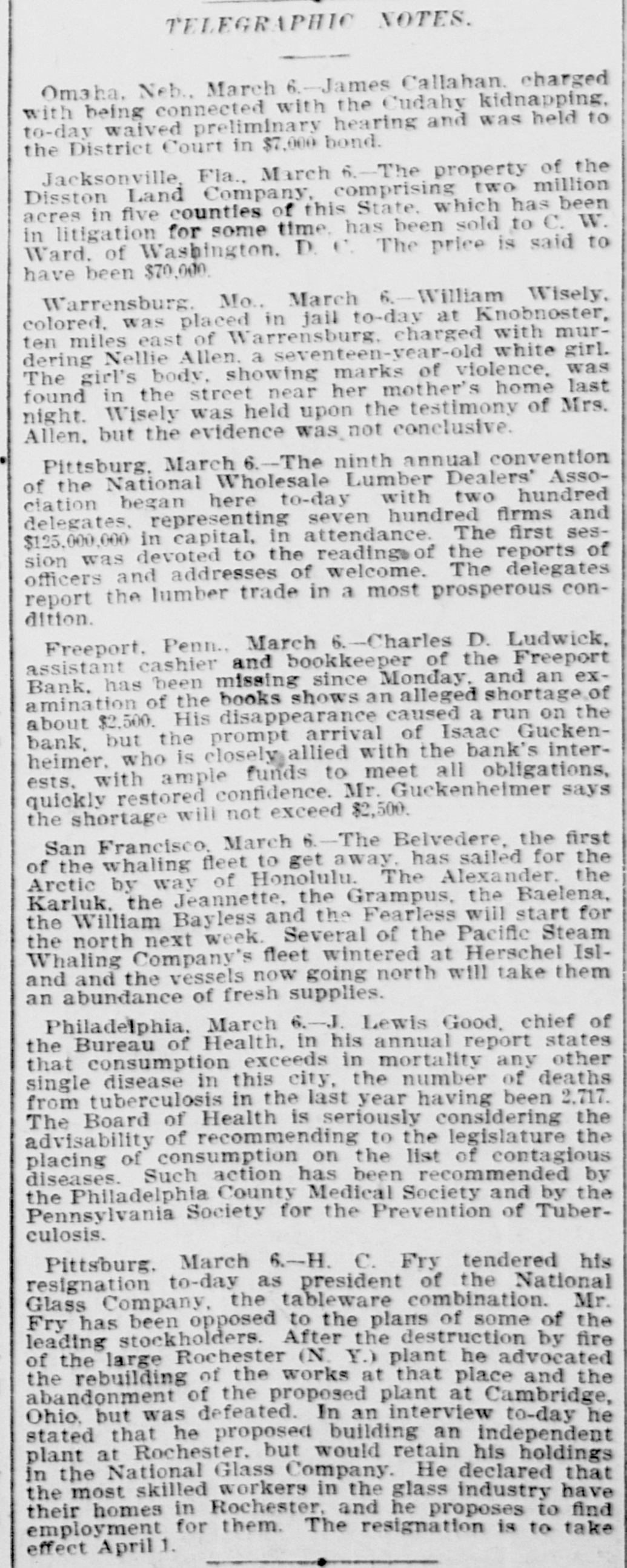
TELEGRAPHIC NOTES. Omaha. Neb. March -James Callahan. charged with being connected with the Cudahy kidnapping to-day waived preliminary hearing and was held to the District Court in $7,000 bond. Jacksonville, Fla., March 6. The property of the Disston Land Company, comprising two million acres in five counties of this State. which has been in litigation for some time. has been sold to €. W. Ward. of Washington. D. € The price is said to have been $70,000 Warrensburg. Mo.. March 6. William Wisely, colored. was placed in jail to-day at Knobnoster, ten miles east of Warrensburg. charged with murdering Nellie Allen. a seventeen-year-old white girl. The girl's body. showing marks of violence, was found in the street near her mother's home last night. Wisely was held upon the testimony of Mrs. Allen, but the evidence was not conclusive. Pittsburg, March -The ninth annual convention of the National Wholesale Lumber Dealers' Assoclation began here to-day with two hundred delegates, representing seven hundred firms and $125,000,000 in capital, in attendance. The first session was devoted to the reading of the reports of officers and addresses of welcome. The delegates report the lumber trade in a most prosperous conditton. Freeport. Penn. March 6. -Charles D. Ludwick, assistant cashier and bookkeeper of the Freeport Bank. has been missing since Monday, and an examination of the books shows an alleged shortage of about $2,500. His disappearance caused a run on the bank, but the prompt arrival of Isaac Guckenheimer, who is closely allied with the bank's interests, with ample funds to meet all obligations, quickly restored confidence. Mr. Guekenheimer says the shortage will not exceed $2,500. San Francisco. March 6. The Belvedere, the first of the whaling fleet to get away, has sailed for the Arctic by way of Honolulu. The Alexander. the Karluk. the Jeannette, the Grampus, the Baelena, the William Bayless and the Fearless will start for the north next week. Several of the Pacific Steam Whaling Company's fleet wintered at Herschel Island and the vessels now going north will take them an abundance of fresh supplies. Philadelphia. March 6.-J. Lewis Good. chief of the Bureau of Health, in his annual report states that consumption exceeds in mortality any other single disease in this city, the number of deaths from tuberculosis in the last year having been 2.717. The Board of Health is seriously considering the advisability of recommending to the legislature the placing of consumption on the list of contagious diseases. Such action has been recommended by the Philadelphia County Medical Society and by the Pennsylvania Society for the Prevention of Tuberculosis. Pittsburg, March 6.-H. €. Fry tendered his resignation to-day as president of the National Glass Company, the tableware combination. Mr. Fry has been opposed to the plans of some of the leading stockholders. After the destruction by fire of the large Rochester (N. Y.) plant he advocated the rebuilding of the works at that place and the abandonment of the proposed plant at Cambridge, Ohio. but was defeated. In an interview to-day he stated that he proposed building an independent plant at Rochester, but would retain his holdings in the National Glass Company. He declared that the most skilled workers in the glass industry have their homes in Rochester, and he proposes to find employment for them. The resignation is to take effect April 1.
Click image to open full size in new tab
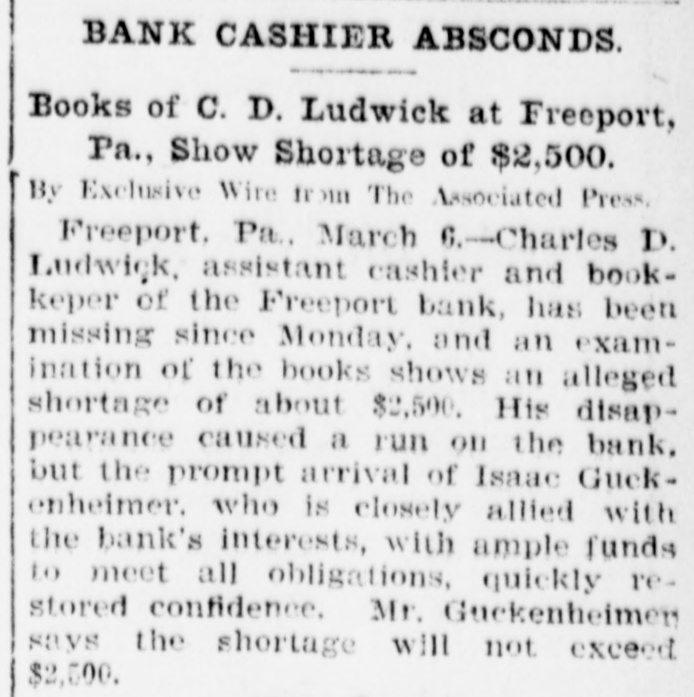
BANK CASHIER ABSCONDS. Books of C. D. Ludwick at Freeport, Pa., Show Shortage of $2,500. By Exclusive Wire from The Associated Press. Freeport. Pa., March 6.-Charles D. Ludwick, assistant cashier and bookkeper of the Freeport bank, has been missing since Monday, and an examination of the books shows an alleged shortage of about $2,500. His disappearance caused a run on the bank, but the prompt arrival of Isaac Guckenheimer. who is closely allied with the bank's interests, with ample funds to meet all obligations, quickly restored confidence. Mr. Guckenheimen says the shortage will not exceed $2,500.
Click image to open full size in new tab
CAUSED RUN ON BANK. FREEPORT, Pa., March 6.-Charles D. Ludwick, assistant cashier and bookkeeper of the Freeport Bank, has seen missing since Monday, and an examination of the books shows an alleged shortage of about $2,500. His disappearance caused a run on the bank, but the prompt arrival of Issac Guckenheimer, who is closely allied with the bank's interests, with ample funds, to meet all obligations, quickly restored confidence. Mr. Guckenheimer says the shortage will not exceed $2,500.
Click image to open full size in new tab
Cashier is Missing. Freeport, Pa.. Feb. 6.-Charles D. Ludwig, assistant cashier and bookkeeper of the Freeport bank, has been missing since Monday, and an examination of the books shows an alleged shortage of about $2,500. His disappearance caused a run on the bank, but the prompt arrival of Isaac Guckenheimer, who is closely allied with the banks in this city, with ample funds to meet all obligations, quickly restored confidence.
Click image to open full size in new tab
BANK CASHIER MISSING. Charles D. Ludwick of Freeport Bank Said to be Short. Freeport, Pa., March 6.-Charles D. Ludwick, assistant cashier and bookkeeper of the Freeport bank, has been missing since Monday and an examination of the books show an alleged shortage of about $2,500. His disappearance caused a run on the bank, but the prompt arrival of Isaac Guckenheimer, who is closely allied with the bank's interests, with ample funds to meet all obligations, quickly restored confidence. Mr. Guckenheimer says the shortage will not aggregate $2,500.
Click image to open full size in new tab
MISSING SINCE MONDAY. A Freeport (Pa.) Bank Official Missing, and There is an Alleged Shortage of $2,500. I Freeport, Pa, March 7.-Charles D. Ludwick, assistant cashier and bookkeeper of the Freeport bank,has been missing since Monday and an examination of the books show an alleged shortage of about $2,500. His disappaerance caused a run on the bank, but the prompt arrival of Isaac Guikenheimer, who is closely allied with the bank's interests, with ample funds to meet all obligations, quickly restored confidence. Mr. Guikenheimer says the shortage will not aggregate $2,500.
Click image to open full size in new tab
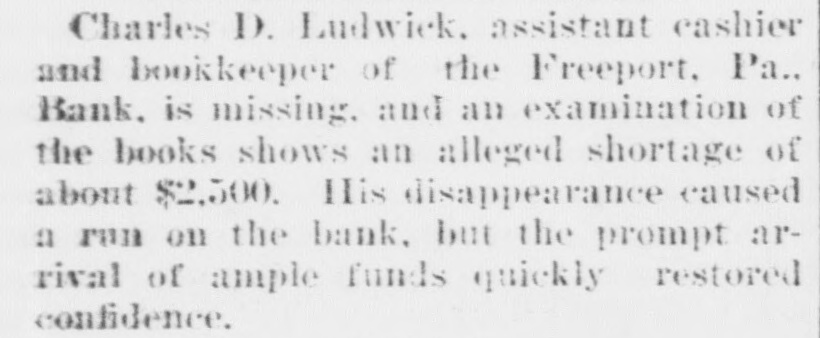
Charles D. Ludwick. assistant cashier and bookkeeper of the Freeport, Pa., Bank. is missing. and an examination of the books shows an alleged shortage of about $2,500. His disappearance caused a run on the bank. but the prompt arrival of ample funds quickly restored confidence.