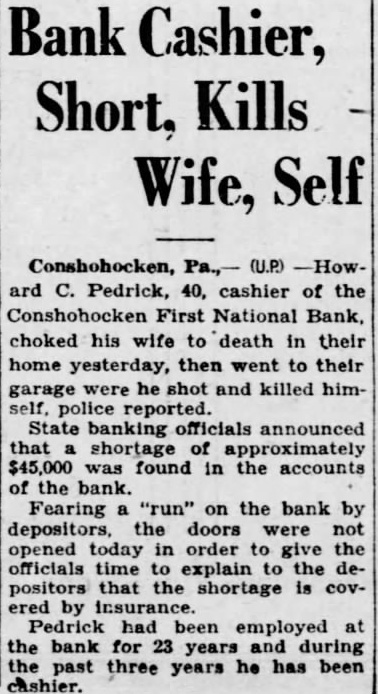
Cashier Howard C. Pedrick embezzled ~ $45,000, then murdered his wife and committed suicide. State banking officials temporarily kept the bank's doors closed to avert a run and to explain that the loss was covered by insurance. Multiple articles state the bank reopened a few hours late the same day, so this is a temporary suspension with reopening; no actual depositor run is reported.
Events (2)
1.January 30, 1873Chartered
Source
historical_nic
2.May 4, 1931Suspension
Cause
Bank Specific Adverse Info
Cause Details
Discovery of an approximate $45,000 shortage in the cashier's accounts (embezzlement by Howard C. Pedrick) prompted officials to keep the bank closed temporarily to avoid panic.
Newspaper Excerpt
Fearing a run on the bank by depositors, the doors were not opened today in order to give the officials time to explain to the depositors that the shortage is covered by insurance.
Source
newspapers
Newspaper Articles (18)
1.May 4, 1931The Zanesville SignalZanesville, OH
Click image to open full size in new tab
Article Text
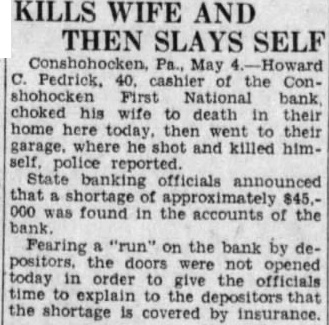
KILLS WIFE AND THEN SLAYS SELF
Conshohocken, May Howard cashier the Conshohocken First National choked his wife death their home here their garage. and killed himState banking officials announced shortage of approximately $45, 000 was found in the accounts of the Fearing "run" on the bank by dethe not opened today in order to the officials give to the the shortage covered by
2.May 4, 1931The Cleveland PressCleveland, OH
Click image to open full size in new tab
Article Text
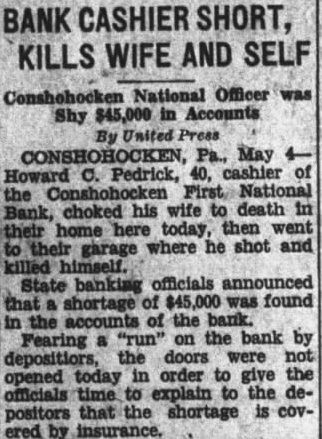
BANK CASHIER SHORT, KILLS WIFE AND SELF
Conshohocken National Officer was Shy $45,000 in Accounts By United Press CONSHOHOCKEN, Pa., May Howard C. Pedrick, 40, cashier of the Conshohocken First National Bank, choked his wife to death in their home here today, then went to their garage where he shot and killed himself. State banking officials announced that shortage of $45,000 was found in the accounts of the bank. Fearing a "run" on the bank by depositiors, the doors were not opened today in order to give the officials time to explain to the depositors that the shortage is COVered by insurance.
3.May 4, 1931Tyrone Daily HeraldTyrone, PA
Click image to open full size in new tab
Article Text
BANKER FEARING DISGRACE. KILLS AND to Used OFFICIALS
Shortage Estimated $45,000. Strangles Wife Death Shoots Self Mentally Unbalanced Fear Disclosure.
Conshohocken May into manial frenzy Howard 40-year old the First National Bank wife death in their home today then The body his wife, Mrs. Edith aged about the while Pedrick's body found in garage of residence the 500 plock street He had fired bullet into brain. Bank officials said that Pedrick's would amount about but that fully coverby insurance. The closed its doors, however, for fear bank issued an official stateafter the double tragedy bank would affected Pedrick's The statealso that Pedrick had from connections with the bank. May and signed Horace Jones, president the bank. The statement follows: of the First National Bank by national bank examiner enport. was discovered that CashPedrick embezzled the sum The amount of by fidelity bond for the and obtained from Mr. Pedrick this been from the office and from any connection bank. information obtained the sum above the represents total bank will sustain loss, no the statement further Pedrick was one of Conshohocken's best known He had been employed the bank for 23 years working the up position cashier from that of clerk. had served cashier the past years time, bank officials said, that took place. Driven to desperation by the fear that his about public, Pedrick, police lieve, decided he not bear disgrace. his motive. believed. for the garroting early morning and Pedrick's suicide State police double probe into double tragedy and will conduct complete Mrs. Pedrick's aged the other the the crime, on the verge result tragedy. Richard brother the dead woman, student college, away the time. He only other resident of the Pedrick home.
4.May 4, 1931The Evening StandardUniontown, PA
Click image to open full size in new tab
Article Text
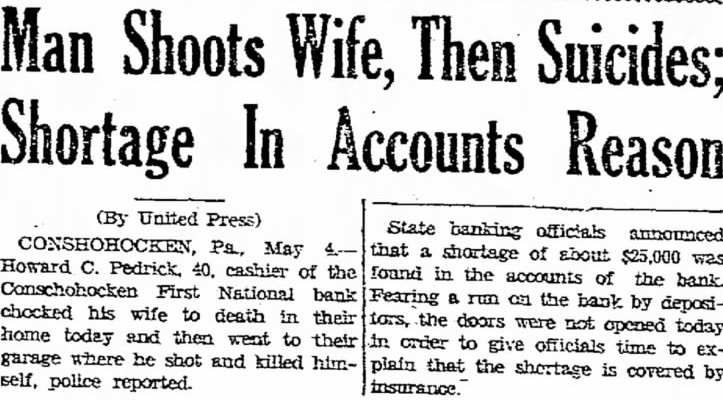
Man Shoots Wife, Then Suicides; Shortage In Accounts Reason
(By United Press) CONSHOHOCKEN, Pa. May Howard C. Pedrick, 40. cashier of the Conschohocken First National bank chocked his wife to death in their home today and then went to their garage where he shot and killed himself, police reported.
State banking officials announced that a shortage of about $25,000 was lound in the accounts of the bank Fearing a run on the bank by deposifors, the doors were not opened today in order to give officials time to explain that the shortage is covered by
5.May 4, 1931The Waterbury DemocratWaterbury, CT
Click image to open full size in new tab
Article Text
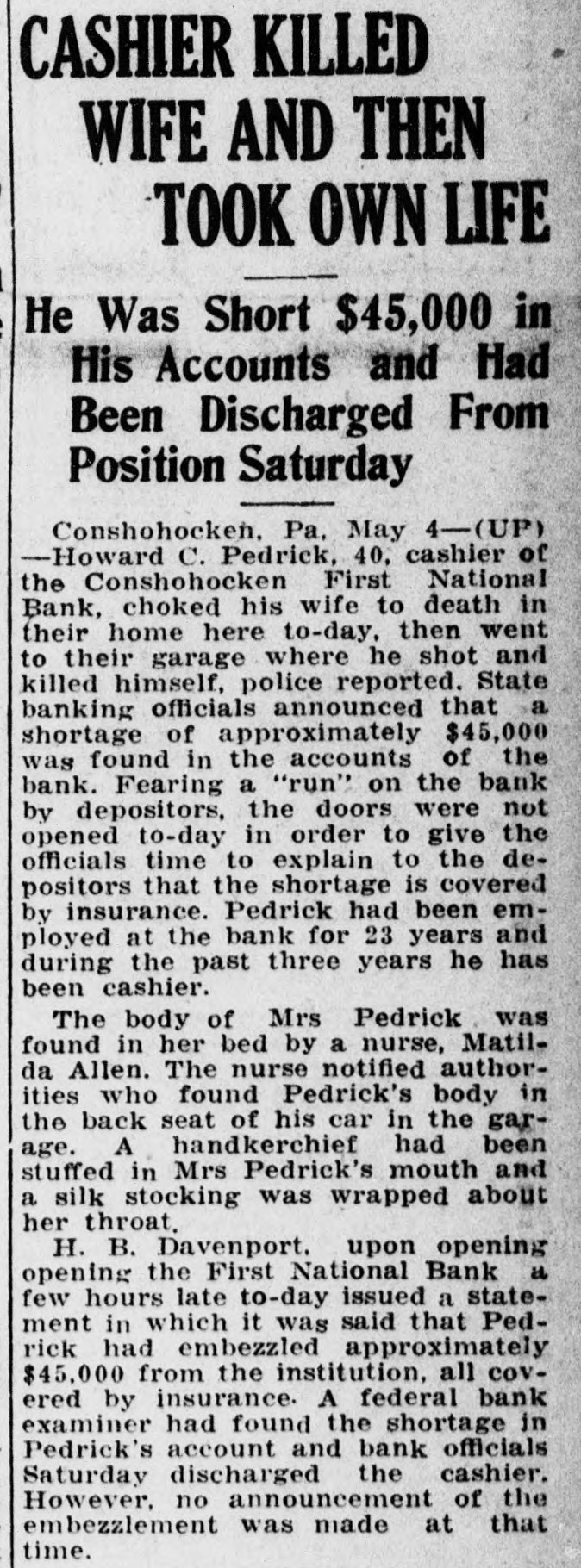
CASHIER KILLED WIFE AND THEN TOOK OWN LIFE He Was Short $45,000 in His Accounts and Had Been Discharged From Position Saturday Conshohocken, Pa, May 4-(UP) --Howard C. Pedrick, 40, cashier of the Conshohocken First National Bank, choked his wife to death in their home here to-day. then went to their garage where he shot and killed himself, police reported. State banking officials announced that a shortage of approximately $45,000 was found in the accounts of the bank. Fearing a "run" on the bank by depositors, the doors were not opened to-day in order to give the officials time to explain to the depositors that the shortage is covered by insurance. Pedrick had been employed at the bank for 23 years and during the past three years he has been cashier. The body of Mrs Pedrick was found in her bed by a nurse, Matilda Allen. The nurse notified authorities who found Pedrick's body in the back seat of his car in the garage. A handkerchief had been stuffed in Mrs Pedrick's mouth and a silk stocking was wrapped about her throat. H. B. Davenport. upon opening opening the First National Bank a few hours late to-day issued a statement in which it was said that Pedrick had embezzled approximately $45,000 from the institution, all covered by insurance. A federal bank examiner had found the shortage in Pedrick's account and bank officials Saturday discharged the cashier. However, no announcement of the embezzlement was made at that time.
6.May 4, 1931The Courier-NewsBridgewater, NJ
Click image to open full size in new tab
Article Text
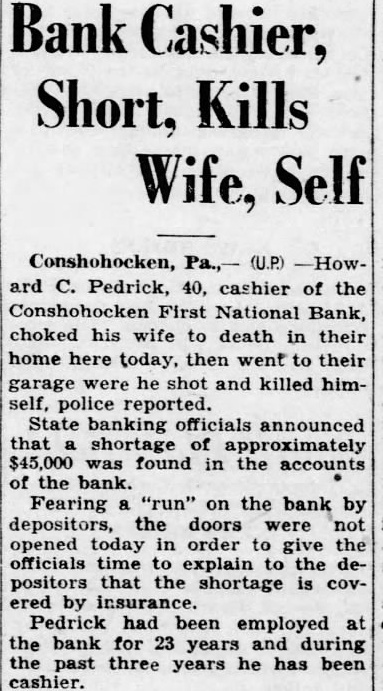
Cashier, Short, Kills Wife,
Conshohocken, ard Pedrick, 40, cashier of the Conshohocken First National Bank, choked wife death their home here today, then went their garage shot and killed himbanking announced shortage $45,000 found in accounts the Fearing "run" on the bank by depositors, the doors opened today order give officials time explain the positors that the shortage COVered insurance. Pedrick had been employed bank for 23 years during past three years he has been cashier.
7.May 4, 1931Times HeraldOlean, NY
Click image to open full size in new tab
Article Text
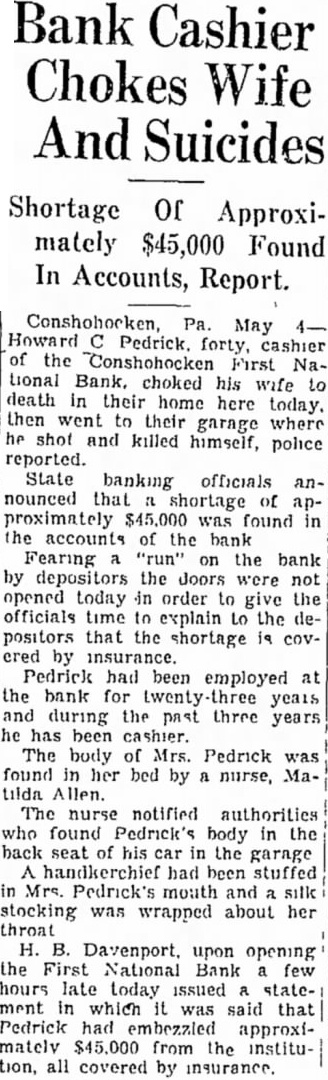
Bank Cashier Chokes Wife Suicides
Shortage Approximately $45,000 Found In Accounts, Report.
Conshohocken, Pa. May Howard cashier of the Conshohocken First Bank, choked his wife death in their home here today. then went their garage where shot and killed himself, police reported. State banking officials nounced that shortage of proximately found the accounts of the bank Fearing "run" the bank depositors the Joors not opened today in order to give the officials time explain the depositors that the shortage is cred by insurance. Pedrick had been employed the bank years and during the past three years he has been cashier. The body of Mrs. Pedrick was found her bed by nurse, tilda Allen. The nurse notified authorities who found Pedrick's body in the back seat of in the garage handkerchief had been stuffed mouth and stocking was wrapped about her throat H. upon opening the First National Bank few hours late today issued ment in which was said that Pedrick approximately $45,000 from the institution, all covered by insurance.
8.May 4, 1931Middletown Times HeraldMiddletown, NY
Click image to open full size in new tab
Article Text
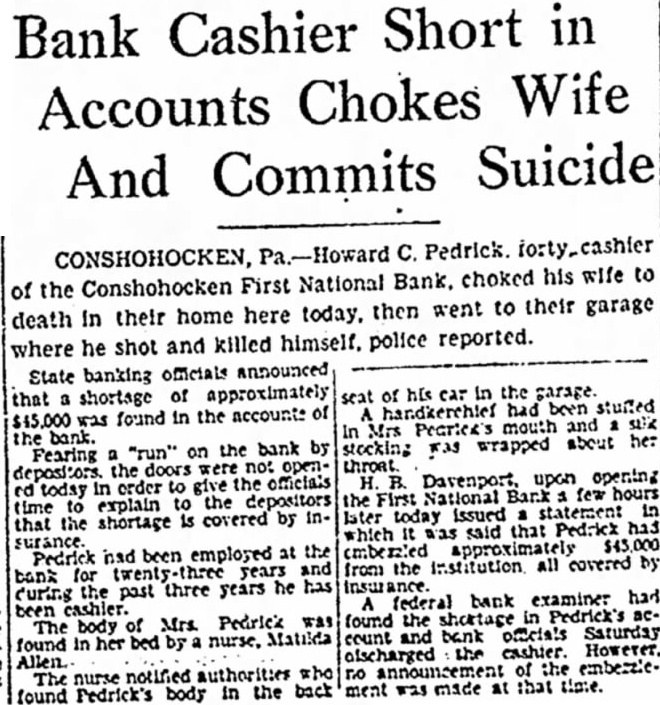
Bank Cashier Short in Accounts Chokes Wife And Commits Suicide
C. Pedrick CONSHOHOCKEN, of the Conshohocken First National Bank, choked his wife to to their garage then went their home here death in himself. police reported. shot and killed where he
State banking officials announced of approximately that shortage found in the accounts of bank. bank by "run" on the Fearing depositors. the doors were no: opentoday in order to give the depositors officials explain to the time that the shortage is covered by insurance. Pedrick had been employed at the bank three he has the past years curing cashier. Mrs. Pedrick The body of found in her bed nurse, Matilda notified authorities who The nurse in the back ment found Pedrick's body his in the garage of handkerchief had been stuffed In Mrs Pearles's mouth and he: wrapped about stocking was throat Davenport, upon opening hours National few later the First today issued statement has said that Pedrick which approximately from the institution all covered by federal bank examiner had found the shortage Pedrick's account and bank officials Saturday However. announcement of the was made at that
9.May 4, 1931The Piqua Daily CallPiqua, OH
Click image to open full size in new tab
Article Text
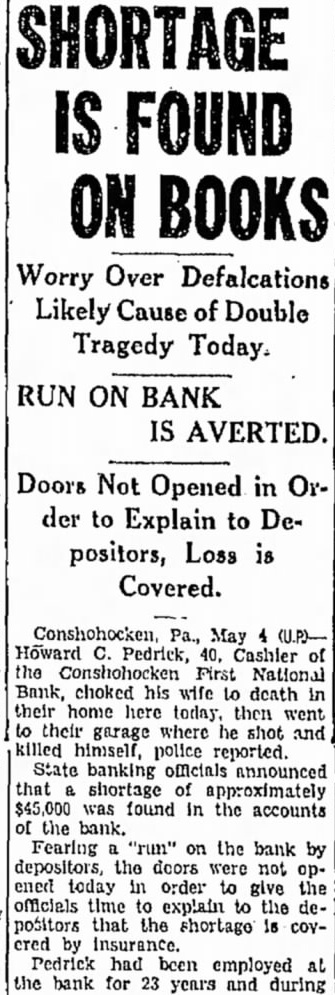
SHORTAGE IS FOUND ON BOOKS
Worry Over Defalcations Likely Cause of Double Tragedy Today.
RUN ON BANK IS AVERTED.
Doors Not Opened in Order to Explain to Depositors, Loss is Covered.
Conshohocken, Pa., May 4 (U.P.) Howard C. Pedrick, 40, Cashier of the Conshohocken First National Bank, choked his wife to death in their home here today. then went to their garage where he shot and killed himself, police reported. State banking officials announced that shortage of approximately $45,000 was found in the accounts of the bank. Fearling a "run" on the bank by depositors, the doors were not opened today in order to give the officials time to explain to the depositors that the shortage 18 covcred by Insurance. Pedrick had been employed at the bank for 23 years and during
10.May 4, 1931The Brooklyn Daily TimesBrooklyn, NY
Click image to open full size in new tab
Article Text
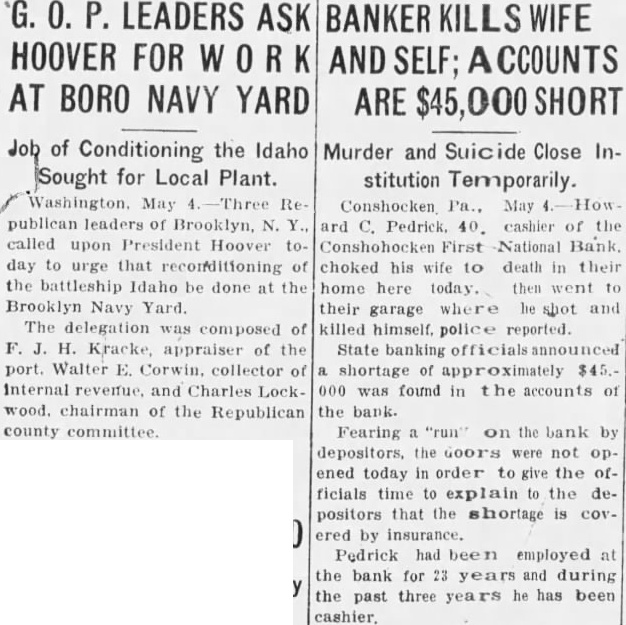
G. 0. P. LEADERS ASK BANKER KILLS WIFE HOOVER FOR W R K AND SELF; A CCOUNTS AT BORO NAVY YARD ARE
Job of Conditioning the Idaho Sought for Local Plant.
Washington. May Republican leaders of Brooklyn, N. called upon President Hoover today to urge that recorditioning of the battleship Idaho be done at the Brooklyn Navy Yard. The delegation was composed of F. J. H. Kracke, appraiser of the port. Walter E. Corwin, collector of Internal revenue and Charles Lockwood. chairman of the Republican county committee
Murder and Suicide Close Institution Temporarily.
Conshocken Pa., May How ard C. Pedrick. 40. cashier of the Conshohocken First National Bank choked his wife to death in their home here today then went to their garage where he shot and killed himself. police reported. State banking announced shortage of approximately $45.000 was found in accounts of the bank. Fearing "run" on the bank by depositors, the Goors were not opened today order to give the officials time to explain to the depositors that the shortage is COVered by insurance. Pedrick had been employed at the bank for 23 years and during the past three years he has been cashier.
11.May 4, 1931The Brooklyn Daily TimesBrooklyn, NY
Click image to open full size in new tab
Article Text
BANKER KILLS WIFE AND SELF; ACCOUNTS ARE
Murder and Suicide Close In- stitution Temporarily. Conshocken, May Pedrick, cashier of the First National Bank, choked his to death in their home here today, then went where shot and their garage killed himself, police reported. State banking officials shortage of approximately 000 was found in the accounts the bank. Faring "run" on the bank by depositors, the doors not ened today order give the ficials time to explain the positors that the shortage is ered by Pedrick had employed bank for years and during the past three years he has been cashier.
12.May 4, 1931The Brooklyn Daily TimesBrooklyn, NY
Click image to open full size in new tab
Article Text
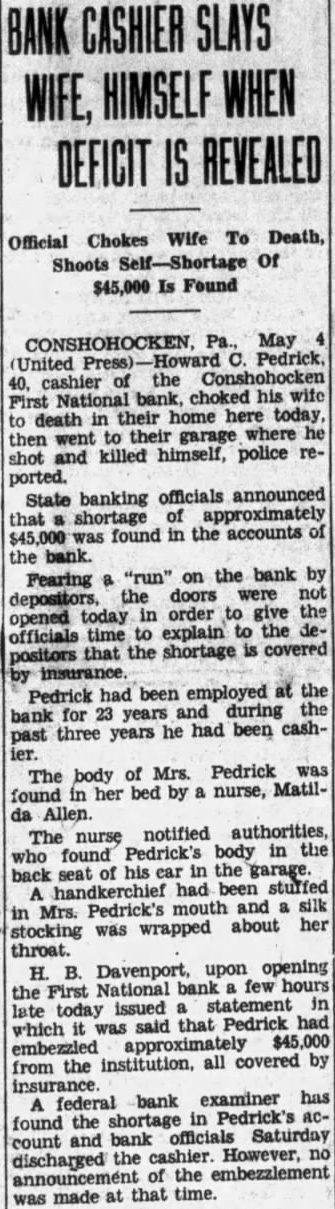
BANKER KILLS WIFE AND SELF; ACCOUNTS ARE $45,000 SHORT
Murder and Suicide Close Institution Temporarily. Conshocken May ard C. Pedrick. 40, cashier of the First National Bank. choked his wife to death in their home here today. then went to their garage where he shot and killed himself, police reported. State banking officials announced shortage of approximately $45.000 was found in the accounts of the bank. Fearing "run" on the bank by depositors. the doors not opened today in order give the officials time to explain to the depositors that the shortage is COVcred by Insurance. Pedrick had been employed the bank for 23 years and during the past three years he has been
13.May 4, 1931The Kilgore News HeraldKilgore, TX
Click image to open full size in new tab
Article Text
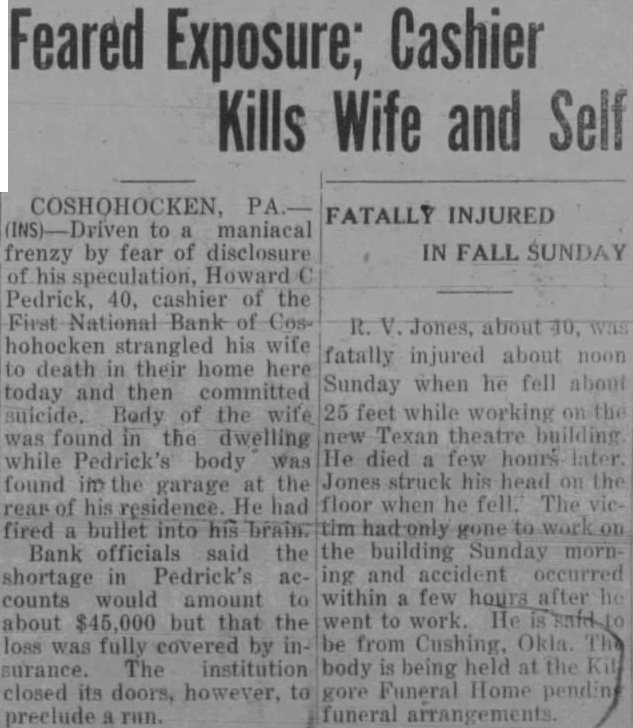
Feared Exposure; Cashier Kills Wife and Self
COSHOHOCKEN, PA.NS)-Driven to a maniacal frenzy by fear of disclosure of his speculation, Howard C Pedrick, 40, cashier of the First National Bank of Coshohocken strangled his wife to death in their home here today and then committed suicide, Body of the wife was found in the dwelling while Pedrick's body was found im the garage at the rear of his residence. He had Bank officials said the shortage in Pedrick's accounts would amount to about $45,000 but that the loss was fully covered by insurance. The institution closed its doors, however, to preclude run.
FATALLY INJURED
IN FALL SUNDAY
R. Jones, about 40, was fatally injured about noon Sunday when he fell about 25 feet while working on the new Texan theatre building He died a few hours later Jones struck his head on the floor when he fell. The victhe building Sunday morn ing and accident occurred within a few hours after he went to work. He be from Cushing, Okla. body is being held at the gore Funeral Home pending funeral arrangements.
14.May 4, 1931The Cincinnati PostCincinnati, OH
Click image to open full size in new tab
Article Text
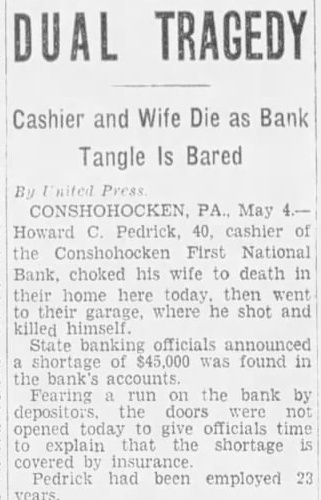
DUAL TRAGEDY
Cashier and Wife Die as Bank Tangle Is Bared
By United Press CONSHOHOCKEN, PA. May 4.Howard C. Pedrick, 40, cashier of the Conshohocken First National Bank, choked his wife to death in their home here today then went garage, where he shot and killed himself. State banking officials announced shortage of $45,000 was found in the bank's accounts Fearing run the bank by depositors the doors not opened today to give officials time to explain that the shortage is covered by insurance Pedrick had been employed 23 years.
15.May 4, 1931Transcript-TelegramHolyoke, MA
Click image to open full size in new tab
Article Text
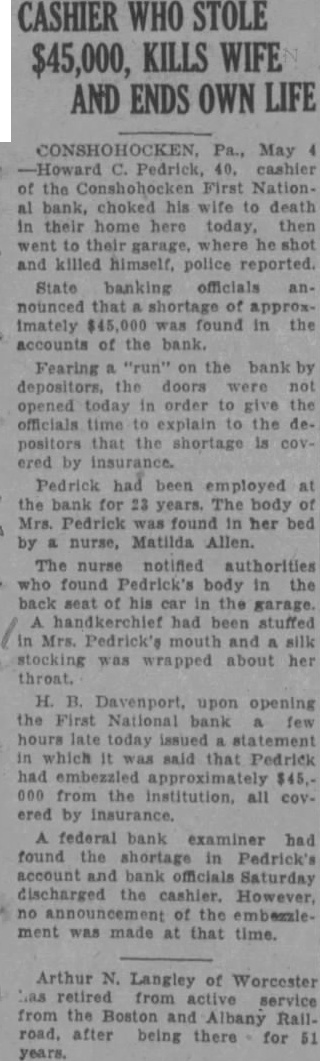
CASHIER WHO STOLE $45,000, KILLS WIFE AND ENDS OWN LIFE
CONSHOHOCKEN, Pa., May -Howard C. Pedrick, 40, cashier of the First Nation. bank, choked his wife to death in their home here today, then went to their garage, where he shot and killed himself, police reported. State banking officials announced that shortage of approximately $45,000 was found in the accounts of the bank. Fearing "run" on the bank by depositors, the doors were not opened today in order to give the officials to explain to the depositors that the shortage is COVered by insurance. Pedrick had been employed at the bank for 23 years. The body of Mrs. Pedrick was found in her bed by nurse, Matilda Allen. The nurse notified authorities who found Pedrick's body in the back seat of his car in the garage. handkerchief had been stuffed in Mrs. Pedrick's mouth and silk stocking was wrapped about her throat. H. B. Davenport, upon opening the First National bank few hours late today issued statement in which It was said that Pedrick had embezzled approximately $45,000 from the institution, all COV. ered by Insurance. A federal bank examiner had found the shortage in Pedrick's account and bank officials Saturday discharged the cashier. However, no of the embezzlement was made at that time.
Arthur N. Langley of Worcester Las retired from service from the Boston and Albany Railroad. after being there for 51 years.
16.May 4, 1931The Waterbury DemocratWaterbury, CT
Click image to open full size in new tab
Article Text
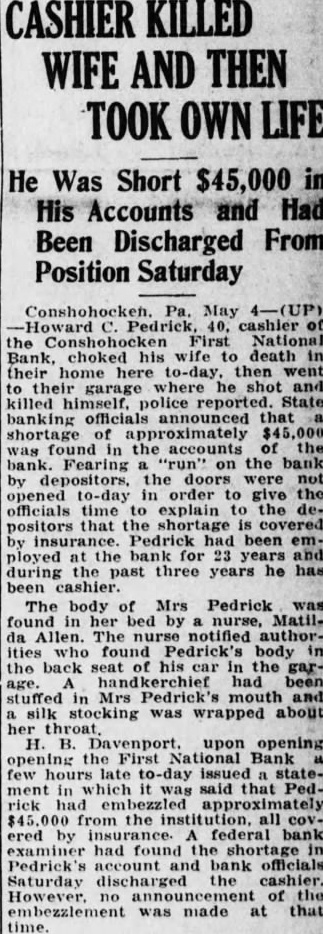
CASHIER KILLED WIFE AND THEN TOOK OWN LIFE
He Was Short $45,000 in His Accounts and Had Been Discharged From Position Saturday
Conshohocken. Pa. May Howard cashier the First National Bank, choked his wife death in their home here to-day, then went to their garage where he and killed police State banking officials announced that shortage of approximately found in the accounts the bank. Fearing on the bank by depositors, the doors not opened to-day to give the officials time explain to the positors that the shortage covered insurance Pedrick had been employed 23 years and during the past three years he has cashier The body Mrs Pedrick was found her bed MatilAllen. nurse notified authorities found Pedrick's body the back seat of in the garhandkerchief had been stuffed Pedrick's mouth and was wrapped about her throat H. Davenport. upon opening opening the First National Bank few hours late to-day issued statement said that embezzled the institution, all covered by insurance. federal bank examiner had found the shortage account and bank officials Saturday discharged However, no of embezzlement was made at that
17.May 4, 1931Troy Daily NewsTroy, OH
Click image to open full size in new tab
Article Text
Chokes Wife To Death, Official Shoots Of $45,000 Is Found
May (United of the Conshohocken cashier choked his wife First their home here today, death in then to their garage where and killed himself, police ported. officials announced State banking that shortage of approximately found in the accounts the bank. the bank by Fearing "run" on the doors were depositors, opened today in order to give the time explain to the officials the shortage covered positors that insurance. at the Pedrick had been employed during the bank for years had been cashpast three years he ier.
The body of Mrs. Pedrick was her bed by nurse, Matilfound in Allen. notified authorities, The nurse Pedrick's body in the who found of his car in the garage. back seat handkerchief had been mouth and silk Mrs. Pedrick's in about her stocking wrapped throat. B. Davenport, upon opening H. bank few hours the First National issued statement today that Pedrick had which said $45,000 embezzled all covered by from the insurance. examiner has federal bank in Pedrick's found the shortage bank officials Saturday count and cashier. However, discharged the the embezzlement made at that time
18.May 5, 1931The Courier-NewsBridgewater, NJ
Click image to open full size in new tab
Article Text
Cashier, Kills Short, Self Wife,
(U.P.) ard Pedrick, 40, cashier of the Conshohocken First National Bank, choked death in their home yesterday, then went to their garage shot and killed himpolice State banking officials announced shortage of approximately $45,000 found in the accounts the bank. Fearing "run" on the bank depositors, the doors were opened today in order give the officials time explain positors the shortage is ered Pedrick employed at the bank for years during past three years he has been cashier.