Click image to open full size in new tab
Article Text
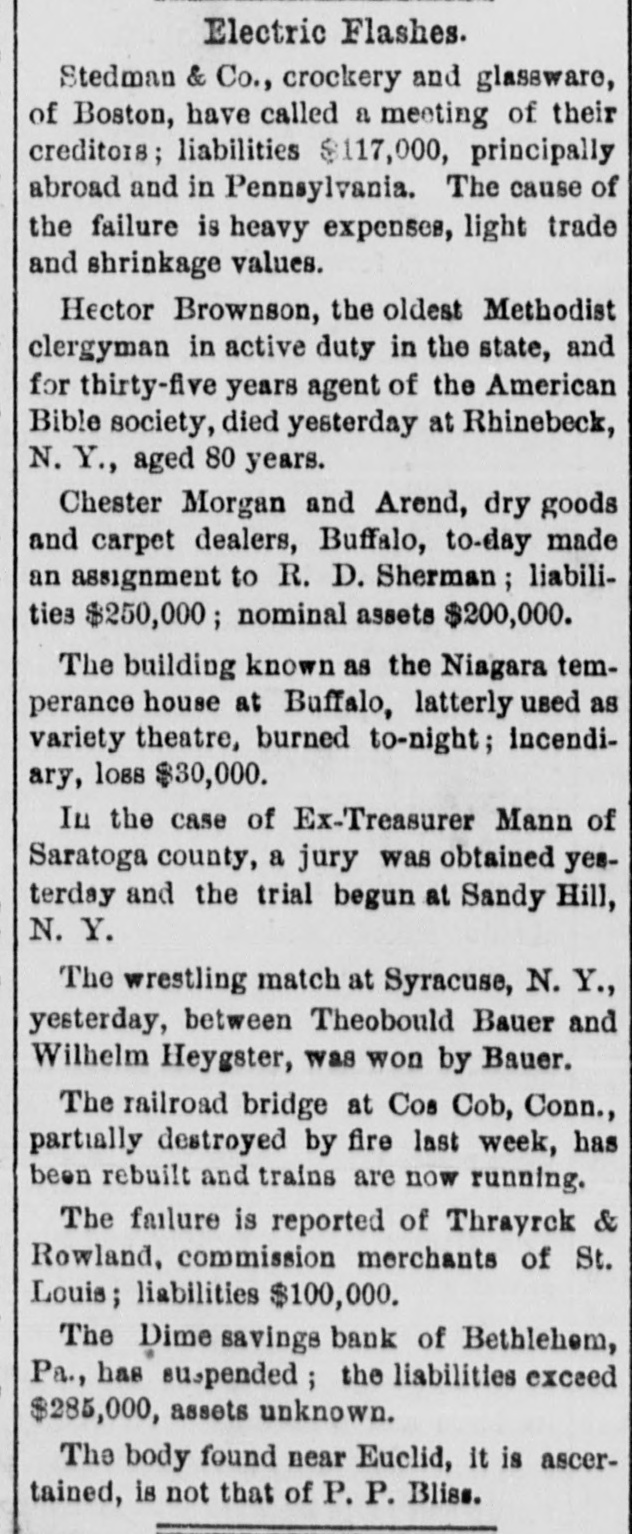
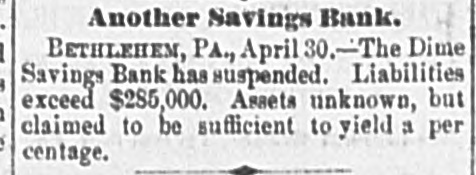
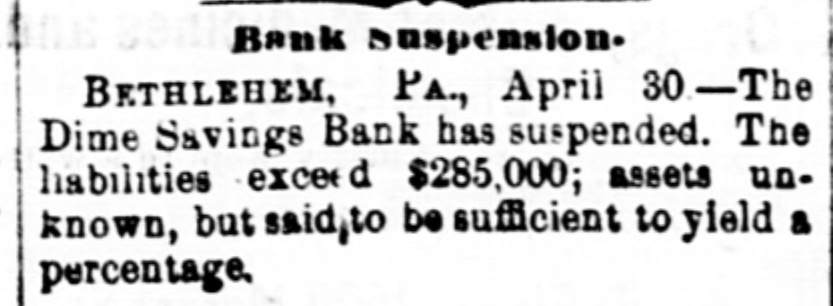
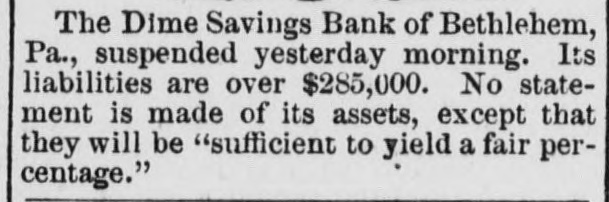
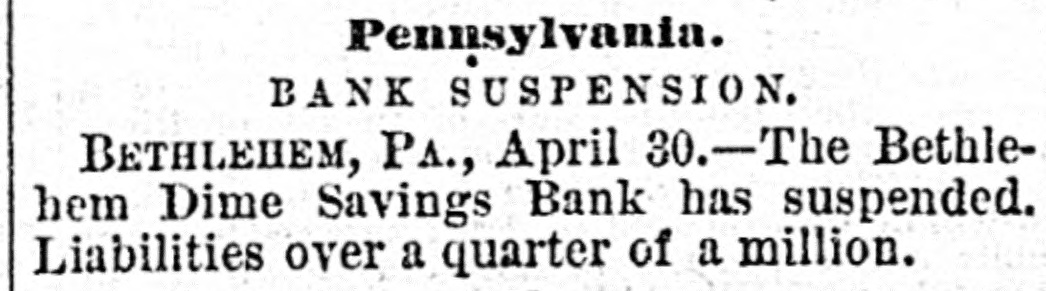
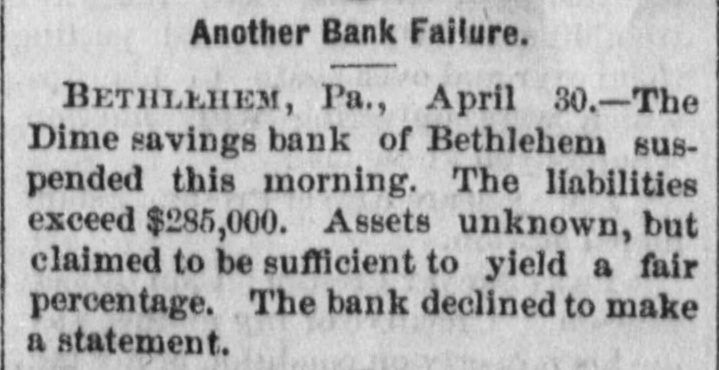
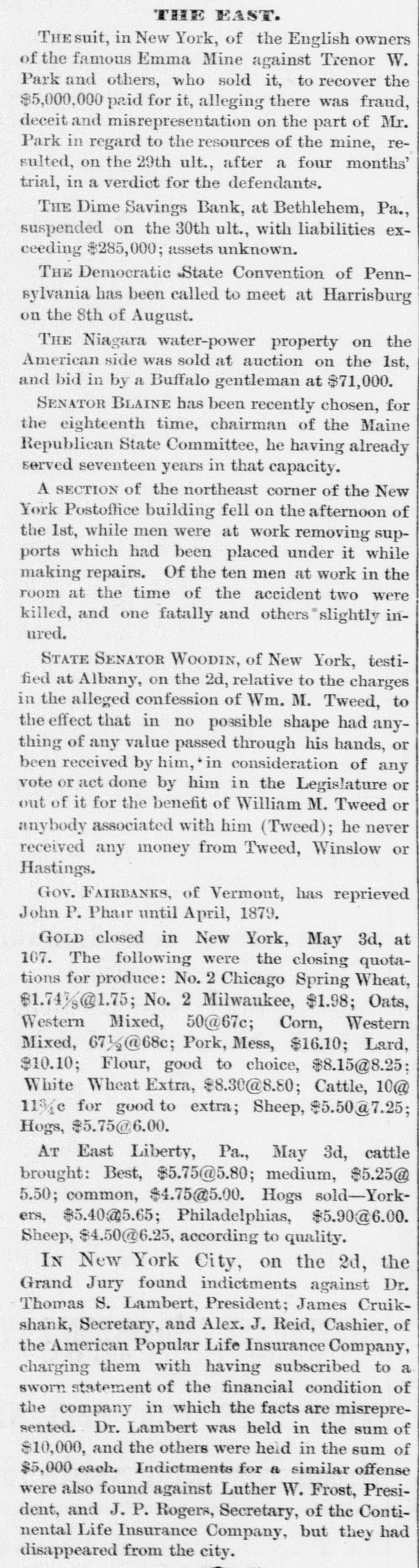
months' on the 29th ult., after a four trial, in a verdict for the defendants. SEVERAL members of the St. Louis Whisky and Ring, who were sentenced to pay a fine who to nominal imprisonment, a year that never paid the fine, were fine on the 28th ult. One of them and was released, but the gave in $1,500. These arrests under ($1,000) had city bail the were arrested ago, paid others made but the in direction of Dist.-Att'y Bliss, in suance the of a recent decision of the Secretary pur- of collect Treasury that measures must be taken to all unpaid fines in the whisky cases. AN Omaha dispatch of the 29th ult. Nebraska says information from nearly all sections of and was to the effect that the heavy rain storm of the previous three days snow had destroyed all the grasshoppers. The weather death. was intensely cold, and froze the 'hoppers to Experiments in thawing them out showed no signs of vitality. Two HUNDRED AND FIFTY employes, mostly females, in the employ of the Bureau of Engraving and Printing, in Washington, were discharged, on the 30th ult. Savings Bank, at suspended, on the 30th $285,000; assets hem, bilities THE Pa., exceeding Dime ult., unknown. with Bethle. liaTHE public debt statement for April shows the following: Coin bonds outstanding, $1,688,020,750; in total debt, $2,224,658,503; cash Treasury, $154,299,886; debt, less decrease Niagara water-power on $4,315,510. Treasury, THE the American $2,070,358,917; during cash property April, in the side was sold at auction on $71,000. be 1st, and bid in by a Buffalo gentleman at A SECTION of the northeast corner of the New York Postoffice building fell of the 1st, while men were at supports which had been afternoon moving t while placed work on under the remaking repairs. Of the ten men at work in theroom at the time of the accident, two injured. were killed, and one fatally and others slightly A JACKSON (Miss.) Associated Press dispatch of the 1st says that, on the evening of 6th ult., John W. Gully, a prominent citizen of Kemporia, was assassinated by an unknown party. On the 28th, two colored men made in affidavit that Benj. Rush, a white man, did the deed, and that Judge Chisholm, who ran for Congress on the Republican ticket in the Third District, last election, hisson and Gilmer, Rosenpaum and Hopper, preaninent white of and instigated the Chisholm ans, knew Republi- crime. and son were arrested and imprisoned at De Kalb. Mrs. Chisholm and laughter insisted on sharing their confinement. the 29th Chisholm sent to for whom a warrant had On for Sunday, Gilmer, been Scooba issued. Gilmer came, and on his arrival was arrested; but just as be arrived at the jail was set a and killed. The was by overpowered mob jailor upon then by the mob, who immediately attacked Chisholm, mortally wounding him his son. Miss her father, shot and killed fending and killing Chisholm, Dr. in Ross. deer, and Mrs. Chisholm young a son of Gully who was was also ted. Miss Gully, Chisholm severely assassina- wounded and Hopper were the ed. woods Rosenbaum seriously carried wound- to by the mob, to extort from them the whereabouts of Rush, the alleged assassin of Gully. It is supposed Rosenbaum and Hopper were hanged. It is reported that a is existing state of affairs throughout that horrible seetion. The people are wild with excitement, and other hangings will probably follow." IN New York City, on the 2d, the Grand Jury found indictments against Dr. Thomas S. Lambert, President: James Cruikshank Secrotary, and Alex. J. Reid, Cashier, of the Ameri= can Popular Life Insurance ng with having i them Company, subscribed charg- to sworn statement of the financial the company in are Dr. Lambert lition facts of misrepresented. which was held con- the in ball of $10,000. and the others were held in the sum of 85,000 each. Indictments for offense were also found and J.P. similar W. Frost. President, Rogers, against Secretary, Luther a of the Continental Life Insurance Company, but they had disappeared from the city,