Click image to open full size in new tab
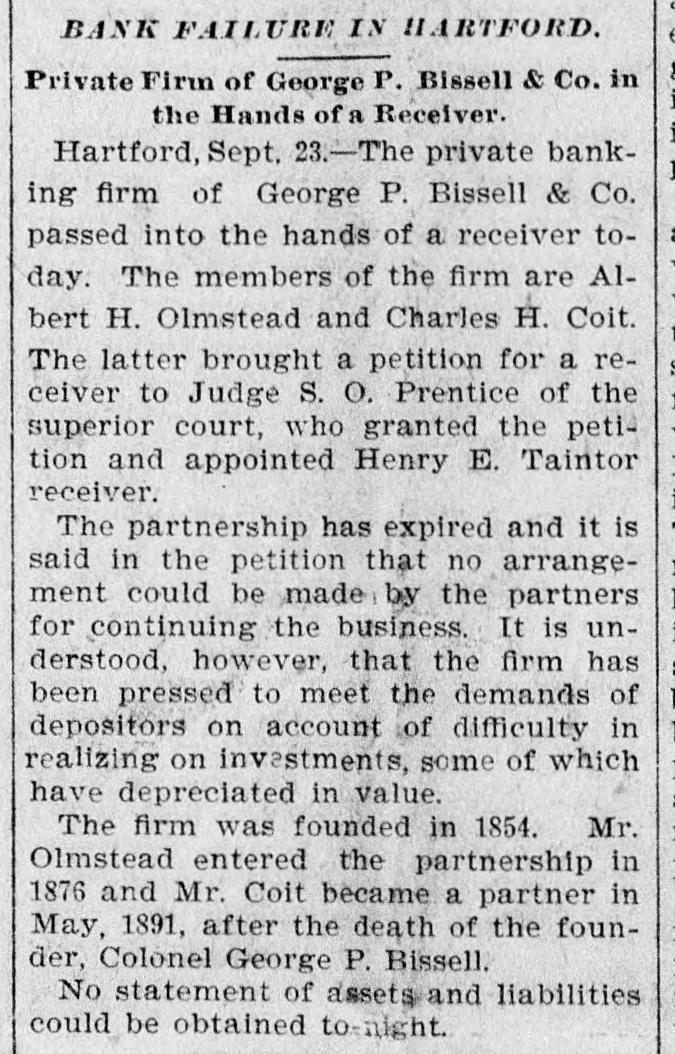
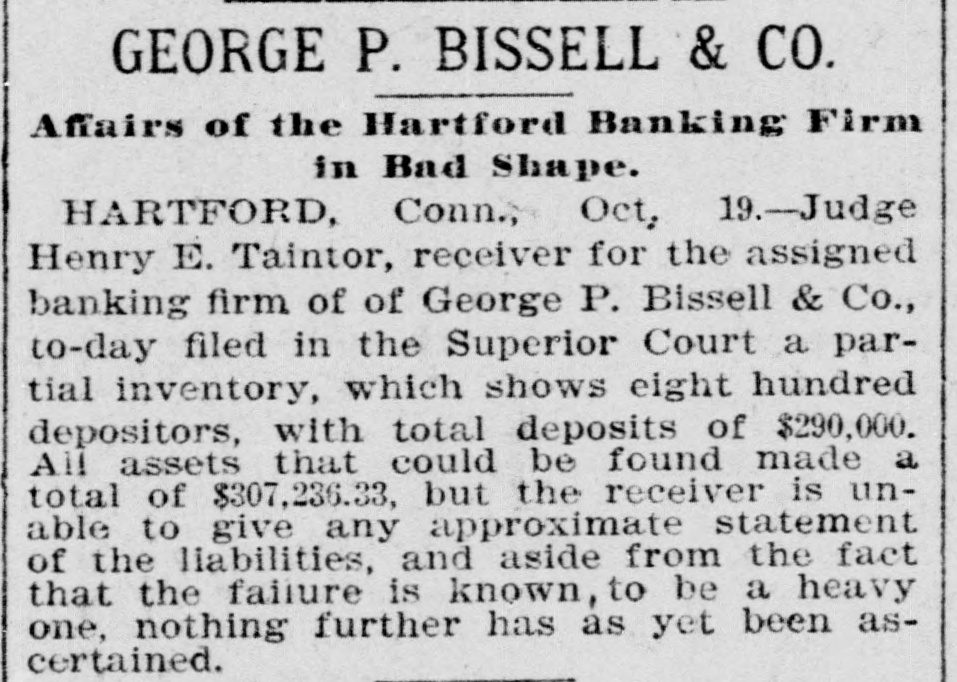
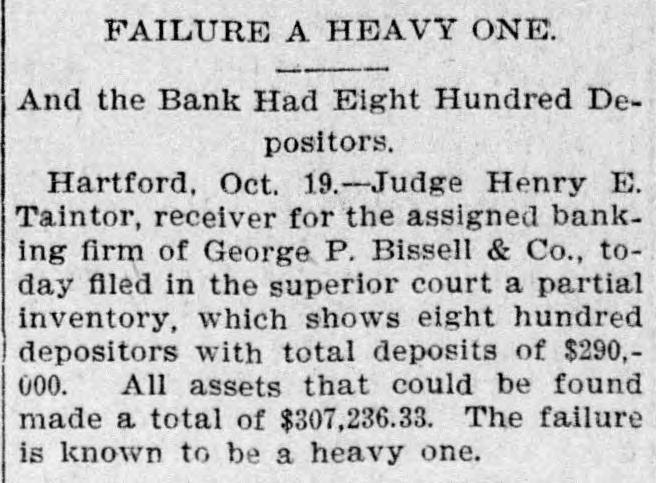
Article Text
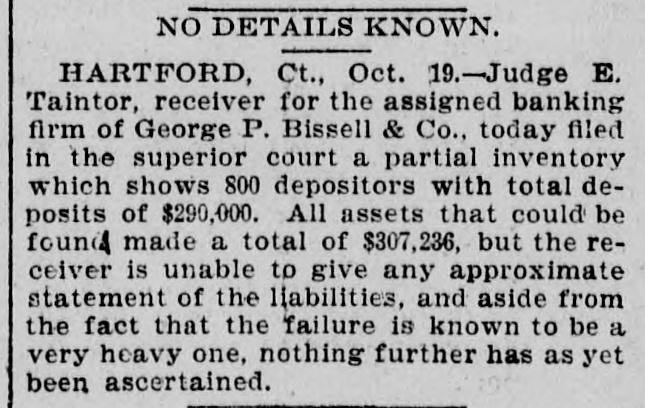
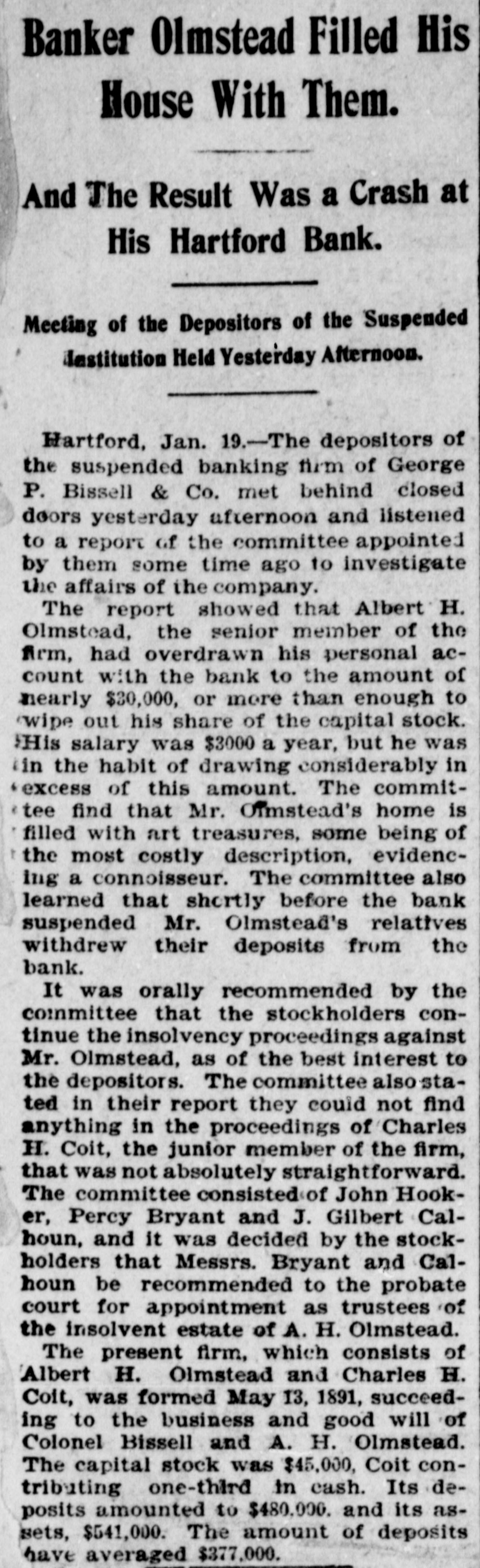
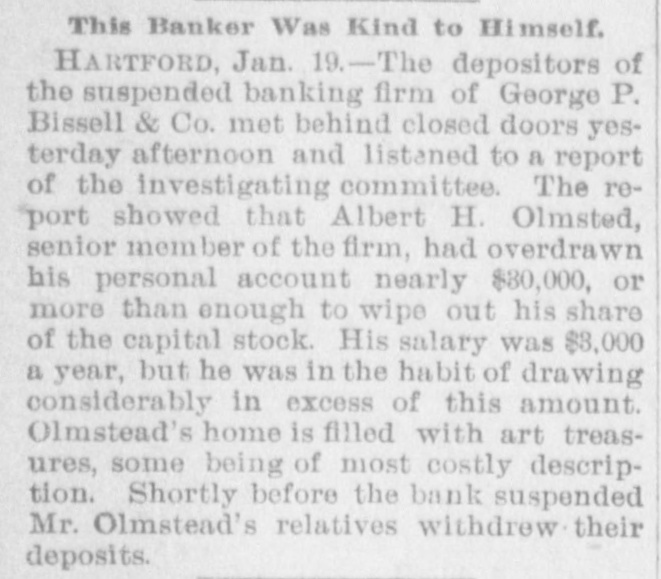
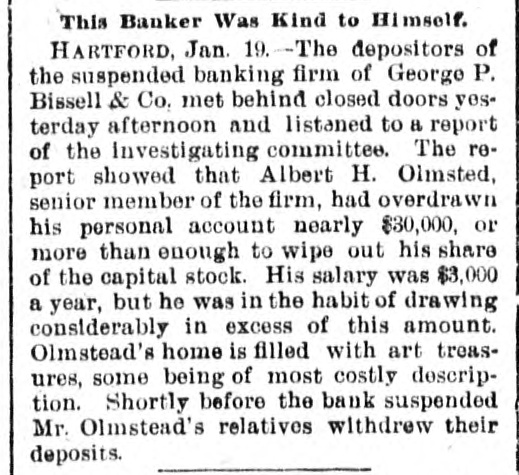
Domestic. Elizabeth S. Mead, President of Mount Holyoke College, South Hadley, Mass., issued an appeal for money with which to replace the buildings recently burned. Governor Morton, of New York. appointed a Board of Examiners for horseshoers. Miss Nellie Hannon was waylaid and robbed by a highwayman in a wood in the annexed district, New York City. Commissioner Waring, of the Street Cleaning Department, returned from Europe after a tour of inspection of leading cities, convinced that New York is one of the cleanest cities in the world. William Jennings Bryan made speeches in Harper's Ferry, Martinsburg and other cities in West Virginia, and arrived at Grafton. Major McKinley addressed delegations from Centre County, Pennsylvania, which called on him at Canton, Ohio. George H. Morrison, Treasurer of Rensselaer County, New York, was rearrested on the official declaration that the shortage in county funds would reach nearly $250,000. A Republican mass meeting at Carnegie Hall, New York City, was addressed by Frank S. Black, Republican candidate for Governor; Senator Lodge, of Massachusetts; Timothy L. Woodruff. Benjamin F. Tracy and Edward Lauterbach. Two delegations, one of old constituents in Ohio and one of colored clergymen and Conference delegates, called on Major McKinley at Canton. William J. Bryan arrived in New York City after making speeches at several places in New England; he spoke to large crowds in the evening at Paterson and Newark, New Jersey. Arthur Sewall accompanied him. William J. Bryan reached Arthur Sewall's home in Bath, Me., and received there a greeting as hearty as any given him during his campaign trips. Mrs. Eliza Griffin Johnson, the widow of General Albert Sydney Johnson, died in Los Angeles, Cal., at the home of her son-in-law, United States Attorney Denis. She was seventy-four years old. Her former home was in Kentucky. A building in Worcester, Mass., from which floated an anarchist flag with William J. Bryan's picture oh it, and which was seen by the candidate, was burned under mysterious circumstances. The big elephant on Coney Island was burned to the ground. Two robbers with pistols held up the cashier of the Western Foundry Company, in Chicago, forced him to hand over $1600 and escaped, in spite of a hot pursuit during which many shots were fired at them. The Clermont Avenue Rink in Brooklyn was packed with an enthusiastic audience which heard speeches by Chauncey M. Depew, J. Franklin Fort and others. James Smith, an engineer, fall on a revolving saw in New York City and was cut in halves. The faculty of Yale refused to say whether they will takeany official action on the antiBryan demonstration by the students. Sentiment in New Haven condemns the disturbers. Generals Palmer and Buckner spoke in Baltimore. J. E. and C. H. Brown, proprietors of the Mapleton (Minn.) Bank, made an assignment. Their assets are $141,000 and liabilities $100,000. The cause of the failure is said to be the advancing of large sums to erect a new building in Mapleton. David Cummings Sprague, a conspicuous resident of Rahway, N. J., and the father of Frank Sprague, the electrician, was killed instantly by the New York express near the Poplar street crossing of the Pennsylvania Railroad. The launching of the new steel steamer James Watt, the first of the Rockefeller fleet, and the largest ship on the lakes, was made a society event at Cleveland, Ohio. More than 3000 persons were present at the yards of the Cleveland Shipbuilding Company. The private banking firm of George P. Bissell & Co., of Hartford, Conn., which has been in existence since 1854. has suspended. Sherry's bathing pavilion at Narragansett Pier, R. L, considered the finest structure of its kind on the coast. was totally destroyed by a fire, supposed to be of incendiary origin. The loss will reach between $50,000 and $60,000. The resignation of Senator James Smith as Chairman of the Democratic State Committee of New Jersey, has been accepted and a new leader has taken his place in the per son of Colonel E. L. Price, of Newark, a silver man and a supporter of Bryan and Sewall. Eugene C. Gregory, aged twenty-four, a Yale College student, was found to have committed suicide by inhaling illuminating gas at his father's residence, New York City. He was the son of wealthy parents. A tendency to hypochondria, caused by overstudy, is given as the cause of the suicide.