Click image to open full size in new tab
Article Text
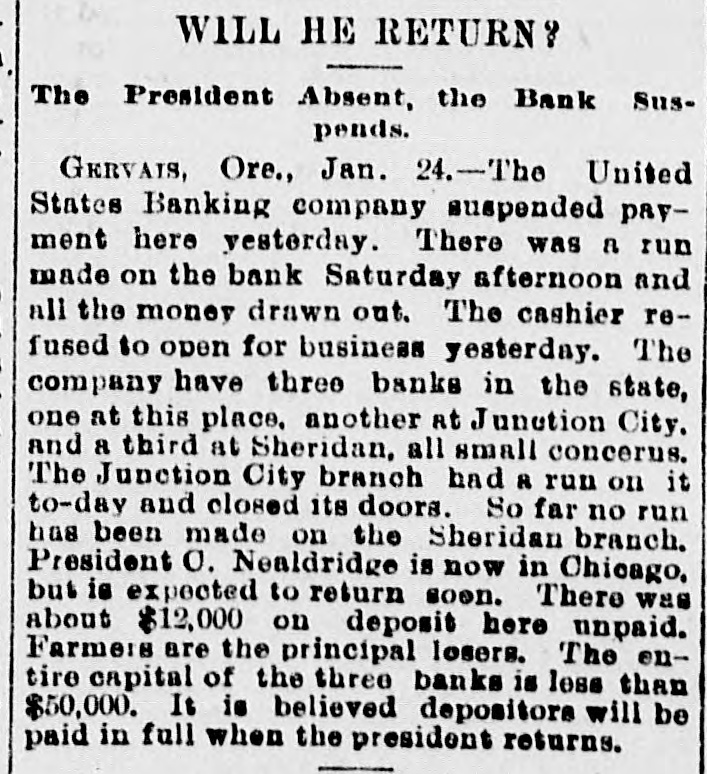
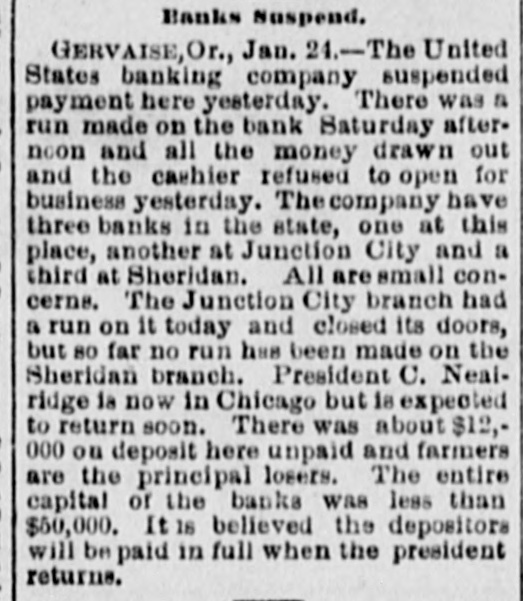
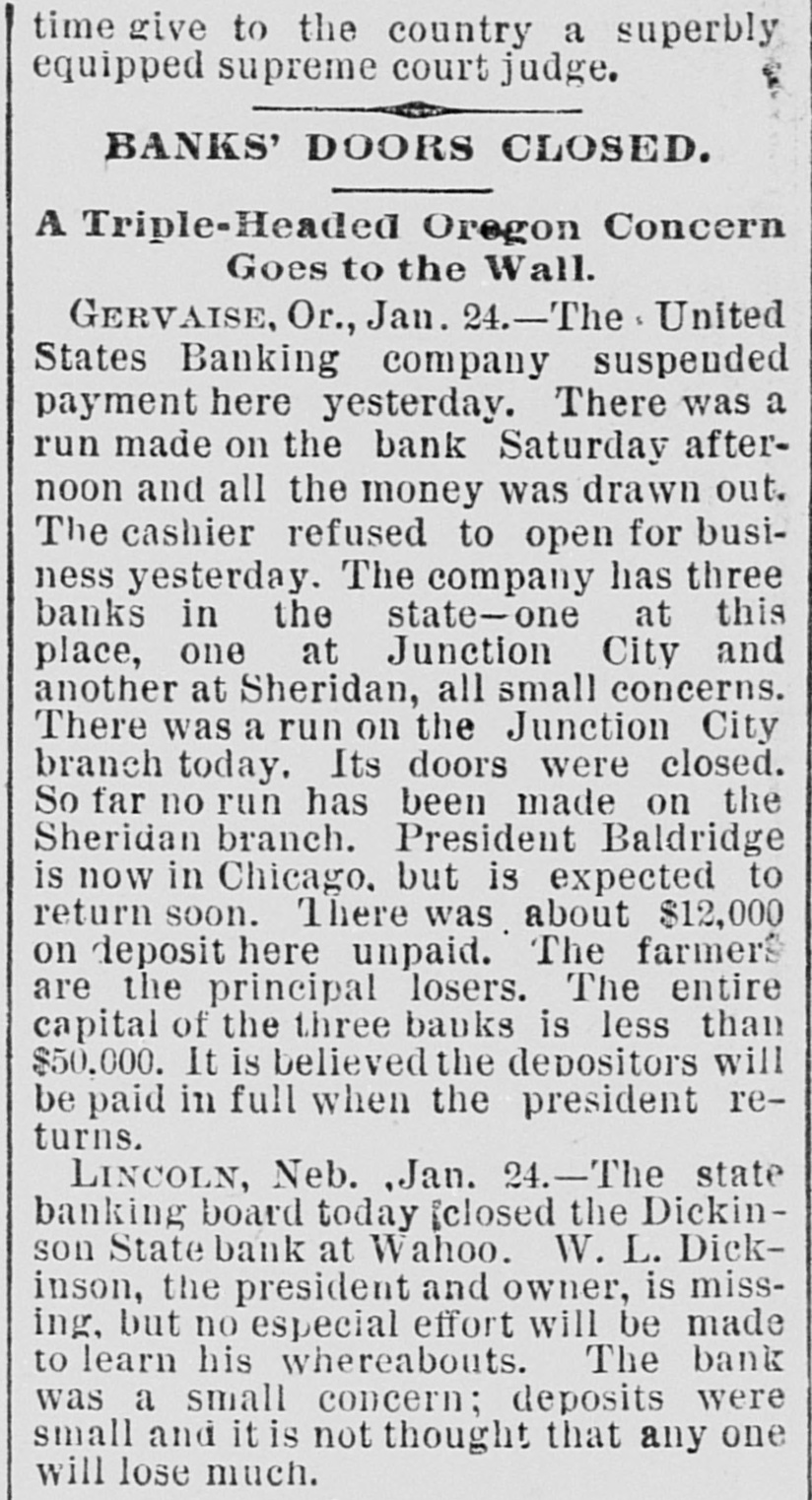
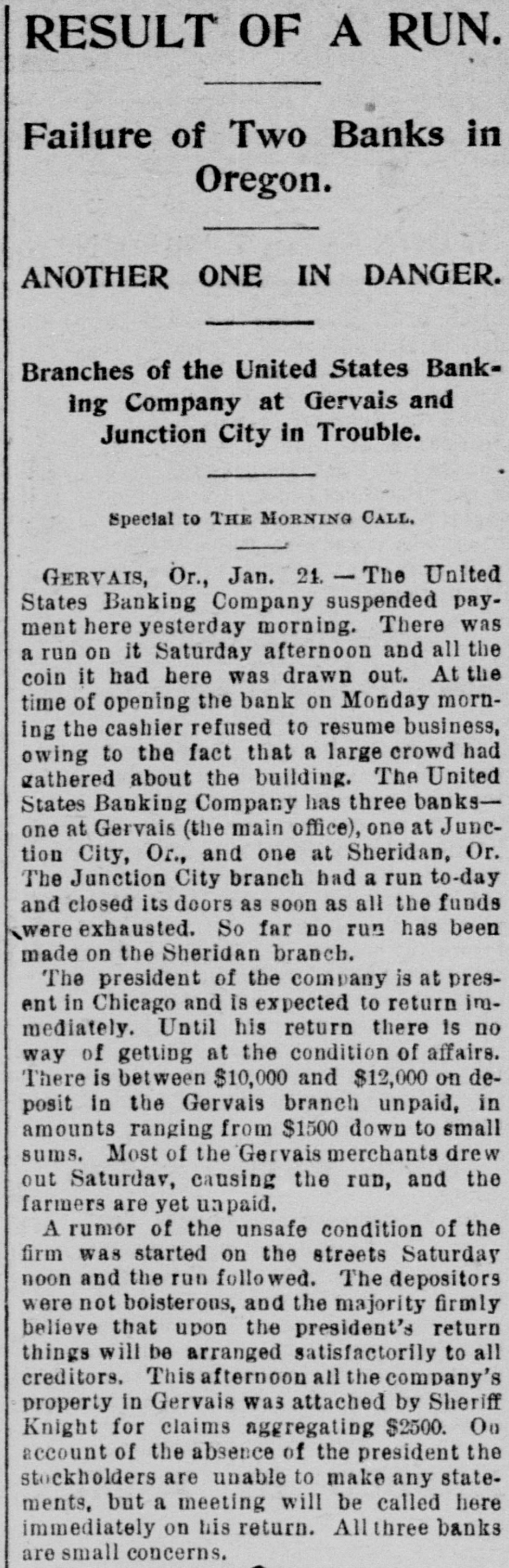
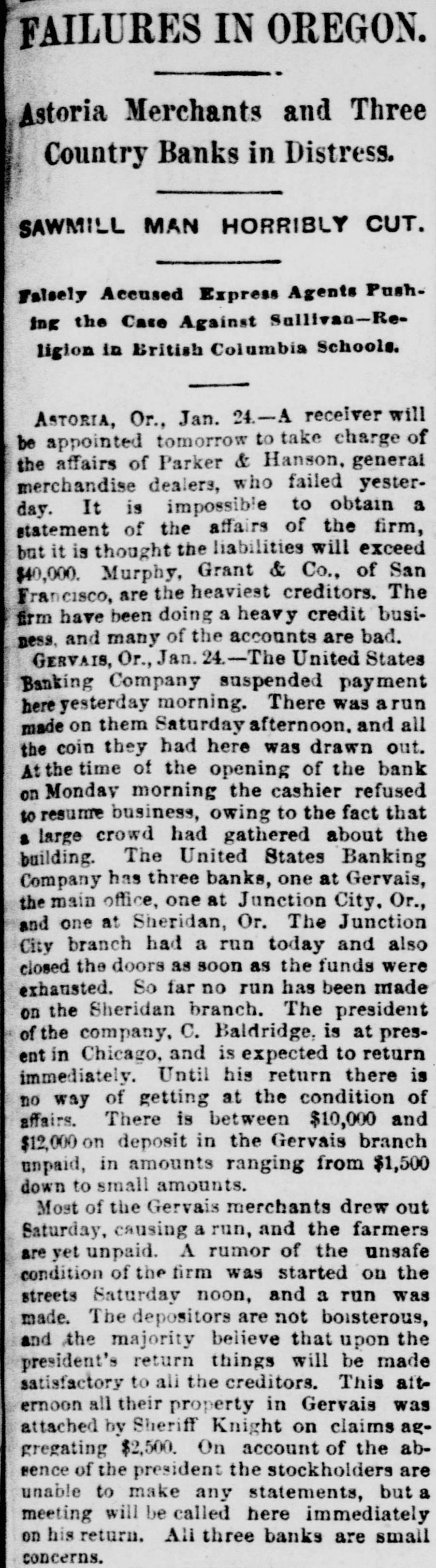
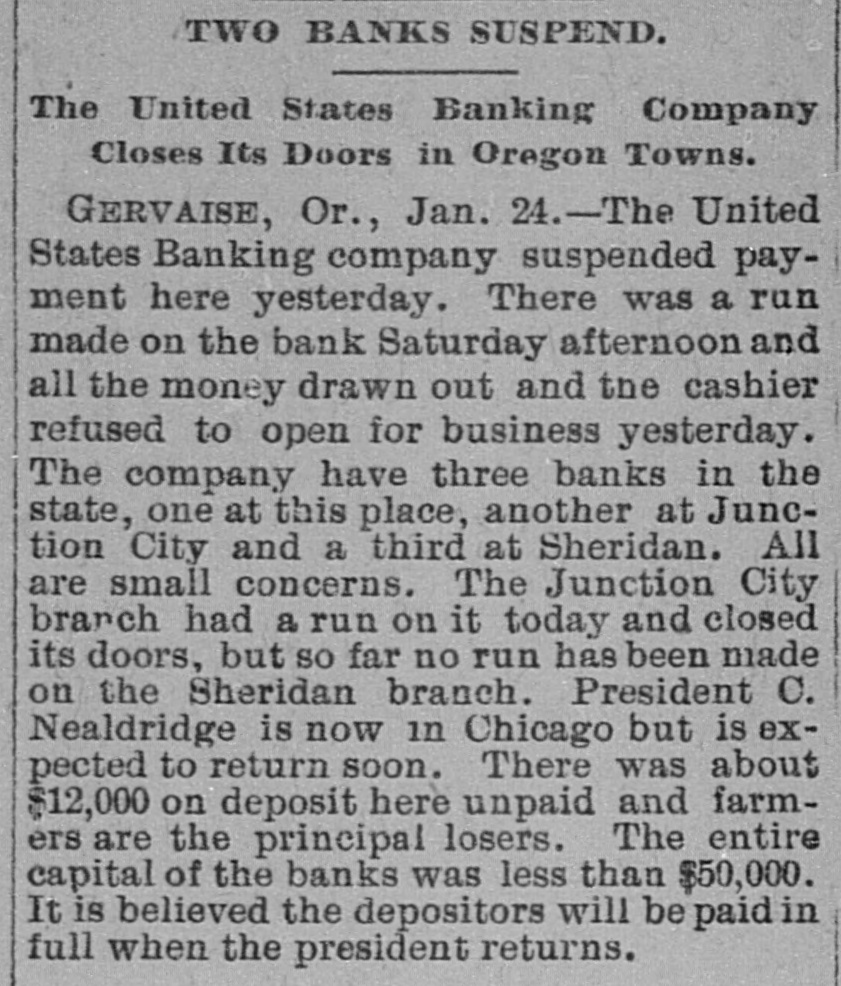
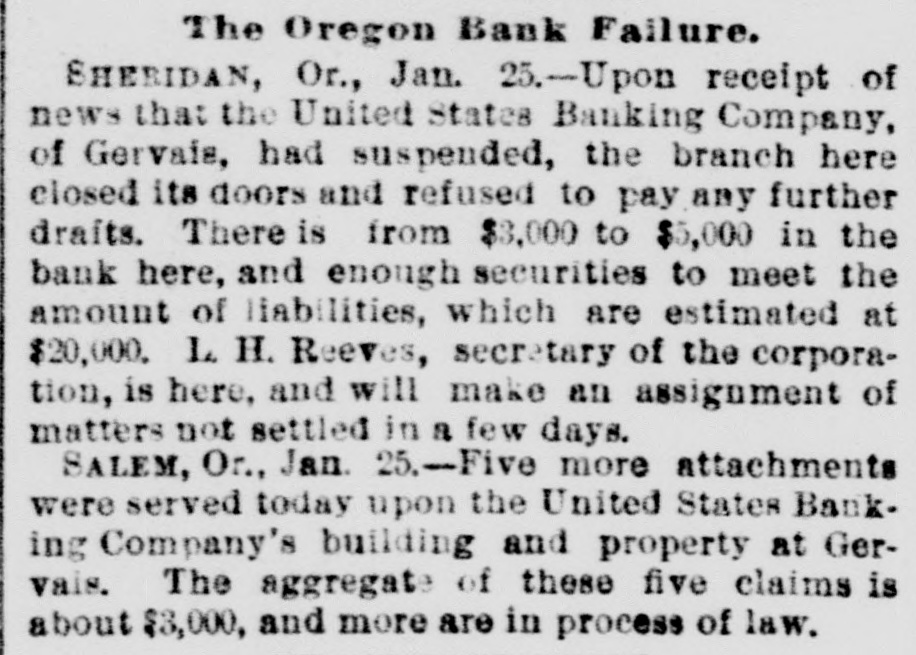
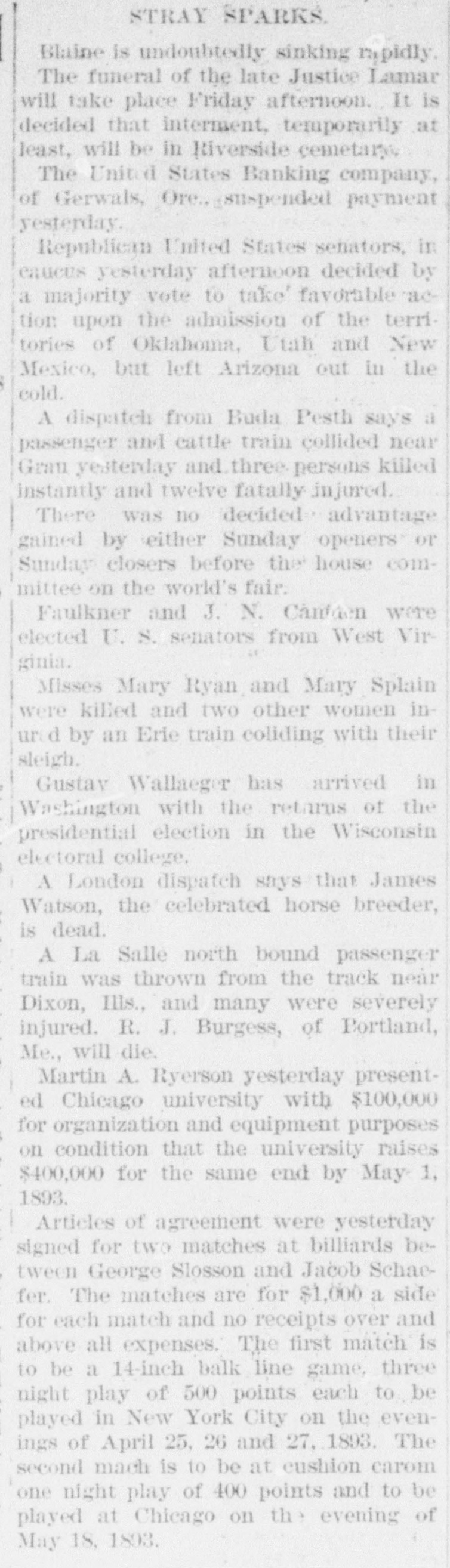
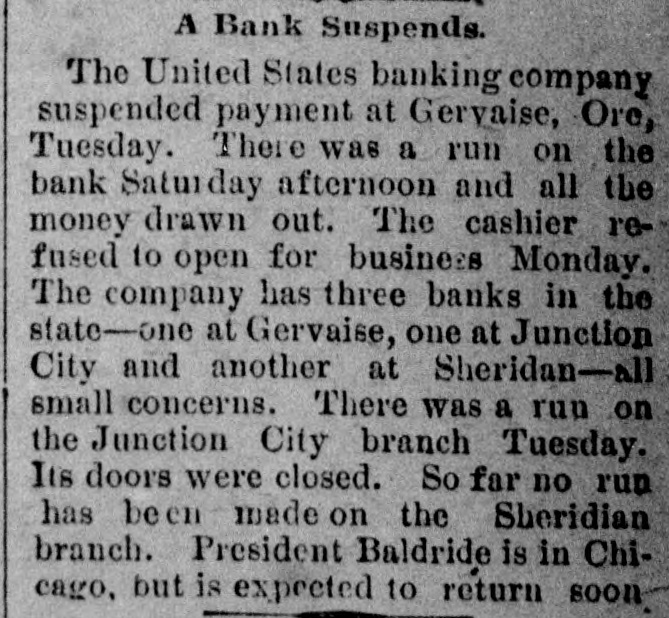
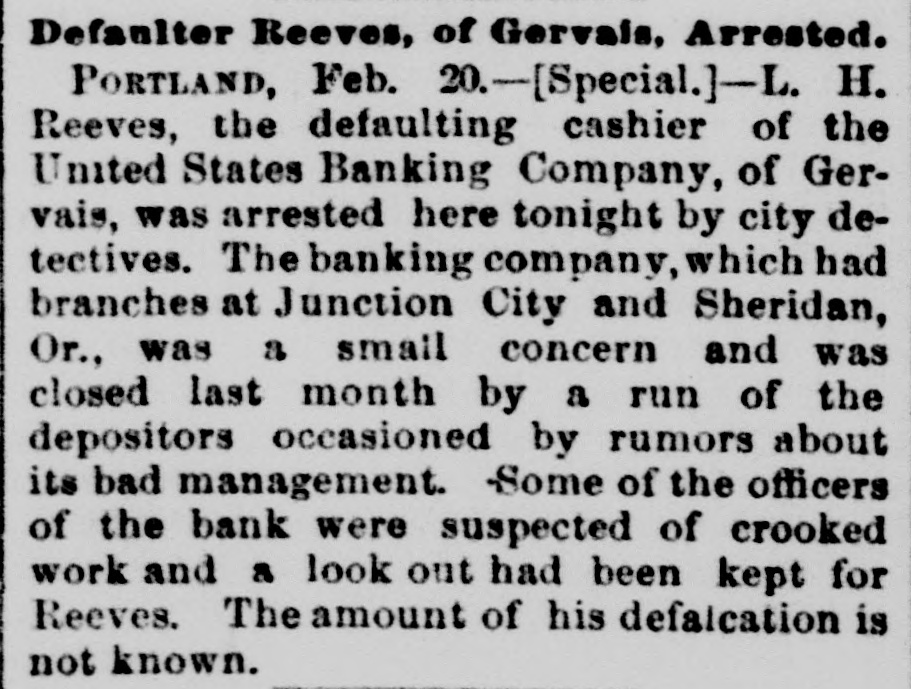
battle-ship Iowa and of the cruiser Brooklyn to the Carbon Steel company of Pittsburg. This included the nickel protective armored deck. The United States cruiser, Philadelphia, sailed on the 24th from New York for Port Royal, S. C., having on board the members of the board that will superintend the trial of the dynamite guns on the dynamite cruiser Vesuvius. The Indiana Humane society through Gen. Coburn has decided to appeal to the legislature for broader powers. At the annual meeting just held D. W. Coffin was made president; Mrs Eliza Hendricks, vice-president; W. H. Robson, secretary; and David E Snyder, treasurer. R. A. Knight, receiver of the order of the Iron Hall, has collected from seventy branches of the order in Massachusetts about $160,000. There are eighty more branches to be heard from, and the receiver expects to collect over $275,000. The United States Banking company, of Gerwals, Ore., suspended payment yesterday. The exodus of southern negroes to Oklahoma continues. Twenty families passed through Denison, Texas, on the 25th bound for the Cherokee strip. C. H. Goodrich, who has just resigned as assistant general freight agent of the New York and New England railroad, : will, it is said, accept a similar position 1 with the Reading. hTe Bruner and Acker Milling company of Seymour, Ind., has brought a damage suit for $7,475 against G. F Harlow for entering into the milling 1 business when, it is alleged, he made a . contract to keep out. An east-bound passenger train collided - with a west-bound switch engine on the - Terre Haut and Indianapolis railroad ; near Brazil, Ind., on the 24th. No one was injured. : A man with half a dozen or more - wives is under arrest in Cincinnati, O., charged with conducting swindling op- erations through the mails. The dismantled and diserted hull of $ the Norwegian bark Star of India has been sighted. Her crew of thirty-seven - were undoubtedly lost. The United States Supreme Court on - the 24th sutained the award of the Court of Claims to Smithmeyer & Pels, the architects who designed the Con: gressional library building, of $48,000 in : their suit against the United States. The infant daughter of Jonas Christo- phel, of Goshen, Ind., pulled a kettle ! of boiling water over upon itself on the : 25th and was scalded to death. Indian Commissioner Morgan has gone 1 to Chicago to buy in open market 300,, 000 pounds of bacon for issue to West: ern tribes of Indians under treaty stipulations. The scheme for building the Winona, - Marshalltown & Southern railroad is : booming. A survey will be commenced February 1. : Won Chin Foo, representing the Chi1 nese Equal Right league of New York . City, appeared before the house com- mittee on foreign affairs yesterday and , advocated the repeal of the Geary Chi: nese exclusion act. He urged the pasi sage of the Andrew bill which leaves , L the law as it was ten years ago. S At St. Paul the mercury dropped from 35 to 40 degrees in the past 3 twenty-four hours and tonight registered ) 14 below. Duluth reports the same, as : do the Dakotas and Montana. Nearly 200 women were present at : the annual meeting of the Illinois e Women's Press association held at the Palmer house last evening. The Illinois supreme court has ren1 dered a decision that women can vote at school elections. Last spring Mar- tha E. Plummer and May M. Moss dea feated Oscar O. Yost and Otto Wallace by the aid of the votes of 293 women The county court decided against the women, appeal the , but on supreme e court reversed the lower court.