Article Text
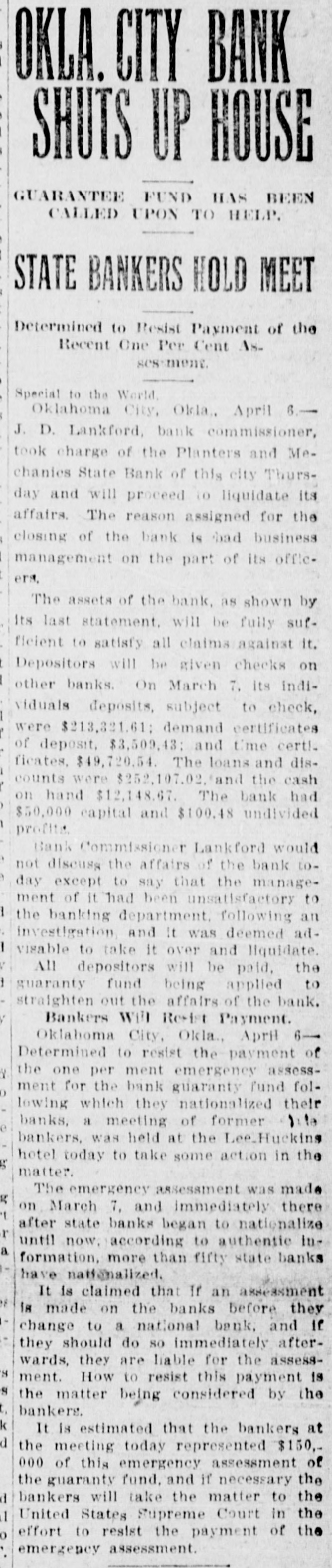
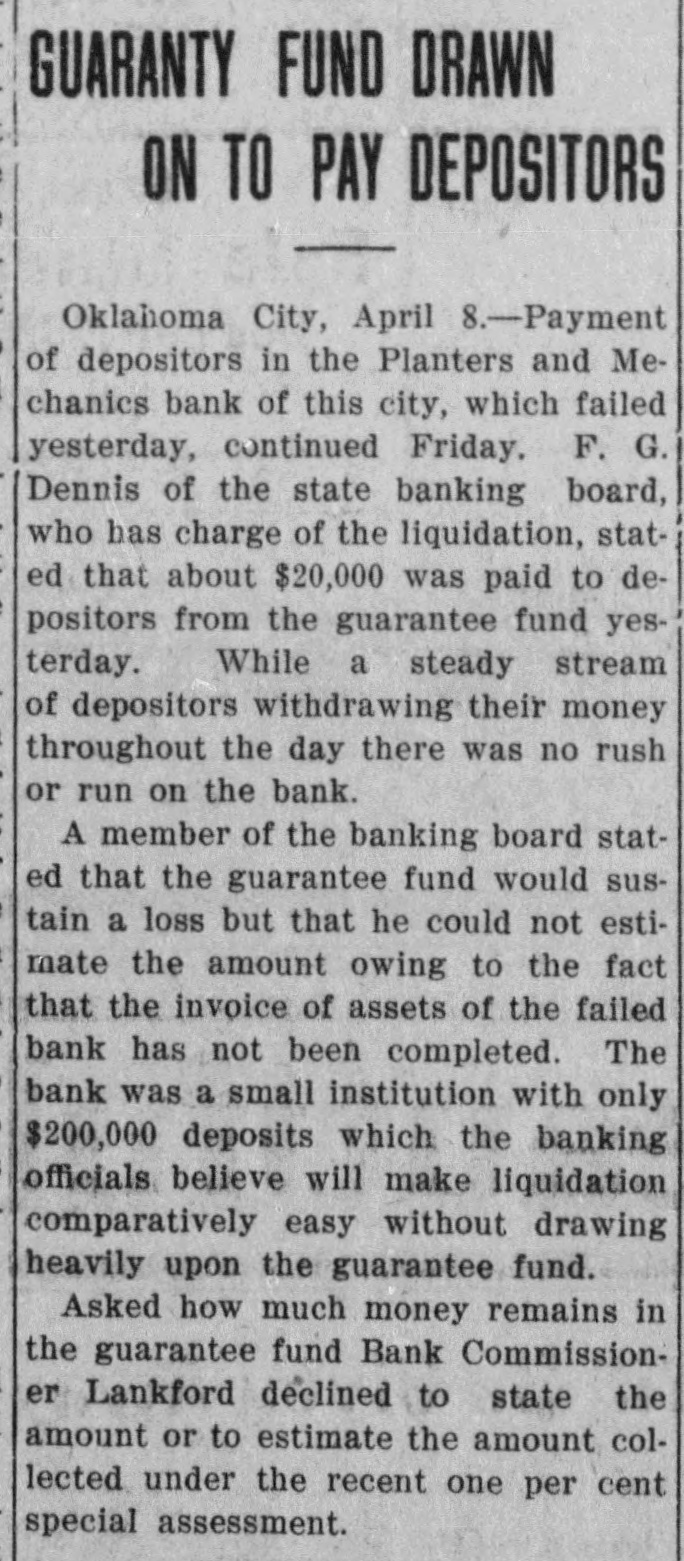
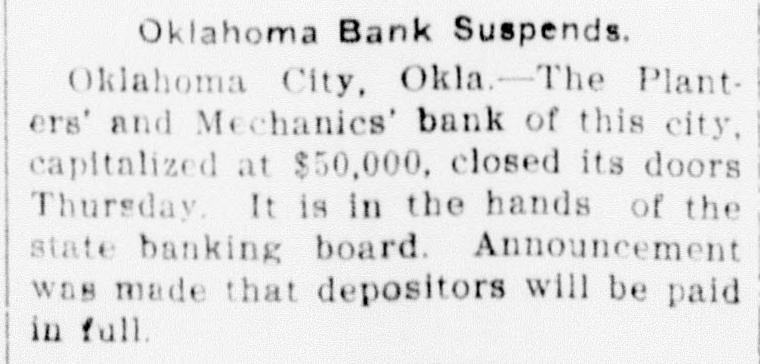
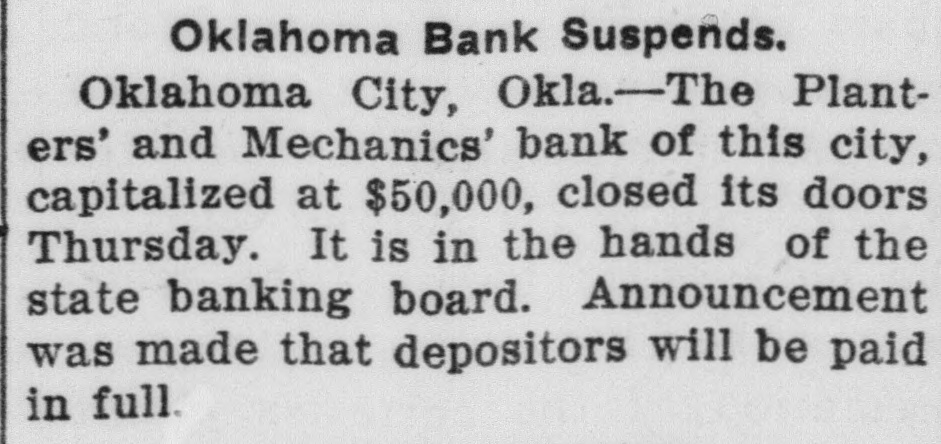
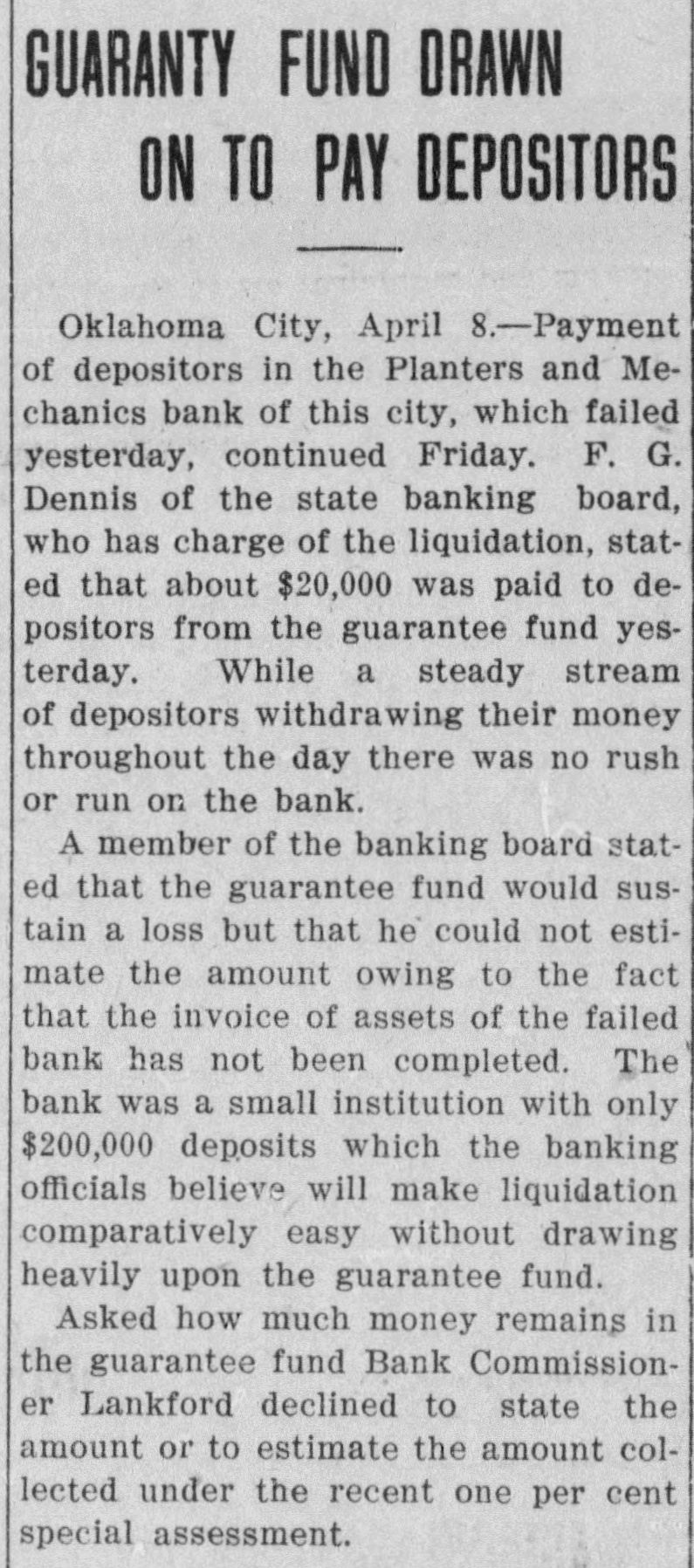
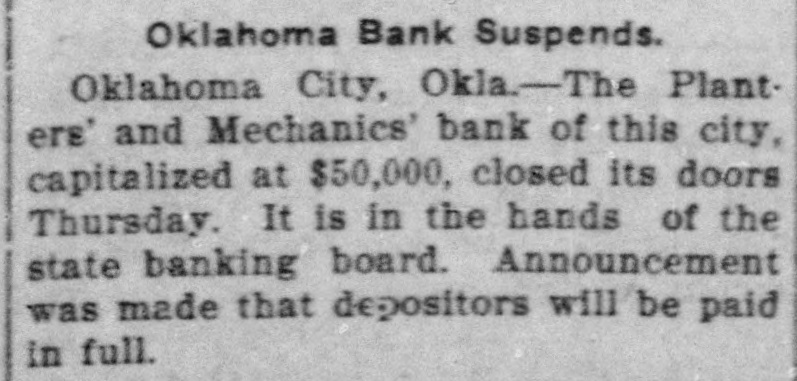
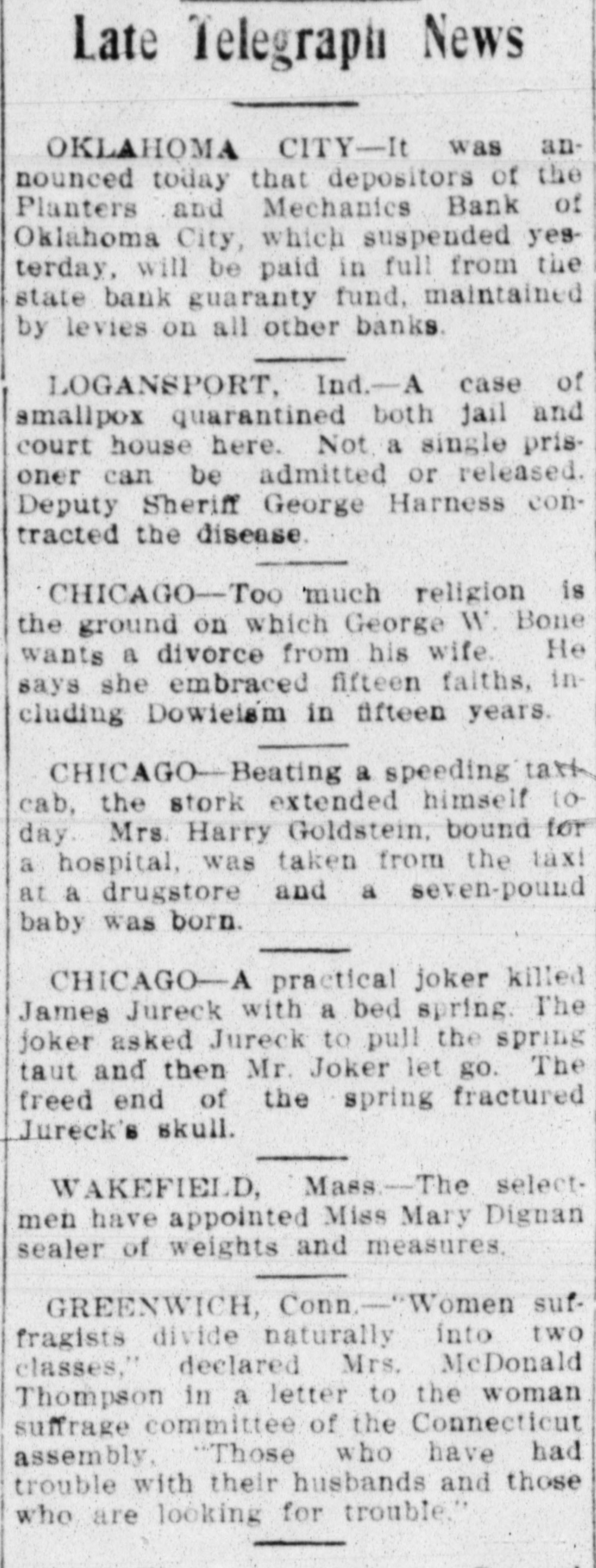
Late Telegraph News OKLAHOMA CITY-It was announced today that depositors of the Planters and Mechanics Bank of Oklahoma City, which suspended yesterday, will be paid in full from the state bank guaranty fund, maintained by levies on all other banks. LOGANSPORT, Ind.-A case of smallpox quarantined both jail and court house here. Not a single prisoner can be admitted or released. Deputy Sheriff George Harness contracted the disease. CHICAGO-Too much religion is the ground on which George W. Bone wants a divorce from his wife. He says she embraced fifteen faiths, including Dowieism in fifteen years. CHICAGO-Beating a speeding taxt cab, the stork extended himself today. Mrs. Harry Goldstein, bound for a hospital, was taken from the taxi at a drugstore and a seven-pound baby was born. CHICAGO-A practical joker killed James Jureck with a bed spring. The joker asked Jureck to pull the spring taut and then Mr. Joker let go. The freed end of the spring fractured Jureck's skull. WAKEFIELD, Mass-The selectmen have appointed Miss Mary Dignan sealer of weights and measures. GREENWICH, Conn.-Women suffragists divide naturally into two classes," declared Mrs. McDonald Thompson in a letter to the woman suffrage committee of the Connecticut assembly. "Those who have had trouble with their husbands and those who are looking for trouble."