Click image to open full size in new tab
Article Text
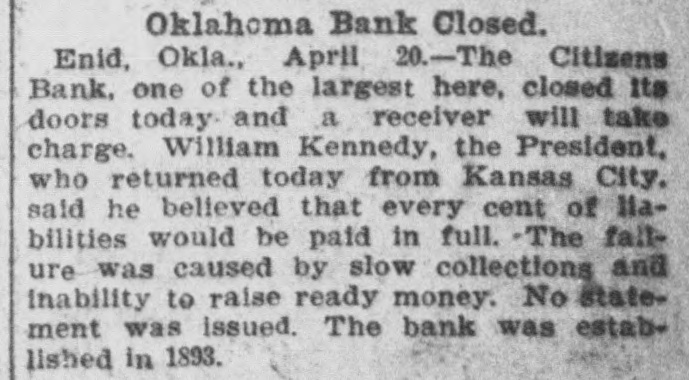
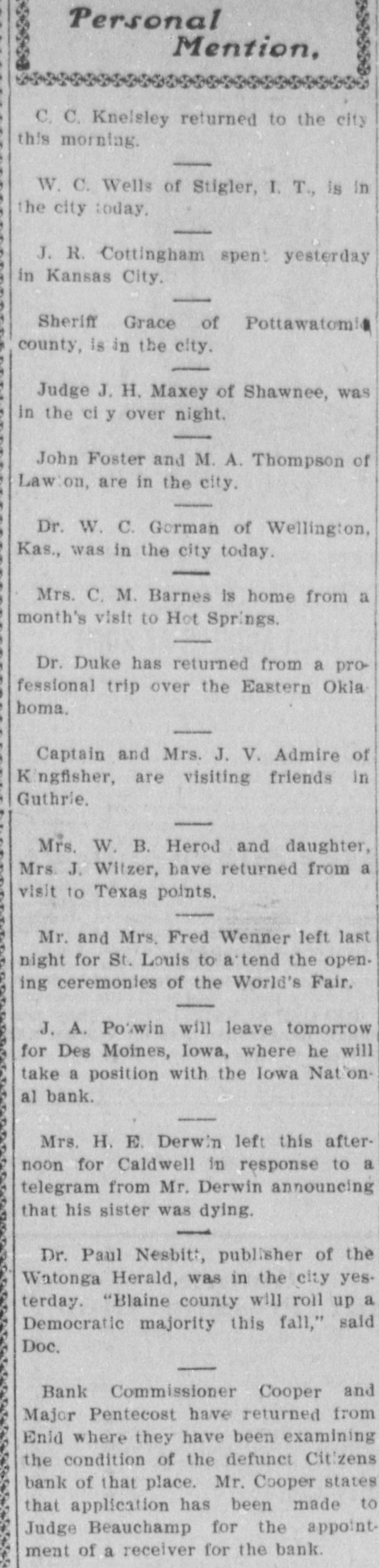
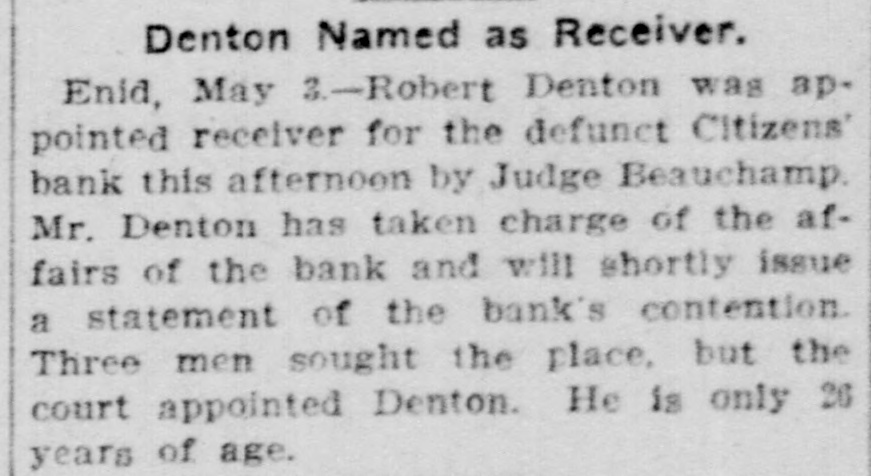
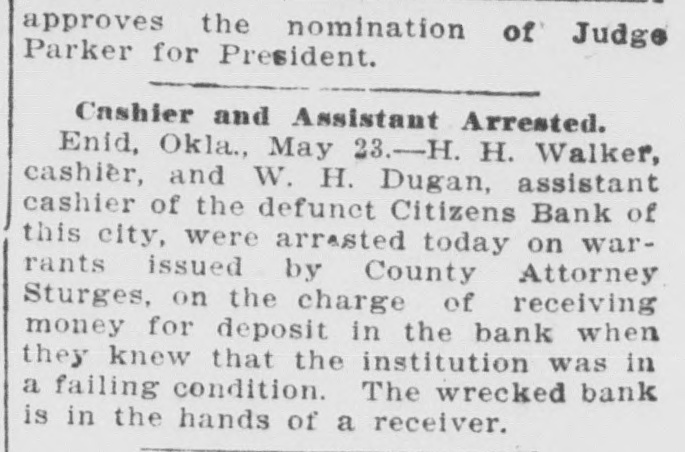
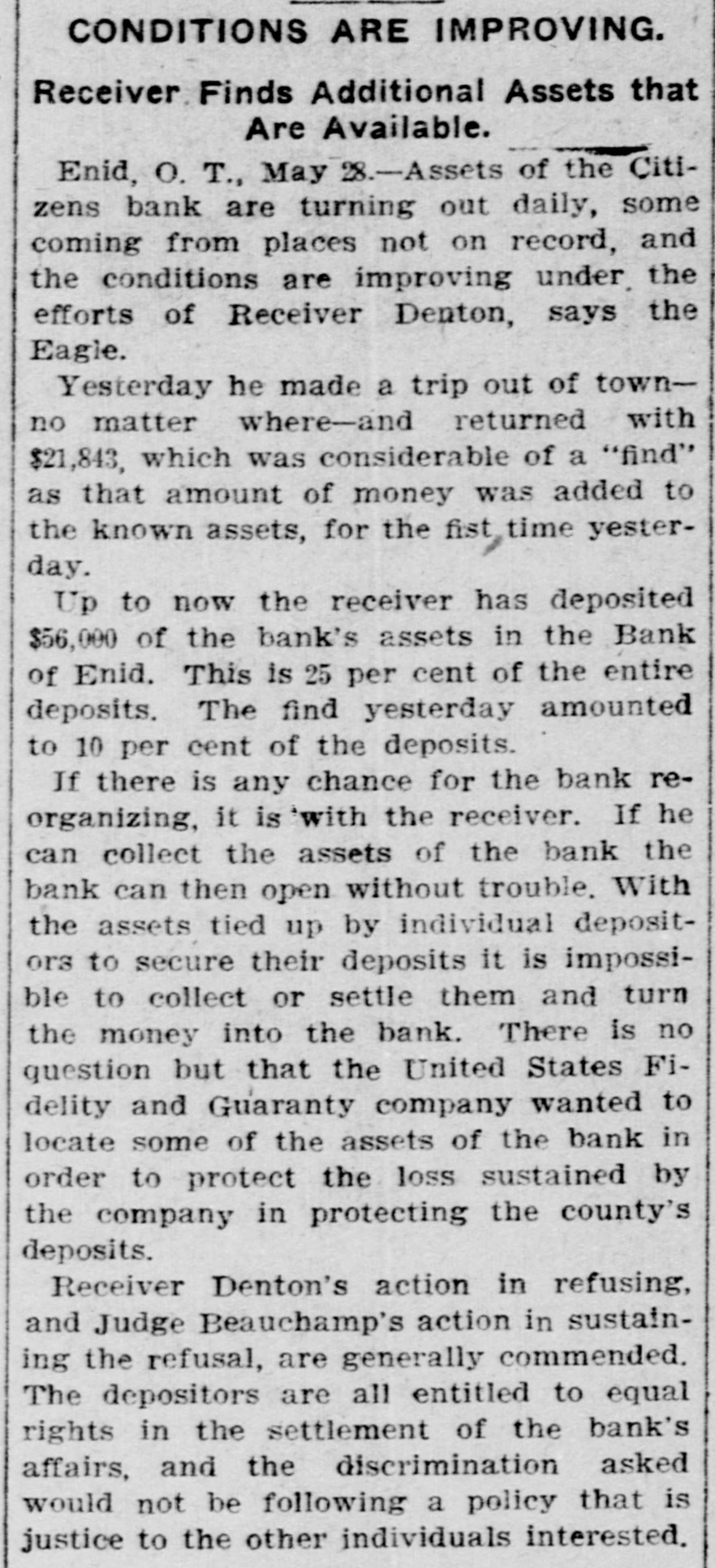
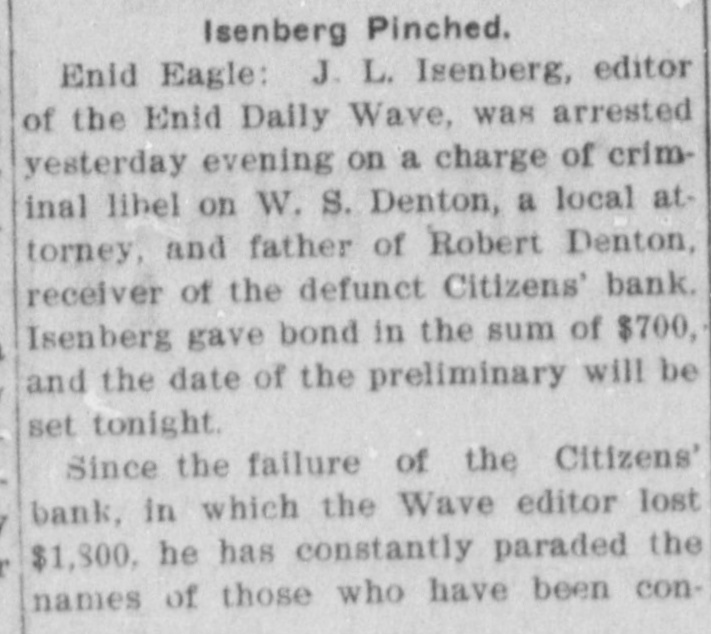
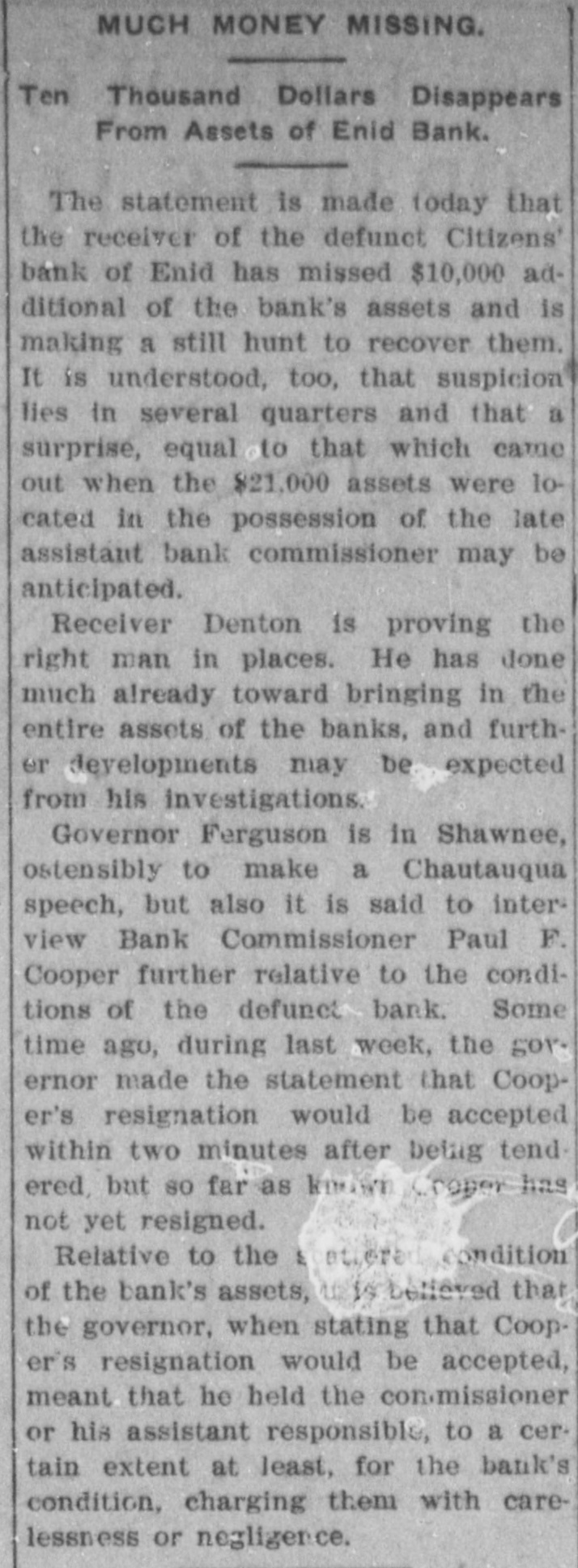
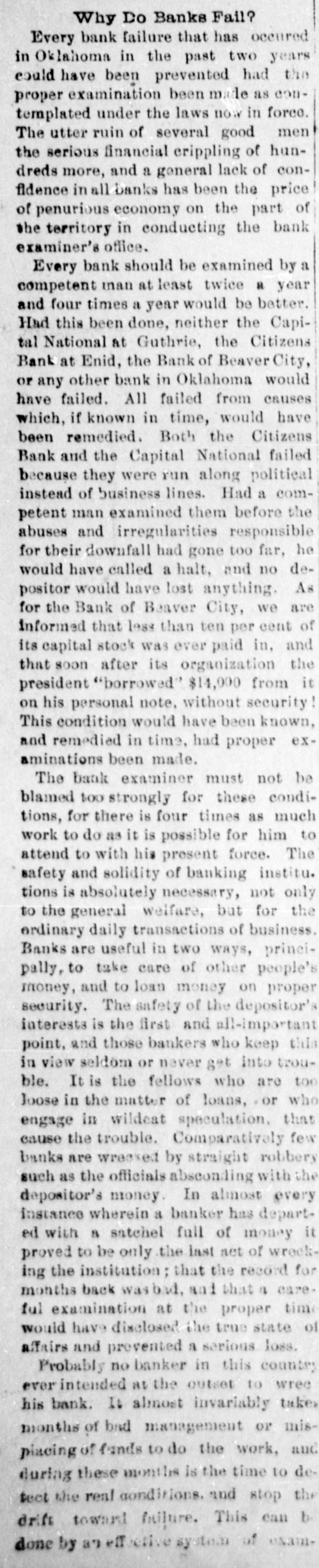
Why Do Banks Fail? Every bank failure that has occured in Oklahoma in the past two years could have been prevented had the proper examination been made as contemplated under the laws now in force. The utter ruin of several good men the serious financial crippling of hundreds more, and a general lack of confidence in all banks has been the price of penurious economy on the part of the territory in conducting the bank examiner's office. Every bank should be examined by a competent man at least twice a year and four times a year would be better. Had this been done, neither the Capital National at Guthrie, the Citizens Bank at Enid, the Bank of Beaver City, or any other bank in Oklahoma would have failed. All failed from causes which, if known in time, would have been remedied. Both the Citizens Bank and the Capital National failed because they were run along political instead of business lines. Had a competent man examined them before the abuses and irregularities responsible for their downfall had gone too far, he would have called a halt, and no depositor would have lost anything. As for the Bank of Beaver City, we are informed that less than ten per cent of its capital stock was ever paid in, and that soon after its organization the president "borrowed" $14,000 from it on his personal note, without security This condition would have been known, and remedied in time, had proper examinations been made. The bank examiner must not be blamed too strongly for these conditions, for there is four times as much work to do as it is possible for him to attend to with his present force. The safety and solidity of banking institu. tions is absolutely necessary, not only to the general welfare, but for the ordinary daily transactions of business. Banks are useful in two ways, principally, to take care of other people's money, and to loan money on proper security. The safety of the depositor's interests is the first and all-important point, and those bankers who keep this in view seldom or never get into trouble. It is the fellows who are too Joose in the matter of loans, or who engage in wildeat speculation. that cause the trouble. Comparatively few banks are wreased by straight robbery such as the officials absconding with the depositor's money. In almost every instance wherein a banker has departed with a satchel full of money it proved to be only the last net of wrecking the institution; that the record for months back was bad, and that a careful examination at the proper time would have disclosed the true state of affairs and provented a serious loss. Probably no banker in this country ever intended at the outset to wree his bank. It almost invariably takes months of bad management or misplacing of funds to do the work, and during these months is the time to defeet the real conditions. and stop the drift toward failure, This can b done by an eff etive sy stem of exam-