Click image to open full size in new tab
Article Text
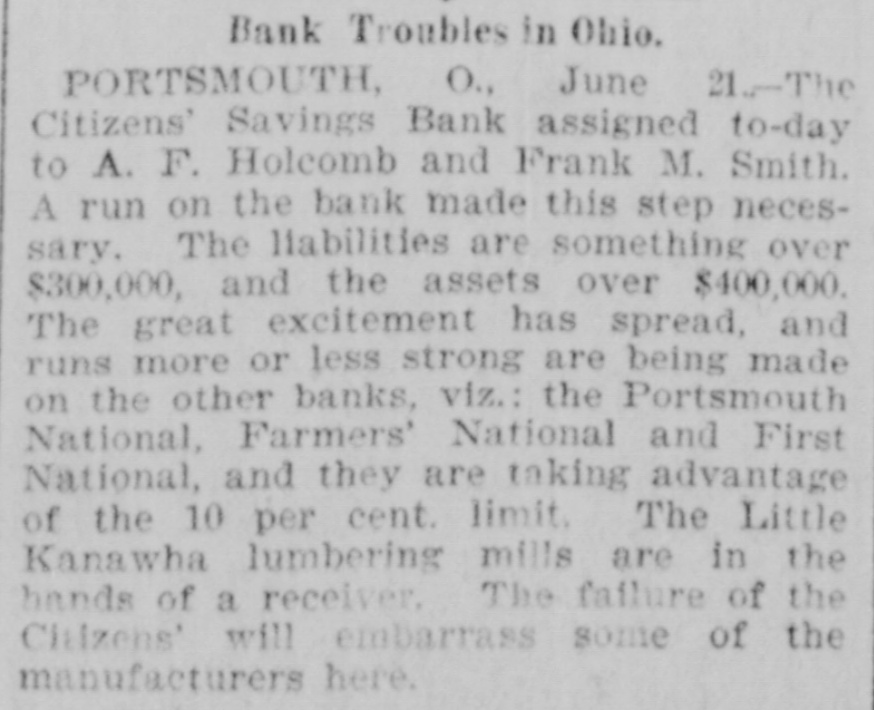
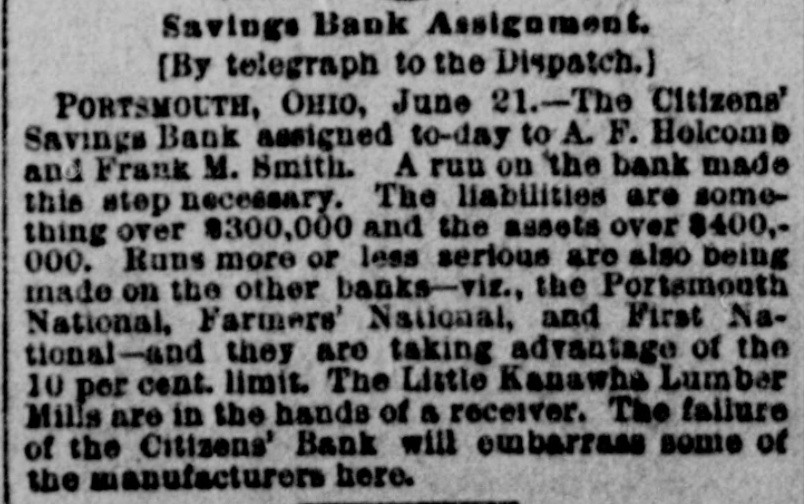
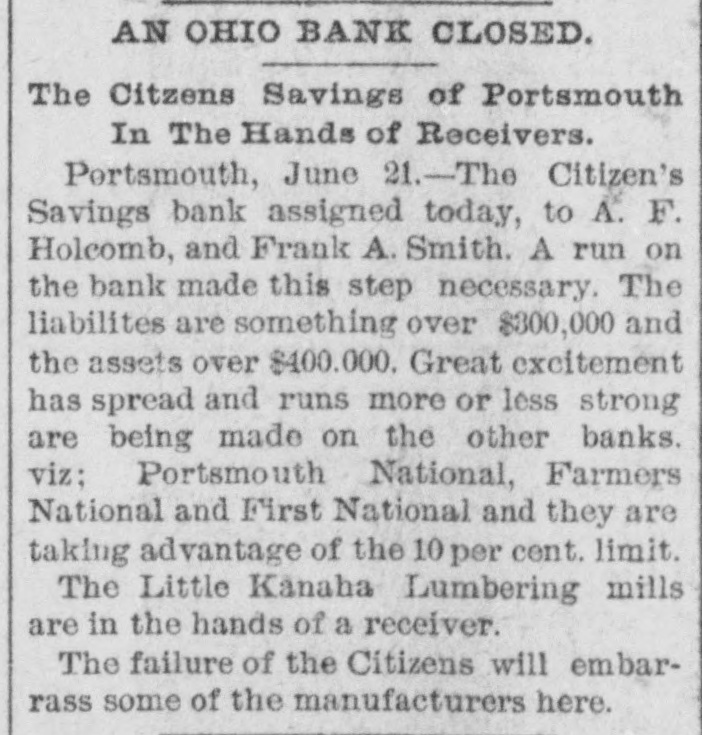
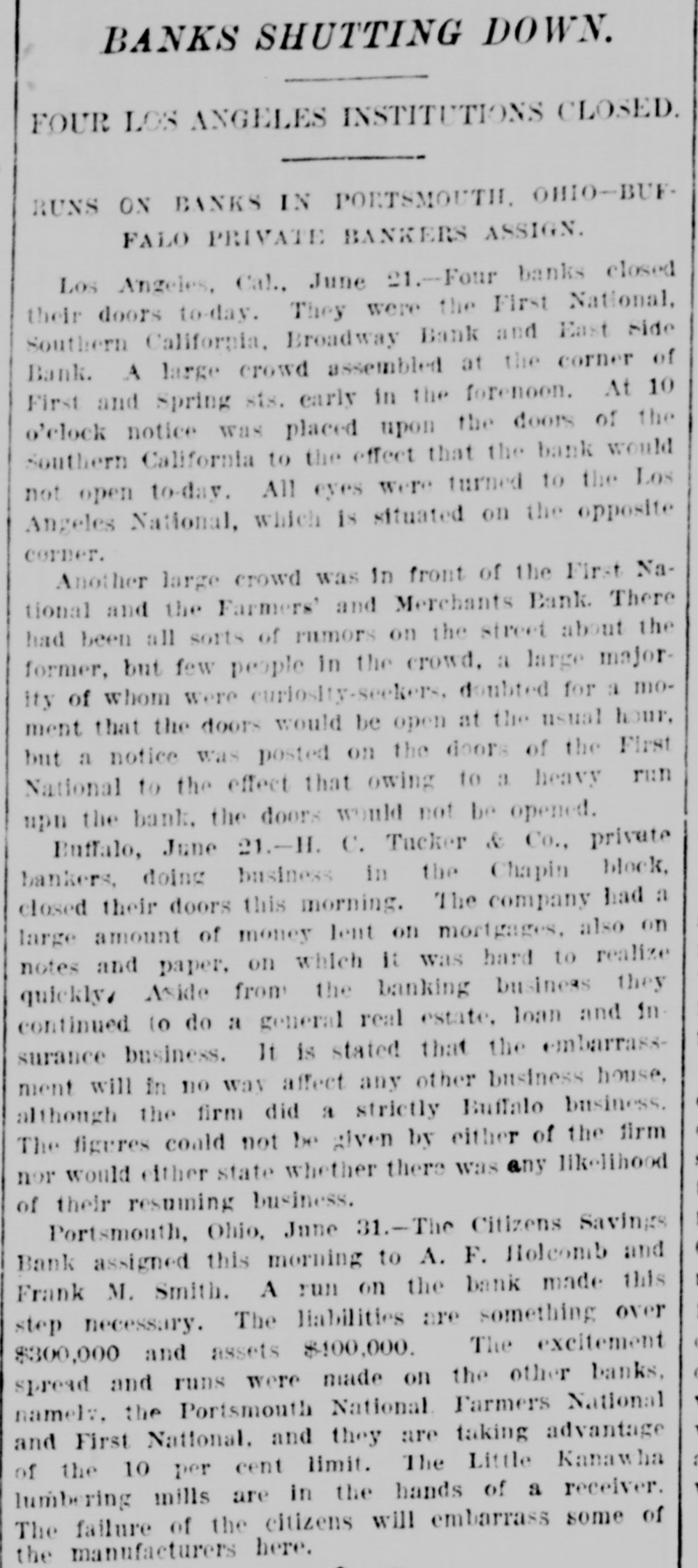
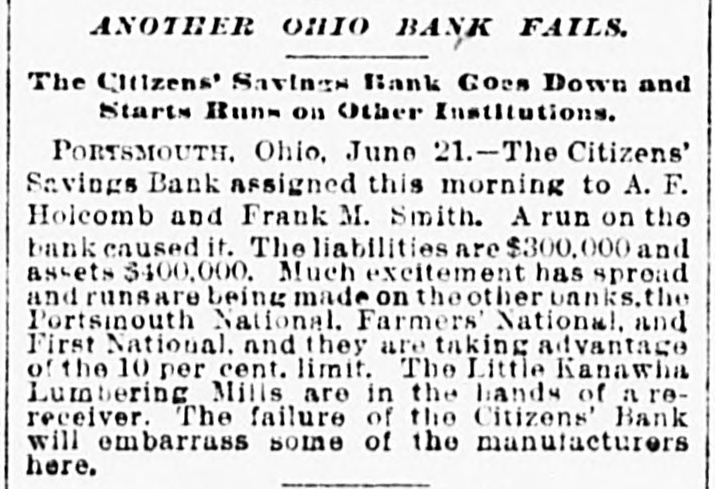
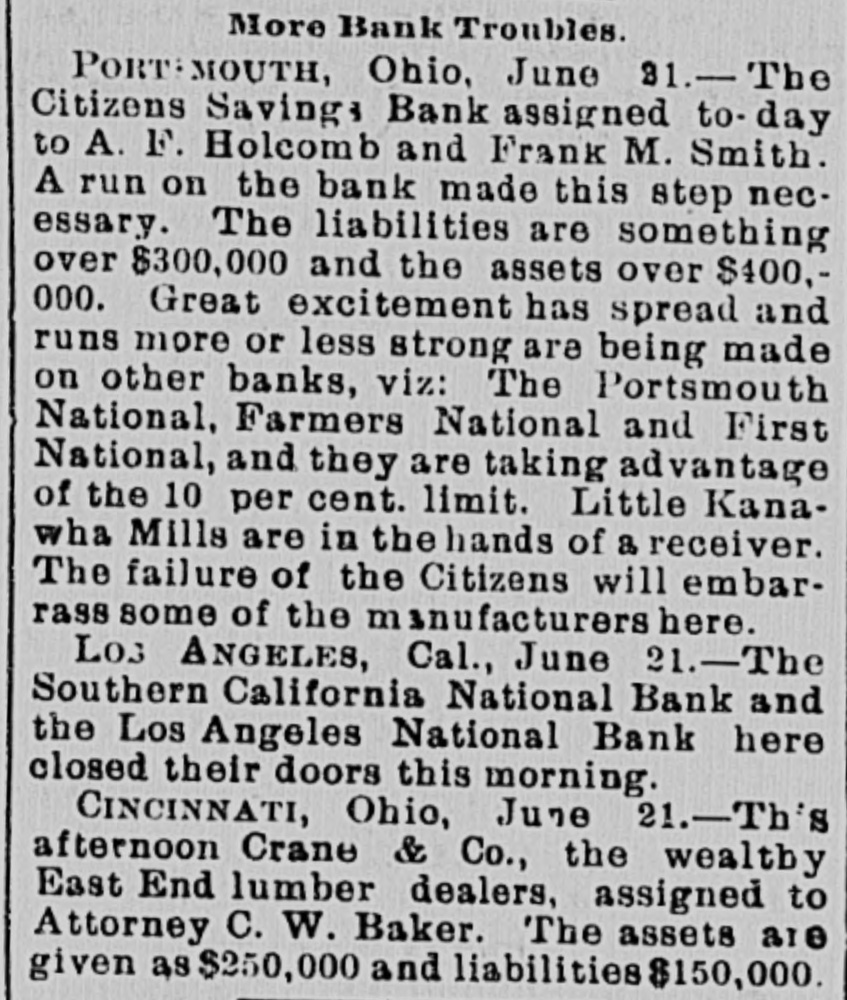
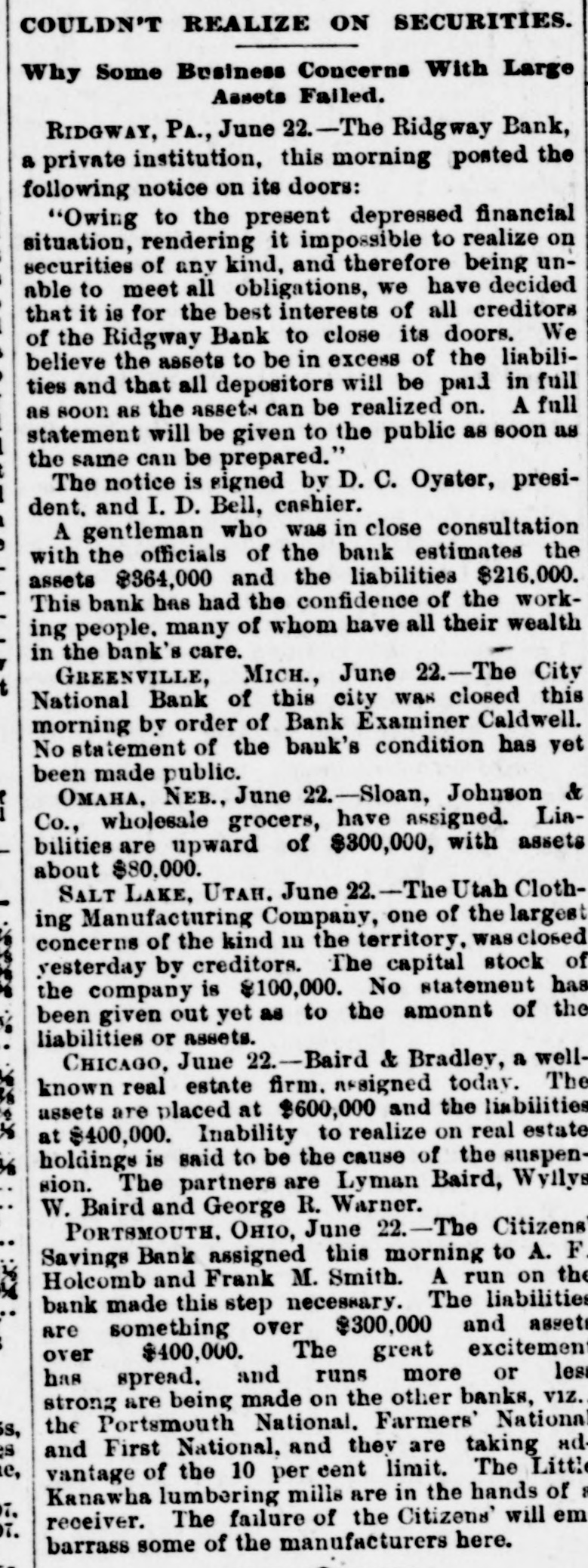
Two of the largest and reputed strongest theatrical troupes in America have gone into the hands of receivers in the past few days "Great prosperity" is no respector of persons. The Cassell Company, the great Eng lish and American publishing concern of New York and London, failed last week. The liabilities are large and the assets cannot be converted into cash at present. WASHINGTON, June 6.-Comproller Eckels to day appointed Robt. M. Ditty receiver of the Citizens' National Bank of Hillsborough, Ohio, and Elisha May, of St. Johnsbury, Vt., an examiner of national banks. FAIRFIELD, III., June 16.-The liabilities of S. Bonham, the banker. who failed yesterday, are in the neighbor hood of $125,008, with assets equal to more than that amount. Iti thought the bank will pay dollar for dollar. E. Bonham's large merchandise store is included in the assignment PORTSMOUTH, Ohio, June 31.-The Citizens' Savings Bank assigned o day to A. F. Halcomb and Frank M. Smith. A run on the bank made this step necessary. The liabilities are something over $300,000 and assets over $400,000. Great excitement has spread and runs, more or less strong, are being made on the other banks, viz: The Portsmouth National, Farmers' National and First National, and they are taking advantage of the 10 per cent. limit. The Little Kanawha Lumbering Mills are in the hands of a receiver. The failure of the Citizens' Bank will embarrass some of the manufacturers here. ASHBORO, June 21.-J. A. Wall, a merchant at Sophia, assigned to day, R. R. Ross, trustee. This is the third assignment in Randolph in fifteen years. Los ANGELES, Cal., June 21.-The Southern California National Bank and the Los Angeles National Bank here closed their doors this morning. EUGENE, Oregon, June 20 -The Lane County Bank temporarily suspended to day. It has plenty of property in sight to secure all depositors. CORVALLIS, Oregon, June 20.-The creditors of Hamilton, Job & Co., bankers, who failed a week ago, held a meet ing yesterday. The receiver made a statement showing the total assets to be $195,000. A deduction of $62,000 for doubtful overdrafts and bills receivable leaves available assets of $133,000 The liabilities are $224,000. An assignment has been made for the benefit of the creditors. TOPEKA, Kansas, June 20.-TheState Bank Commissioner yesterday ordered the State Bank of Plainville closed. The capital stock is $50,000, but the amount of liabilities is not obtainable. The officers of the bank say that depositors will be paid in full. PITTSBURG, Pa., June 19.-The Oil Well Supply Company, with assets of $2,500,000 and liabilities of $1,000,000, was totally unable to meet its indebted ness to day, and to prevent forced sales and a waste of property had to seek of the courts. John Eaton, of company, was appresident the aid the pointed receiver by Judge A. Cheson, of the United States Circuit Court. BOSTON, Mass., June 16.-Winkley, Dresser & Co., the Milk street stationers, made an assignment to-day to Francis Doane, a well-known stationer. The liabilities are $150,000 and the assets somewhere in the same neighborhood. PHILADELPHIA, Pa., June 16.-The Reading Rolling Mill Company yesterday made an assignment for the benefit of creditors to Joseph R. Cofrode and Lllis Ames Ballard. BUFFALO, N. Y. June10 6.-The Genesee Oil Works, limited, have made a general assignment. The liabilities of the company are about $300,000. The cause of the assignment was the inability to meet several large notes when they became due or to have them extended. THE EATON, COLE AND BURN-