Article Text
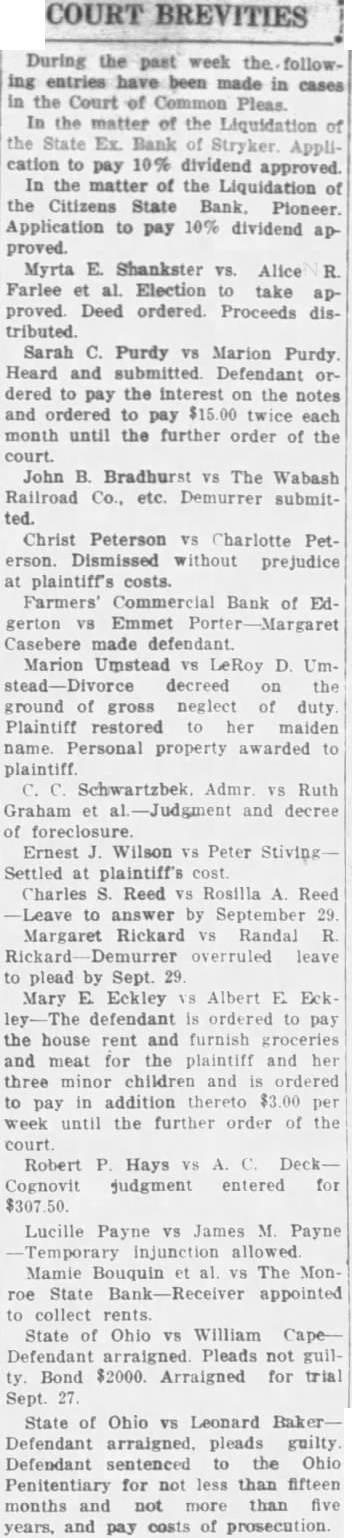
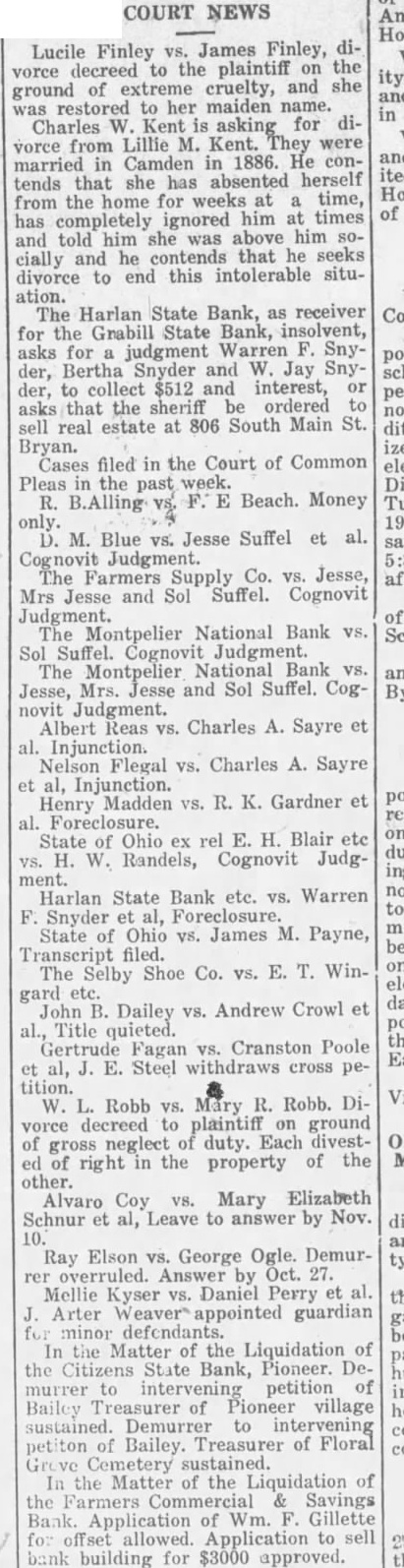
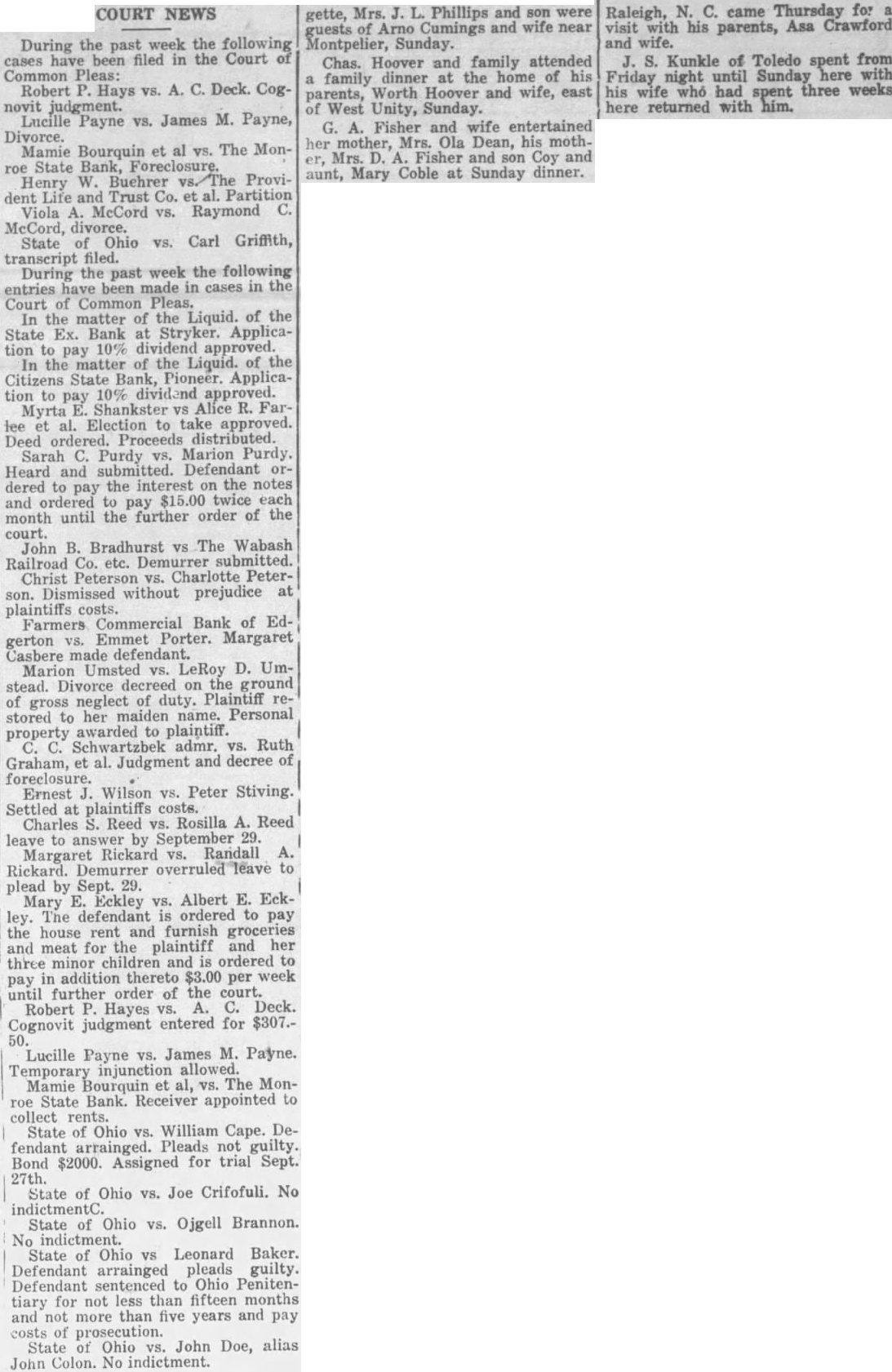
COURT NEWS During the past week the following cases have been filed in the Court of Common Pleas: Robert P. Hays vs. A. C. Deck. Cognovit judgment. Lucille Payne vs. James M. Payne, Divorce. Mamie Bourquin et al vs. The Monroe State Bank, Foreclosure. Henry W. Buehrer vs./The Provident Life and Trust Co. et al. Partition Viola A. McCord vs. Raymond C. McCord, divorce. State of Ohio vs. Carl Griffith, transcript filed. During the past week the following entries have been made in cases in the Court of Common Pleas. In the matter of the Liquid. of the State Ex. Bank at Stryker. Application to pay 10% dividend approved. In the matter of the Liquid. of the Citizens State Bank, Pioneer. Application to pay 10% dividend approved. Myrta E. Shankster VS Alice R. Farlee et al. Election to take approved. Deed ordered. Proceeds distributed. Sarah C. Purdy vs. Marion Purdy. Heard and submitted. Defendant ordered to pay the interest on the notes and ordered to pay $15.00 twice each month until the further order of the court. John B. Bradhurst vs The Wabash Railroad Co. etc. Demurrer submitted. Christ Peterson vs. Charlotte Peterson. Dismissed without prejudice at costs. plaintiffs Farmers Commercial Bank of Edgerton vs. Emmet Porter. Margaret Casbere made defendant. Marion Umsted vs. LeRoy D. Umstead. Divorce decreed on the ground of gross neglect of duty. Plaintiff restored to her maiden name. Personal property awarded to plaintiff. C. C. Schwartzbek admr. vs. Ruth Graham, et al. Judgment and decree of foreclosure. Ernest J. Wilson vs. Peter Stiving. Settled at plaintiffs costs. Charles S. Reed vs. Rosilla A. Reed leave to answer by September 29. Margaret Rickard vs. Randall A. Rickard. Demurrer overruled leave to plead by Sept. 29. Mary E. Eckley vs. Albert E. Eckley. The defendant is ordered to pay the house rent and furnish groceries and meat for the plaintiff and her three minor children and is ordered to pay in addition thereto $3.00 per week until further order of the court. Robert P. Hayes vs. A. C. Deck. Cognovit judgment entered for $307.50. Lucille Payne vs. James M. Payne. Temporary injunction allowed. Mamie Bourquin et al, vs. The Monroe State Bank. Receiver appointed to collect rents. State of Ohio vs. William Cape. Defendant arrainged. Pleads not guilty. Bond $2000. Assigned for trial Sept. 27th. State of Ohio vs. Joe Crifofuli. No indictmentC. State of Ohio vs. Ojgell Brannon. No indictment. State of Ohio VS Leonard Baker. Defendant arrainged pleads guilty. Defendant sentenced to Ohio Penitentiary for not less than fifteen months and not more than five years and pay costs of prosecution. State of Ohio VS. John Doe, alias John Colon. No indictment. gette, Mrs. J. L. Phillips and son were guests of Arno Cumings and wife near Montpelier, Sunday. Chas. Hoover and family attended a family dinner at the home of his parents, Worth Hoover and wife, east of West Unity, Sunday. G. A. Fisher and wife entertained her mother, Mrs. Ola Dean, his mother, Mrs. D. A. Fisher and son Coy and aunt, Mary Coble at Sunday dinner. Raleigh, N. C. came Thursday for visit with his parents, Asa Crawford and wife. J. S. Kunkle of Toledo spent from Friday night until Sunday here with his wife who had spent three weeks here returned with him.