Click image to open full size in new tab
Article Text
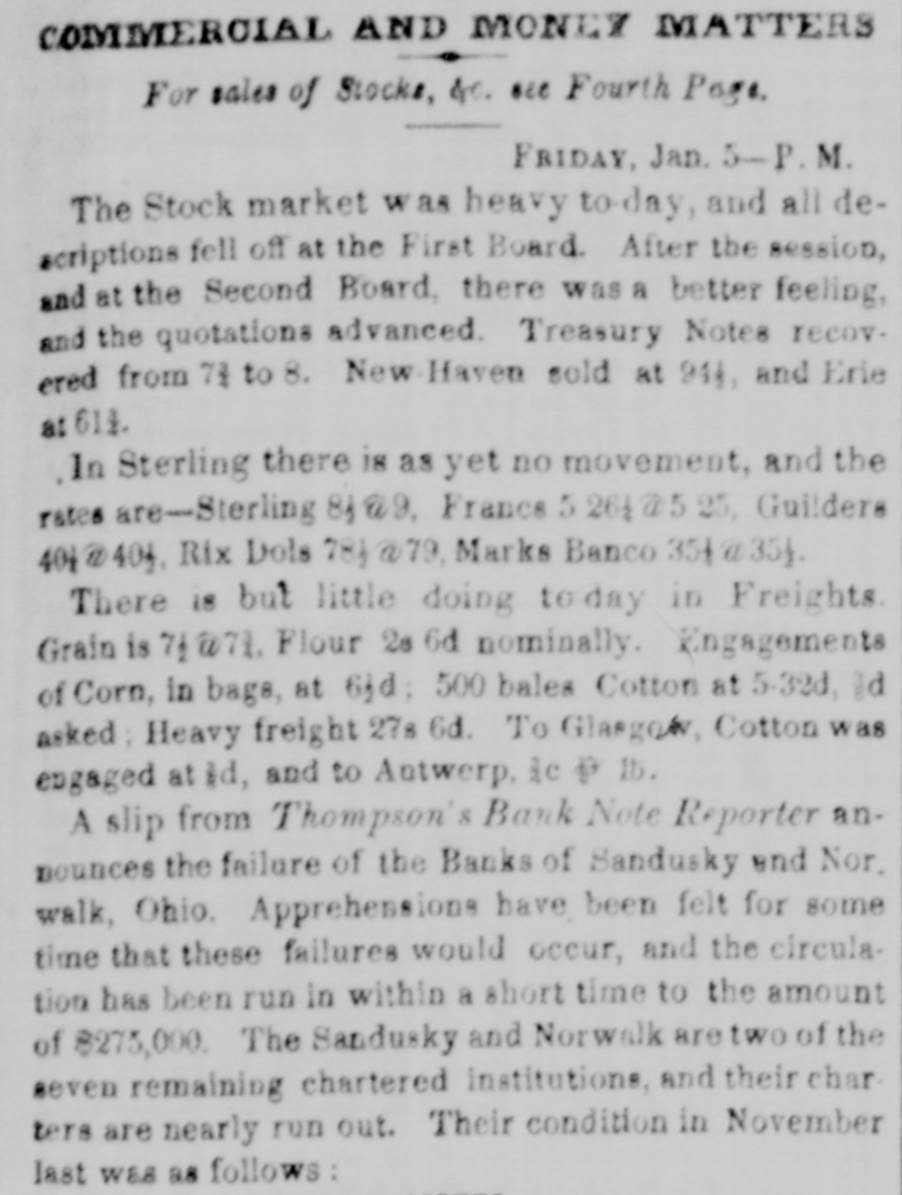
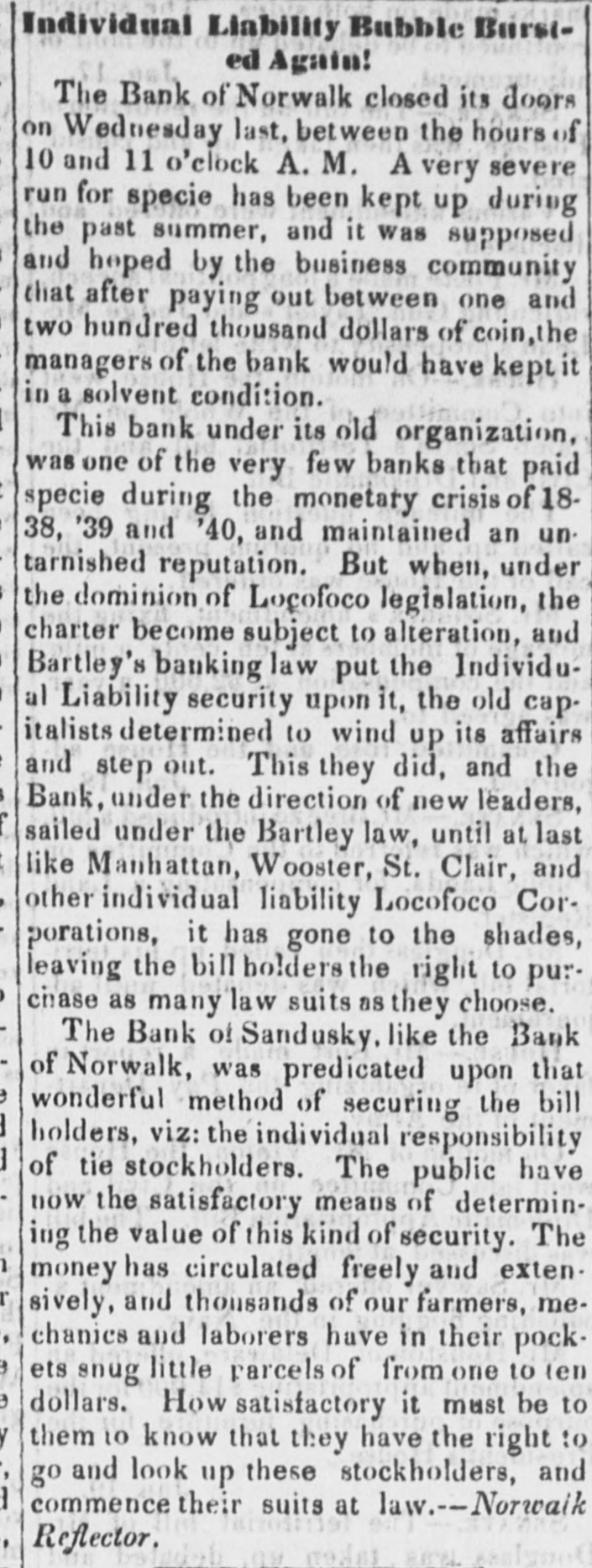
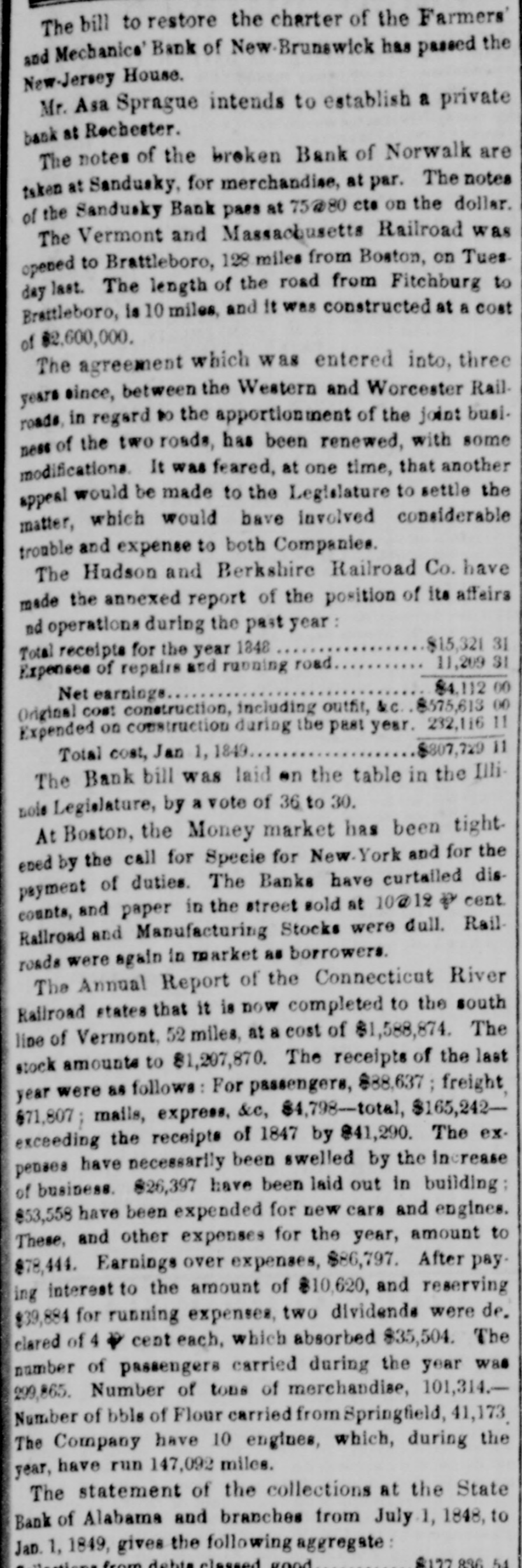
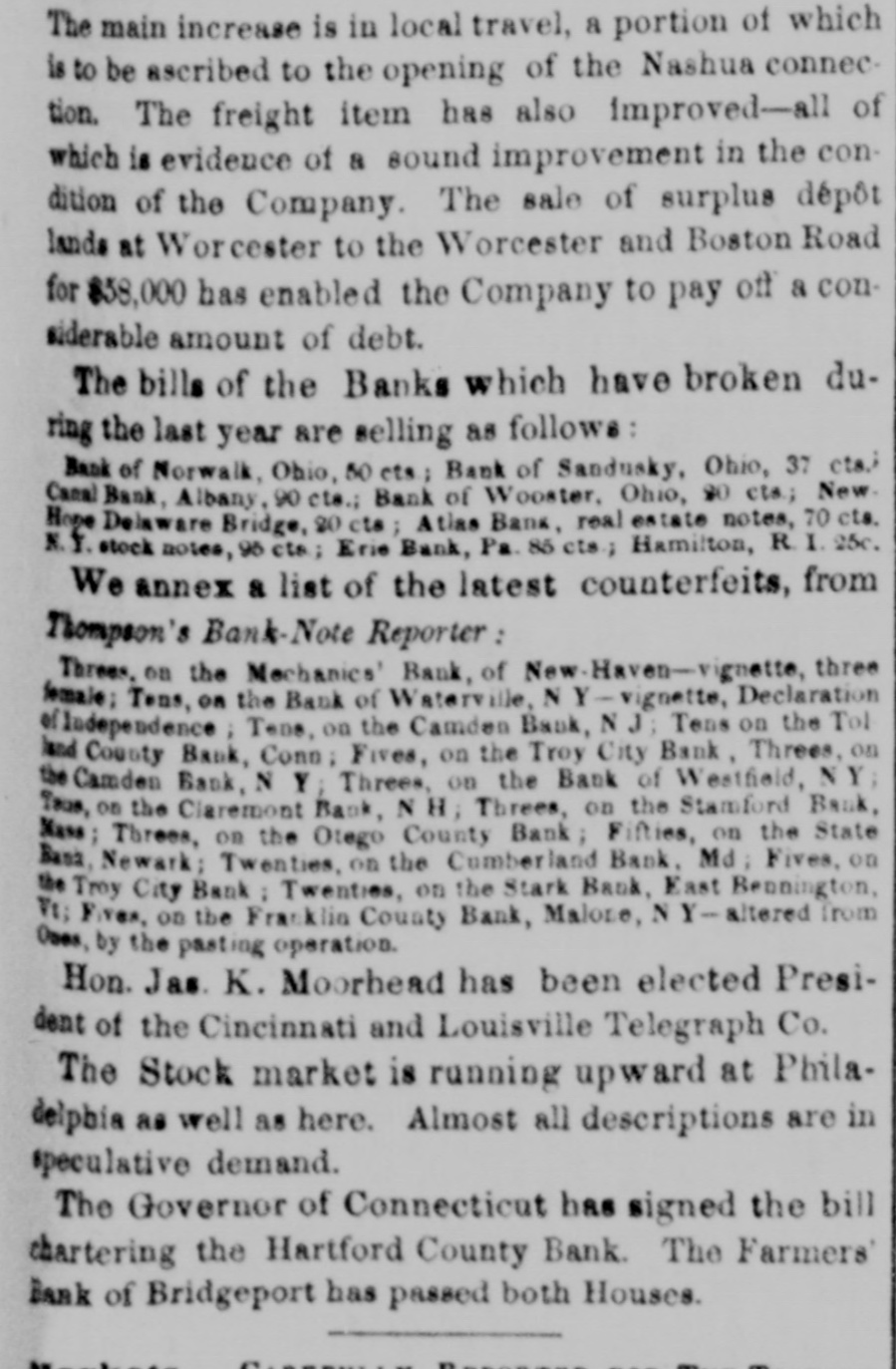
de Bank of Xenia do Bank of Zanesville do Beltnont Bank of St. Clairsville do Columbiana Bank of New Lisbon Commercial Bank of Scioto, Portsmouth Commercial Bank of Lake Erie, Cleveland do Farmers and Mechanics Bank, Steubenville do Franklin Bank of Columbus do Franklin Bank Cincinnati do Mechanics and Traders' Bank, Cincinnati de Muskingum Bank, Putnam BROKEN BANKS. 10 dis Bank of Hamilton 50 die Bank of Norwalk 70 dis Bank of Sandusky 80 dis Bank of Wooster All other banks either broken or fraudulent. COUNTERFEITS ON OHIO BANKS The following is a list or counterfeits on the vent banks of this State. We have deemed it: useless to publish the counterfeits on those banks whose charters have expired, or which have failed. Bank of Massillon-I's vignette steamboat and railroad cars, which is not on the genuine. 10's, new issue; unlike the genuine; vignette steamboat, s'oop and ship undersail City Bank of Cleveland, Cleveland.-3's, the fig ure 3, across the bill is not distinct. Clinton Bank of Columbus-10'saltered from2's easily detected. Commercial Bank of C'incinnati-3's letter A beautifully executed. and likely to deceive the best judges. In the centre of the nate a large figure 3, the medallion part of which, in the genvine. is beautifully wrought, whilst in the counterfeit, it is faint and but partially tormed. No. tice also, that the female upon the left of the bill in the genuine has a string of beads aronnd her neck, the counterfeit has no beads. The genuine notes of the old bank of this name having been mostly all redeemed, it will be best to refuse all notes dated previous to 1845. Dayton Bank letter A. regularly countersigned by the Register. It is half an inch shorter than the genuine The flourish over the letter A" should be the same as over "No." in the counterfeit it is just the reverse-engraving inferior to the genuine Franklin Bank of Zanesville, Zanesville.--3's, letter A; the figure 3 across the bill is very indistinct Lafayette Bank-1's vignette a steam boat; on the left an Indian holding up his right hand. 5's, letter C., badly executed. Cashr's name engraved whale face of the bill lighter than genuine 5's, let. B., vig signers of the Declaration of Independence, most beautifully engraved, and good paper. Gano, Cashier: Carlisle. President. Observe the head of Lafayette; in the genuine there is flourish or hair stroke, which is delicate and nearly touches the marginal border in which the head is encircled, whilst in the counterfeit it is coarse breaks off abruptly, and lacks the 16th of an inch of touching. Notice also the flourish above the word Cashiet which, in the genuine turos up and nearly touches the word Cincinnati whilst in the counterfeit it turns down. 10's. spurious They have for vignette view of the ocean, and an eagle resting upon a shell. 10's letter vignette an eagle standing in a car, wings expanded. The engraving good, but paper bad. The bank has DO such plates. 10' spurious. The vignette is two children seat ed, on the right end a full length portrait of Gen. La Fayette Payable to H. Peachen, Thomas String and other persons, and of different dates. The medallion head, with the word TEN stamped on it is very rough and indistinct. 10'3, letter B. dated January t 1845. W. w Gano, cash., with pale ink, G. Taylor Prest. Paper rather dark general appearance good. 20's, close imitation of genuine;let. B. dated Jan 4, 1844, pay C. Conahan: the toes of the female in the vignette imperfect, and the right hand of the Indian on the left end of the bill imperfect. 100's spurious. The genuine bills have ared back. Ohio Life Insurance and Trust Co. 5's, spuri. ous. Vignette a drove of cattle and a locomo. tive and cars in the distance. Sandusdy City Bank-3's letter A. Description about the same the description of the counter: feit 3's on the Commercial Bank of (Cincinnati. State Bank of Ohio-5's, engraving coarse. The bill contains the red back: and on the back of the genuine it reads State Bank of Ohio; on the counterleit it reads State of Ohio. 3's. 5's and 10's, alt from l's and 2's; hold them up to the light and the alteration can be detected 100's, none higher than 50's issued. 1's, letter D, imitation of genuine, engraving course; apparently lithographed; signatures lithographed; filling and date very pcorly done. 5's, letter B payable at the Union Bank, Massil lon. Paper and engraving course 5's, poorly done. The head of Franklin.on the left end of the bill is badly engraved and the left ayo is omitted 10's, vignette a man on the left and a female on the right; railroad cars in the distance on the left; large X in the centre of the vignette eagle at the bottom. The words State Bank of Ohio' larger than the genuine 10g, general appearance calculated to deceive, but ou examination and comparison with the genuing, will be found crude, and imperfect in detail. The prominent figures in the counterfeitare lacking in expression and careful minute, ness. Faces, hands, implements, &c., in the central vignette, are blurred and indistinct. Portrait of Gen. Harrison on left hand end, ob. scure and undecided; in the genuine the figure is distinctly relieved from the back ground, the coat showing dark in color against it The dog's head on the bottom part, between the signatures, is rough and coarse, and the scrolls containing the words "Mutual Liabily' on eith. side, are faint. and smaller than the genuine. The figure of Minerva on the right side, perhaps one of the best tests of comparison; in the genuine, the spear in the right hand of the figure, touches the letter T in Ten. above; while in the counterfeit it is midway between the letters T. and E: and on the breast-plate face is distinctly seen in the centre. The word Ten, under the figure, is pale and weak in sbad. ing, but dark and plain in the genuine. 1s, various branches: a good imitation. Detest by the star or_areola (on the back) at the end of the bar enclosing the words "State Bank of Ohio;" being set in the centre asquare block, which is not so in genuine Western Reserve bank-10's letter D. (Murray, Draper & Fairman's plate,) badly executed. Date unknown. The wor is Western Reserve Bank on the left, and 'Ohio' on the right margin; on the genuine notes they are the reverse. Signed Zalman Fitch. ono OTHER BANK PAPER. The principal part of the circulation in this see. ion of the State, in addition to Okio paper, is on he banks of Indiana, Kentucky, Western Penn2 ylvania, and Wheeling, Va., which passes.gener.