Click image to open full size in new tab
Article Text
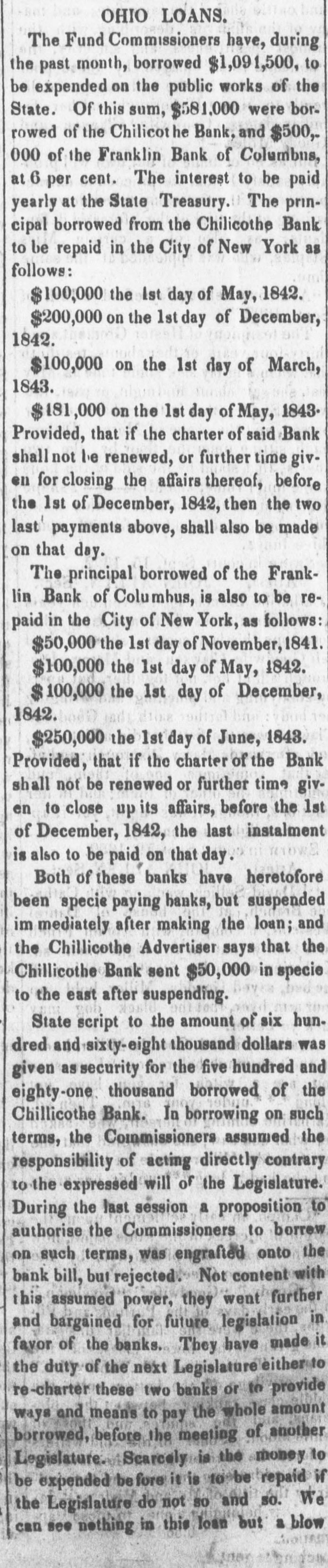
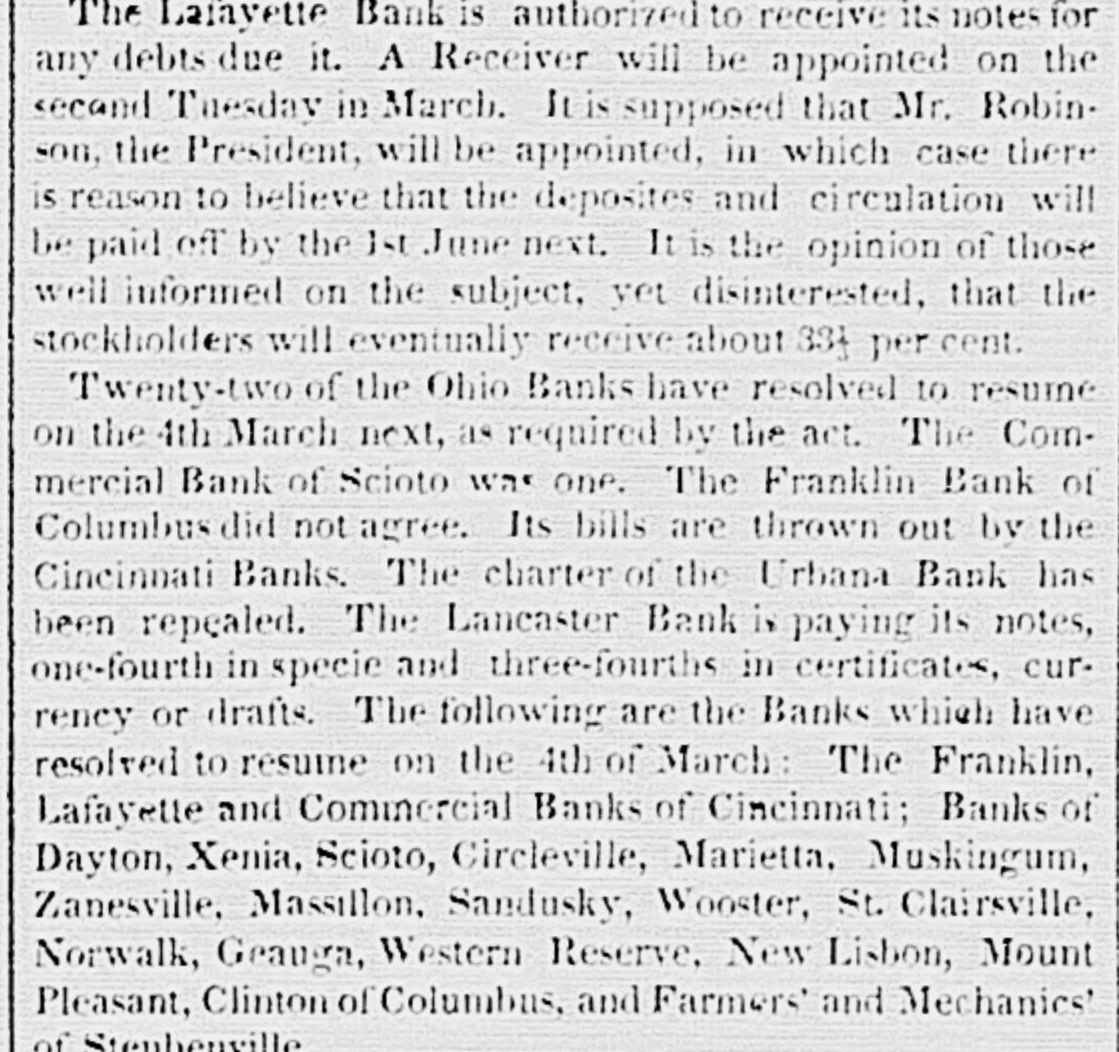
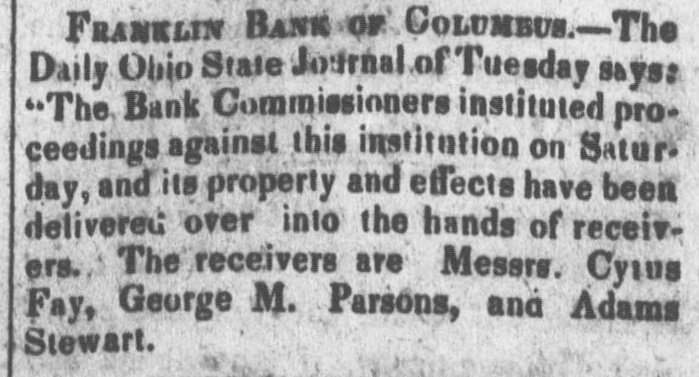
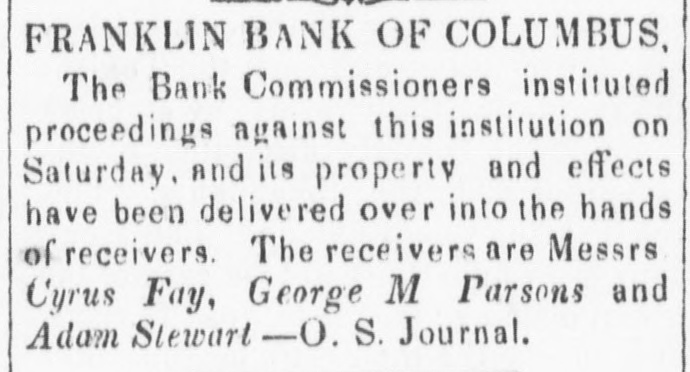
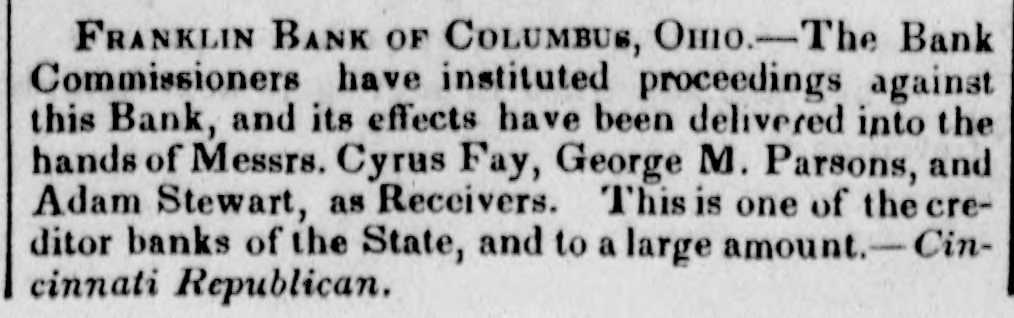
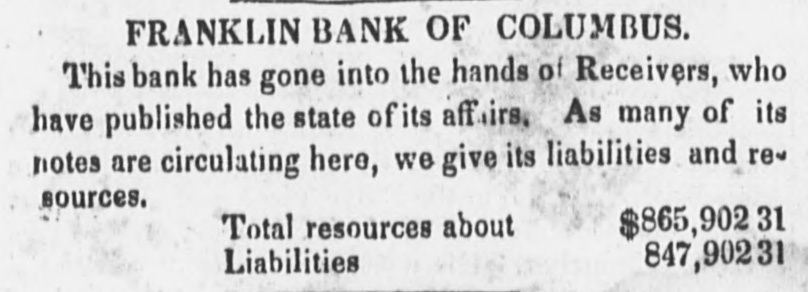
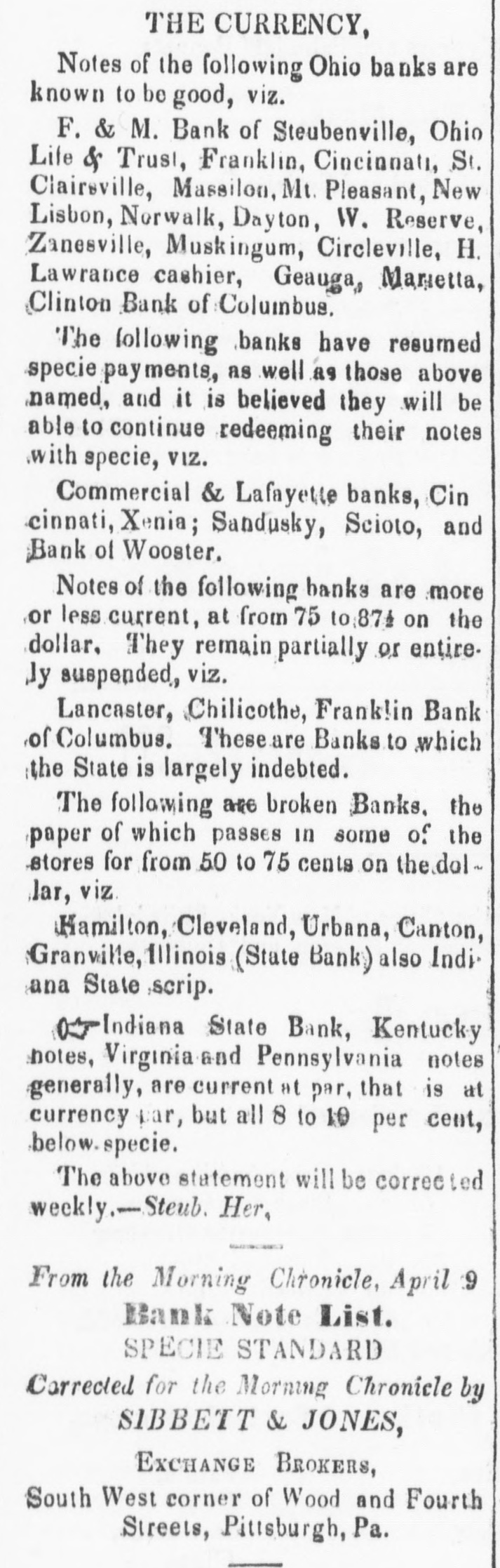
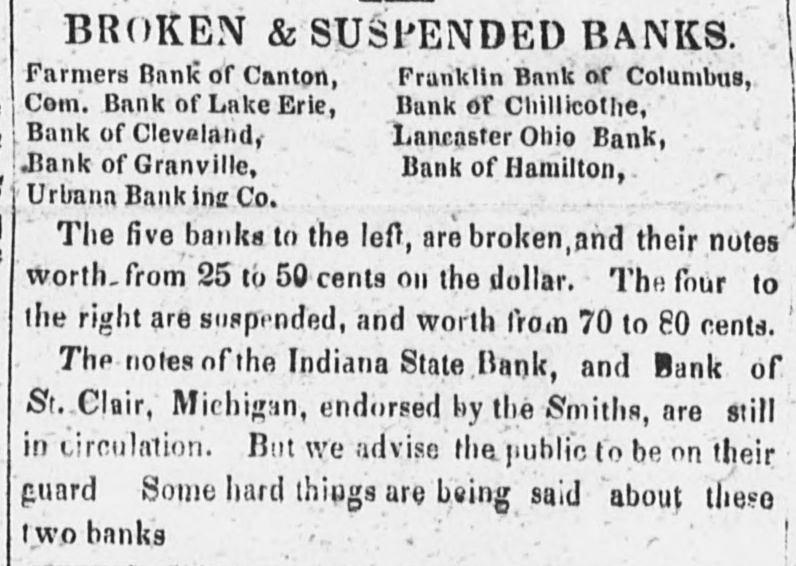
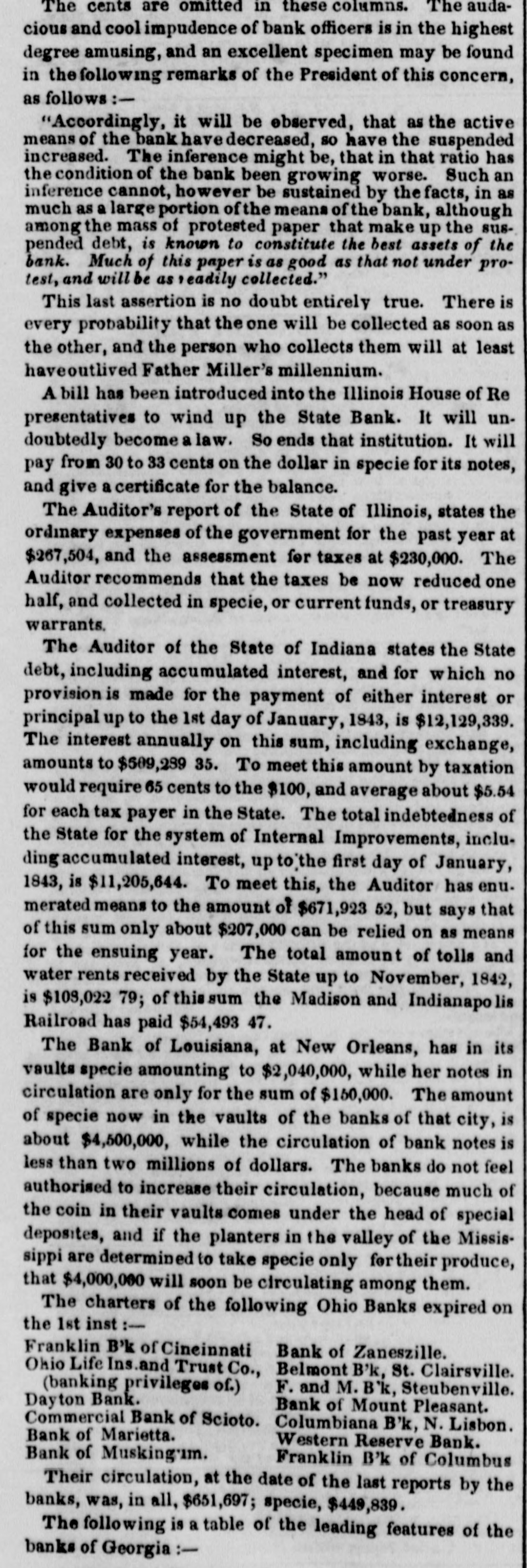
MONEY MARKET. Sales at the Stock Exchange, Sept. 16. cash 8: 25 Harlem R 1100 Sd 84 do cash 843 33d 50 do cash State 75 NY 200 Long 1s! bsod Com 100 92 scrip. b30d 50% 92 cash 100 Hariem 30d 18 Farmers' Loan do 504 s10d 150 cash 36 Mohawk R b30d 50 do $60d 50% SECOND BOARD. 25 Mohawi E 66 do b30d 364 25 Commercial and AVE oncy Watters P. M. FRIDAY There was rather more doing to-day, but no improv ment in prices. Delaware was beavy and dec lined 11 per The sales of Long Island on time. Harlem steady. Mohawk fel off per cent. the last The only sale of Stock Stocks was 3.000 Keatucky Sixes same last sale. For State Sevens 993. terest 1862, asked. Fancies firm The transac tions were$3000 Kentucky Bonds. Sixes for the firmly The Foreign Exchange market closed has steamer at Boston. The amount of very large. Sterling 7 Francs 5.32c, with bills higher. Amsterdam 39 391; Hambarg 35 S5 Bremer 751 a 76. Mobile is rather heavier to day and more off ring. North 28 Mobile for other branches. Virginia at 11 discount. The brokers buying Bank Lyons notes at 25 a 30 per cent. discount. There is another Bank belonging to waak cliqueas the Bank of Lyons which is which the brokers generally have confidence. If it should called upon for what owes the State would probably by the board, like the other. There in the street for United States Bar notes, some sales have been made at 41 cents on the dollar. Treasury Notes are quoted at par and 14 discount. None of the notes authorized by the late act of Congress have ap. peared The Receiver of the Lafayette Bank has given notice that all debts due by be paid on presentation at his office. 31 Wall-street, on and after the 19th inst. We noticed few days since, the Farmers' and Mechan. ics' Bank of Rochester stating the circulation not secured. We have seen o-day some new notes of this the face New. arked OR secured by are Bank, which York per cent. stocks. These notes are no doubt well secured and perfectly safe. The American says that the State debt of Alabama, instead of being $15,000,000, as is generally supposed, only $9,874,550, payable from 1844 to 1866, bearing an annual in terest, including exchange, of 8526,341, or 51 per cent. This the State can be called upon to pay, even in case of total loss of the capital of the State Bank and branches. The entire receipts of the United States from 1789 to 1840 were $1,112,076,586. The entire expenditures were $1,082, 113,422. of which $436,700,648 were on account of public debt. Business in stacks is dull at Philadelphia The Banks are of ineans, and discoant all the good business paper offering The following stocks sold in Boston 103 per cent. ad shares Boston and Worcester Railroad vance; 20 do Western Railroad, $641 a 641 shares; Boston and Maine Ra ilroad, 79 pershare do Boston do Eng $500 : New 8115-par Company change Bank,971; 7 do Atlantic Bank. 864: do Eagle Bank Neponset Bank, 4do Methuen Manufactur Company,2 Jassachusetts Fives. 1857, offered but not sold, only 83 being bid. Demands belonging estate of Grant, Seaver & Co. to the amount $76,000, for ciniling $4,400 dema against the United States, sold $1,532.5M The Franklin Bank of Columbus, Ohio, is again on its legs, having reco from the embarrassment arising out of its loan to the State. On the 7th inst. had $85,278 Cirspecie $20,000 funds New-York Bank notes $11,536. culation $187,332 D reposites $79,145. The principle of Metual Insurance has been adopted in Baltimore. The Bahimore Insurance Company is winding up, and in its place the Atlantic Mutual Company has been organized. At Cincinnati, Exchange on New-1 York had declined 10 21 premium. At Louisville the Banks were drawing for customers in small sums 1 premium. The supply out of doors was 85 equal to the demand. Kentucky SO year Bonds 75 Scrip 70. The Savannah Re that is informed that, Central Bank, while in New-York lately, the agen in in-order to pay the interest upon the State bonds due land, deposited two dollars for one in the bills of that Bank. and agreed to pay at the rate of twenty percent. per annum for ninety days, until the deposite was redeemed. Whether the sum deposited was to be forfeited if not redeemed in the ninety days, our informant did not learn. Markets Carefully reported for The Tribune. ASHES.-There are no new bills out to-day, and some of the lots offered yesterday remain unsold, some of holders ab.ut sales of We hear rates. current relove 100 bbls. Pots at $5 874, and 40 to 50 obis. Pearls 62A.The receipts are rather limited, as is usual during this month. The market cannot be considered very firm, although Pots are in pretty fair demand the quoted rate. noticed before as market continues, COTTON.-T quiet, with sales to-day of 250 to 300 bales at previous rates. The stock on the market for sale one reason for the small operations, and also has the effect keep holders firm. of The stock is estimated at about 8,000 bales. A portion the Cotton being shipped goes out from first hands. FLOUR-There has been fair demand to-day for Eastports and for shipment, but not enough to induce holdern ers any advance. The sales of Genesee have been at 4 62j ; we heard of but one sale below that price. Re ceivers are generally firm, but the market cannot be con sidered quite so favorable as yesterday. Michigan has old as at 4 561, but most of the receipts sell at the same rate Genesee, being as good, if not better article, and coming 60. in in good order. A lot of few hundred bbls. sold at Small sales of Troy at 4 62], comprising all afloat. About 1,000 bbls., variou- descriptions, taken for the British Provinces, which 700 were flat Ohio and limitation Genesee at 561, and 300 round Ohio at 4 50. A sale of 100 bbls. Genesee at 4 62 ₫ was reported for London. We quote Geuesee 4 62}; Michigan 563 a 462 Ohio flat 564 of transac no hear exceptwe Southern In 450. round ing parcel of 340 bbls. Richmond Country at 4624 Georgetown new we quote at 87/ a $5; old 25 5371 Brandy wine $5. There is no stock of Southern here of any importance, excepting of urgetown. North River Rye Flour plenty Jersey scarce. We quote the former $8 S 12 ; the later S 25. No sales Corn Meal. Jersey 2 87 2 $3; Brandywise$3; hids. 13 50,4 mos. of about since few days made was sale GRAIN 1,400 busbels North Carolina Wheat at 75c, for milling. To day and yesterday there have been sales of S,500 bushels new Ohio about 93c, and 500 bushels Genesce 93 100c, milling. There is not now much Wheat offering The supplies of Corn continue to be light, and the Eastern demand cannot be supplied. Southern is wanted, and we believe there none on the market. Since our last report of Southern there has been sold 1,500 bushels Yellow Maryland 55c, measure, for the East, and about 3,000 bushels inferior at 58 55c, weight, for distilling. We notice sales to day of 600 to 800 bushels North River at 58c. measure, and 800 Jersey Yellow at 59 60c. No Rye in market, and it i wanted. parcel or IWE offered, to arrive, 59c. Oats are without change moderate business doing, and receipts ample. Old Canal so 31 new so River 28 30; new 26 a 28 for fair quality. No receipts of Barley since the first lot, which sold at 53c. SEEDS We notice sale of 100 bbls. Ohio Clover good. at 84c. for export PROVISIONS There is considerable demand for Pork and the market firm. We notice sale to-day of 700 bbls. Ohio Prime and Mess 5311 as S74 and $8. In Beef there is but moderate business doing at $8 and 62 and at for this State. For Refuse Provisions the demand continues good but the only transactions which we heard of 200 bbis. soft Prime Pork $4. The balance of the parcel is held at 4 25. In Butter and Chee there is no change, and a fair business doing. WHISKY.-Sales of 150 ubls. good Western at 207 21c WHALE OIL.-A further sales of 400 bbls. has been made export. WHALEBONE.-A parcel of 16,000 lbs. has been tab en for ipment at 32jc, an advance of 1)c per lb. on the last sale. TE AS.-The Teas imported in the barque Olof Wych