15051. George Washington Bank (Corning, NY)

Bank Information

Episode Type
Suspension → Closure
Bank Type
private
Start Date
February 1, 1875*
Location
Corning, New York (42.143, -77.055)

Metadata

Model
gpt-5-mini
Short Digest
27f0d625

Response Measures

None

Description

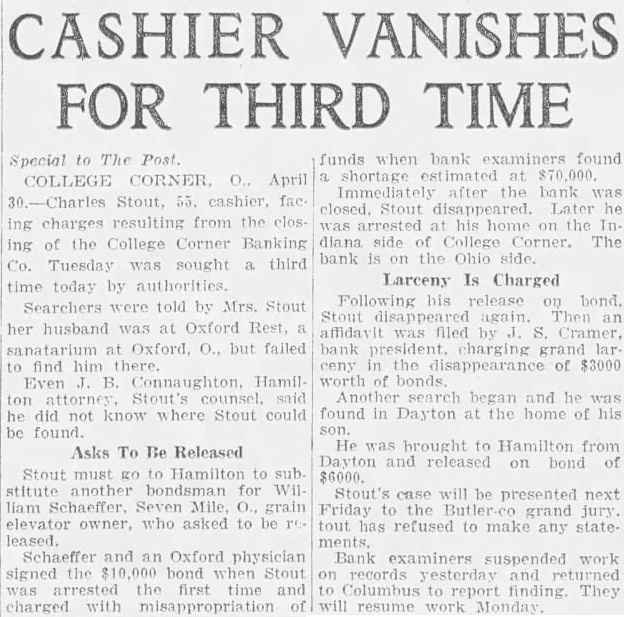
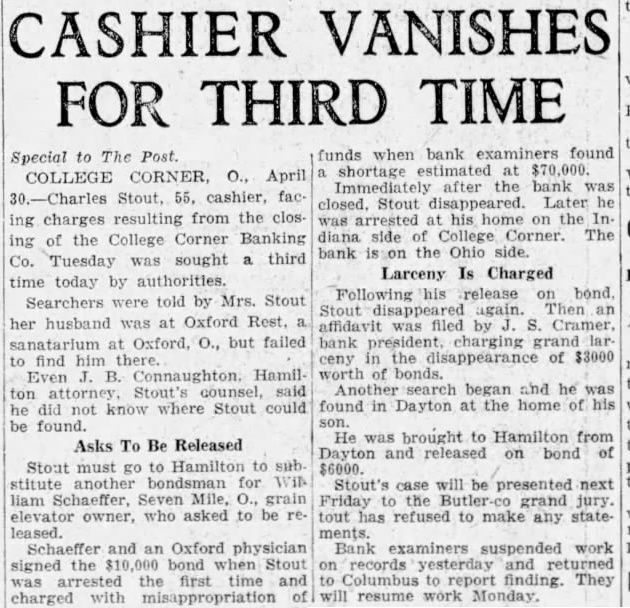
Newspaper reports (Feb 1875) state the George Washington Bank of Corning, N.Y., a private institution controlled by George W. Patterson, has been closed by the Sheriff. No run or reopening is reported; liabilities ~$100,000. Classified as a suspension/closure due to government action (sheriff closure).

Events (1)

1. February 1, 1875* Suspension
Cause
Government Action
Cause Details
Closed by the sheriff (law enforcement action/seizure), reported in Feb 1875.
Newspaper Excerpt
The George Washington Bank, of Corning, N. Y., a private institution, and controlled by George W. Patterson, has been closed by the Sheriff. The liabilities are $100,000.
Source
newspapers

Newspaper Articles (2)

Article from The Milan Exchange, February 4, 1875

Click image to open full size in new tab

Article Text

COMMERCE AND INDUSTRY. Gold closed in New York, on Jan. 30, at 113 1-8. The George Washington Bank, of Corning, N. Y., a private institution, and controlled by George W. Patterson, has been closed by the Sheriff. The liabilities are $100,000. Many of the depositors are poor persons, and there is much excitement in the neighborhood. Charles G. Hager & Sons, bankers of Watertown, N. Y., have suspended payment. The President has approved the act to enable the Commissioner of Agriculture to make a special distribution of seeds to portions of the country which have suffered from grasshopper ravages during last summer. The Arkansas State Grange met at Little Rock on the 27th. Every county was represented. General Butler has introduced in the House a bill for a postal telegraph system. It provides that all telegraphic lines of communication shall be made post roads; prohibits preference being given to any classes of business, except Government dispatches when certified to by a proper officer; provides that all telegrams shall be privileged communications to the same extent that sealed letters now are; requires rates for special telegrams to newspapers and commercial news associations to be the same, which rates shall be publicly displayed, such rates in no case to exceed the rates charged to the Associated Press and other press associations on the 1st of January, 1875. Following is the comparative cotton statement for the week ending Jan. 29:


Article from The Jasper Weekly Courier, February 6, 1875

Click image to open full size in new tab

Article Text

Hon. Thomas F. Bayard has been re-elected United States Senator from Delaware. The East River was bridged by ice between New York and Brooklyn, on the 22d, and hundreds of persons crossed during the day. This is considered a noteworthy occurrence, from the fact that it has occurred only during the coldest seasons, at intervals of many years. The George Washington Bank of Corning, N. Y., a private institution, and controlled by George W. Patterson, has been closed by the Sheriff. The liabilities are $100,000. Many of the depositors are poor persons, and there is much excitement in the neighborhood. Judge Maunsell B. Field, at one time Secretary of Legation at Paris, and Assistant Secretary of the Treasury. under Chase, Fessenden and McCulloch, died in New York, on the 24th, aged fifty-four years. General Ambrose E. Burnside has been elected United States Senator from Rhode Island. Charles G. Hager & Sons, bankers of Watertown, N. Y., have suspended payment. Theodore F. Phillips (Dem.) has bee n chosen U. S. Senator from New Jersey. His competitor was George M. Robeson, who received 31 votes to Phillips's 49. Frank Moulton concluded his testimony in the Beecher-Tilton case on the 27th. Mr. and Mrs. Sartoris (Nellie Grant) arrived at New York on the 27th.