Article Text
FINANCIAL AND COMMERCIAL
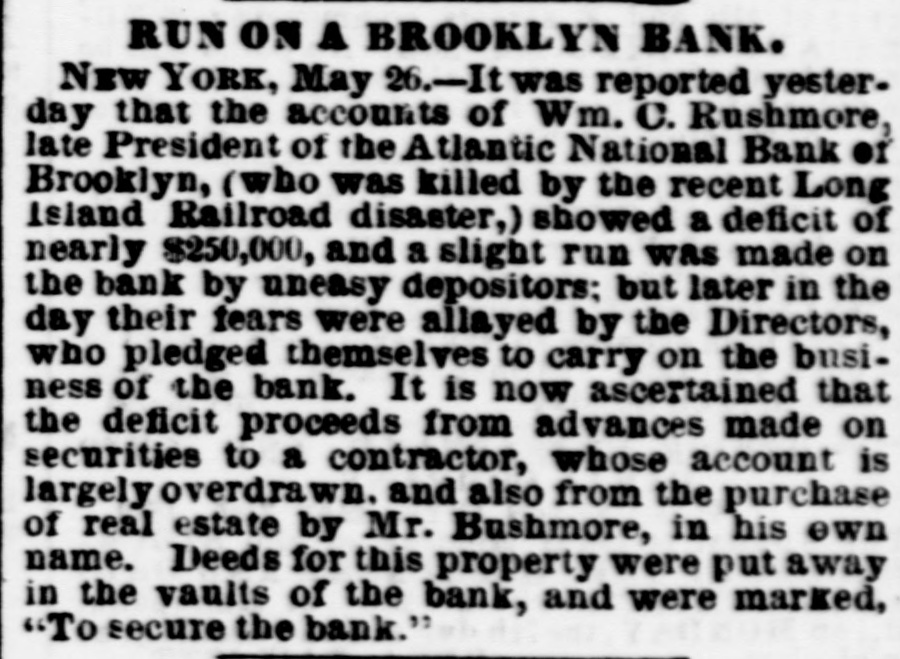
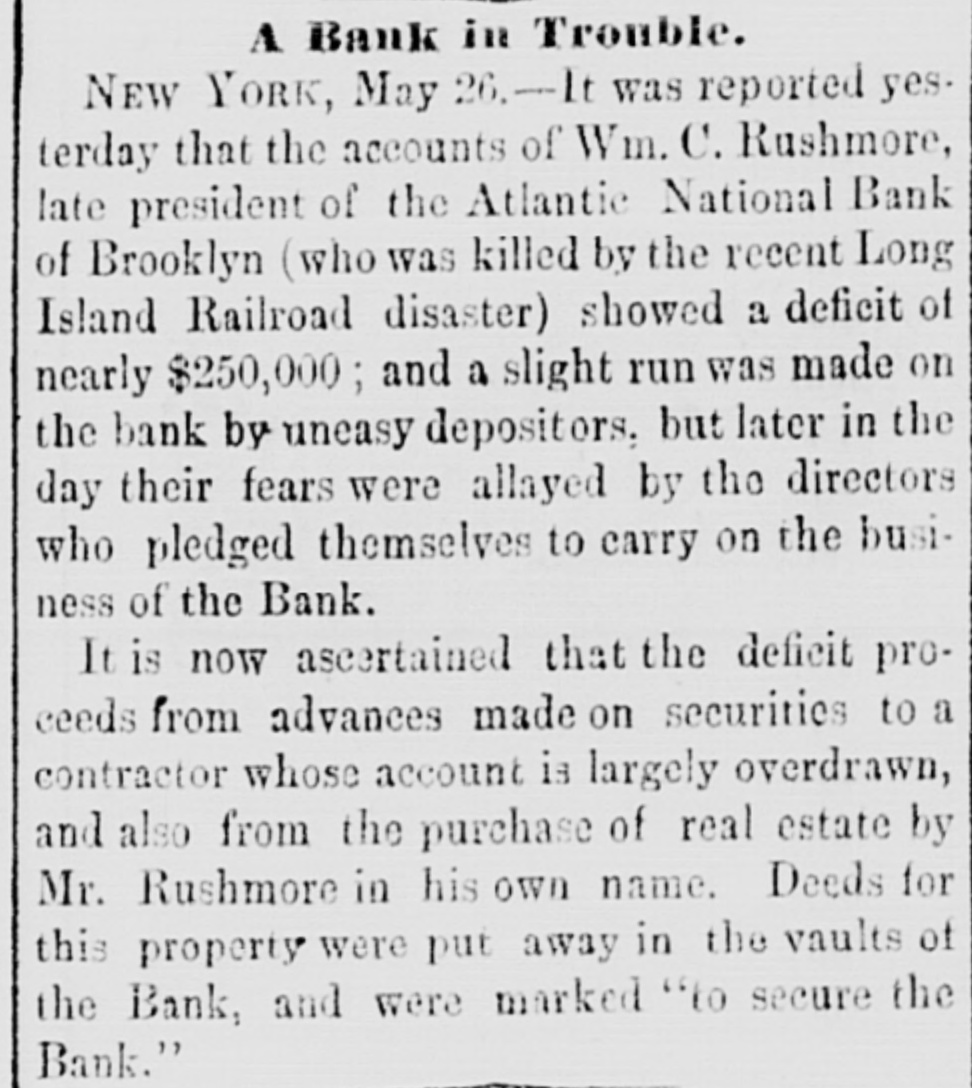
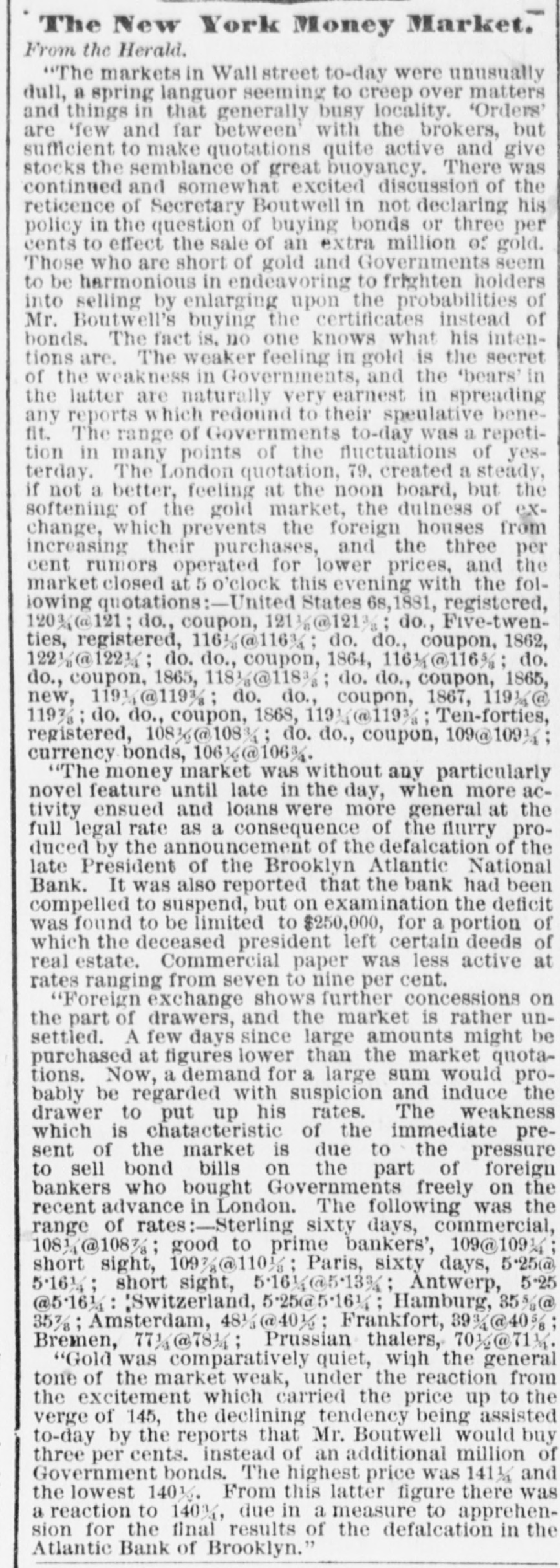
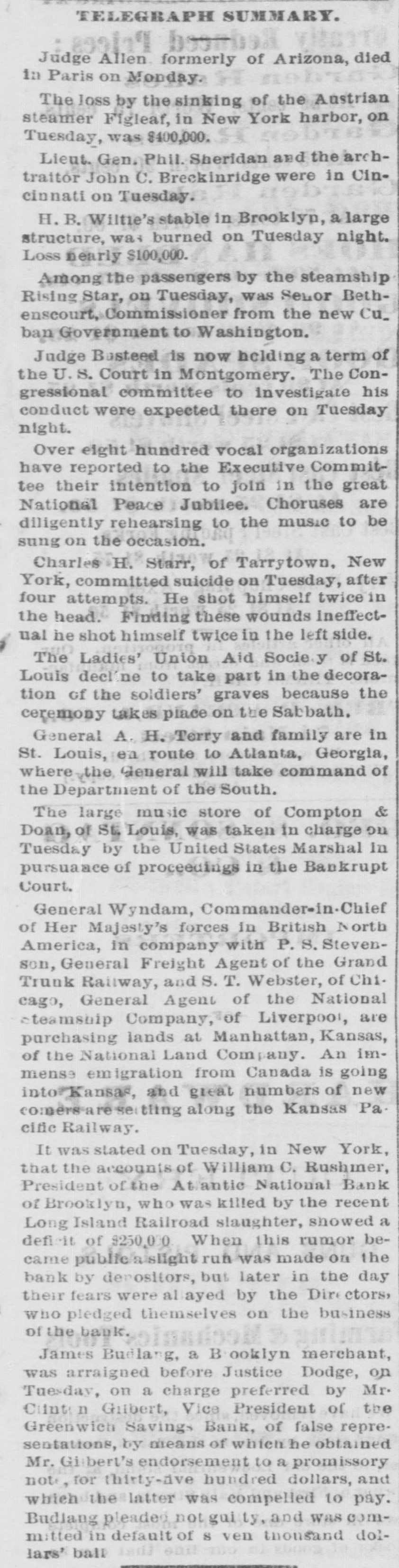
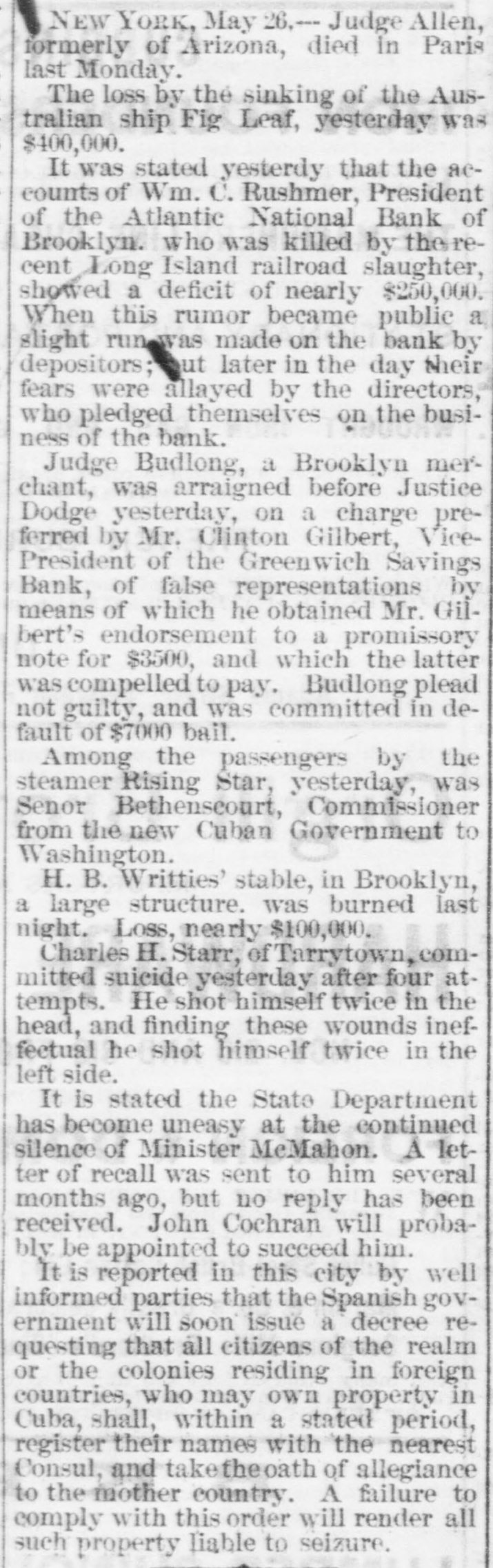
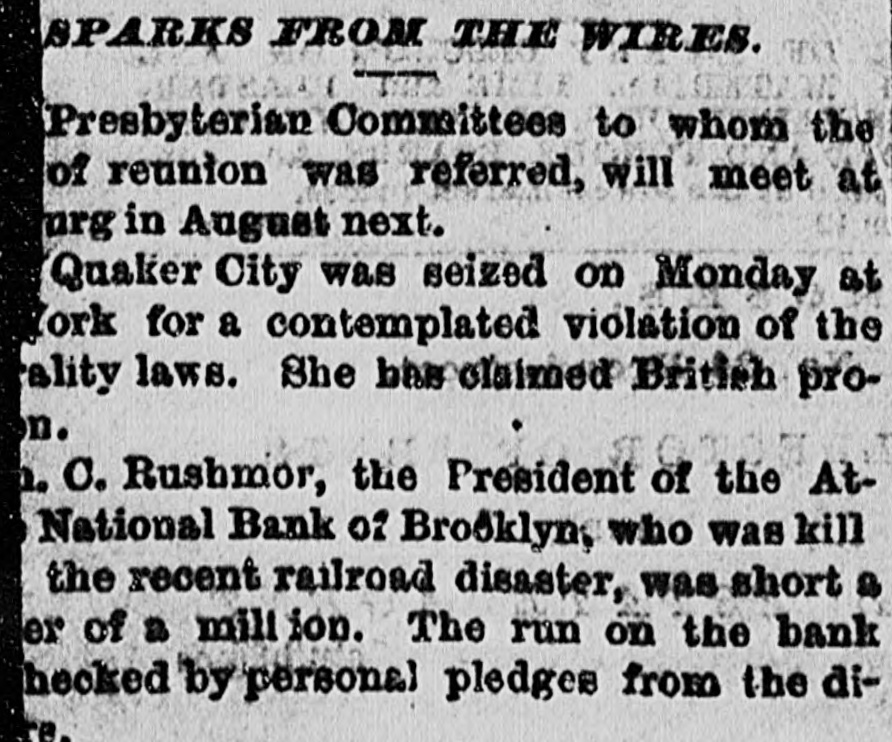
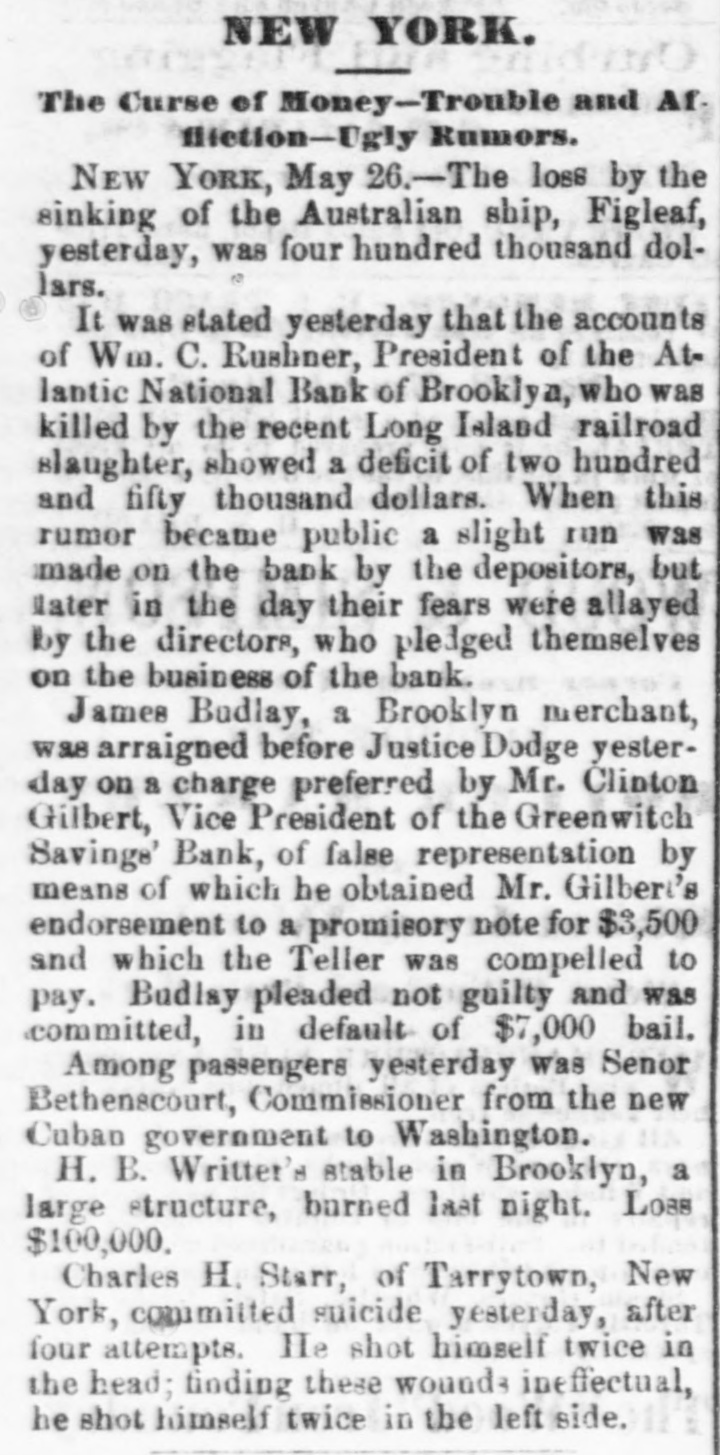
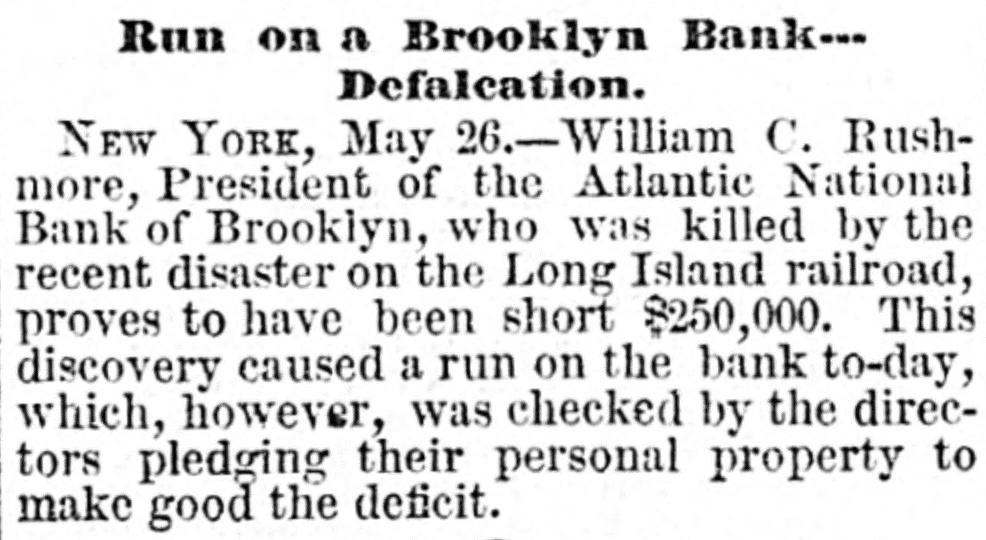
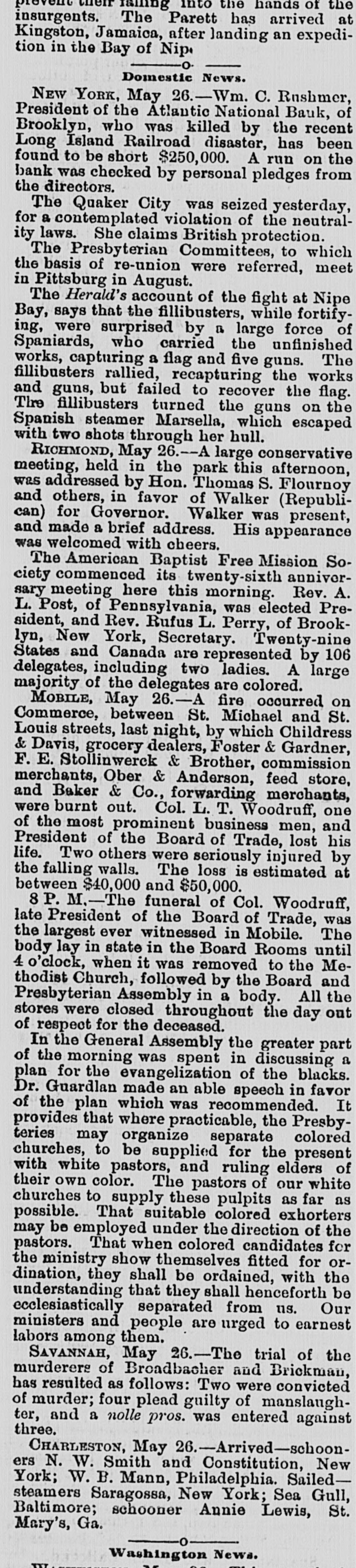
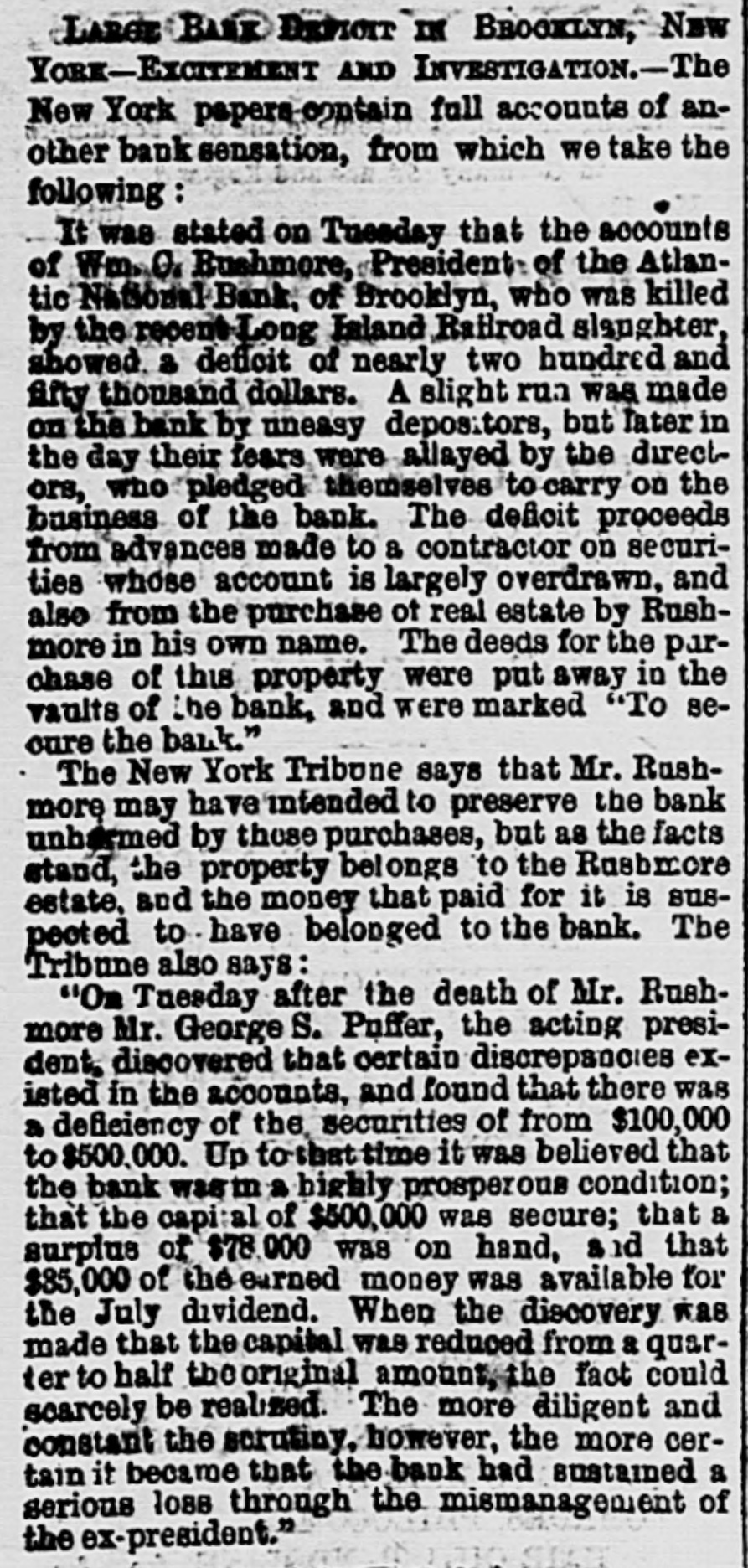
TUESDAY, May 25-6 P,M. The markets in Wall street to day were unusually dull, a spring languor seeming to creep over matters and things in that generally busy locality. "Orders" are "few and far between" with the brokers, but sumcient to make quotations quite active and give stocks the sembiance of great buoyancy. There was continued and somewhat excited discussion of the reticence of Secretary Boutwell in not declaring his policy in the question of buying bonds or three per cents to effect the sale of an extra million of gold. Those who are short of gold and governments seem to be harmonious in endeavoring to frighten holders into selling by enlarging upon the probabilIties of Mr. Boutwell's buying the certificates instead of bonds. The fact is, no one knows what his intentions are. The weaker feeling in gold is the secret of the weakness in governments, and the "bears" in the latter are naturally very earnest in spreading any reports which redound to their speculative benefit. The range of government ts to-day was a repetition in many points of the fluctuations of yesterday. The London quotation, 79, created a steady, if not a better feeling at the noon board, but the softening of the gold market, the dulness of exchange, which prevents the foreign houses from increasing their purchases, and the three per cont rumors operated for lower prices, and the market closed at five o'clock this evening with the fol. lowing quotations:-United States sixes, 1881, registered, 120% a 121; do., coupon, 121 1/6 a 121%; do., Ave-twenties, registered, 1161/6 a 1163/6; do. do., coupon, 1862, 12216 a 1221/4; do. do., coupon, 1864, 11616 a 116%; do. do., coupon, 1865, 1181/6 a 1181; do. go., coupon, 1865, new, 11914 a 1191/2; do. do., coupon, 1867, 11914 a 1191/2; do. do., coupon, 1868, 1191/4 a 11936; do., ten-forties, registered, 108 1/2 a 108%; do. do., coupon, 109 a 1091/6; currency bonds, 1061/6 a 1063. The money market was without any particularly movel feature until late in the day, when more activity ensued and, loans were more general at the full légal rate as a consequence of the furry produced by the announcement of the defalcation of the late President of the Brooklyn Atlantic National Bank. It was also reported that the bank had been compelled to suspend, but on examination the deficit was found to be limited to $250,000, for a portion of which the deceased president left certain deeds of real estate. Commercial paper was less active at rates ranging from seven to nine per cent. Foreign exchange shows further concessions on the part of drawers and the market is rather unsettled. A few days since large amounts might be purchased at figures lower than the market quotations. Now, a demand for a large sum would probably be regarded with suspicion and induce the drawer to put up his rates. The weakness which is characteristic of the immediate present of the market is due to the pressure to sell bond bills on the part of foreign bankers who bought governments freely on the recent advance in London. The following was the range of rates:-Sterling, sixty days' commercial. 10814 a 108 % good to prime bankers', 109 a 1091/4; short sight, 1093/8 a 1101;;; Paris, sixty days, 5.25 a 5.161/4; short sight, 5.1614 a 5.13 1/4; Antwerp, 5.25 a 5.161/; Switzerland, 5.25 a 5.161/4; Hamburg, 851/6 a 35% Amsterdam, 3934 a 401/6; Frankfort, 39% a 40%; Bremen, 7734 a 7814; Prussian thalers, 7014 a 71 . Gold was comparatively quiet, with the general tone of the market weak, under the reaction from the excitement which carried the price up to the verge of 145, the declining tendency being assisted to-day by the reports that Mr. Boutwell would buy three per cents instead of an additional million of government bonds. The highest price was 14134 and the lowest 140 1/2. From this latter figure there was reaction to 14034, due in a measure to apprehension for the final results of the defalcation in the Atlantic Bank of Brooklyn. The disbursements of coin interest from the Sub-Treasury amounted to $107,613. The course of the market is shown in the table:-