Click image to open full size in new tab
Article Text
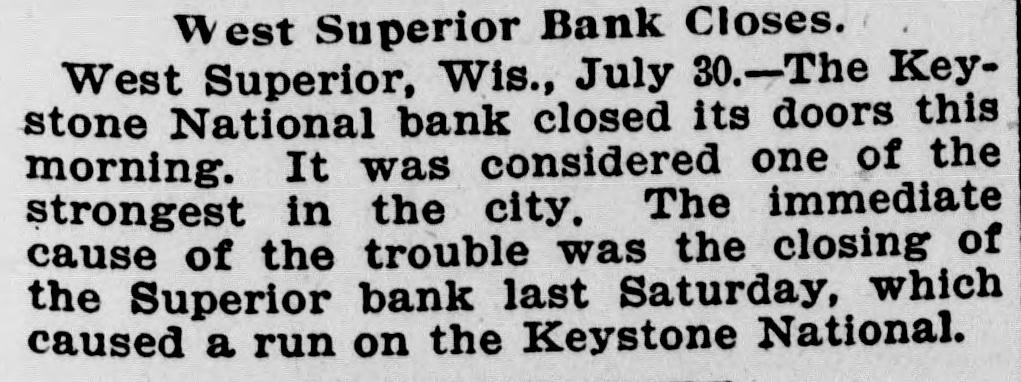
POTATOES AS A FOOD FOR LIVE STOCK. BY W. HENRY, Director Wis. Agricultural Experiment Station Wisconsin farmers have harvested the large crop of potatoes ever grown in the state only find that the markets are glutted at exceed ingly low prices. There has also been an un usually heavy grain crop harvested in mo sections, and with bins overflowing an eno mous quantity of potatoes.will be wasted unles their feeding value is appreciated and they a intelligently handled. While potatoes are extensively used in man countries for stock food, their value for th purpose is little known and less appreciate by our people, because most years prices hay ruled so high that there was more profit in sel ing than feeding. Bitter as is the disappoint ment concerning results, the present offers opportunity for a practical lesson in the feed ing value of potatoes, which If rightly practice will turn impending loss into a fair prof after all. WHAT EXPERIMENTS SHOW Girard, the French investigator, in exper ments with steers and sheep. secured the fo lowing results: Steers fed 110 lbs. beets per day gained pounds per day Steers fed lbs. potatoes per day gained 2. pounds per day. Steers fed lbs. potatoes per day gained 3. pounds per day Sheep fed 8.8 lbs. beets per day gained 1: per day. pounds Sheep fed 4.4 lbs. potatoes per day gaine 239 pounds per day. Sheep fed 6.6 lbs. potatoes per day gaine 295 pounds per day. In the above experiments the potatoes wer cooked before feeding, practice not to I generally followed excepting with swine. all cases hay and straw were fed additiona The figures show that potatoes were wort considerably more than twice their weight field beets. Girard oncludes: "The potato when fre from rot and mature must be considered as food of excellent merit for producing meat.' Fjord, the great investigator of feeding stuff in Denmark, found as the result of many ex periments that four lbs. of potatoes furnishe as much nutriment to animals as one pound rye or barley. The writer conducted experiments a fe years since to ascertain the value of potatoe for hogs. The potatoes were carefully weighe and then cooked in iron kettles and a weighe amount of corn meal added so as to make thick pudding or mush. These experiment show that 145 pounds of potatoes were equal 100 pounds of corn meal in pig feeding. I other experiments have shown that corn mea had somewhat higher feeding value than bar ley. This true, my results are practically con cordant with Fjord's, and we may assume wit safety that four pounds of potatoes are wort one pound of barley or rye and almost th same weight of corn meal for hog feeding. Cooked potatoes to which meal has bee added are excellent food for fowls. Besides their nutritive value, potatoes ai helpful in furnishing a variety of food an keeping animals in a healty condition. a poir always considered by the prudent stock man. From what has been said above, we see the when corn is worth 40 cents a bushel, potato are worth about 10 cents a bushel for feedin purposes. HOW TO FEED POTATOES. Although Girard favored cooking for steer and sheep, general experience goes to sho that they can be most economically used b feeding raw to all farm animals, excepting hog and fowls. For he rses, sheep and dairy cows, potatoe should be sliced in root-cutter or chopped a box with sharp spade. Milch cows may be fed with advantage much as 25 pounds of sliced potatoes per day if greater weight than this is fed the potatoe will have an unfavorable influence on th quality of the butter produced. For sheep, 3 or pounds of potatoes daily t each member Of the flock will prove highly ad vantageous; fattening sheep may be fed a much as pounds per day. Work horses may be fed 10 or 12 pounds pe day of sliced potatoes; more than this shoul not be fed because this food is too "softening. Idle horses and breeding stock can get a some what larger amount with advantage. Hogs do not thrive on raw potatoes. Th writer has found that in cooking potatoes fo hogs only a little water should be placed in th kettle so as to leave the potatoes almost fre from water when the cooking is finished; the by withdrawing the fire the potatoes can b mashed "in the kettle and meal mixed wit them, making a thick mush or pudding. thick pudding was found to be more acceptabl to the hogs than a thin mush or slop. FEED POTATOES AND SAVE THE GRAIN. Experience shows that unusually large crop over large areas may work harm to the farme because the very low prices which often follow cause him to become careless and wasteful what he has raised. This threatening faul should be carefully avoided by our people this time. It should be remembered that pc tatoes are perishable and will soon waste an disappear, while the grain now on hand ma be saved in the bins for some years to com without material loss. The farmer with a larg stock of potatoes on hand should feed these his stock as rapidly as they can be judiciousl handled in order to conserve the grain. Whil potatoes may not be worth more than 10 cent a bushel for feeding they may effect a savin of hundreds of bushels of grain, which at som later time may bring better prices, or at leas this action will tend in that direction. Our figures teach that an acre of good pota toes may be worth as much for feeding as acre of corn yielding from 50 to 75 bushels grain per acre. Viewed in this light the potat crop is after all not necessarily a losing one. POTATO RAISING STILL PROFITABLE INDUSTRY. No state in the union raises better potatoe than Wisconsin, and our reputation in thi direction is already established. Unlike wheat our great crop of potatoes will all have disap peared by July next. They cannot be carrie over to affect next year's market. The preser season is one of -production because th crop has been generally large everywhere. Ou farmers should arrange to plant a reasonable acreage of potatoes next year and every year They should know the feeding value of pota toes and how to feed them, 80 that when price rule low in the future they are prepared t utilize them to the best advantage on their OW farms. In this way the present season ma prove an opportunity for a most valuable, last ing lesson. For the year ending Aug. 31, 1894 under the McKinley tariff the impor tation of shoddy was 201,404 pounds For the year just ended under th Democratic free wool tariff 17,666,56 poundsof the vile stuff were imported The State had some $30,000, it seem on deposit in the Superior bank which lately failed. This has cause some of our republican colleagues t fall into the error of criticising th law directing such deposits of th public funds. In our opinion suc criticism is ill-founded. If the stat officers have done their duty, and W will not assume that they have not the funds of the state are absolutel safe, for the state has the guaranty not only of the responsible stock