Article Text
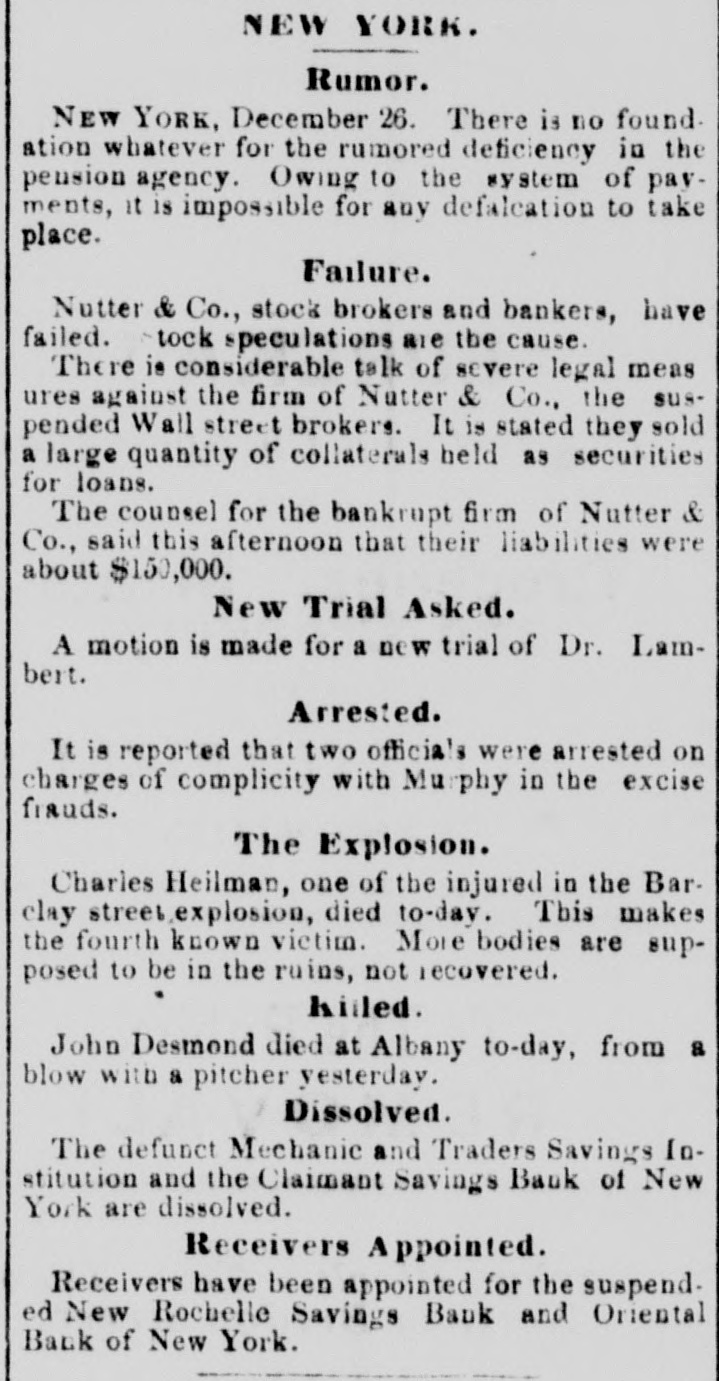
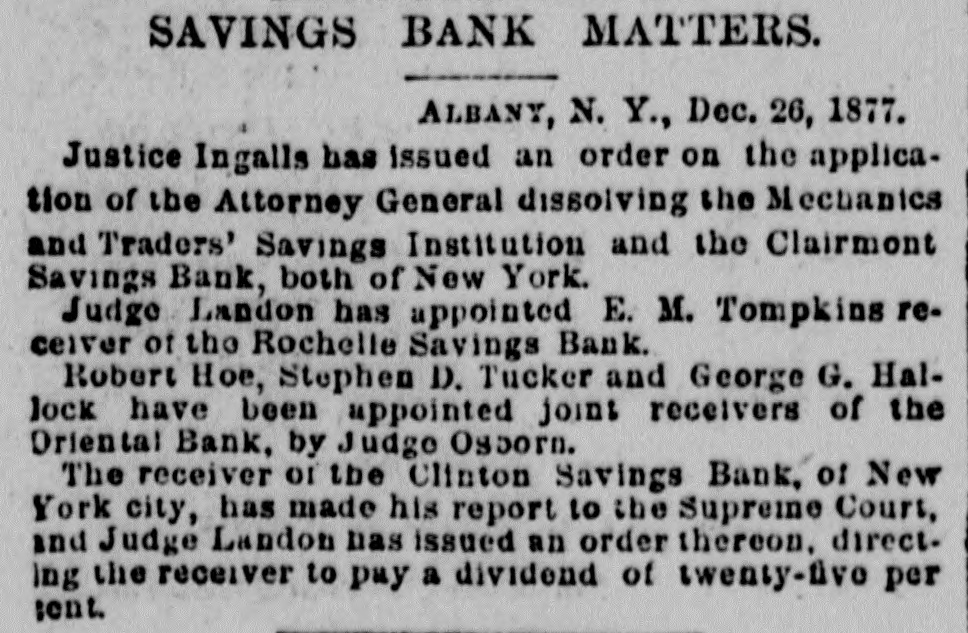
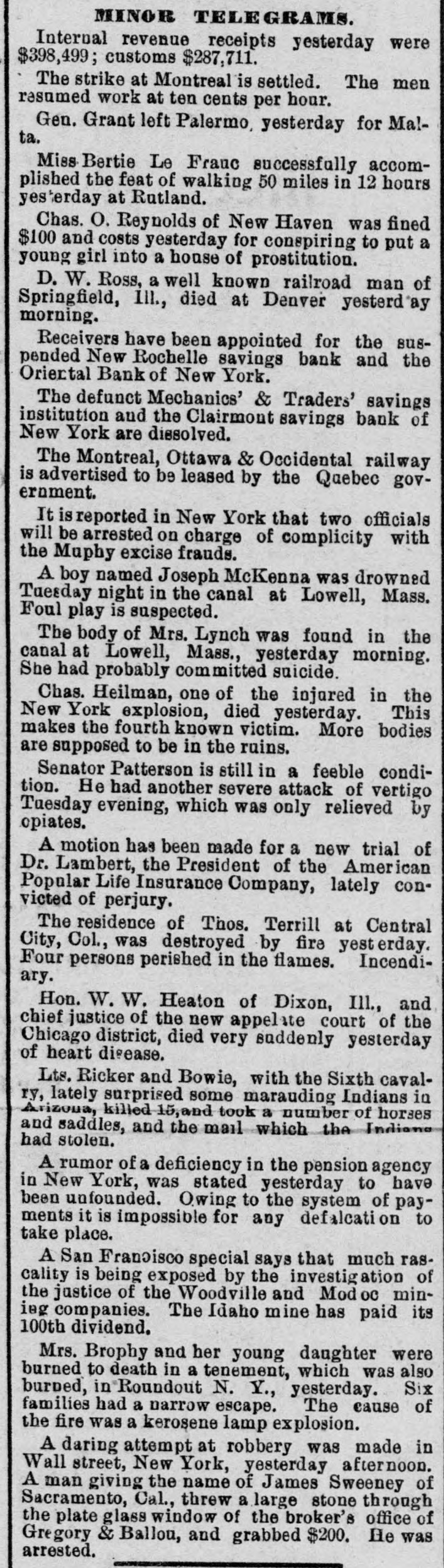
MINOR TELE GRAMS. Internal revenue receipts yesterday were $398,499; customs $287,711. The strike at Montreal is settled. The men resumed work at ten cents per hour. Gen. Grant left Palermo, yesterday for Malta. Miss Bertie Le Franc successfully accomplished the feat of walking 50 miles in 12 hours yesterday at Rutland. Chas. O. Reynolds of New Haven was fined $100 and costs yesterday for conspiring to put a young girl into a house of prostitution. D. W. Ross, a well known railroad man of Springfield, III, died at Denver yesterd'ay morning. Receivers have been appointed for the suspended New Rochelle savings bank and the Oriertal Bank of New York. The defunct Mechanics' & Traders' savings institution and the Clairmont savings bank of New York are dissolved. The Montreal, Ottawa & Occidental railway is advertised to be leased by the Quebec government. It is reported in New York that two officials will be arrested on charge of complicity with the Muphy excise frauds. A boy named Joseph McKenna was drowned Tuesday night in the canal at Lowell, Mass. Foul play is suspected. The body of Mrs. Lynch was found in the canal at Lowell, Mass., yesterday morning. She had probably committed suicide. Chas. Heilman, one of the injured in the New York explosion, died yesterday. This makes the fourth known victim. More bodies are supposed to be in the ruins. Senator Patterson is still in a feeble condition. He had another severe attack of vertigo Tuesday evening, which was only relieved by opiates. A motion has been made for a new trial of Dr. Lambert, the President of the American Popular Life Insurance Company, lately convicted of perjury. The residence of Thos. Terrill at Central City, Col., was destroyed by fire yest erday. Four persons perished in the flames. Incendiary. Hon. W. W. Heaton of Dixon, Ill., and chief justice of the new appelate court of the Chicago district, died very suddenly yesterday of heart disease. Lts. Ricker and Bowie, with the Sixth cavalry, lately surprised some marauding Indians in Arizona, killed 15,and took a number of horses and saddles, and the mail which the Indiana had stolen. A rumor of a deficiency in the pension agency in New York, was stated yesterday to have been unfounded. Owing to the system of payments it is impossible for any defalcation to take place. A San Francisco special says that much rascality is being exposed by the investigation of the justice of the Woodville and Modoc mining companies. The Idaho mine has paid its 100th dividend. Mrs. Brophy and her young daughter were burned to death in a tenement, which was also burned, in Roundout N. Y., yesterday. Six families had a narrow escape. The cause of the fire was a kerosene lamp explosion. A daring attempt at robbery was made in Wall street, New York, yesterday afternoon. A man giving the name of James Sweeney of Sacramento, Cal., threw a large stone through the plate glass window of the broker's office of Gregory & Ballou, and grabbed $200. He was arrested.