Click image to open full size in new tab
Article Text
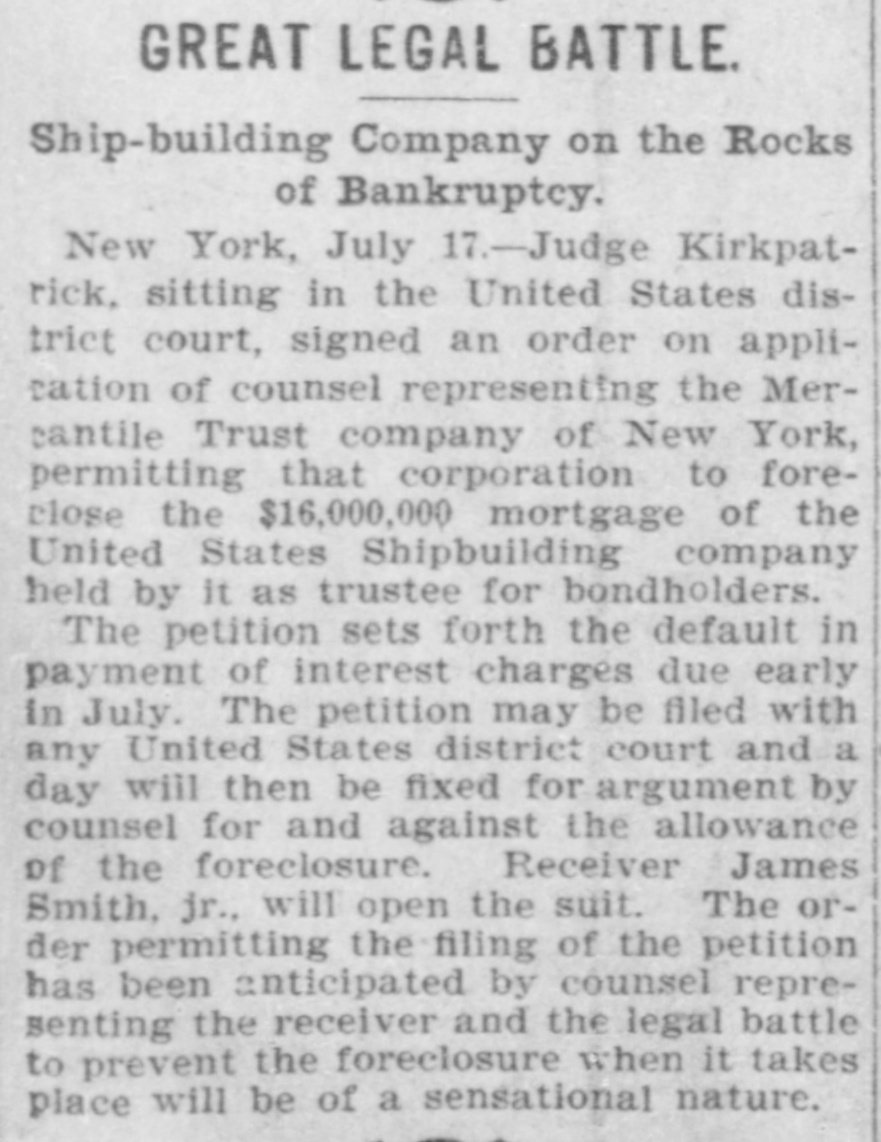
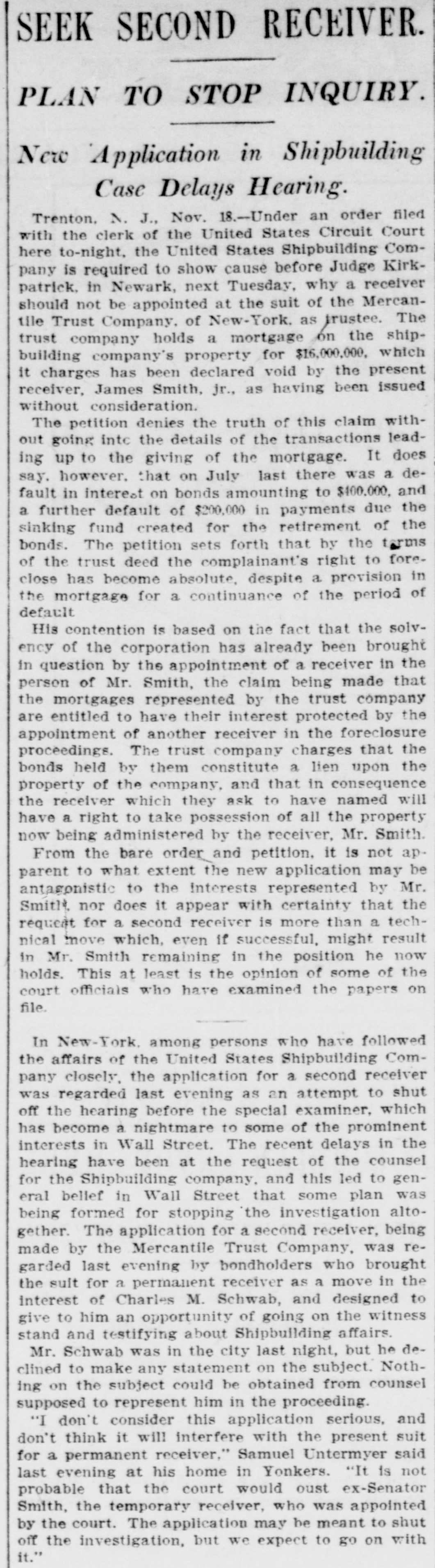
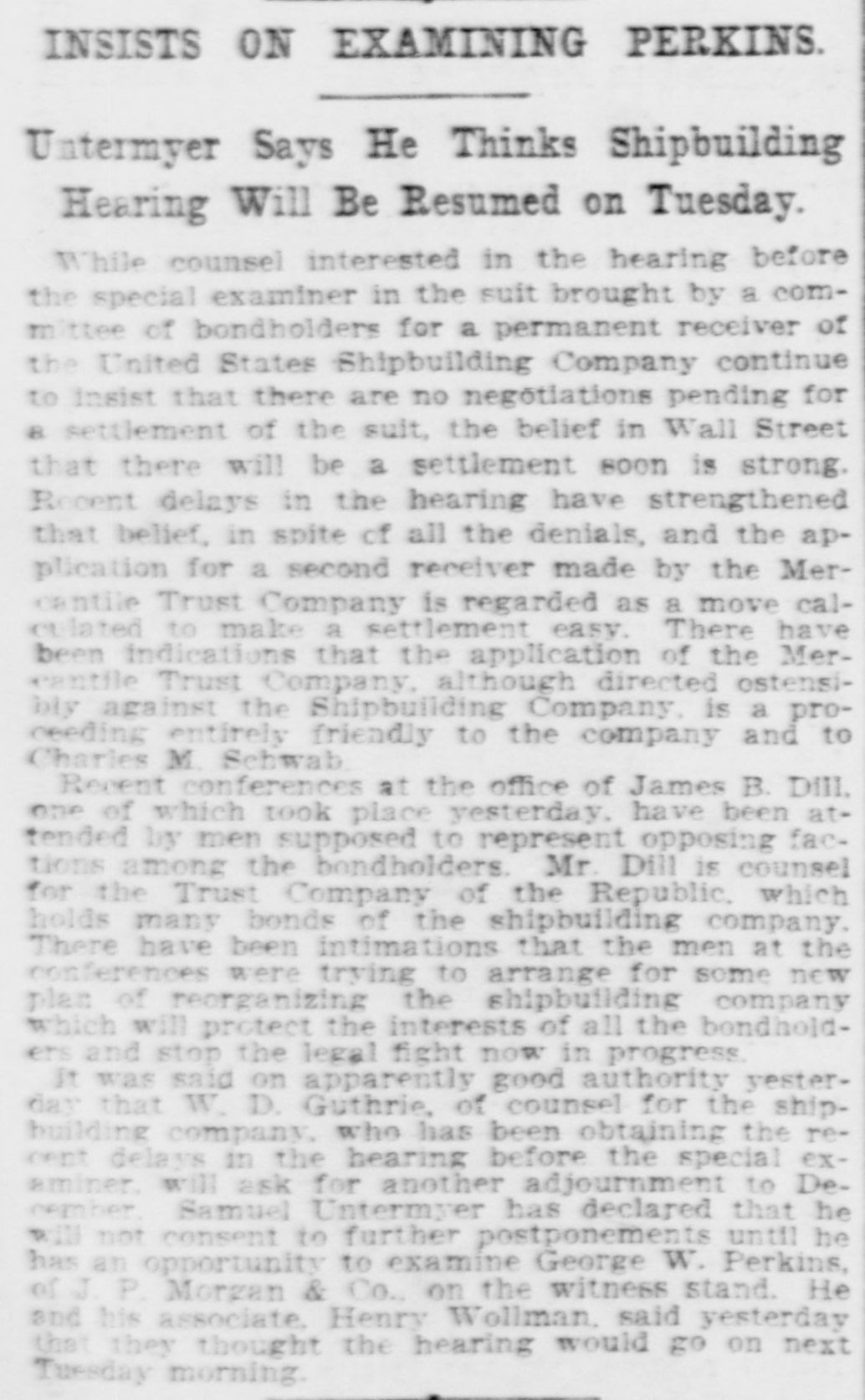
Former Governor of New York Goes on the Stand To Testify in the Insurance Company Investigation. HE MADE NO THREATS. Denies That He Tried to Coerce Mercantile Trust. Says Platt Generally Collected the Campaign Funds. New York, Nov. 16.-B. B. Odell, Jr. former governor of New York, and at present chairman of the state Republican committee, was the first witness before the insurance investigation committee today. Before his testimony was begun Samuel Untermyer, counsel for James H. Hyde, entered an objection, protesting against the investigation of the affairs of the United States Ship Building company by the committee Mr. Hughes, counsel to the committee, began by asking Mr. Odell to tell the facts pertaining to the Mercantile Trust company charter and the witness said he would prefer to tell of the the whole transaction leading up to settlement, if permitted. Mr. Untermeyer protested that if the committee permitted that it would take them far outside the legitimate line of inquiry Senator Armstrong referred the protest to Mr. Hughes who said he would call to Mr Odell's attention "the fact that the matter which concerns the committee is simply the question whether there was any political influence pressure brought to bear upon the Mercantile Trust company, directly or indirectly to induce settlement.' There was not, said Mr. Odell Will you state, governor, said Mr. Hughes, "whether you had any information with regard to the introduction of a bill in the senate for the purpose of repealing the charter of the Mercantile Trust company? Odell Knew of It. knew of it at the time, yes," 'Who advised you of it?" knew of it before its introduction From whom did you get the information? "Oh, various people as to the propriety of the introduction of such a measure." "Did you suggest its introduction "No. "Did you request its introduction saw no objection to it. 'Did you state that you saw no objection to the introduction of the measure At the time it was introduced I did, yes. "To whom?' "Oh, to anyone who asked me; I have forgotten. What was the ground for that action or approval?' "Simply because the scandal incident to the shipbuilding trust was uppermost in the people's mind and it was claimed that the Mercantile Trust company had been behind 15 or 16 corporations, everyone of them had been insolvent, and it was time, I thought, such matters in the state of New York should be stopped. While Mr. Odell was testifying Senator Depew entered the room. Continuing, Mr. Odell said the bill was intended to provide for an in gation of the Mercantile Trust company. He could not recall that he had an interview with Assemblyman Fish with regard to the introduction in the assembly of a bill similar to Senator Ambler's reneal bill. His only interview with Senator Ambler about the bill was after it had been introduced. At that time he had no suit pending against the Mercant ile Trust company. His suit was brought in August, 1904 Why He Sold Out. When the bill was introduced in March, 1904 the witness said he still had every dollar's worth of his shipbuilding holdings. These holdings sold at auction and brought $43,687 against $164,171 paid for them Since their sale witness has had no interset in the shipbuilding company. The sale was made because he felt that there would be matters of legislation come up affecting shipbuilding affairs and he felt that the governor should not be interested directly or indirectly in the bonds. He contemplated beginning an action against the Mercantile Trust company in August, 1904. He had no interview with J. P. Morgan regarding his shipbuilding claim. but did have with Chas M. Schwab. His interview with Mr. Schwab was when the company was in the hands of receiver. 'Did you make any statement to anybody in the city of New York that retaliatory measures of any kind would be taken? asked Mr. Hughes. 'Never.' 'That any measures threatening the Mercantile Trust company or any one else would be taken if your claim was not settled? 'Never.' He never made any such statement to Mr. Harriman nor did he ever have any interview with Mr. Harriman in which it was suggested that Harriman should use his influence to procure a settlement of witness' claim against the Mercantile Trust. "Then," said Mr. Hughes, "I understand your testimony is that you never directly or indirectly used any threat to procure a settlement of that suit? "No. sir." Was the legislation which was proway posed by Senator Ambler in any topic of conversation when the settlement of your suit came up?" a "Never excepting- yes, when I had talk with Mr. Hyde. he spoke of it and I told him no matter what the outbe come of our settlement might whether I should go into the courts. or case should be settled by the Merthe cantile Trust company, there was no fear of retaliatory legislation." Changed His Mind. 'Had anything occurred to change your mind as to the propriety of the introduction of such measures?' "Yes, sir The fact that the base alumny which Mr. Hyde uttered here been circulated in the papers and had Senator Ambler and I said that as called desirable as I believed the legislation, feared that my unfortunate conwith the ship building matter nection it would was of such a character that be better for him to drop this legislation. That interview took place some